In September 2017, Winnie and I embarked on our most ambitious trip to China (until then). We planned a three-week adventure that covered visits to the western Chinese city of Xi’an, and the central Chinese city of Hangzhou. Then back to Nanning and Winnie’s hometown of Leuchuan. This trip involved several domestic Chinese flights, and a couple of trips on China’s high-speed railway system.
To date, this was my last visit to China, although Winnie has gone back on her own since then to spend time with her family. This photo gallery is my humble attempt to display more of the amazing sights of modern China.
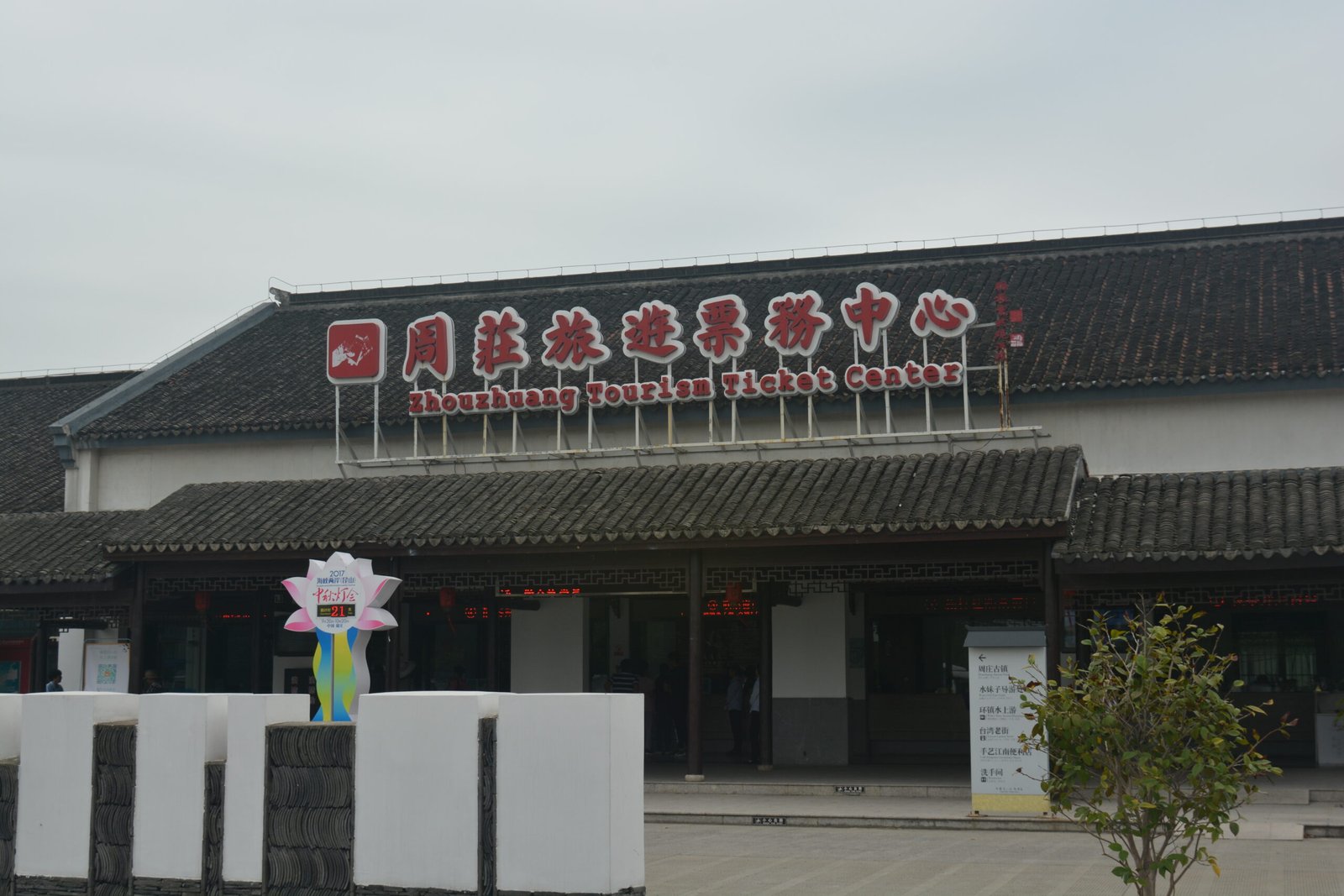
Tourist Entrance to The Water Town of Zhouzhuang
The tourist entrance to the historic "Water Town" of Zhouzhuang, in Jiangsu Province. A "Chinese Venice" this town is renowned for its well-preserved ancient architecture, stone bridges, and serene waterways, often described as resembling a traditional ink wash painting
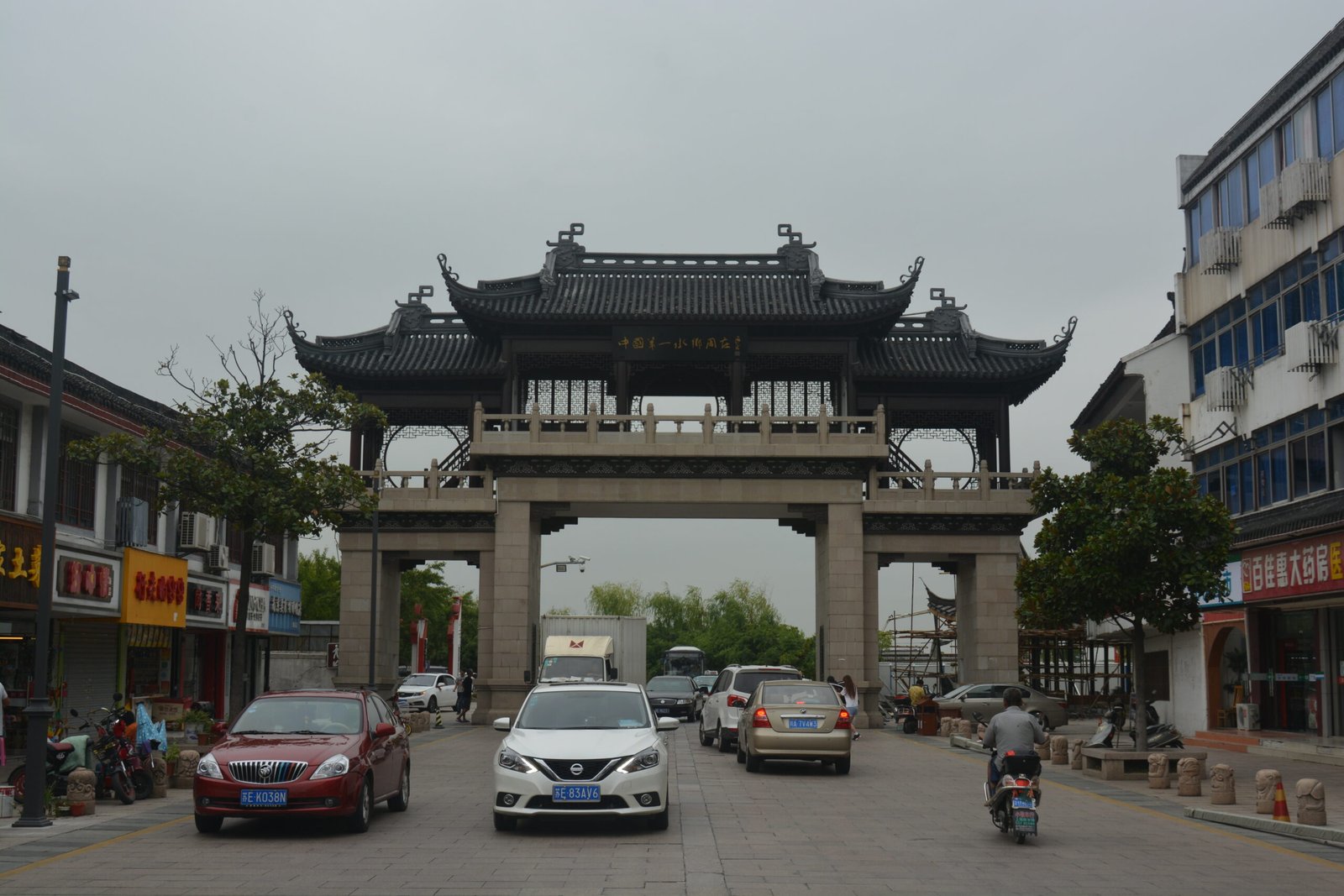
The Road Entrance to Zhouzhuang
The roadway entrance to the water town of Zhouzhuang. The road is a modern expansion, as this town was once only accessible via boats. The parking area on the other side of this arch is as far as cars are allowed to go into the town. Past that parking area, all traffic is by foot, bicycle, or canal boats (also called sampans).
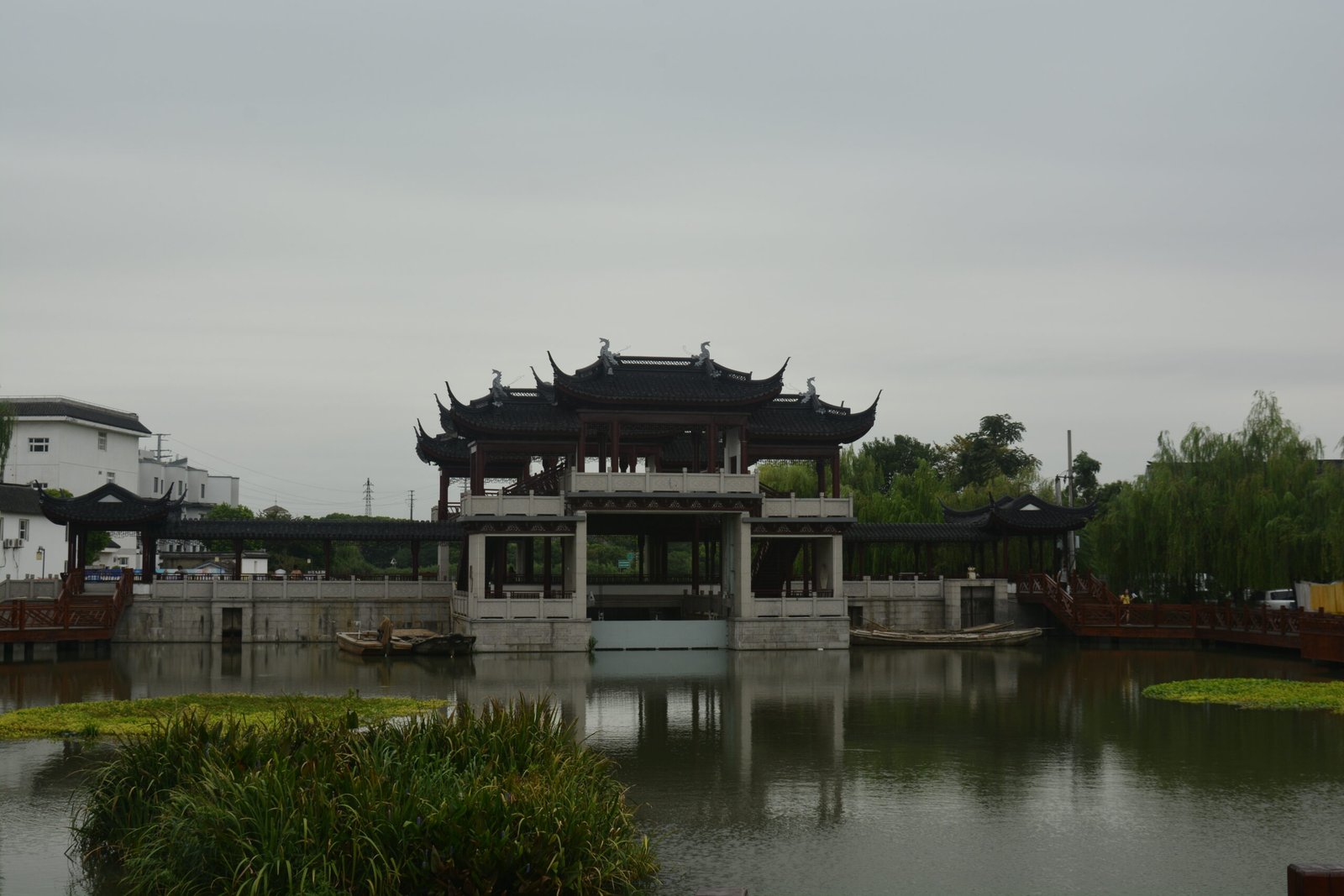
A Water Gate of Zhouzhuang
One of the "water gates" of Zhouzhuang. This gate opens to allow boats to enter or leave the town, and navigate the many canals.
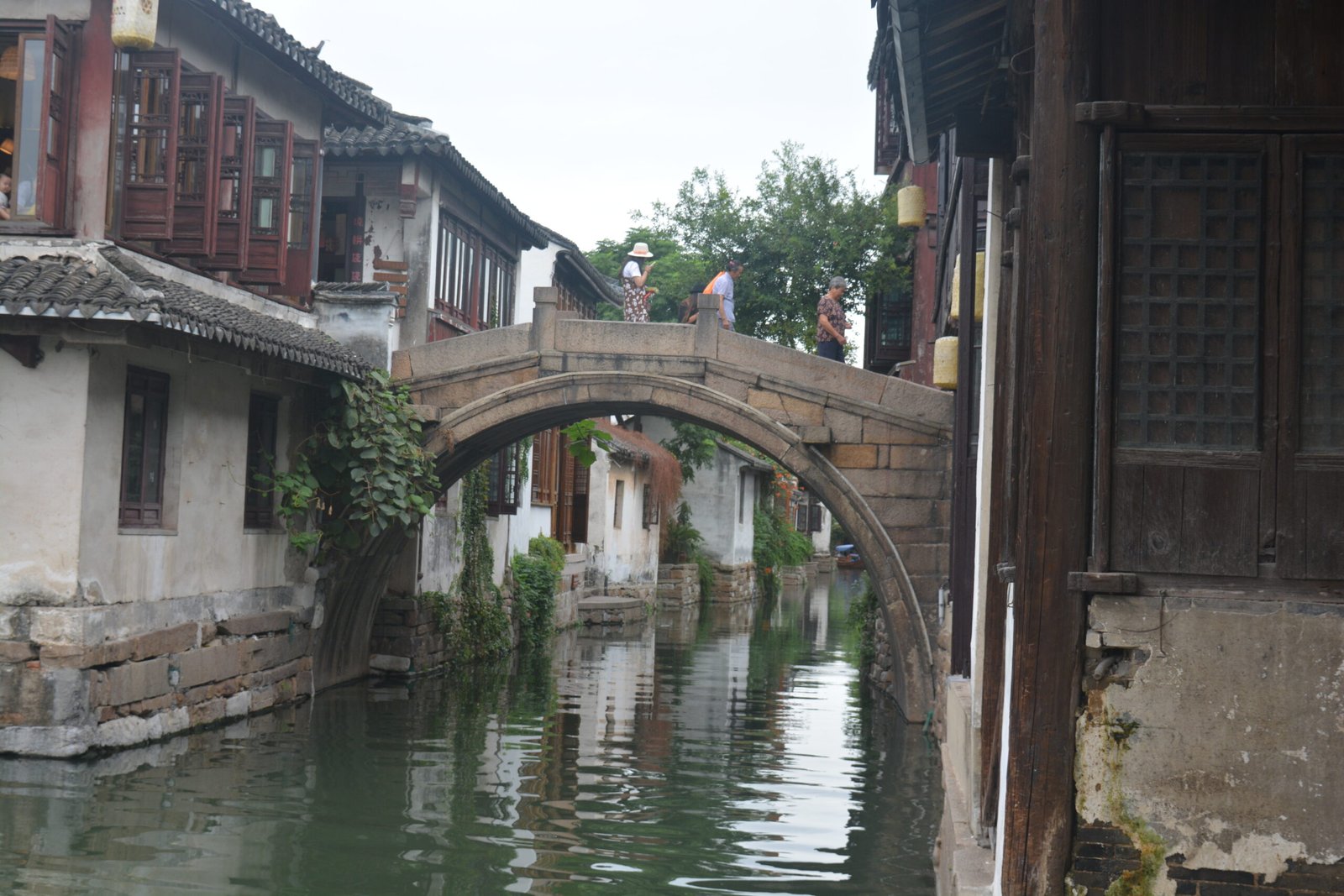
A Canal Bridge of Zhouzhuang
One of the stone arch bridges connecting walkways across the many small canals. I observe that Venica, Italy, features very similar style stone bridges over her canals.
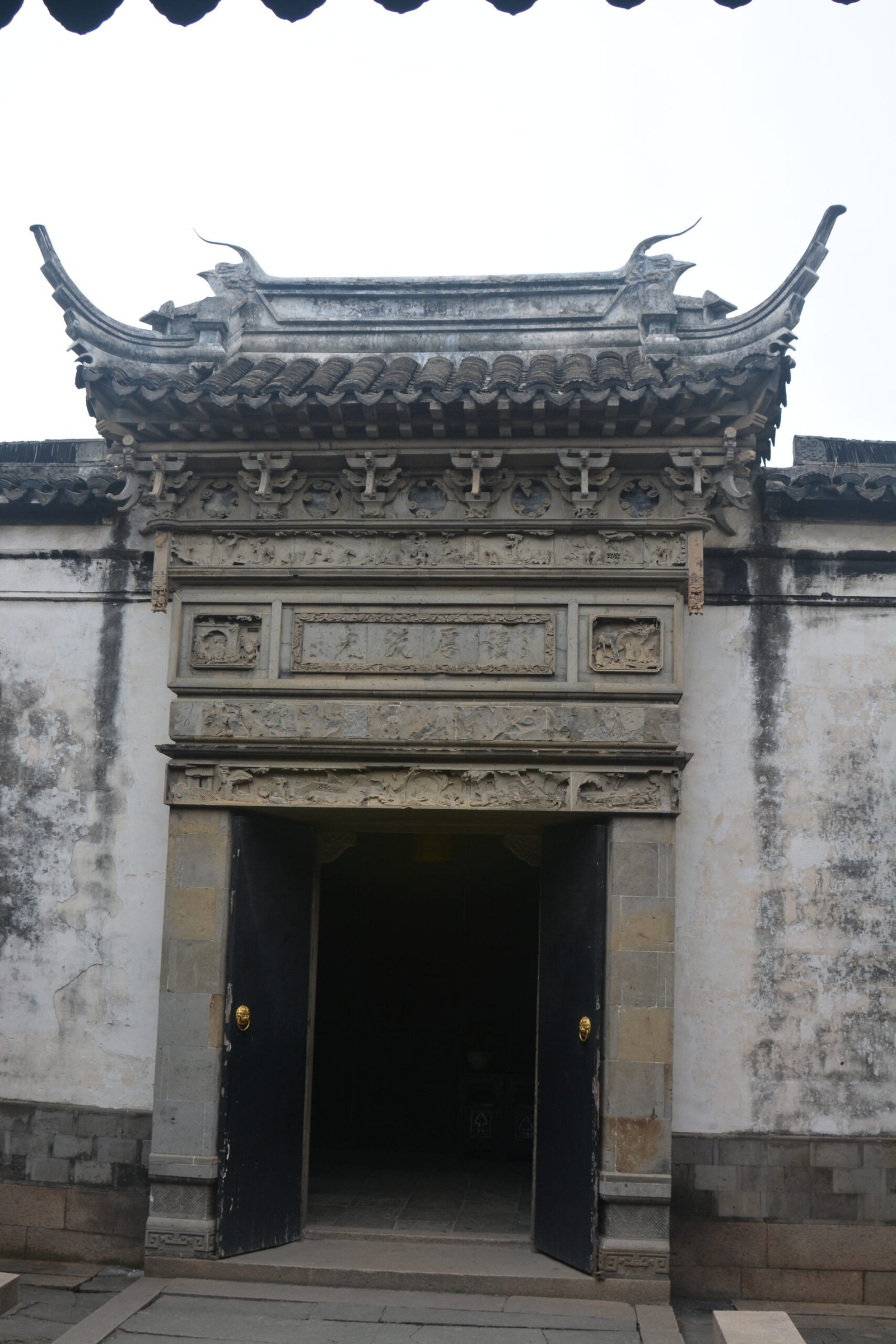
The entrance to the Zhouzhuang House of Shen Ting
This historic house was built in 1742 by the descendants of Shen Wansan, a legendary wealthy merchant in the early Ming Dynasty. It is a classic example of Jiangnan-style residential architecture.
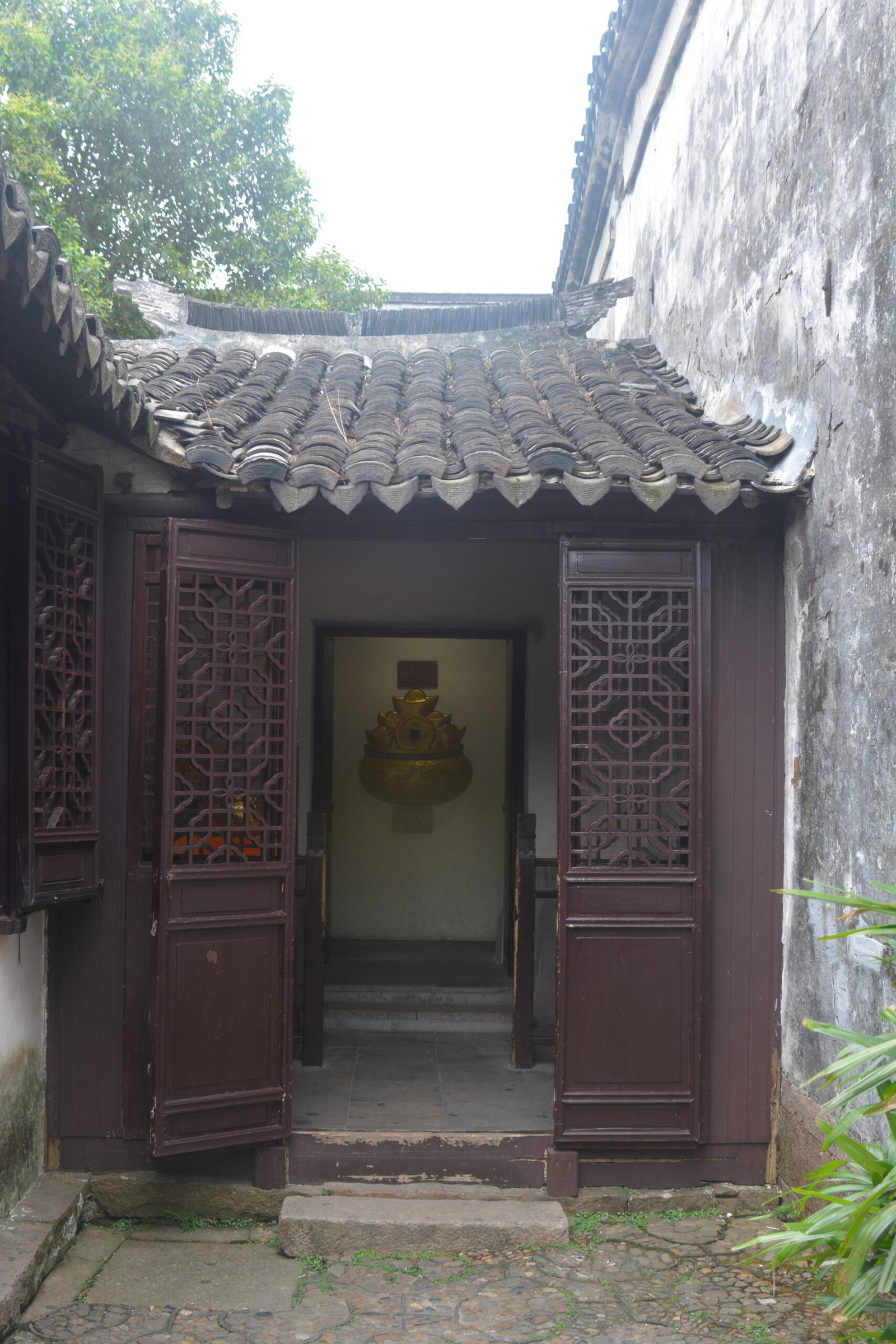
A Traditional Chinese Courtyard Entrance in the House of Shen Ting
One of the side entrances in the house of Shen Ting. This is an example of a traditional Chinese courtyard entrance, part of a siheyuan (four-sided courtyard) complex within this house.
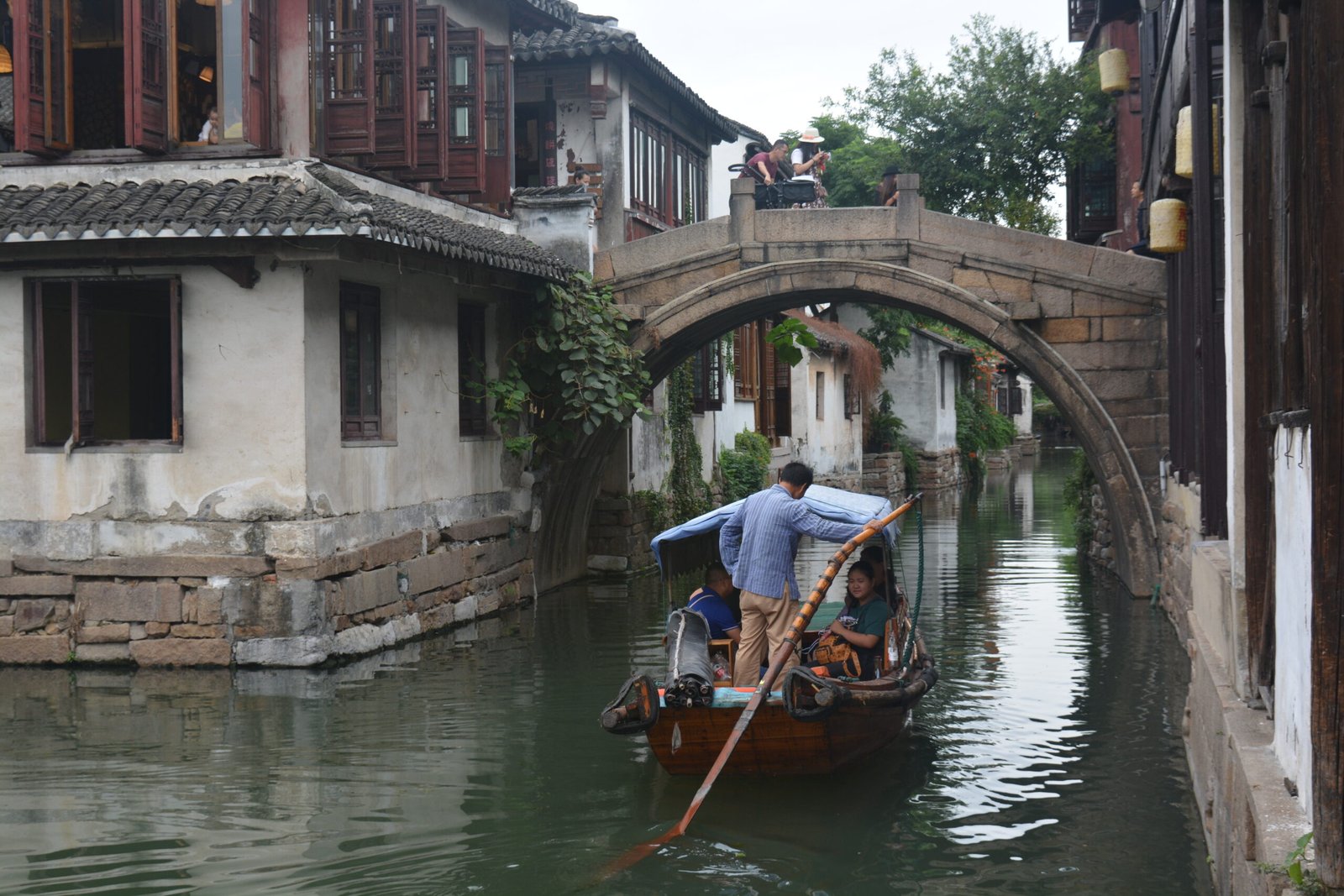
A Canal Boat Passing Under A Bridge
This view shows one of the many passenger canal boats passing under a stone arch bridge. Note these boats use sculling as their primary means of propulsion.
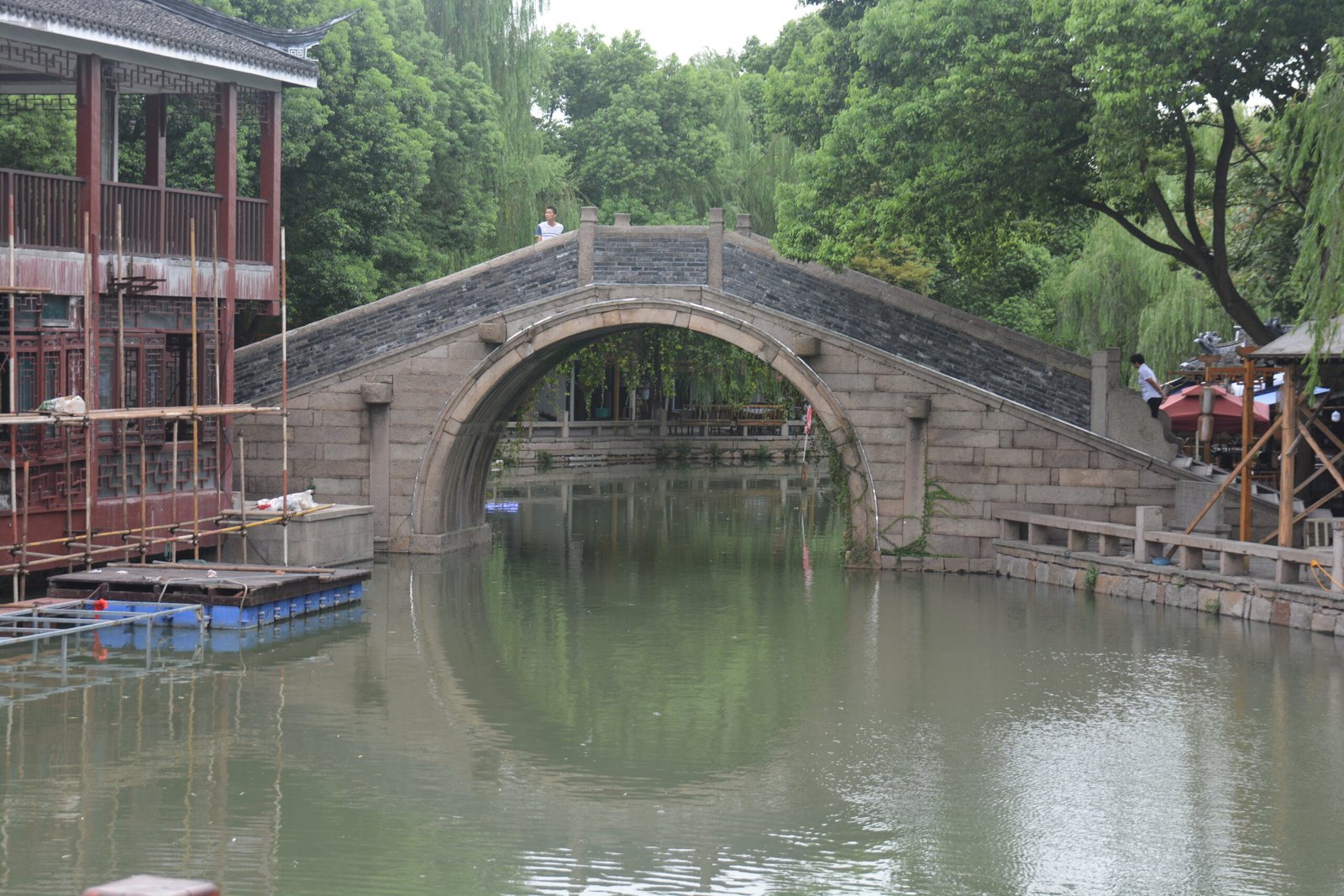
A Large Canal Bridge in Zhouzhuang
A bridge across one of the wider canals in the water town of Zhouzhuang. The building on the left is undergoing repairs. Bamboo scaffolding is common throughout China.
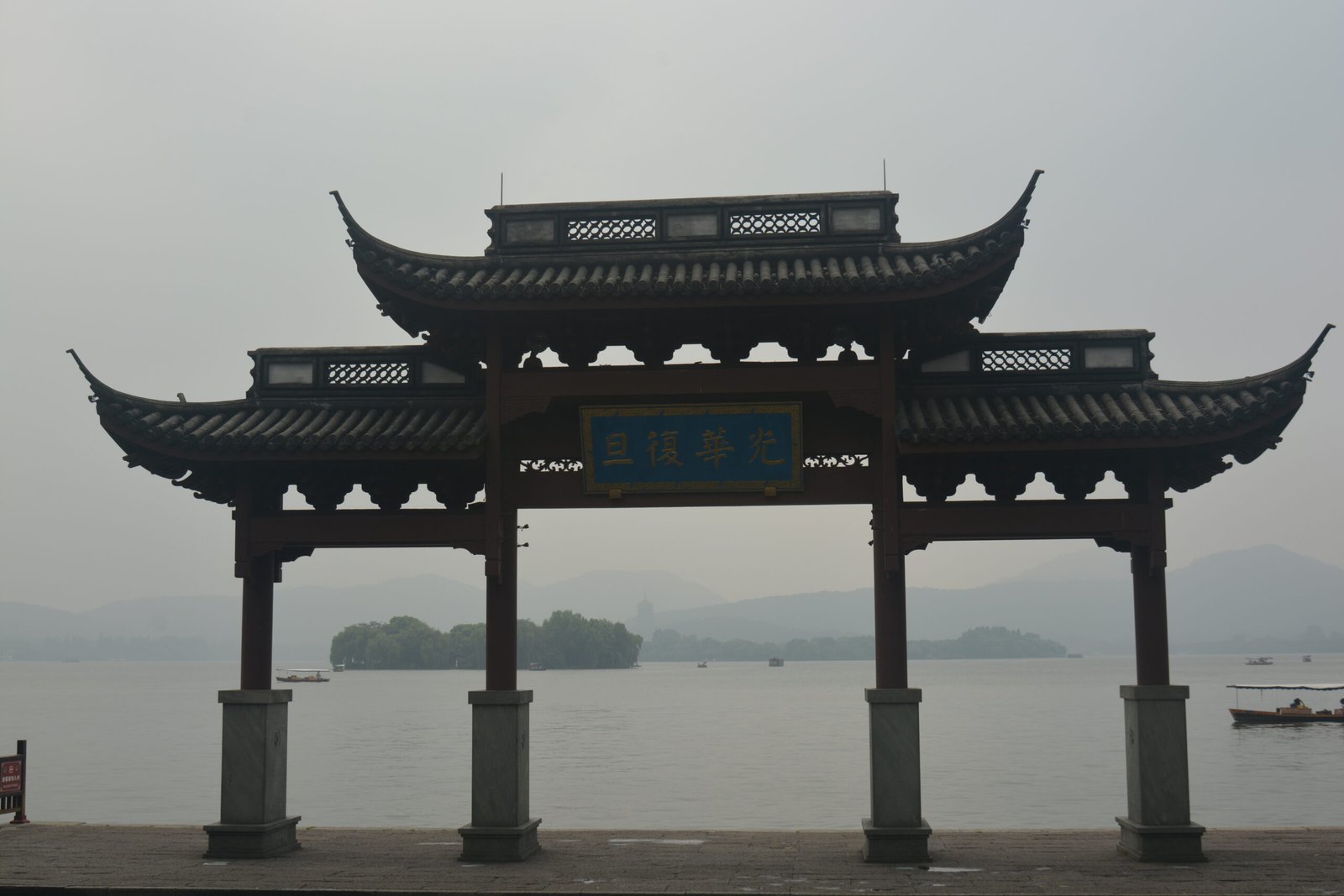
A Boat Landing on West Lake
A lovely chinese gateway marking the spot of a prominent boat landing along West lake in Hangzhou. A small island in the middle of the lake is in the background. West Lake is famous for its natural beauty and historical significance, celebrated for the "Ten Scenes of West Lake," which include temples, pagodas, and scenic spots. This lake is deeply intertwined with Chinese poetry and culture.
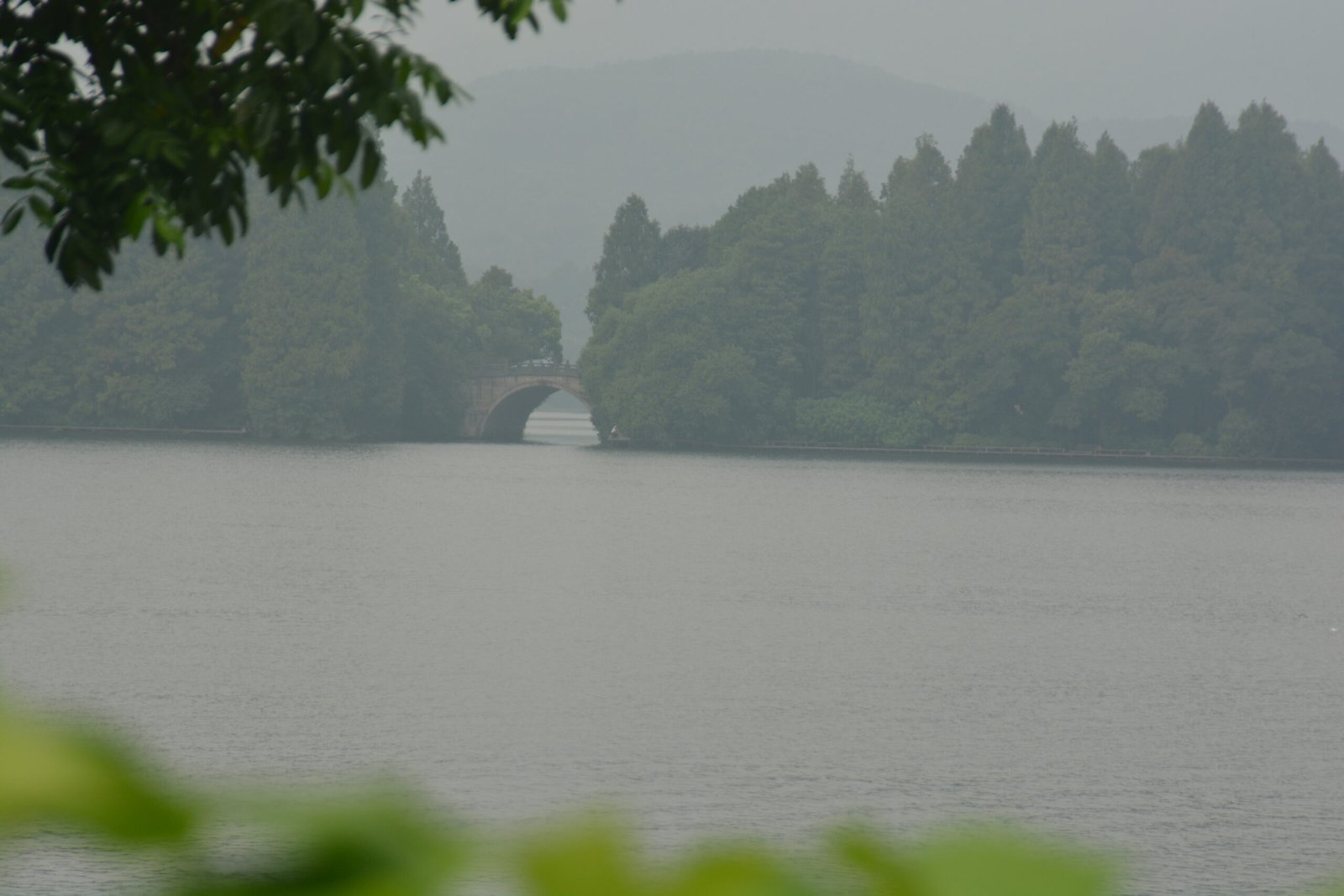
West Lake (Xi Hu) in Hangzhou
Looking across West Lake (Xi Hu), a large and scenic freshwater lake located in Hangzhou. The lake is ringed with a pedestrian walkway featuring numerous pavilions and gardens.
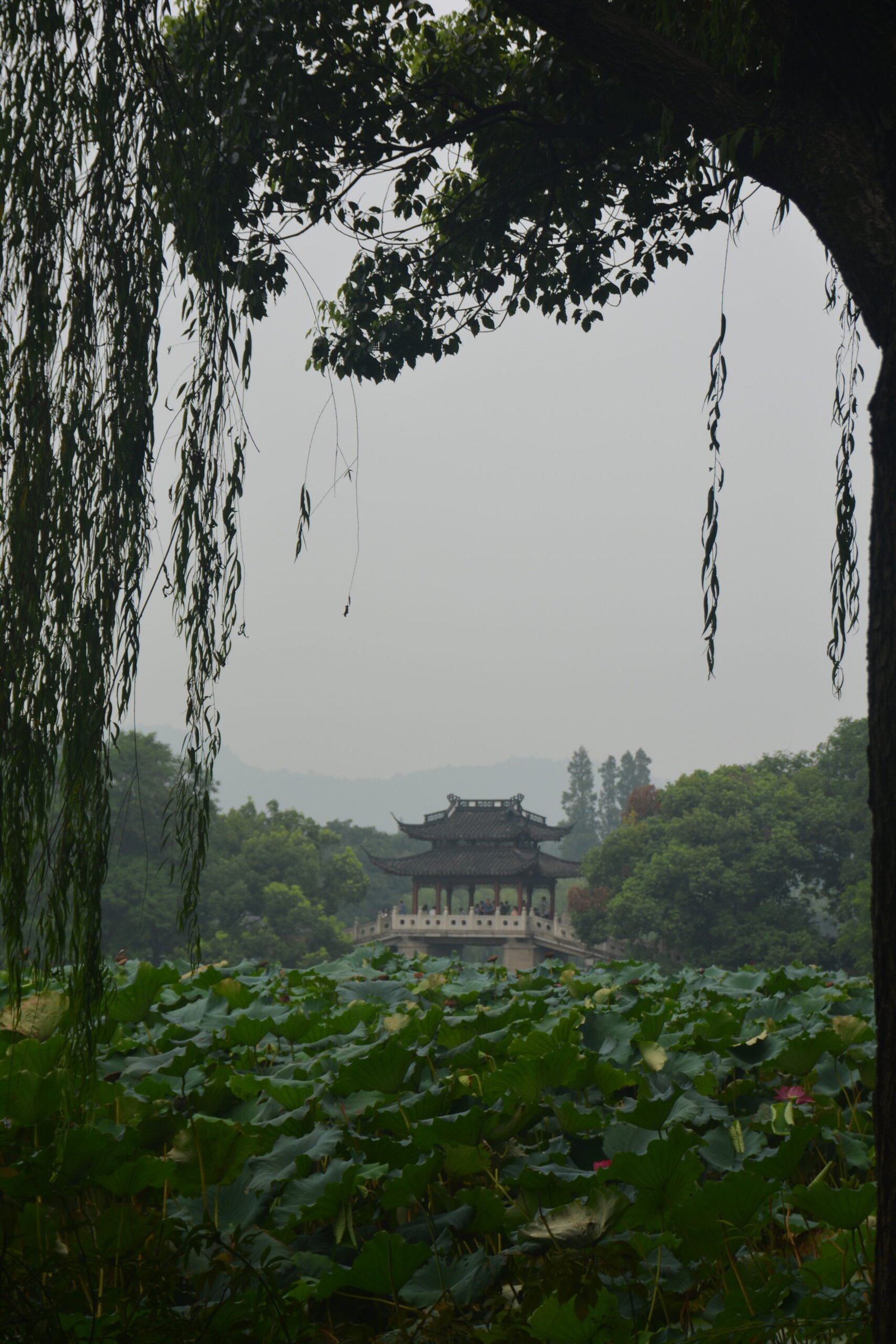
A Pavillion on West Lake
Looking across a lagoon covered in lotus plants at a traditional Chinese pavilion of beautiful West Lake (Xi Hu) in Hangzhou.
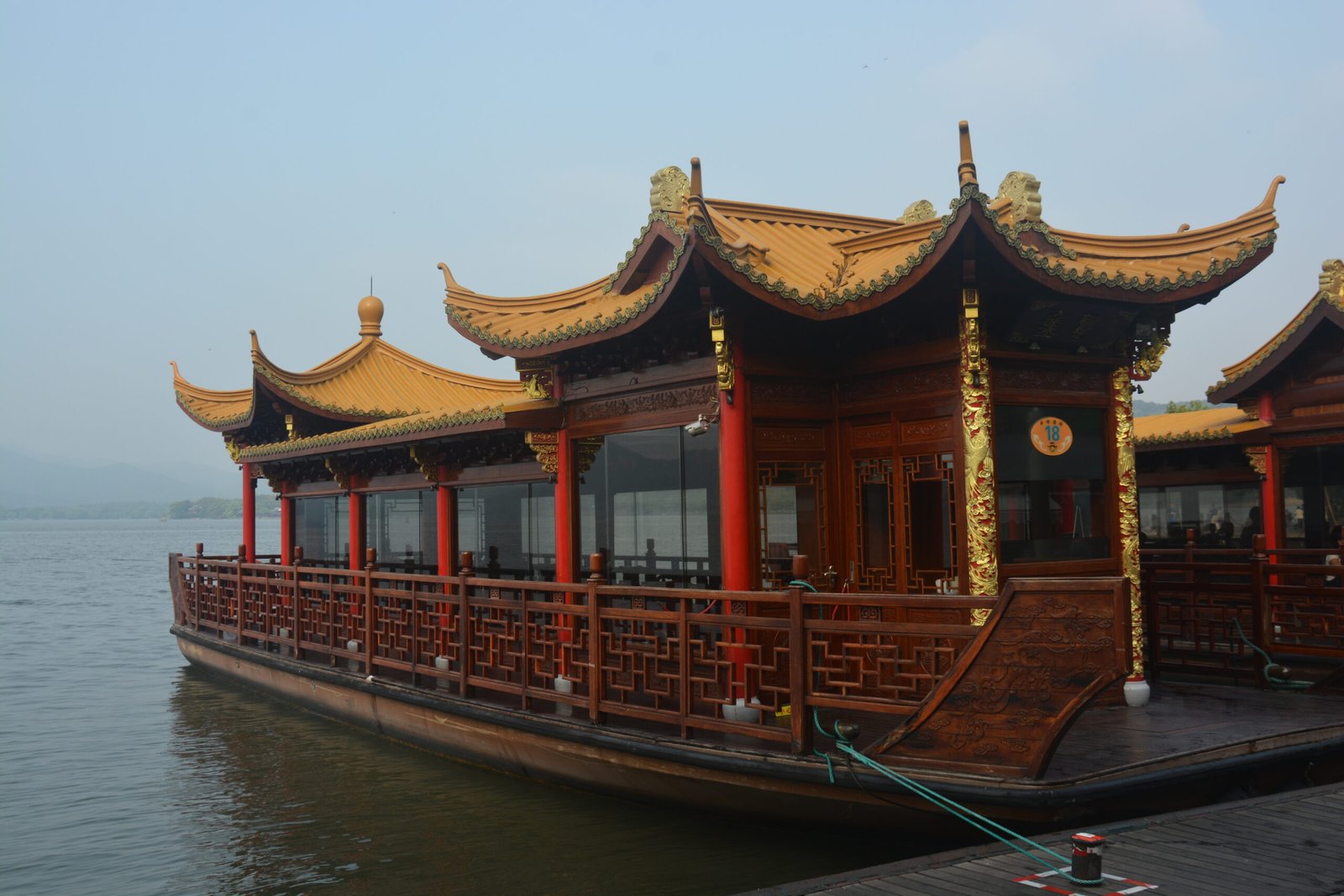
A Dragon Boat on West Lake
One of the many traditional tourist boats on West Lake in Hangzhou. These boats are frequently used for organized daytime or evening cruises, allowing visitors to view the scenic surroundings from the water.
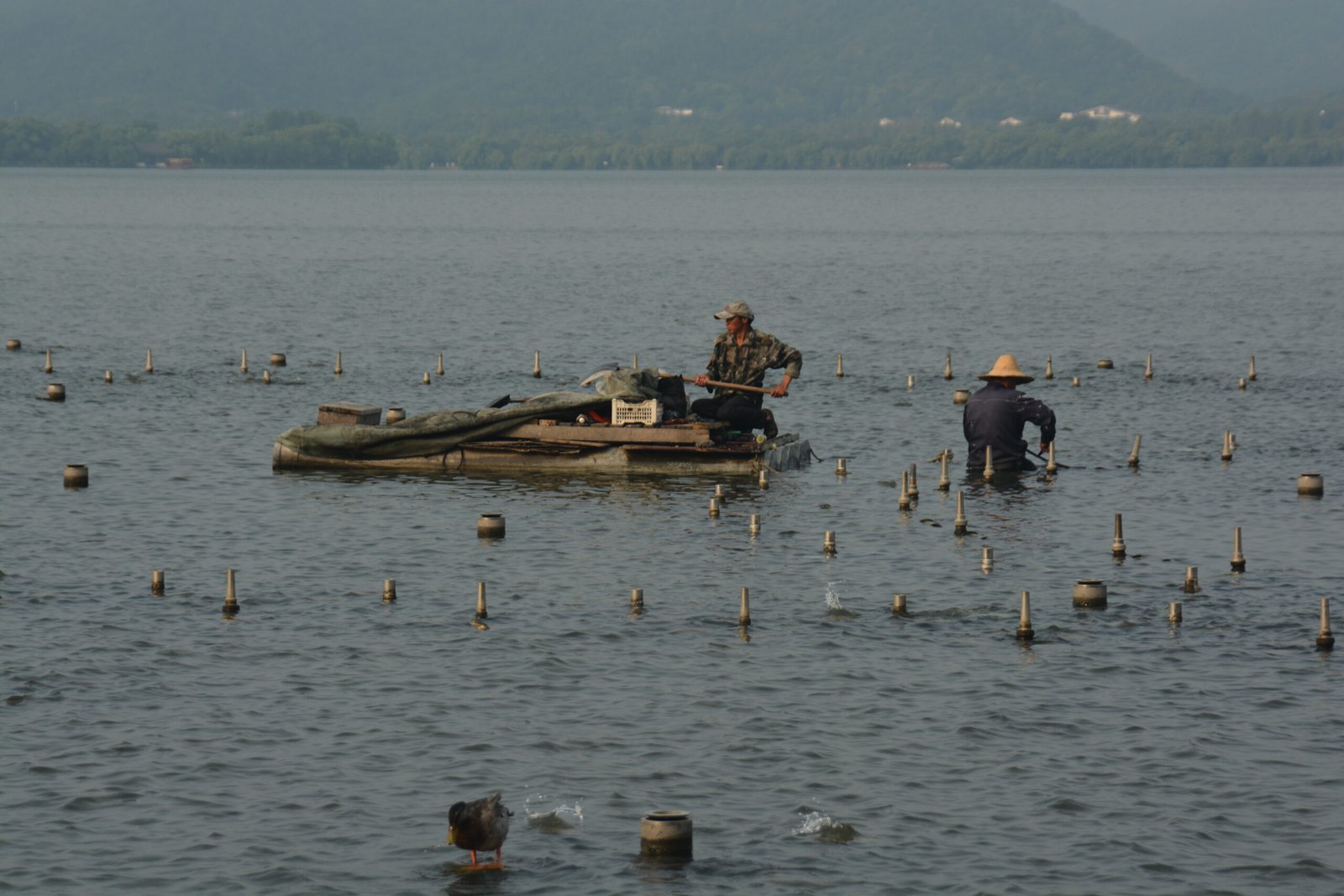
Fishing in West Lake
Two fishermen working their fish traps in West Lake

A Tourist Boat on West Lake
A traditional wooden tourist boat navigating the calm waters of West Lake in Hangzhou. These boats are still propelled with a sculling oar pushed by the operator sitting in the back of the boat.
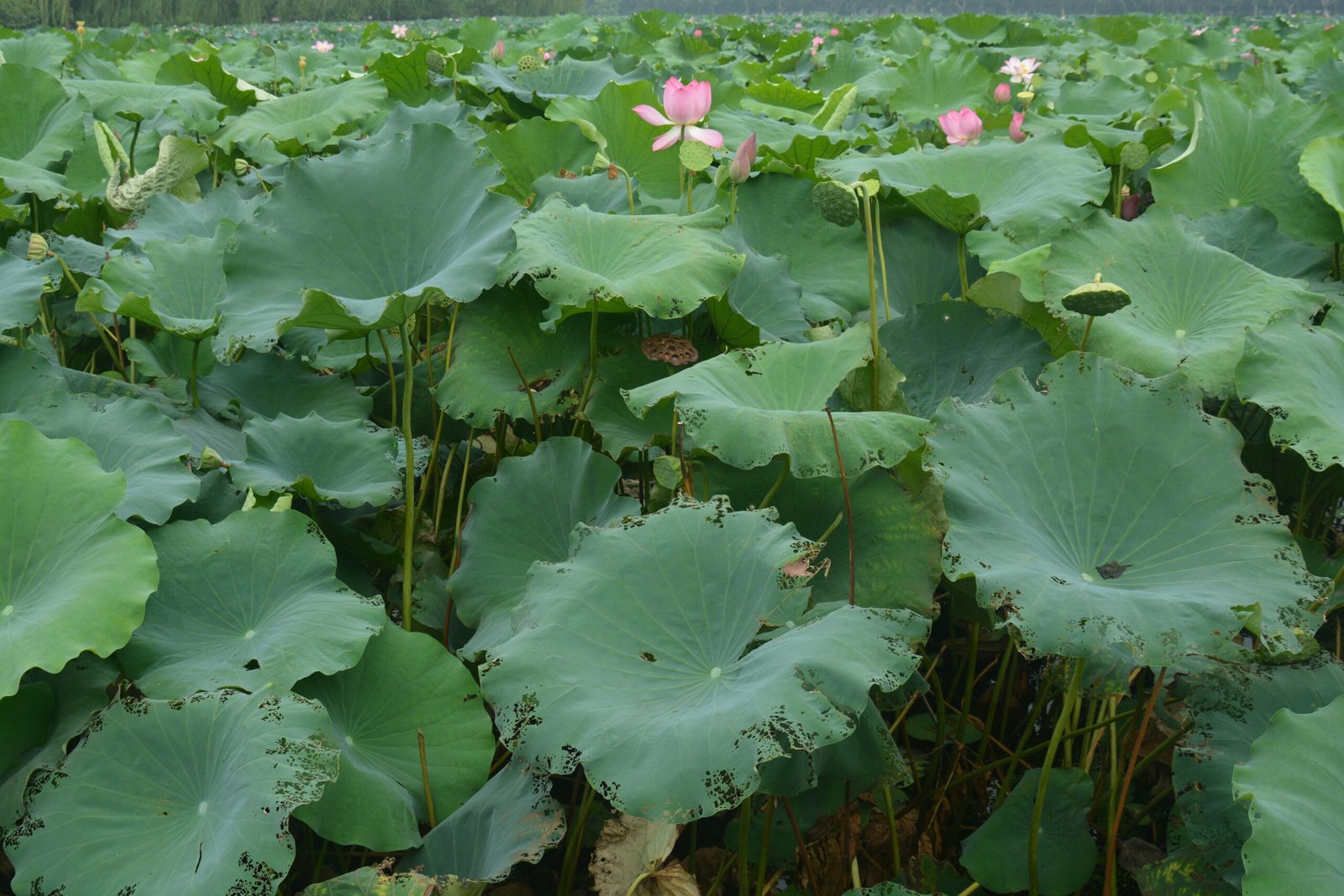
A Field of Lotus Plants
One area of the West Lake was a shallow lagoon filled with lotus plants, many blooming with yellow flowers

Winnie and The Lotus Plants
Winnie sitting on a wall along the West Lake walking path, next to a field of lotus plants.
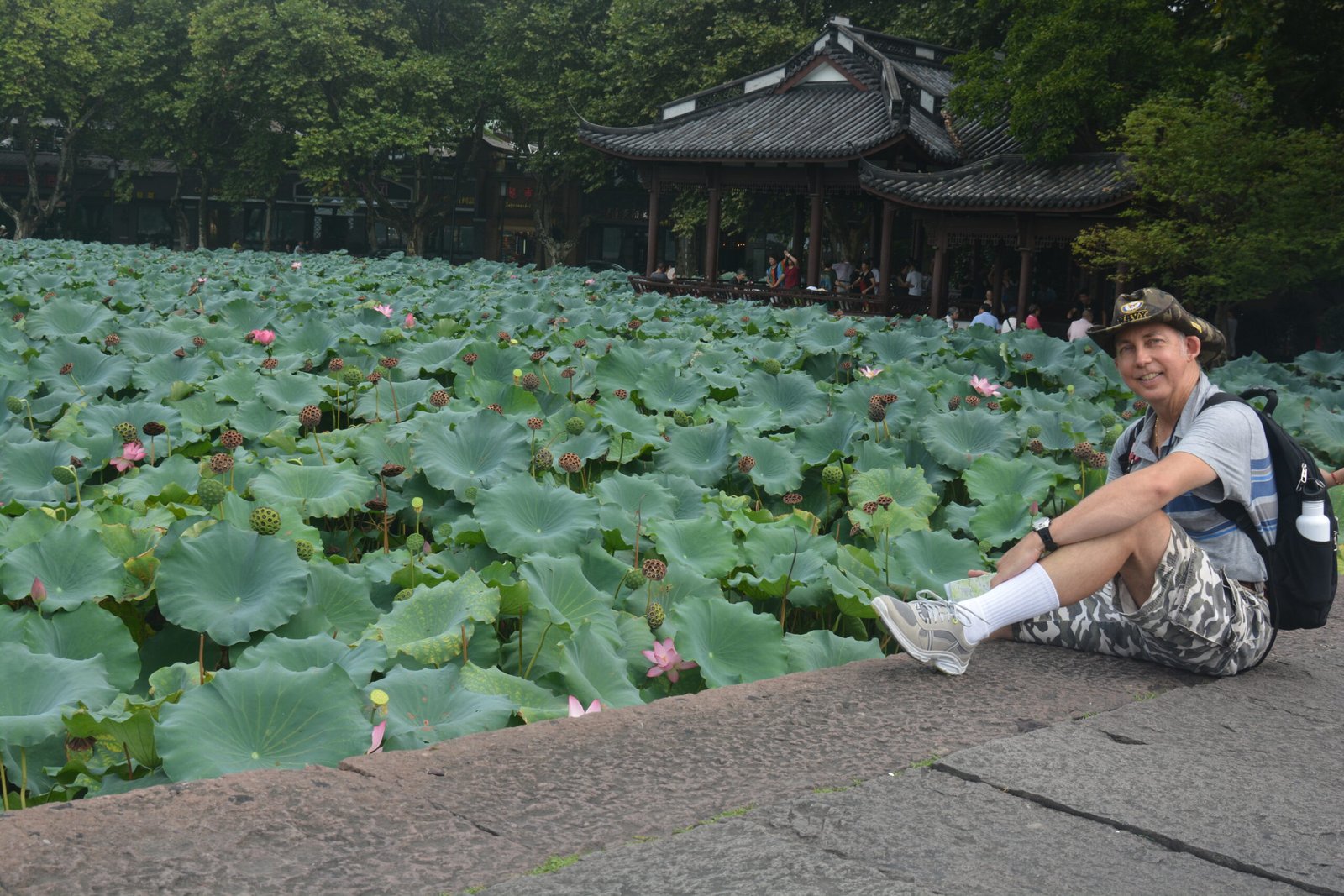
Ron and The Field of Lotus
Ron sitting on a wall along the West Lake walkway, admiring the pond covered with Lotus plants.
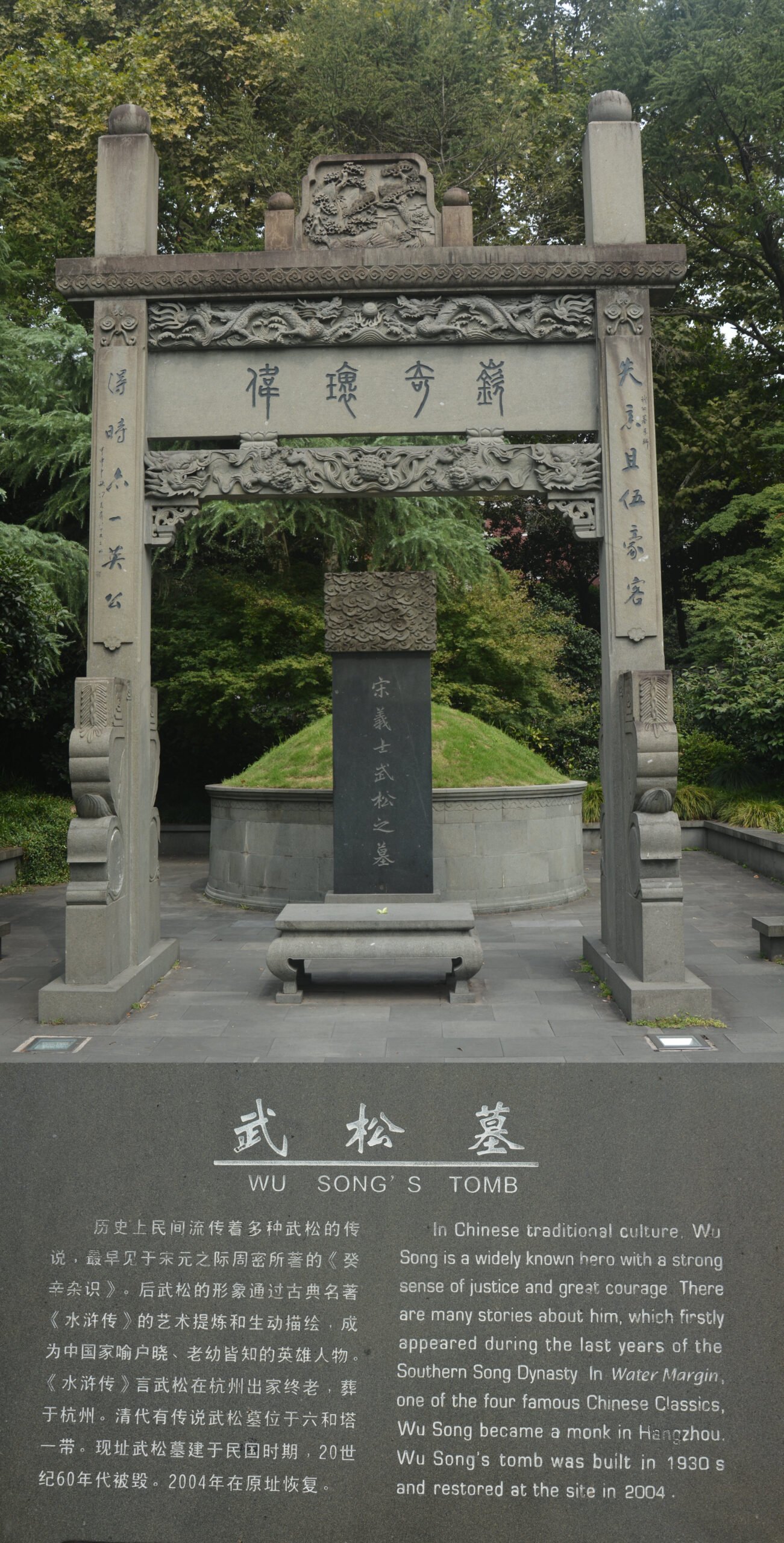
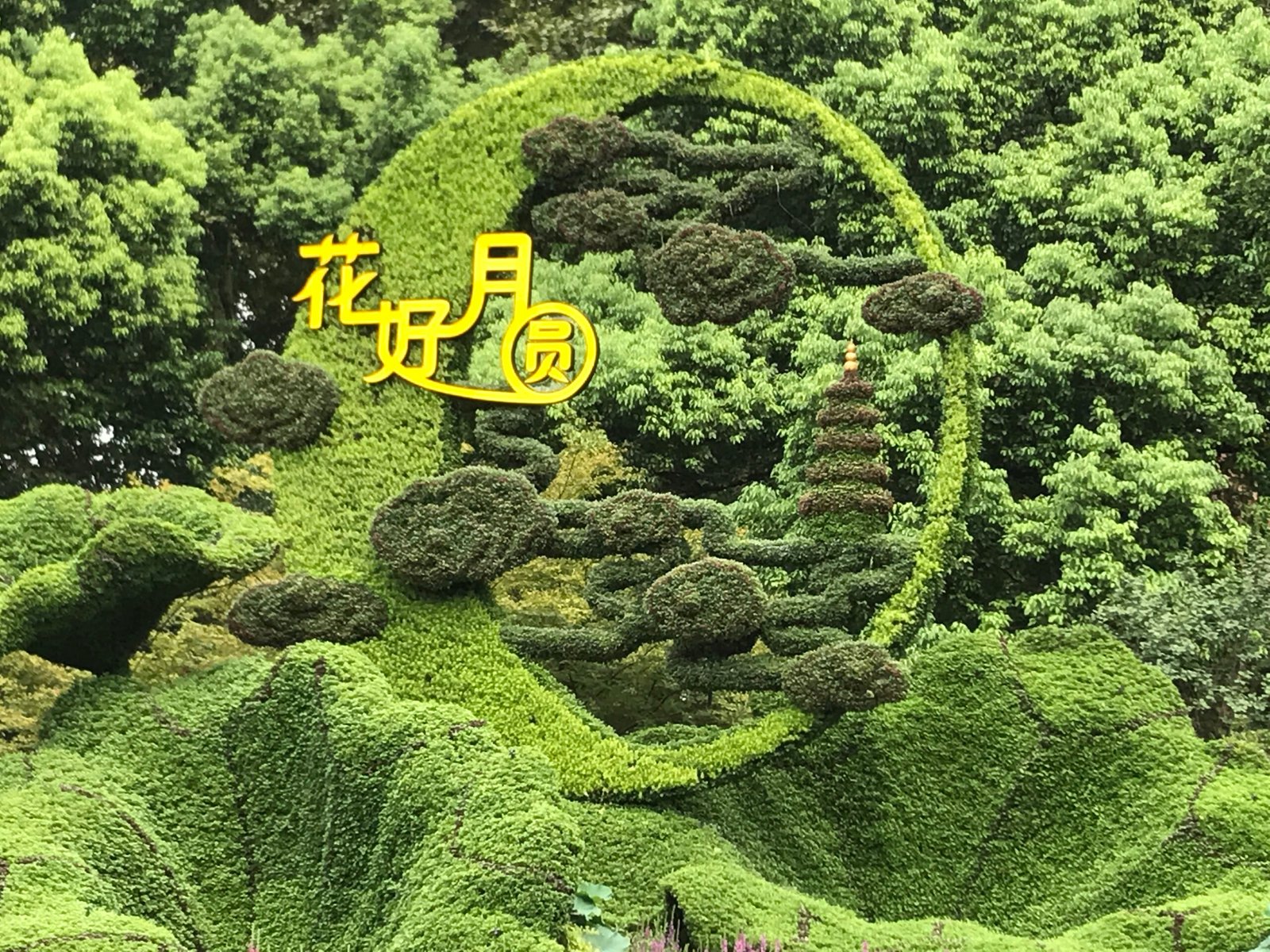
Composite Image of Wu Songs Tomb
A memorial site dedicated to a legendary hero from Chinese folklore, located near West Lake in Hangzhou. Wu Song is a famous character from the classic Chinese novel "Water Margin" (also known as "Outlaws of the Marsh). The tomb was originally built in 1924, demolished in 1964, and subsequently reconstructed near the Xiling Bridge on Beishan Road
Garden Pavillion Near Wu Songs Tomb
A lovely ornamental garden near Wu Songs Tomb along West Lake in Hangzhou
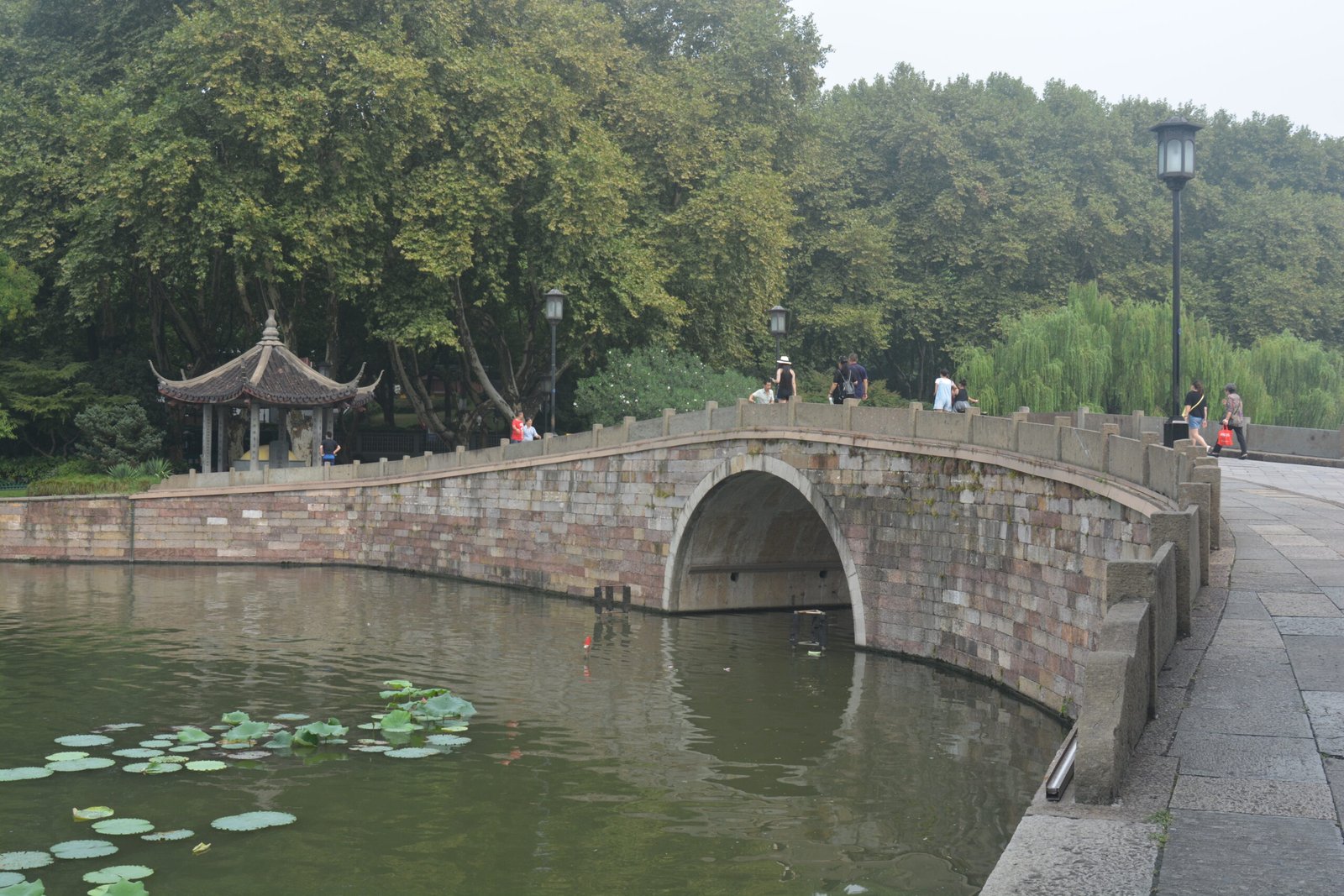
Xiling Bridge on the West Lake in Hangzhou
A view of historic Xiling Bridge. Part of the walking trail around West Lake in Hangzhou, this bridge is famous for its proximity to the tomb of Su Xiaoxiao, a legendary singer and poet from the Southern Qi dynasty.
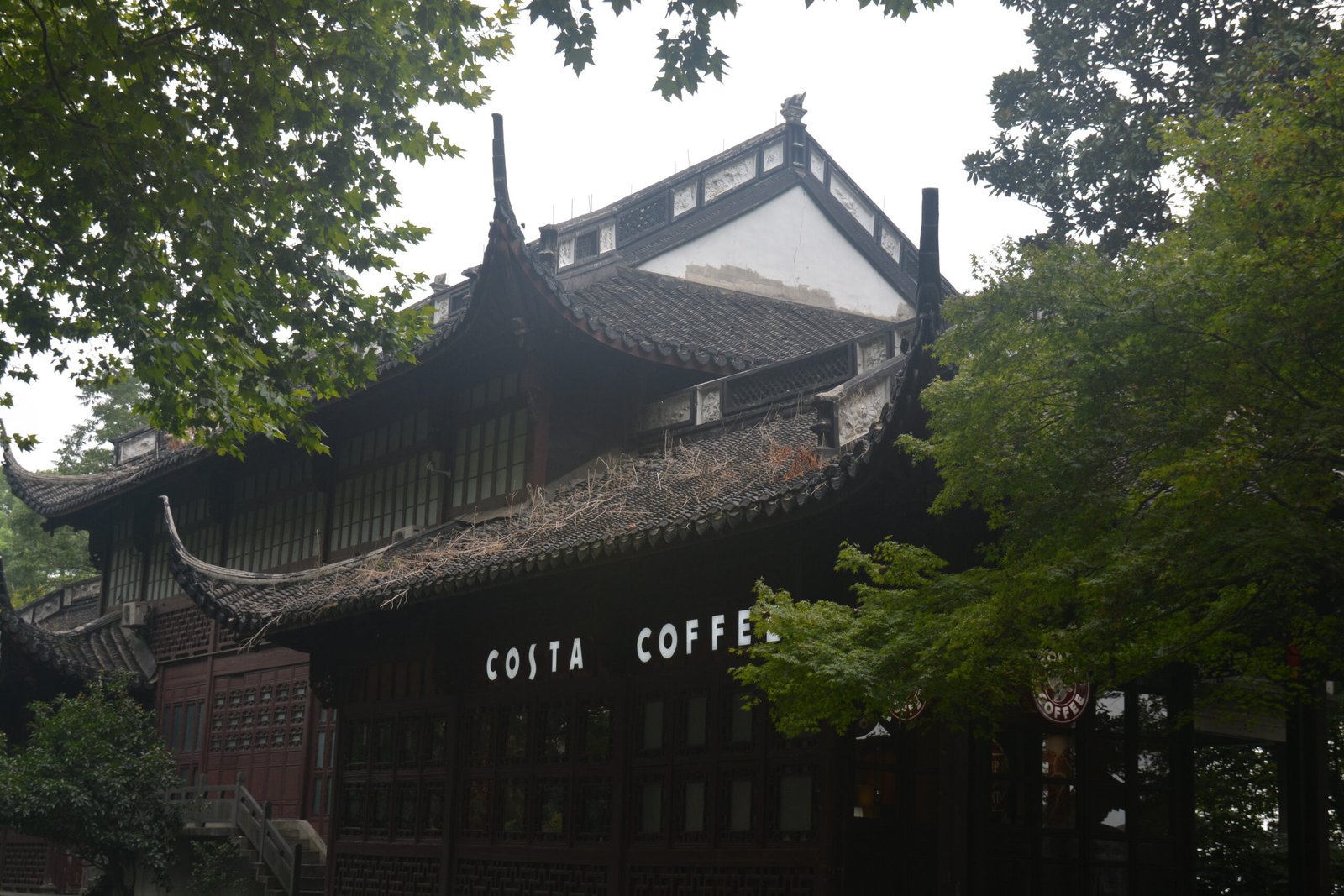
Coffee Comes to Hangzhou
There is a walking trail ringing West lake in Hangzhou, which is a popular spot for locals and tourists. In true Capitalist fashion, a coffee shop along this path does a brisk business.
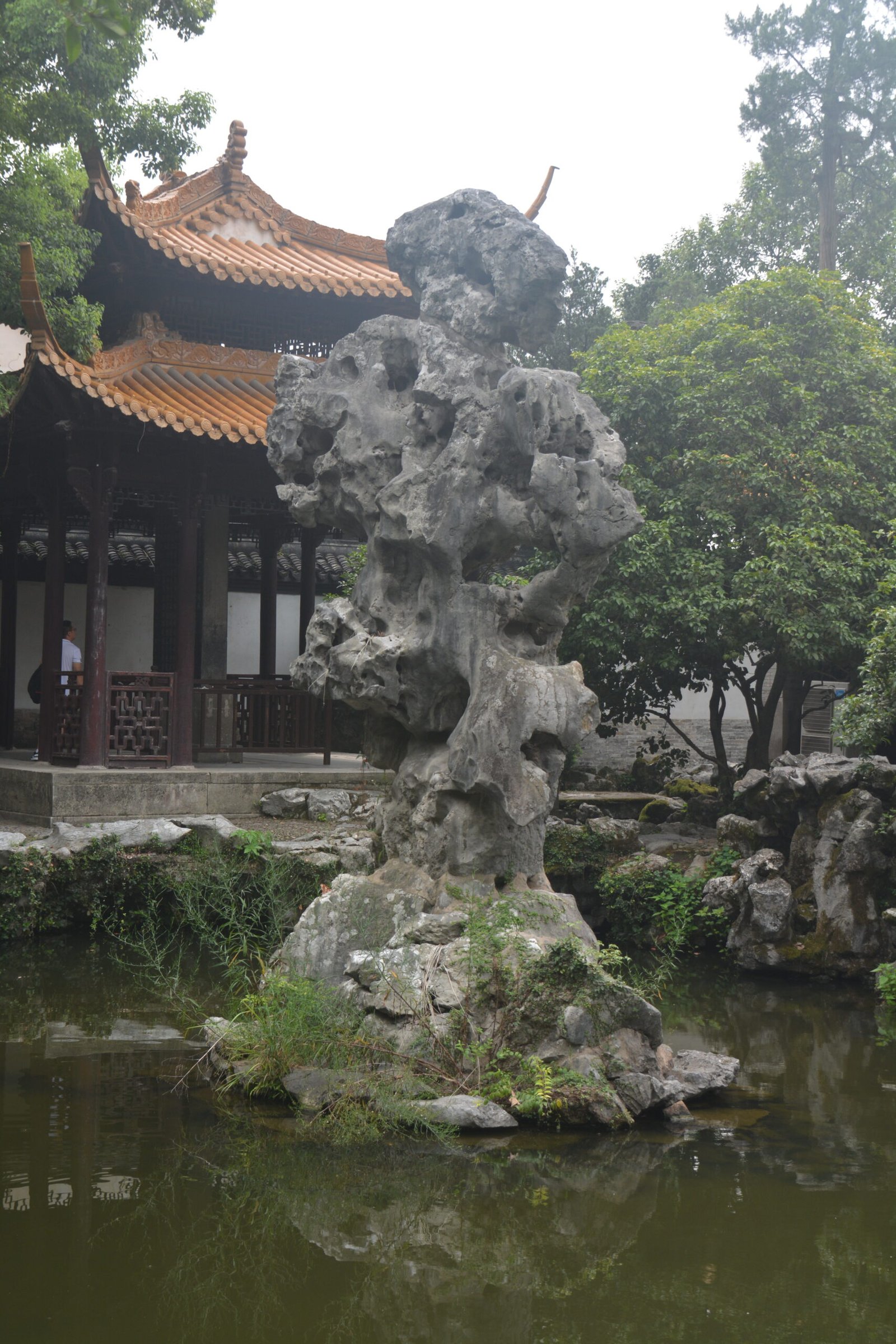
A Traditional Chinese Garden Along West Lake
A traditional Chinese garden set on a pond in a small pavillion on the path around West Lake, These types of are porous, jagged limestone boulders are known as Taihu stones, and are a notable feature of traditional Chinese gardens.
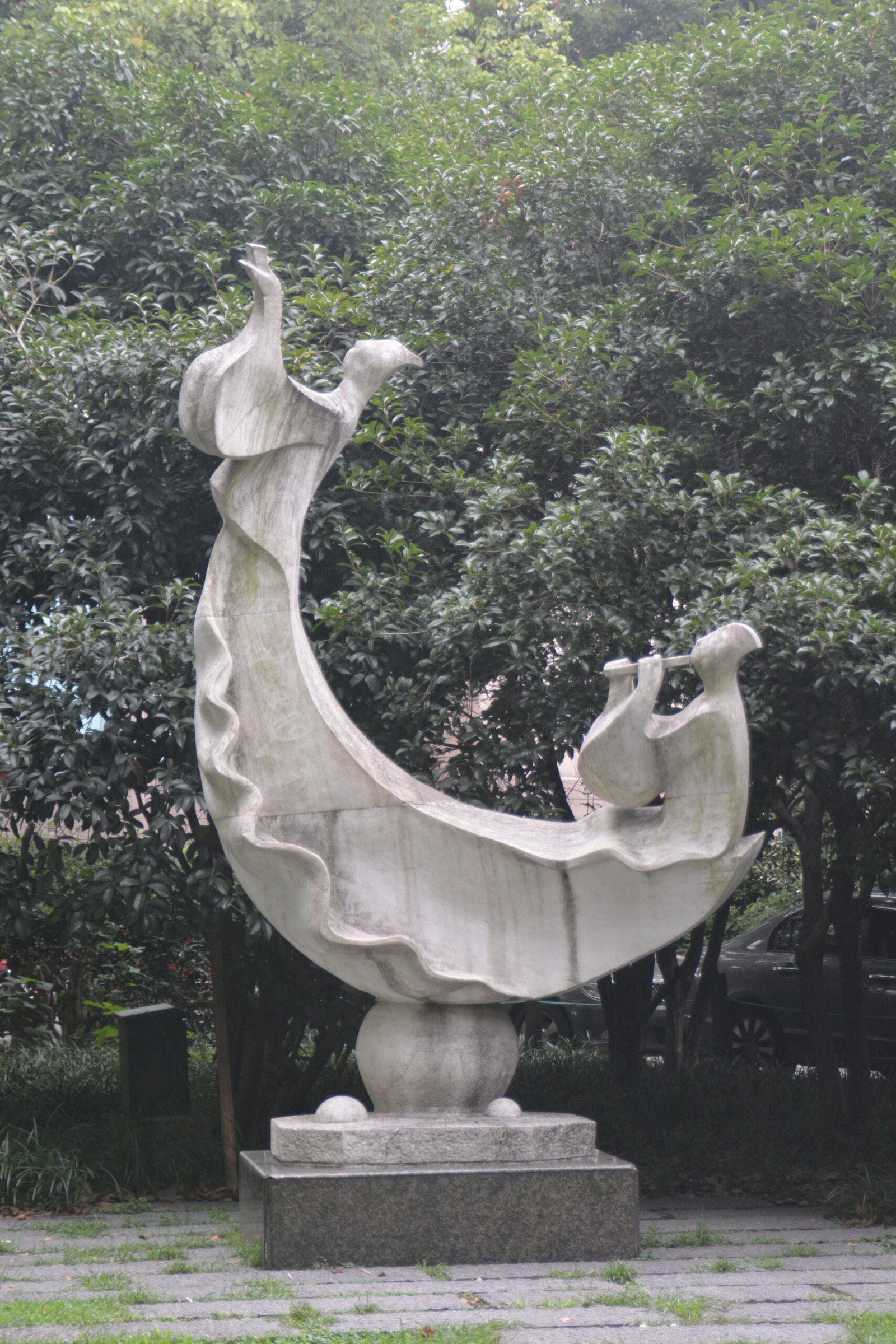
A Sculpture Along West Lake in Hangzhou
A marble sculpture of a stylized boat and two passengers. Located in a small park set along the walking path that surrounds West lake in Hangzhou
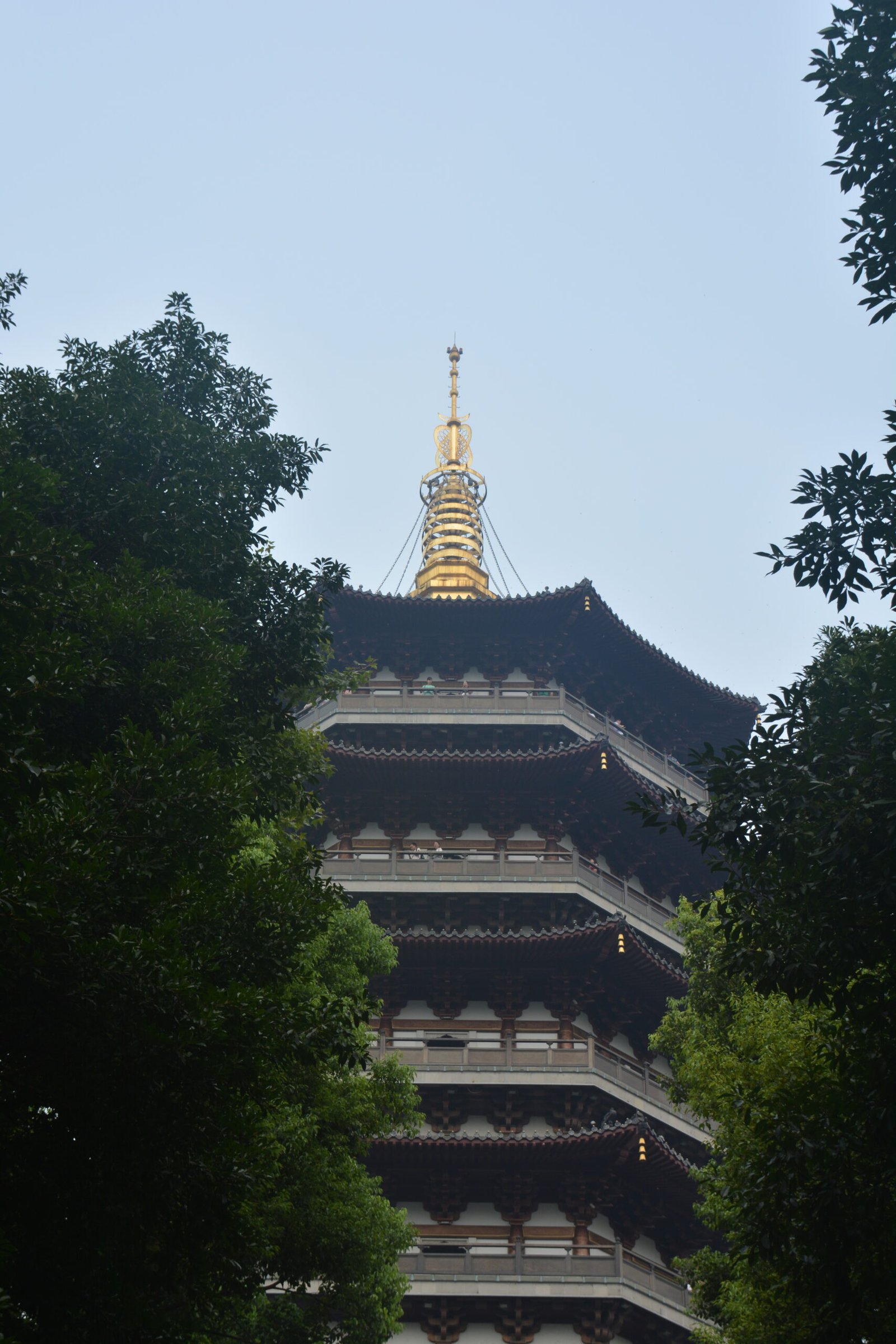
Leifeng Pagoda on West Lake in Hangzhou
A View of Leifeng Pagoda, a historic five-story, eight-sided tower located in Hangzhou. It was originally constructed in AD 975 on Sunset Hill south of West Lake, but over the centuries fell into disrepair. The original structure collapsed in 1924, but a modern replica was built on the site and opened in 2002. This pagoda is famous for its association with the Chinese legend of White Snake.
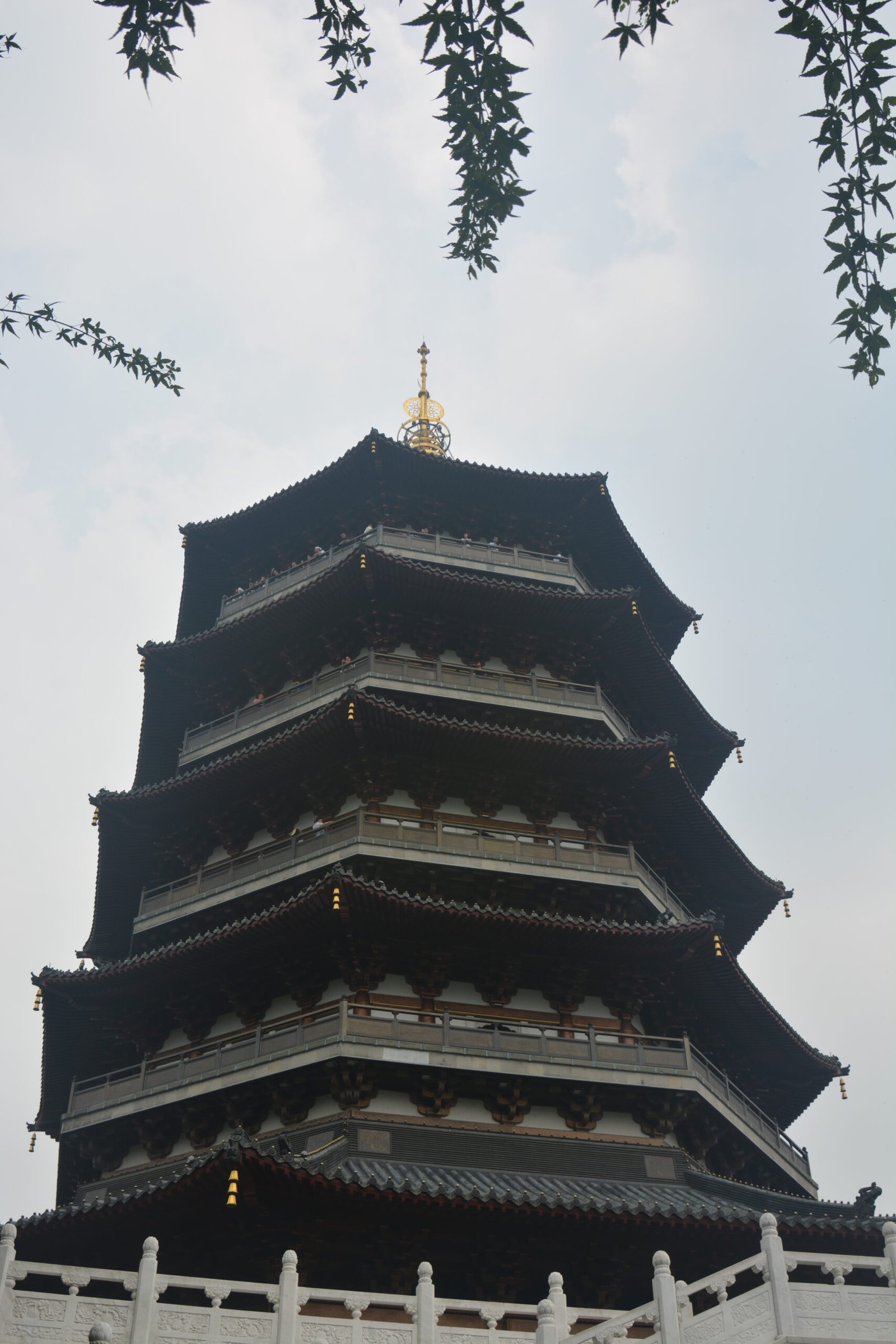
Leifeng Pagoda on West Lake in Hangzhou
A View of Leifeng Pagoda, a historic five-story, eight-sided tower located in Hangzhou. It was originally constructed in AD 975 on Sunset Hill south of West Lake, but over the centuries fell into disrepair. The original structure collapsed in 1924, but a modern replica was built on the site and opened in 2002. This pagoda is famous for its association with the Chinese legend of White Snake.
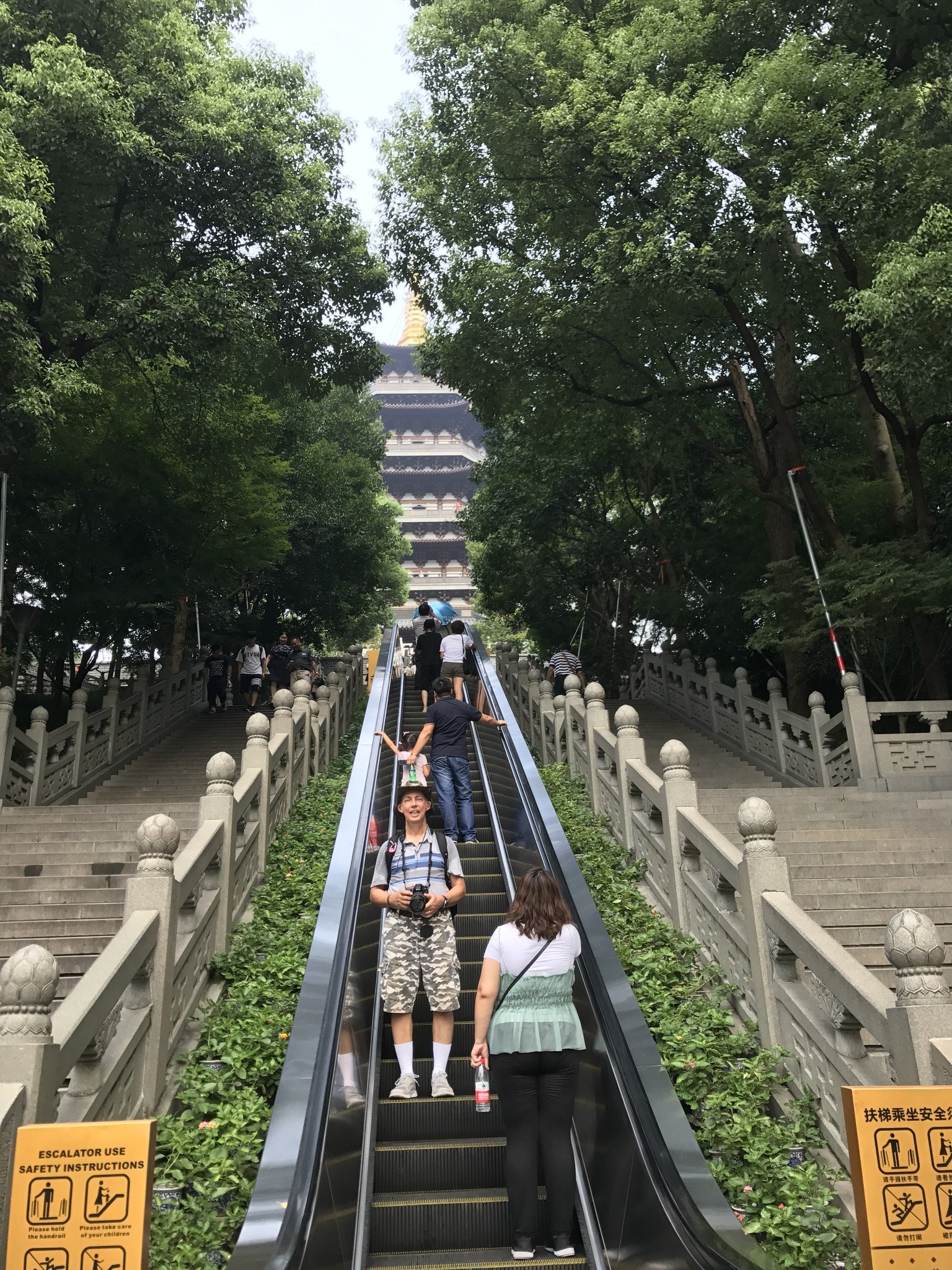
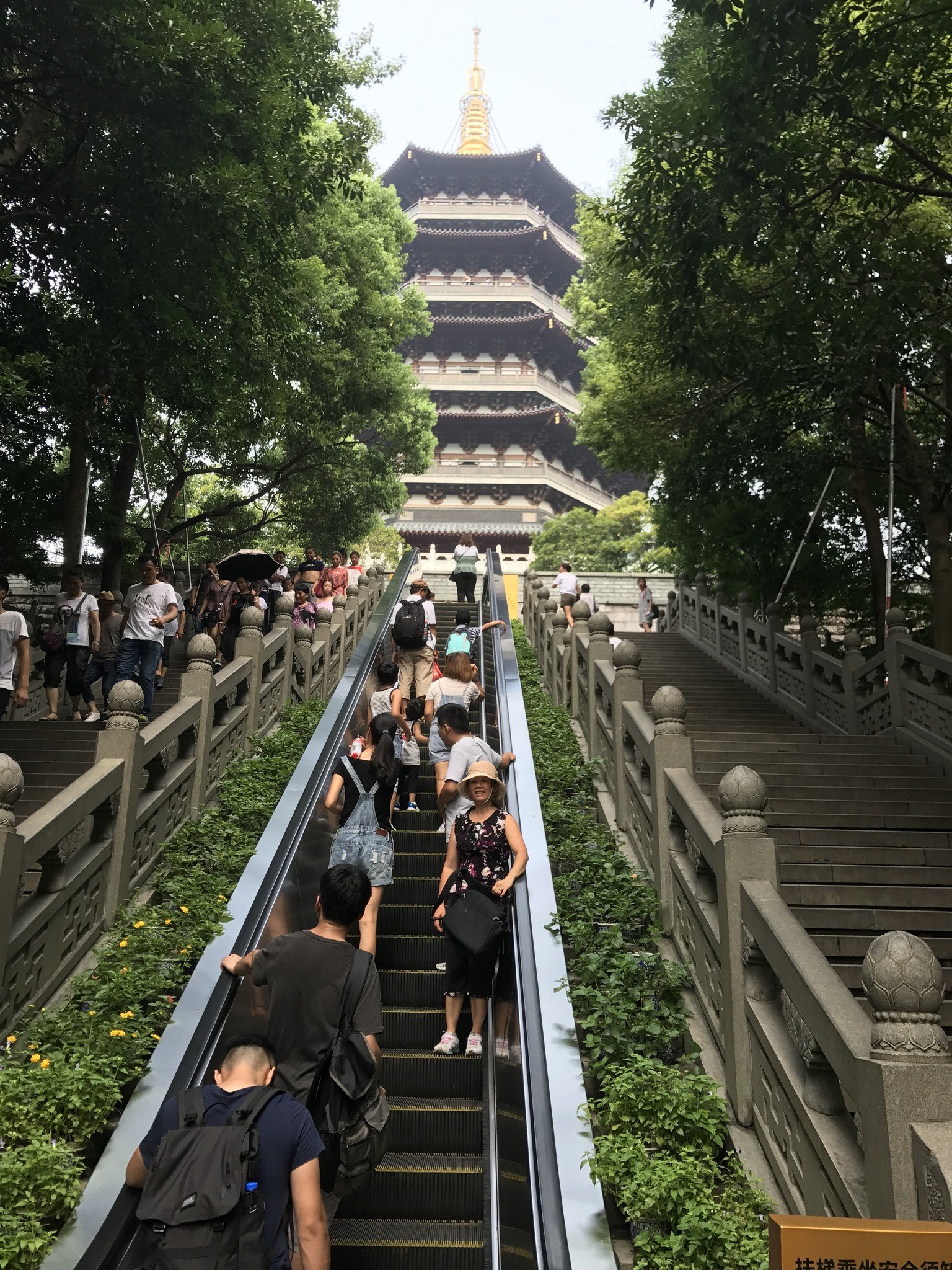
The Leifeng Pagoda in Hangzhou
Ron riding the escalator up to the the Leifeng Pagoda in Hangzhou. This is a modern recreation of a pagoda that was originally built in AD 975, and later destroyed. This modern recreation, located on Sunset Hill, south of West Lake, is a five-story tower. It is the site of the legend of the White Snake, a famous Chinese story.
The Leifeng Pagoda in Hangzhou
Winnie riding the escalator up to the the Leifeng Pagoda in Hangzhou. This is a modern recreation of a pagoda that was originally built in AD 975, and later destroyed. This modern recreation, located on Sunset Hill, south of West Lake, is a five-story tower. It is the site of the legend of the White Snake, a famous Chinese story.
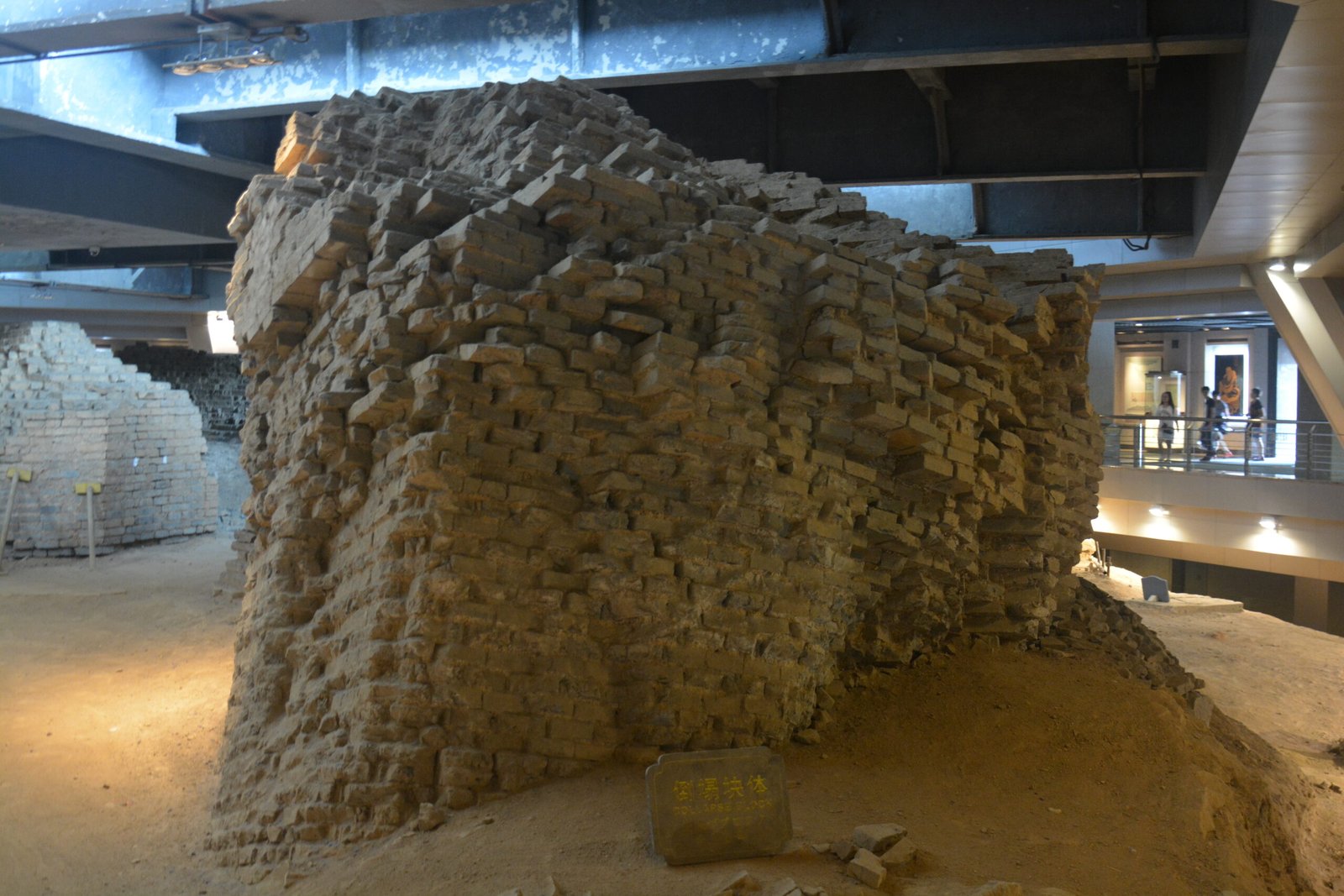
The Ancient Foundation of Leifeng Pagoda
The original pagoda structure of Leifeng Pagoda was built in AD 975. Over the centuries it fell into disrepair and suffered several fires. In 1924 the ruins collapsed, but a modern replica was built on the site and opened in 2002. As part of the reconstruction, the modern construction was designed to protect the original foundations open for viewing.
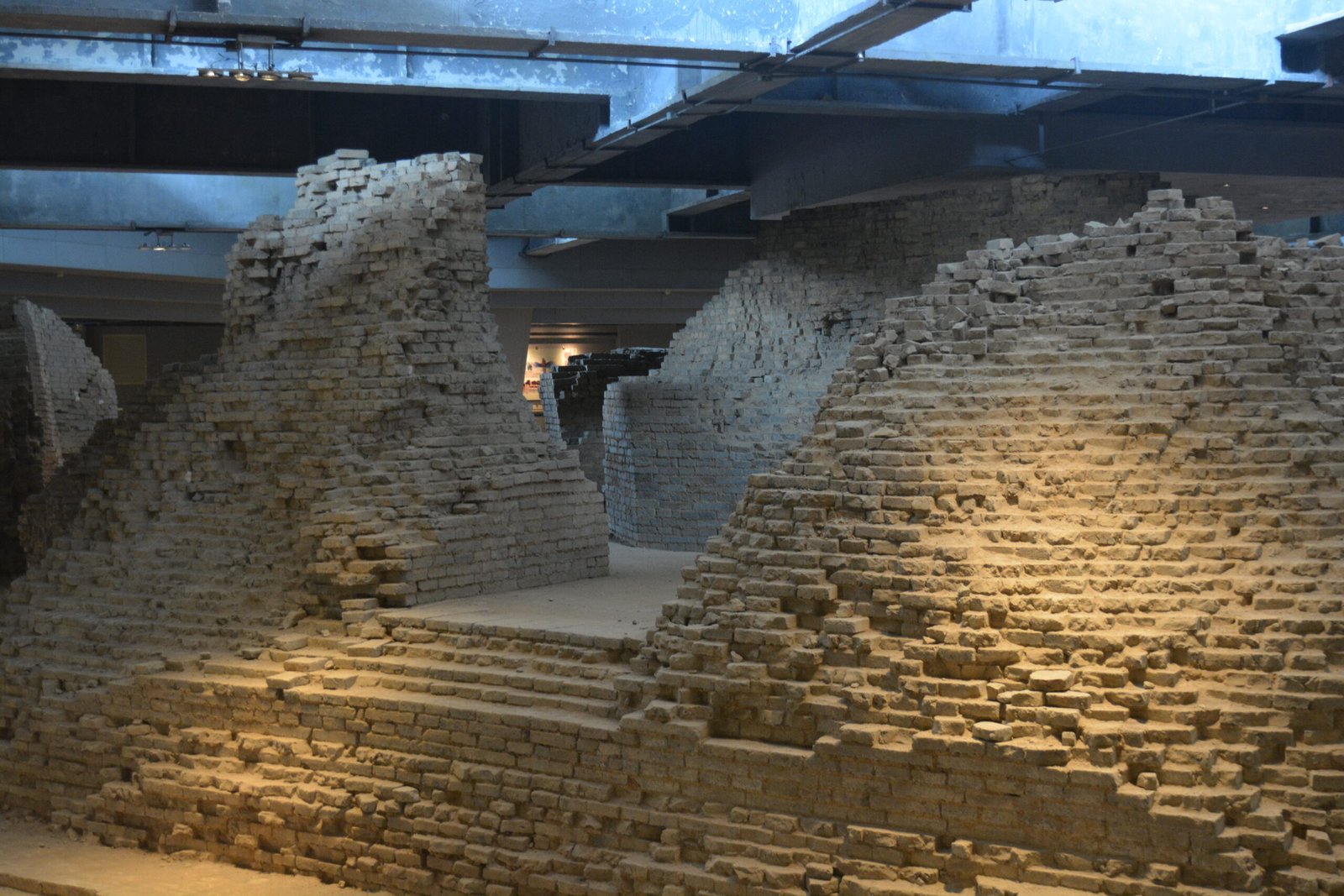
The Ancient Foundation of Leifeng Pagoda
The original pagoda structure of Leifeng Pagoda was built in AD 975. Over the centuries it fell into disrepair and suffered several fires. In 1924 the ruins collapsed, but a modern replica was built on the site and opened in 2002. As part of the reconstruction, the modern construction was designed to protect the original foundations open for viewing.
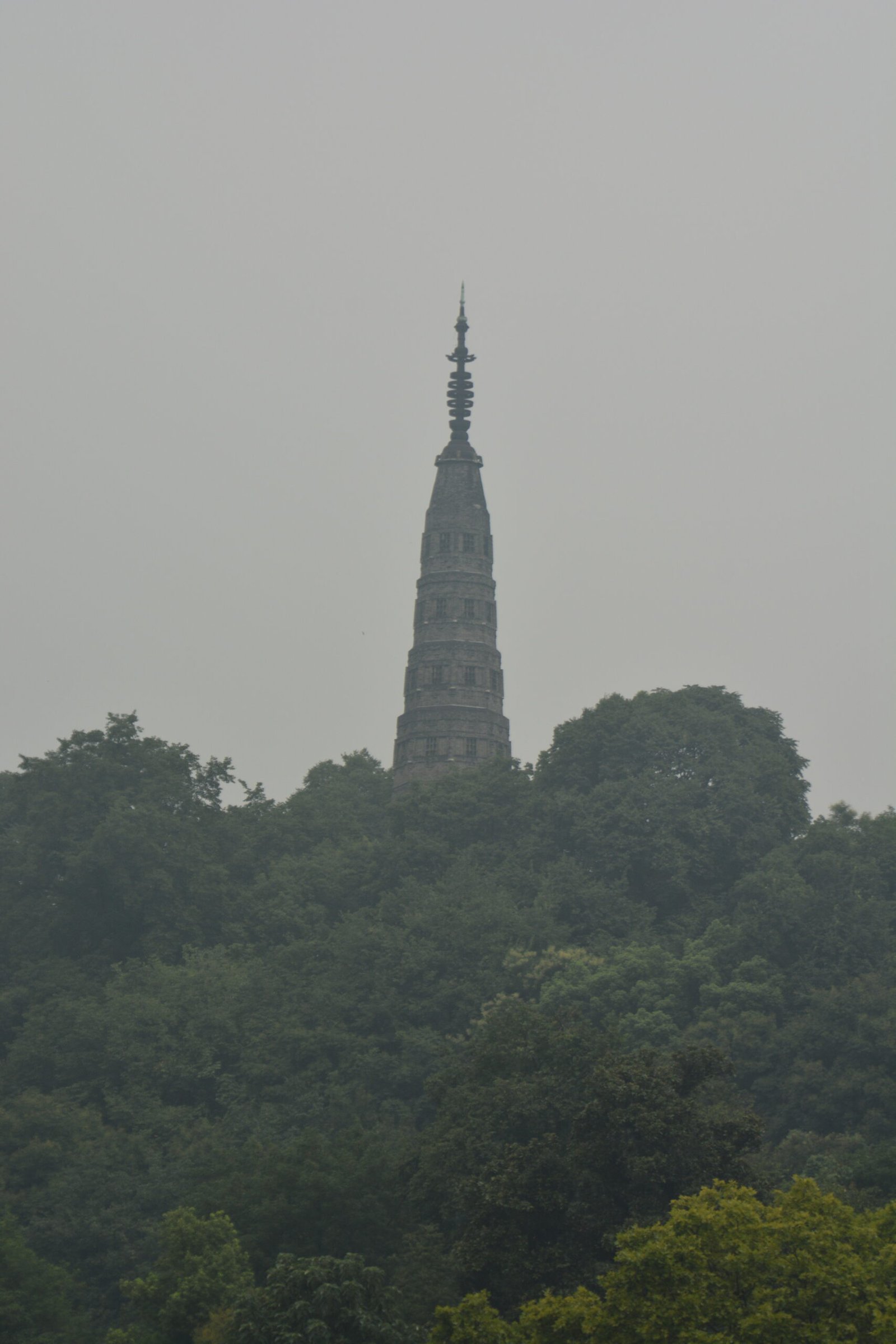
The Baochu Pagoda in Hangzhou
Looking at the Baochu Pagoda from across West Lake in Hangzhou. Originally constructed around 963 AD during the Five Dynasties period, the present reconstruction was completed in 1933. It stands 148 feet tall. The pagoda sits on top of Precious Stone Hill, along the north side of West Lake.
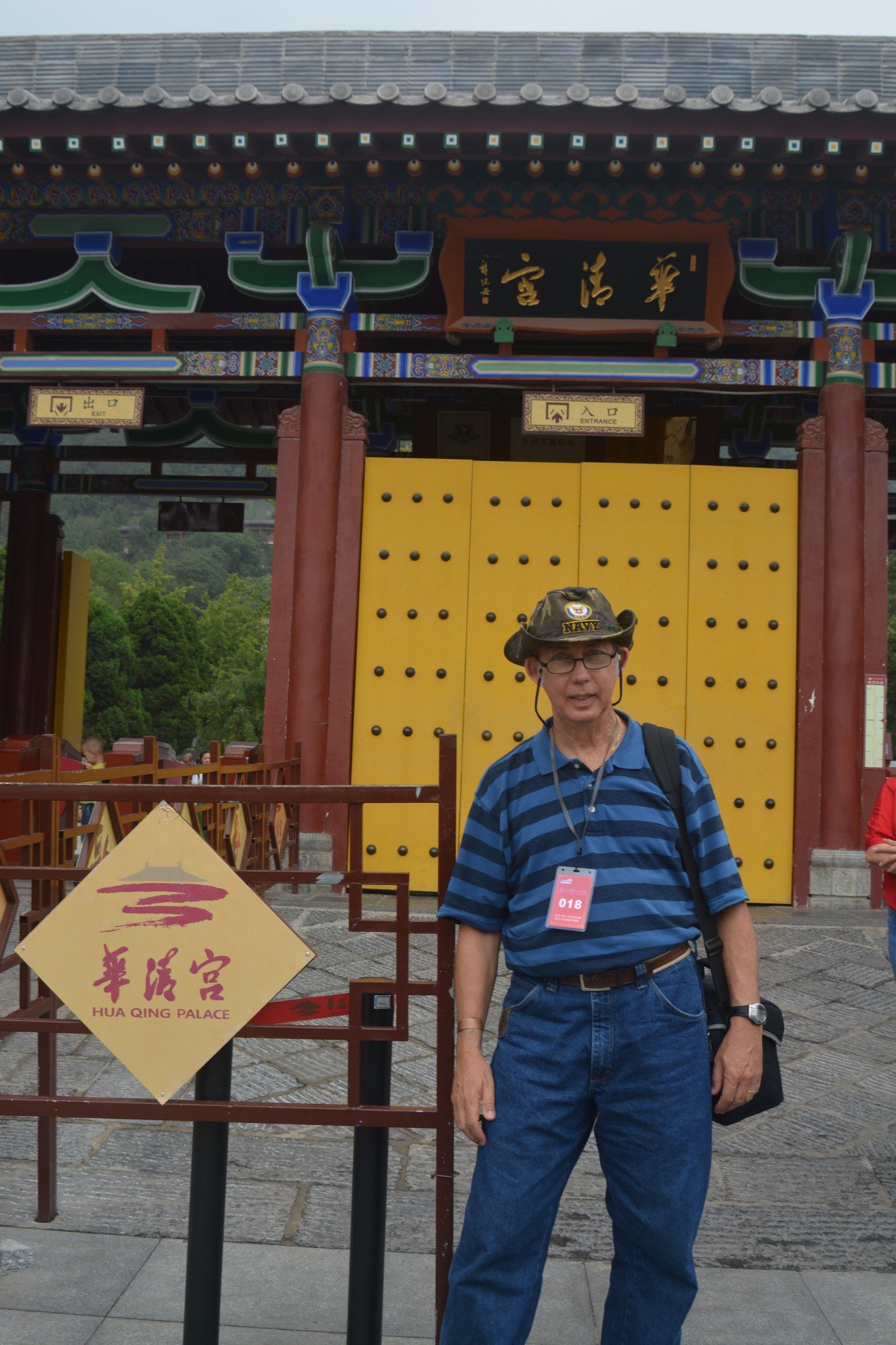
Ron At the Gates of Huaqing Palace
Ron standing in front of the main gate to Huaqing Palace. a historic complex of hot springs and gardens, located at the base of Mount Lishan in Xi'an, China. This site has a 3,000-year history in Chinese culture.
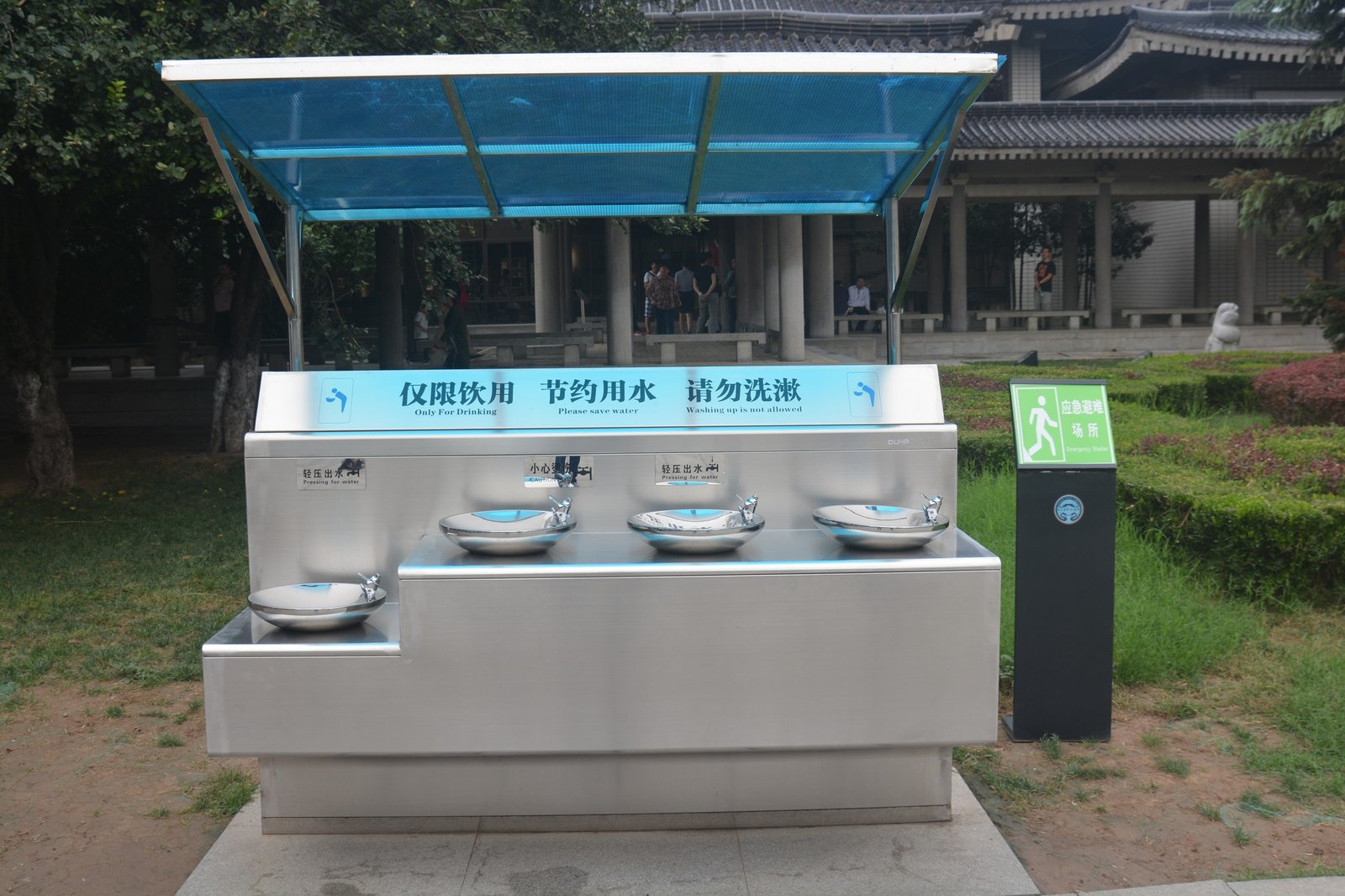
A Modern Drinking Fountain at Huaqing Palace
A Modern Drinking Fountain at Huaqing Palace. This site sees heavy tourism.
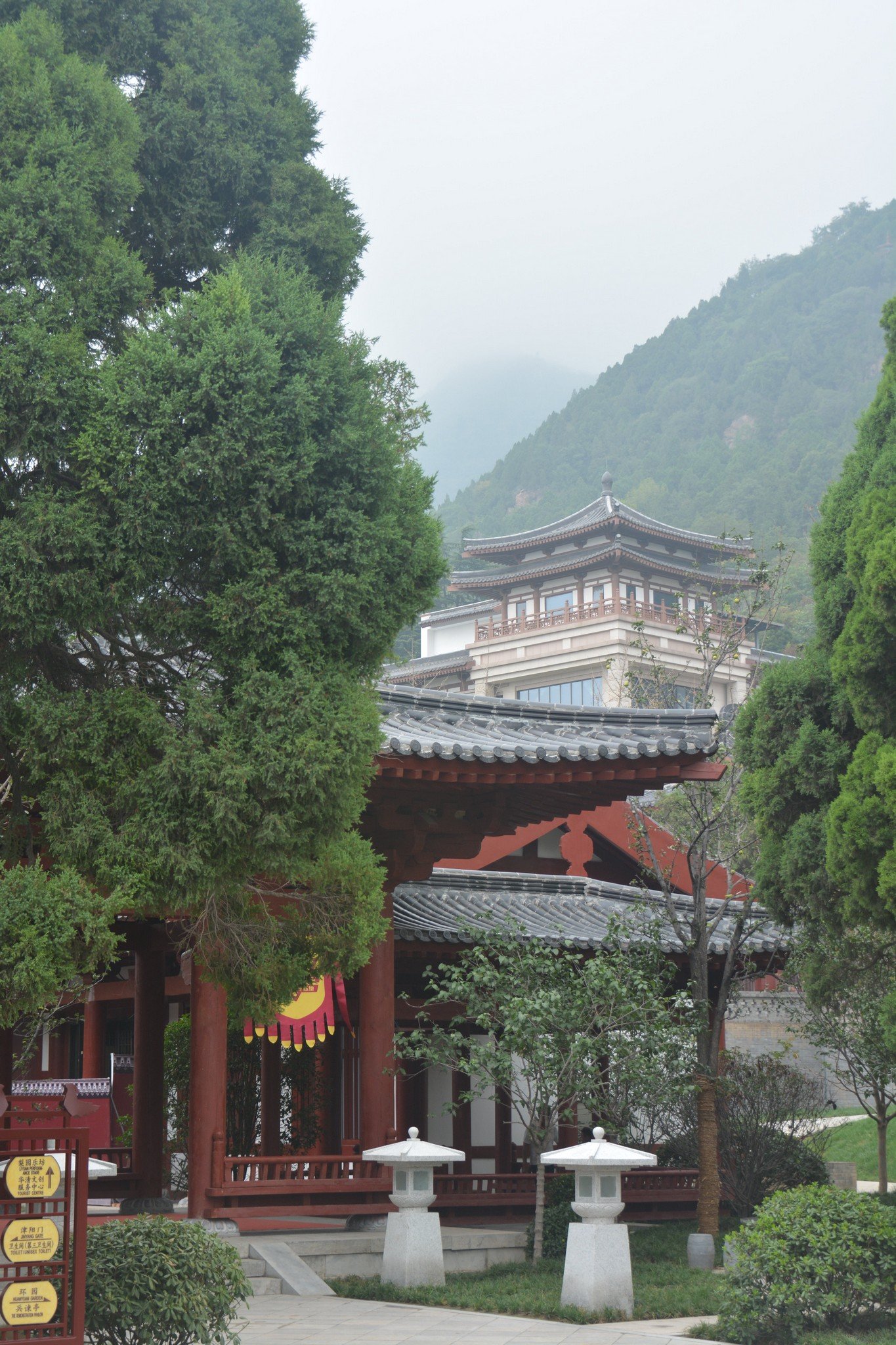
Huaqing Palace Near Xi'an
A view of Huaqing Palace, a historic complex of hot springs and gardens, located at the base of Mount Lishan in Xi'an, China. It served as a popular getaway spot for numerous Chinese emperors throughout history. During the Chinese civil war Mao Zedong's army headquartered here.
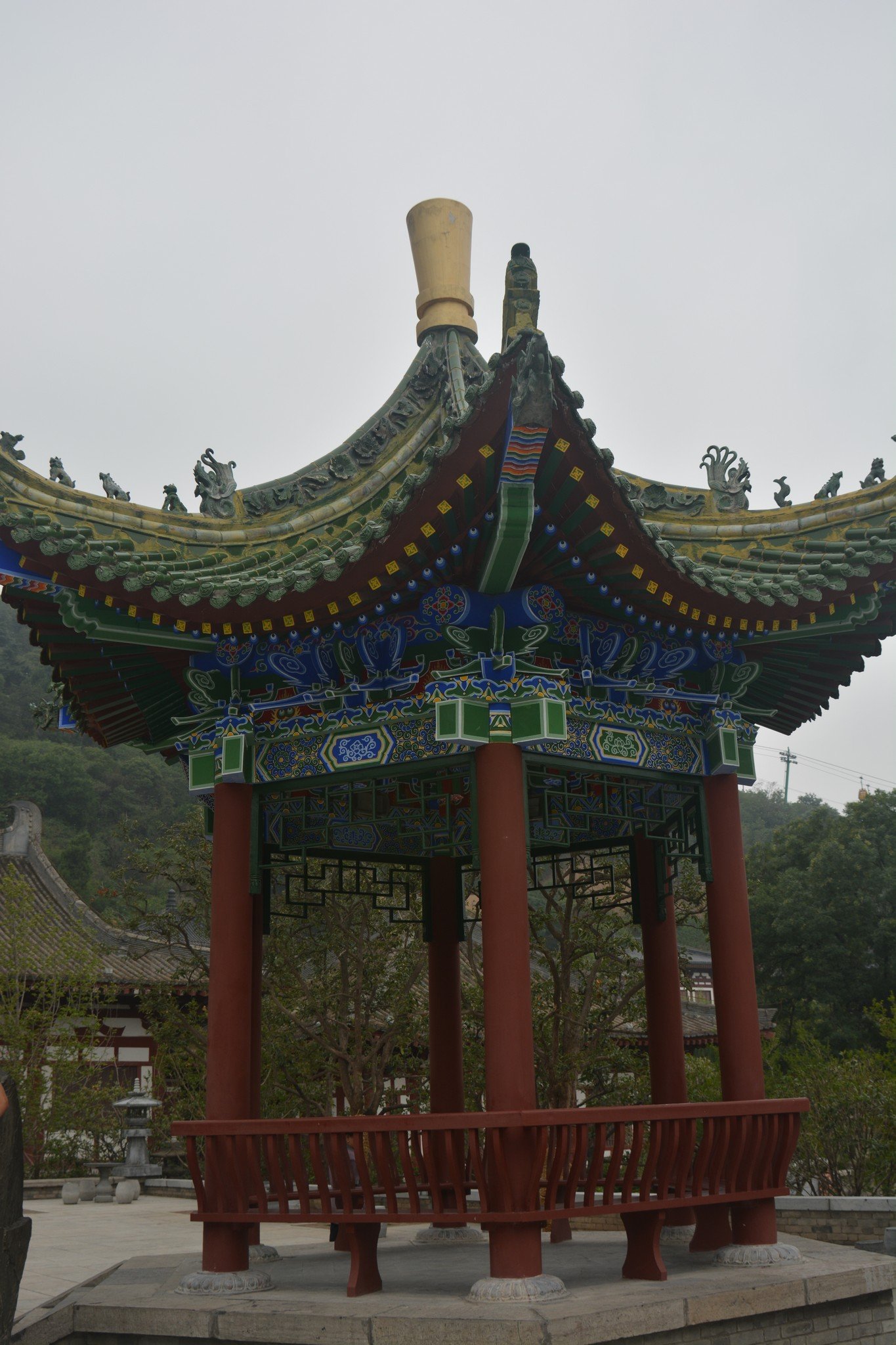
A Traditional Pavilion at Huaqing Palace
A traditional pavilion at the Huaqing Pool, also known as the Huaqing Palace, located at the foot of Mount Li near Xi'an, China.
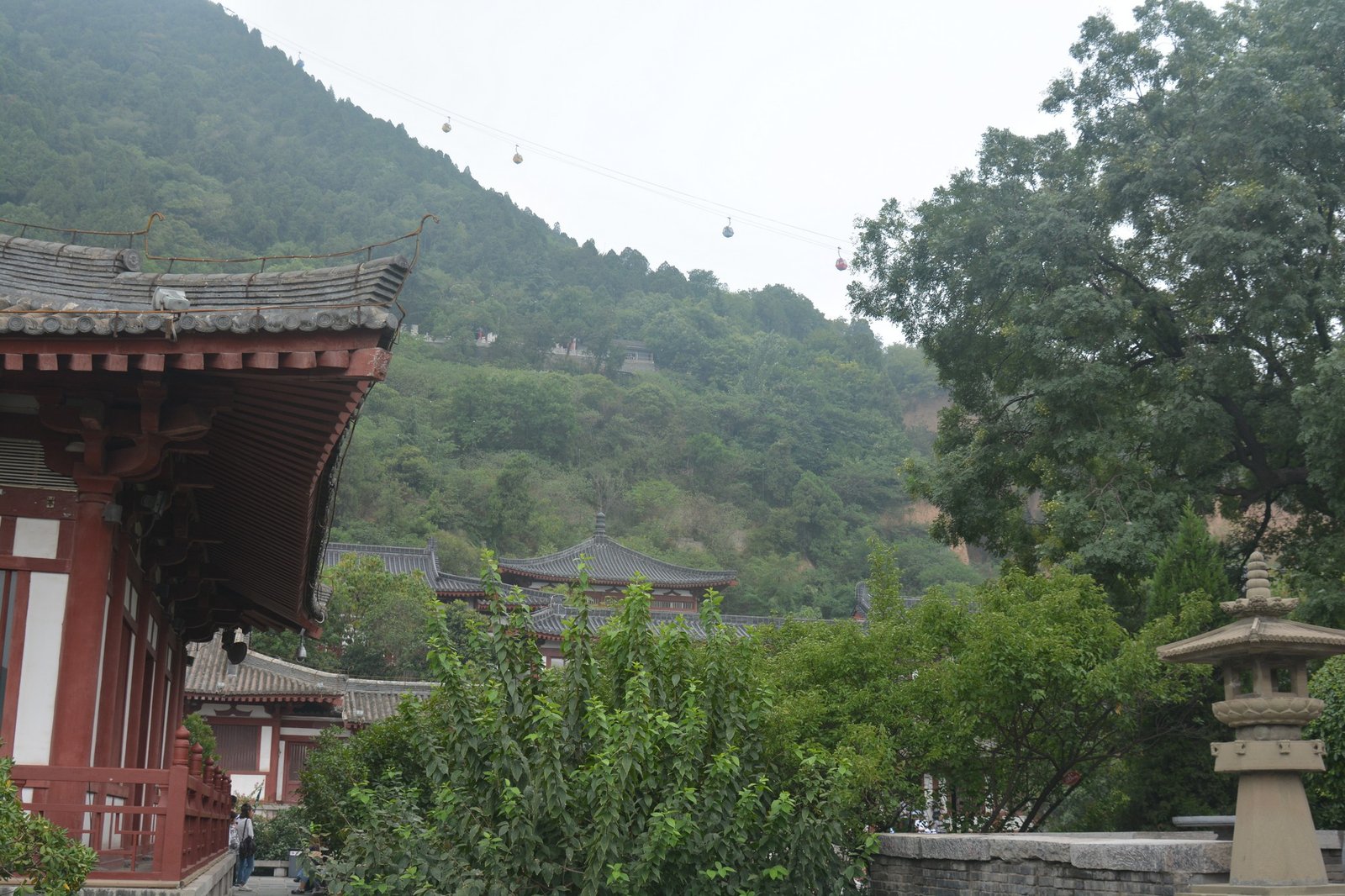
A View of Huaqing Palace
A view of Huaqing Palace, also known as the Huaqing Hot Springs, located at the northern foot of Mount Lishan in the Lintong District of Xi'an, China. This site features traditional Tang Dynasty architecture, beautiful gardens, and provides a backdrop for cultural performances.
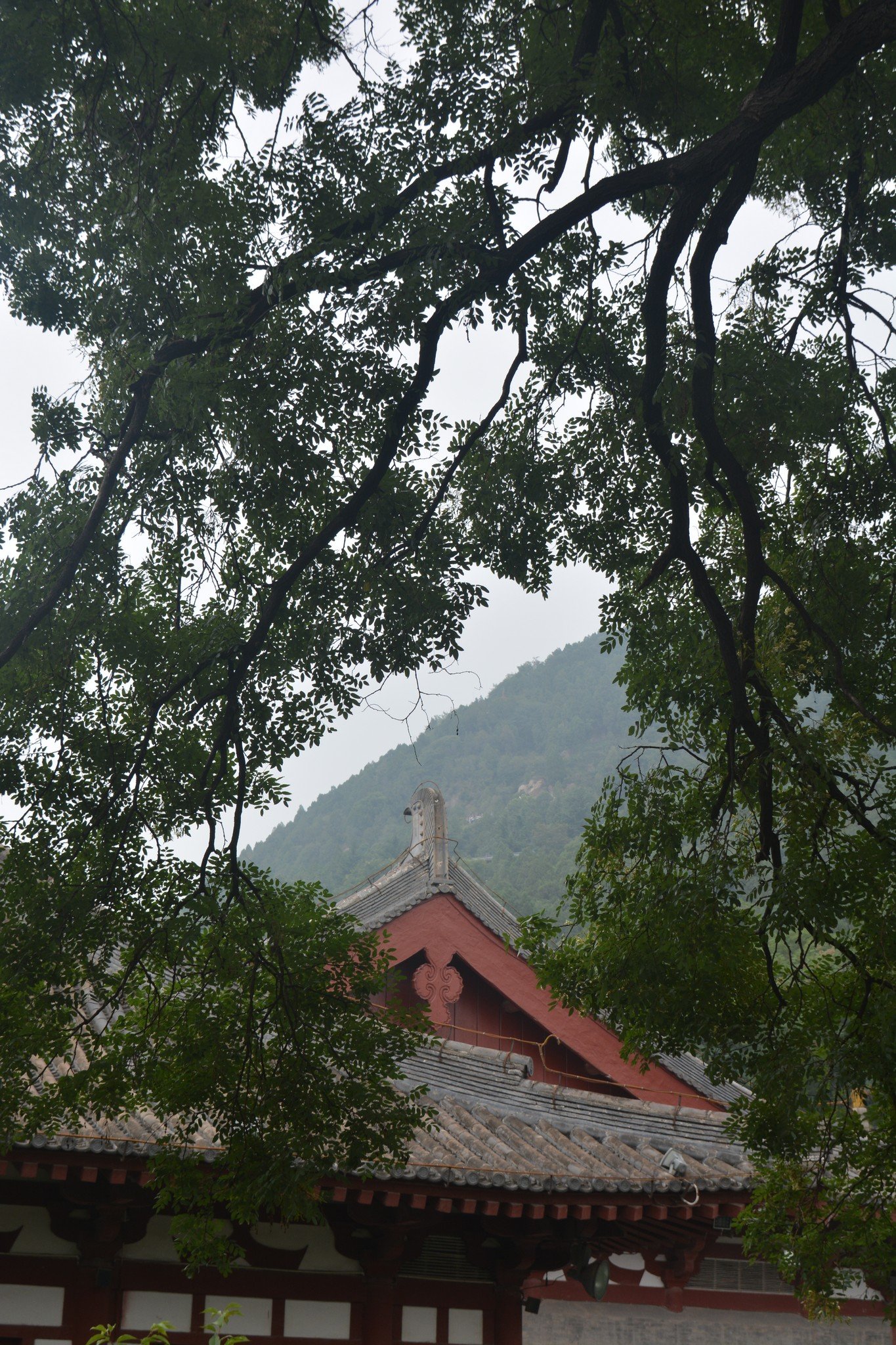
A Rooftop View of Huaqing Palace
Looking through the trees at one of the lovely rooftops in Huaqing Palace.
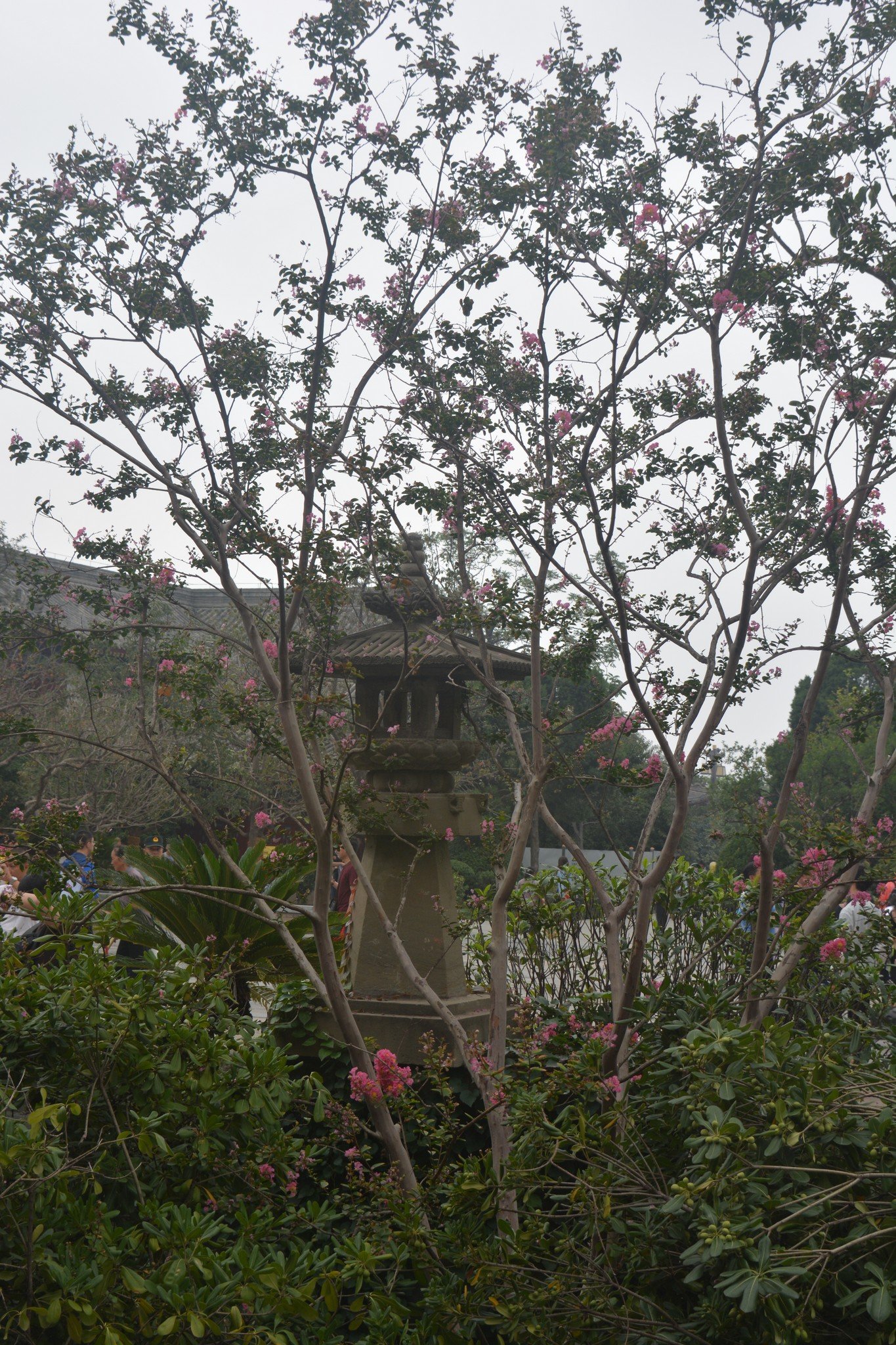
a Crape Myrtle Tree in Huaqing Palace
Looking through a Crape Myrtle tree at a garden pavilion in Huaqing Palace
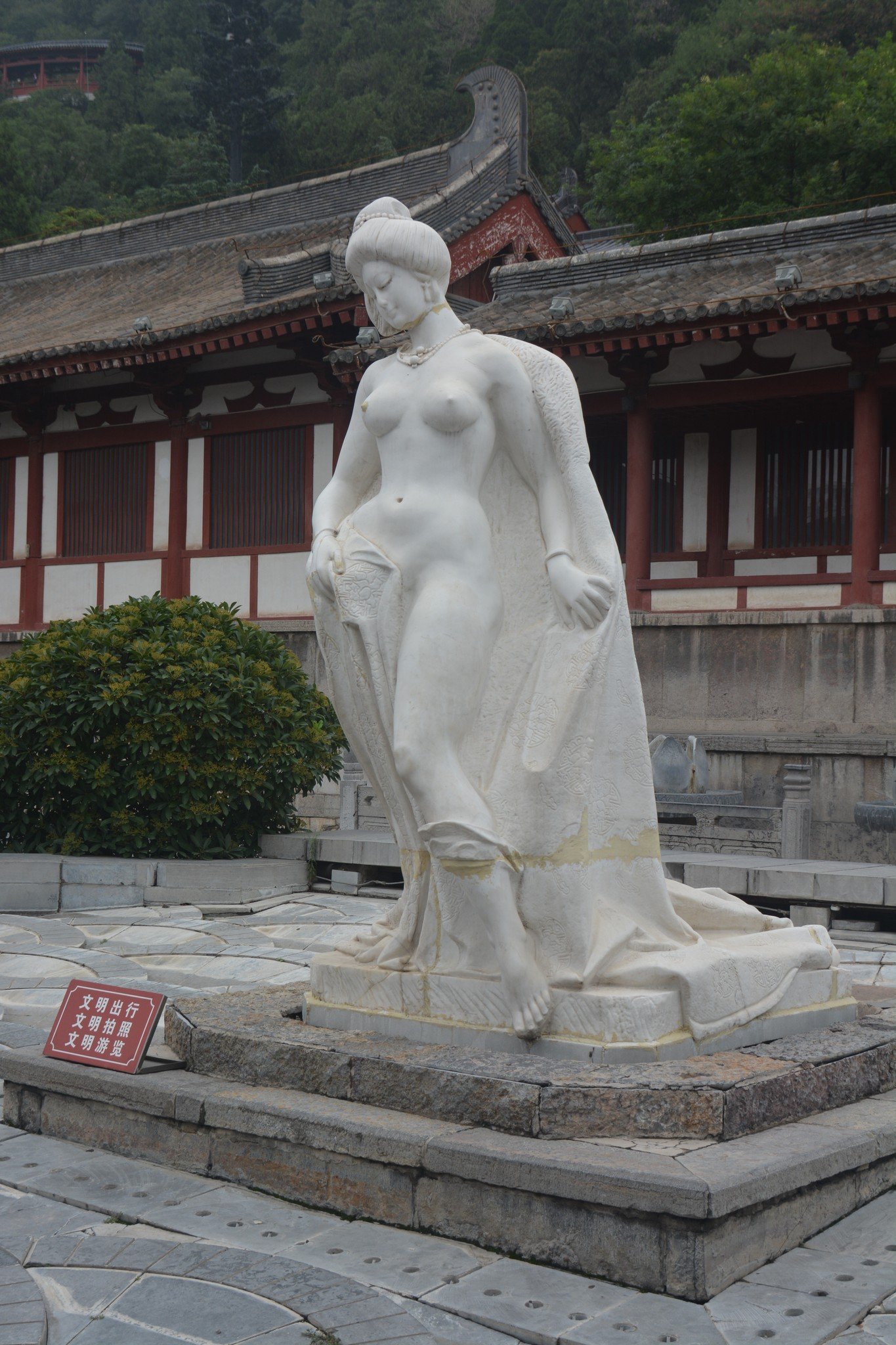
A statue of Yang Guifei at Huaqing Palace
A statue of Yang Guifei, a famous imperial concubine of Emperor Xuanzong during the Tang Dynasty, located at the Huaqing Palace hot springs in Xi'an, China. The site is renowned for its connection to the romantic love story between the Emperor and Yang Guifei.
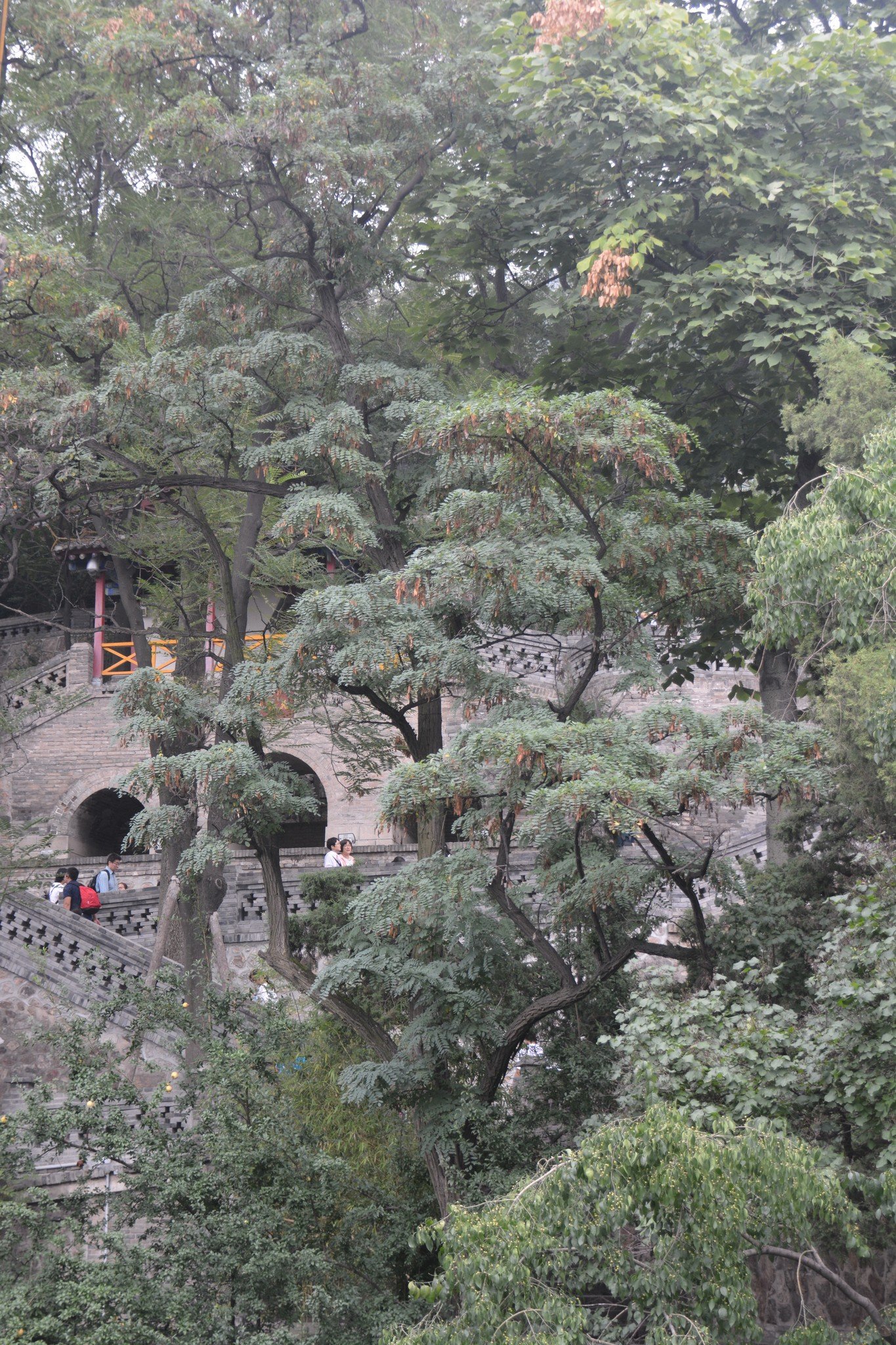
A Garden at Huaqing Palace
A Garden at Huaqing Palace hot springs in Xi'an, China.
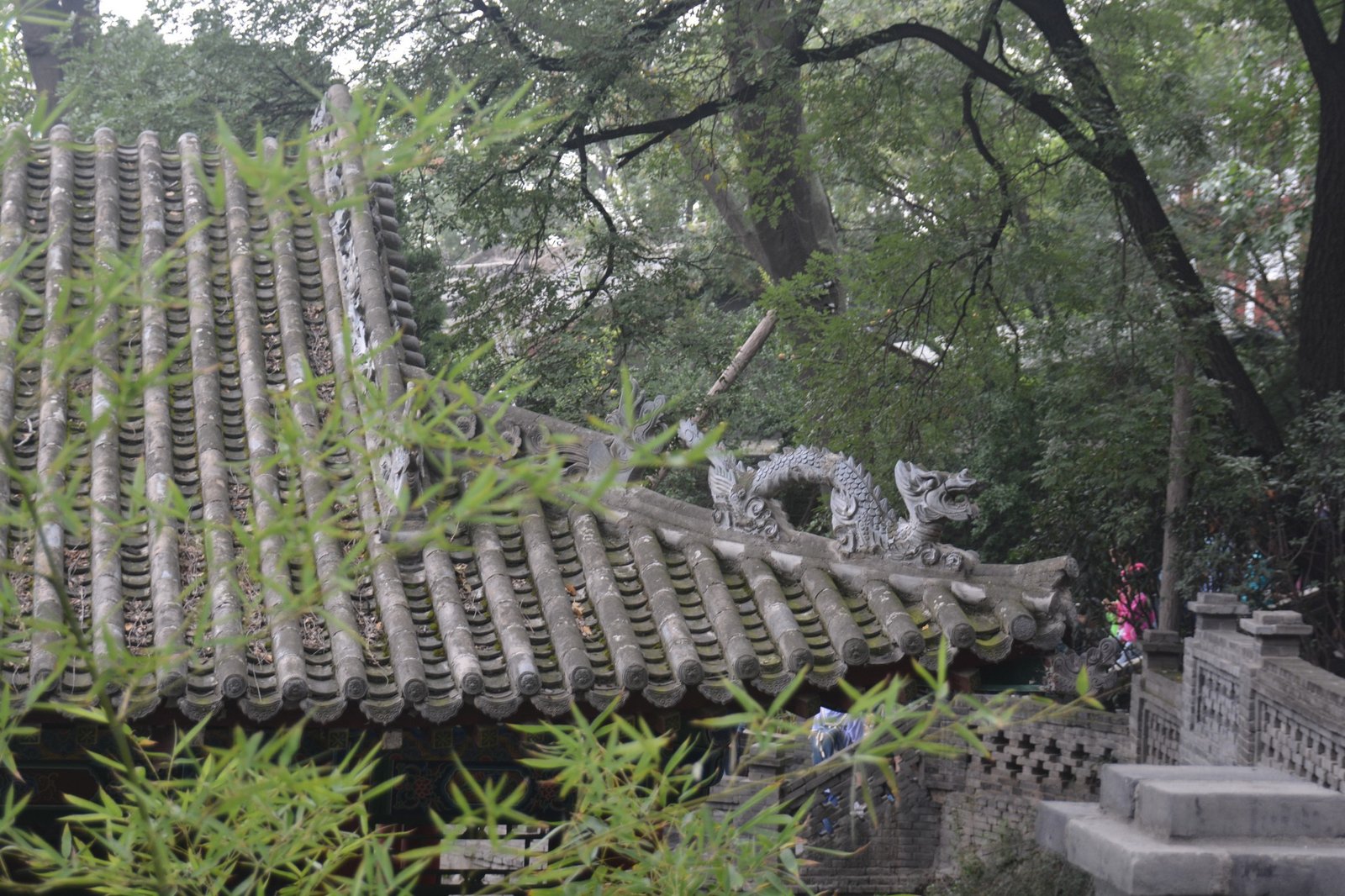
An Architectural Detail of a Chinese Roof
A sculpture of a dragon on the corner of a rooftop. This is a traditional architectural detail on roofs of Chinese palaces. The roofs themselves are made of fired clay. For the most important palace structures the roof tiles will be glazed in bright colors.
DSC_2792_edited
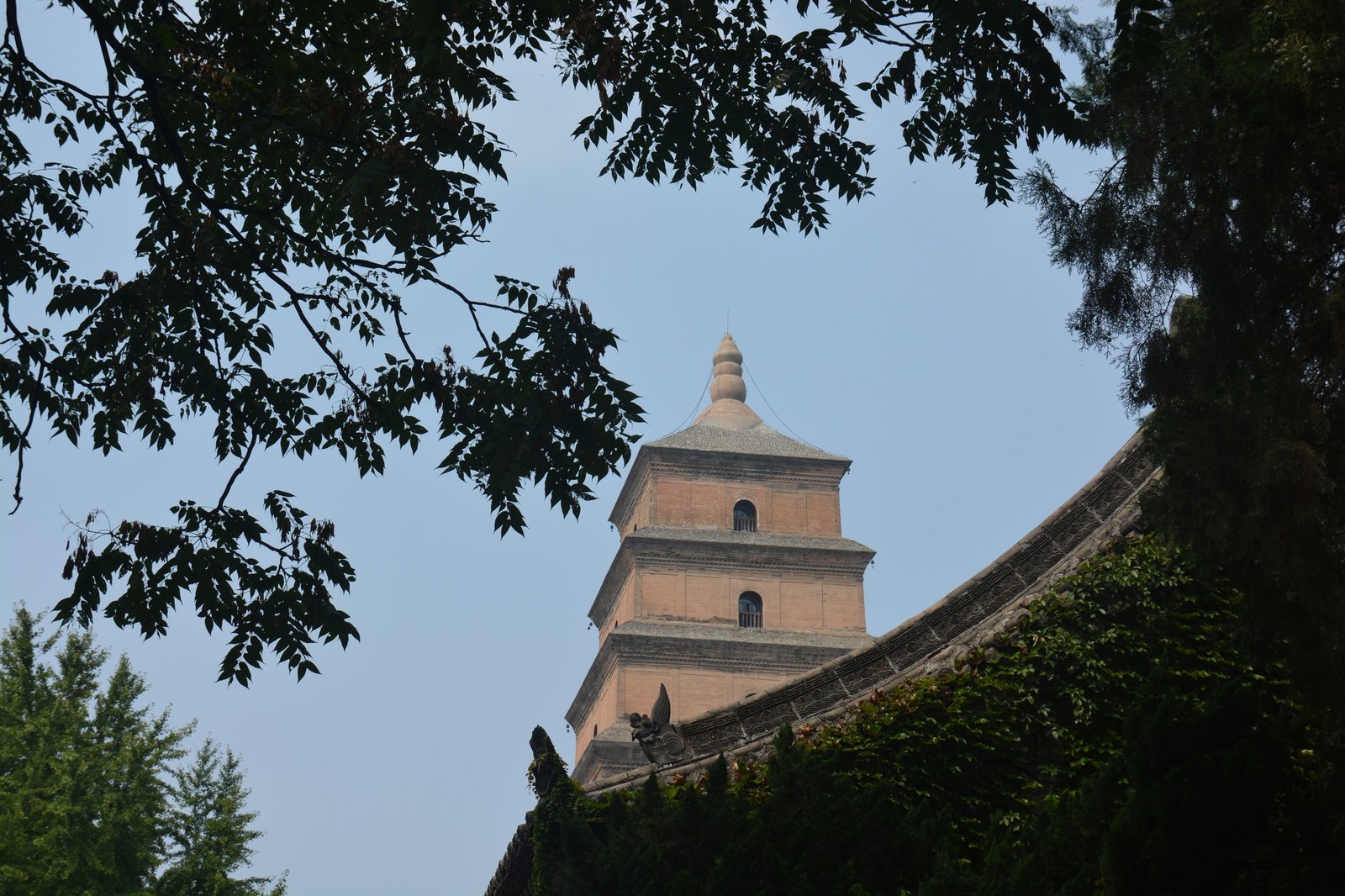
View of Wild Goose Pagoda from the Temple Grounds, Xi'an, China
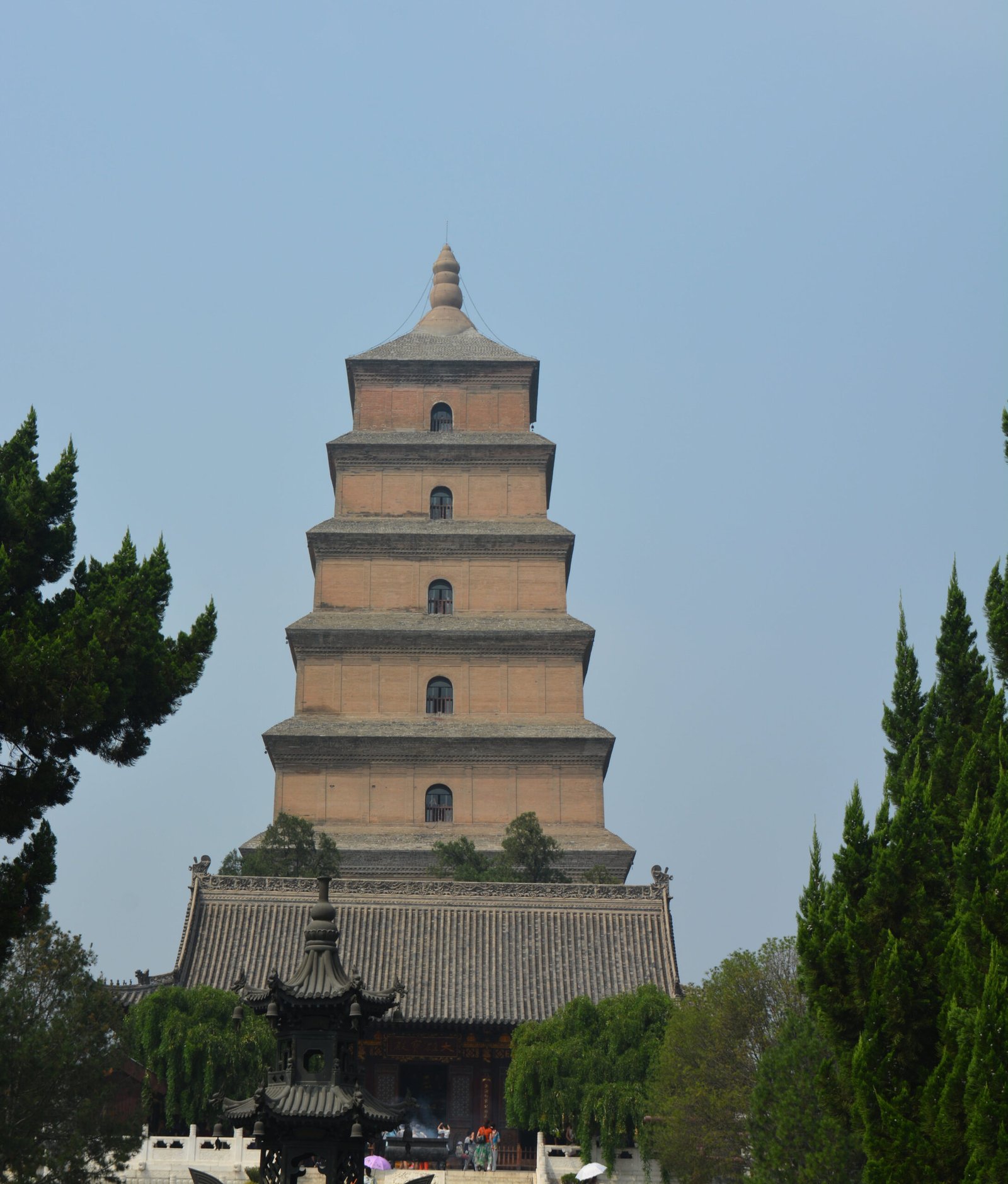
View of Wild Goose Pagoda from the Temple Grounds. The pagoda is part of a historic Buddhist temple complex built in 648 or 649 during the Tang Dynasty to hold sutras brought from India. The story of bringing sutras from India forms the core of the famous Chinese novel "Journey to the West."
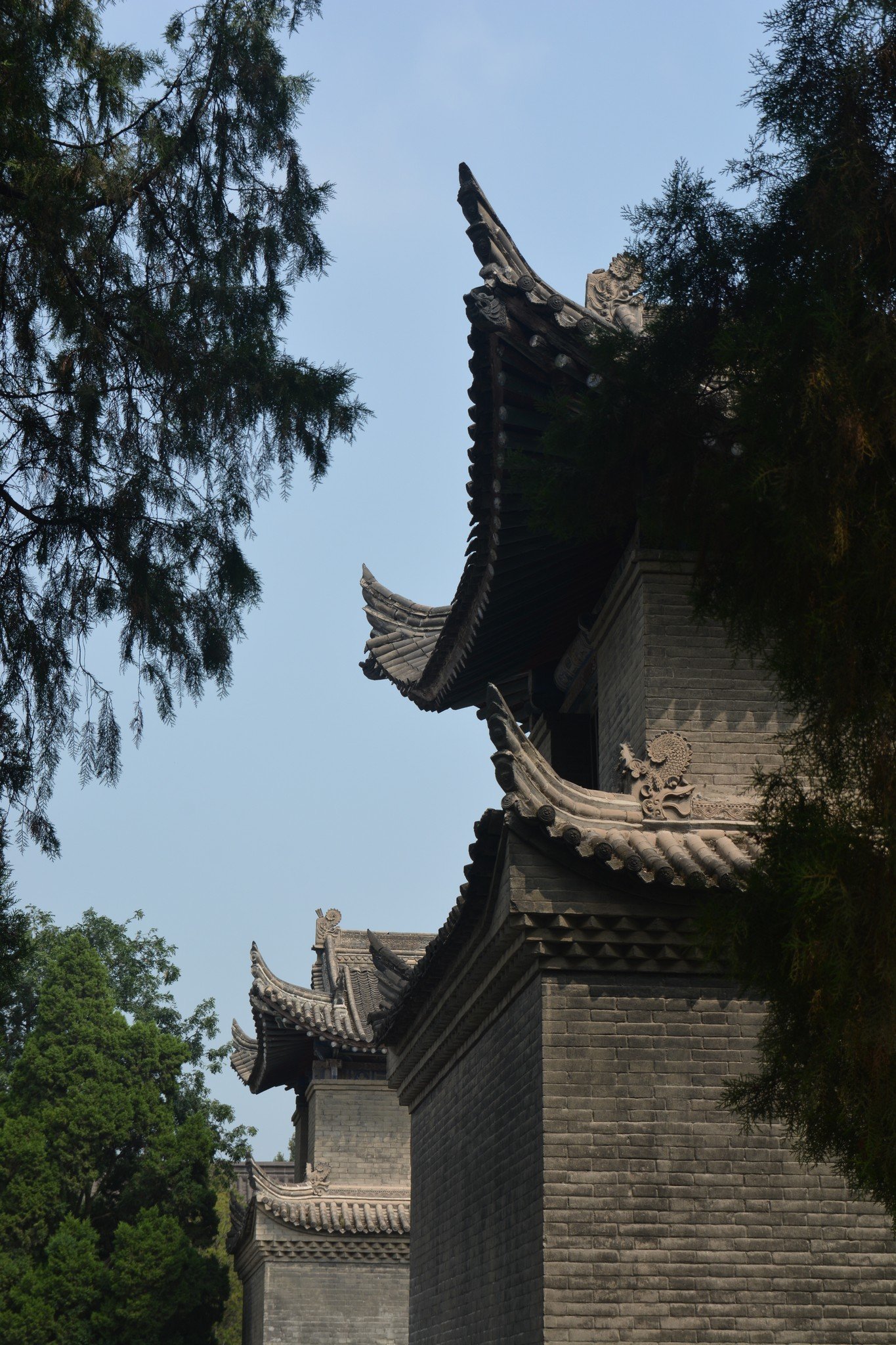
Detail of a Wild Goose Rooftop
Detail of a roof, one of the buildings on the temple grounds of Wild Goose Pagoda, Xi'an, China.
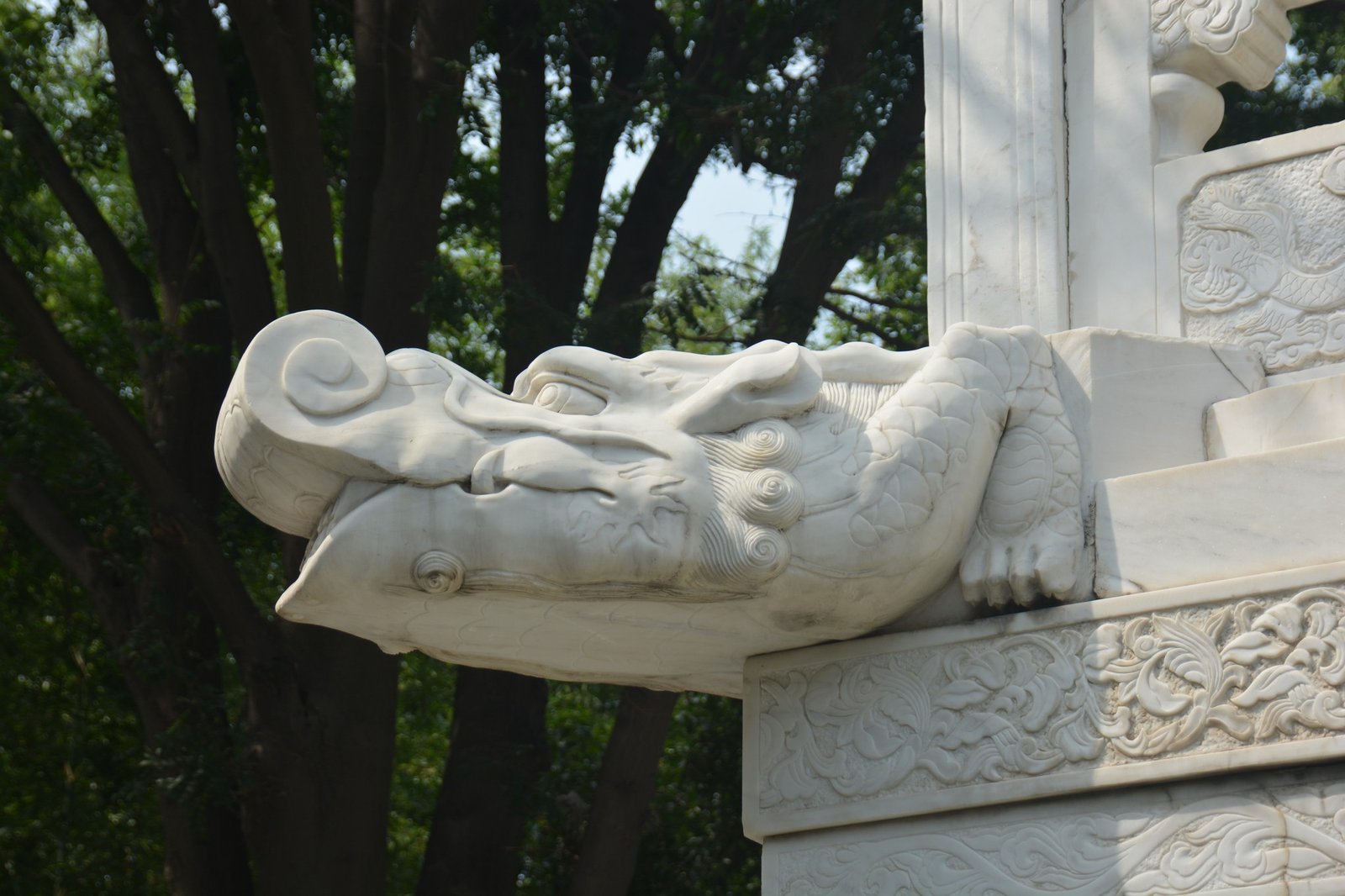
A Chinese Gargoyle of Wild Goose Pagoda
Building detail on the temple grounds of Wild Goose pagoda, Xi'an, China. These statues often serve as architectural gargoyles on historic structures, characteristic of traditional Chinese imperial or religious architecture, symbolizing power and protection.
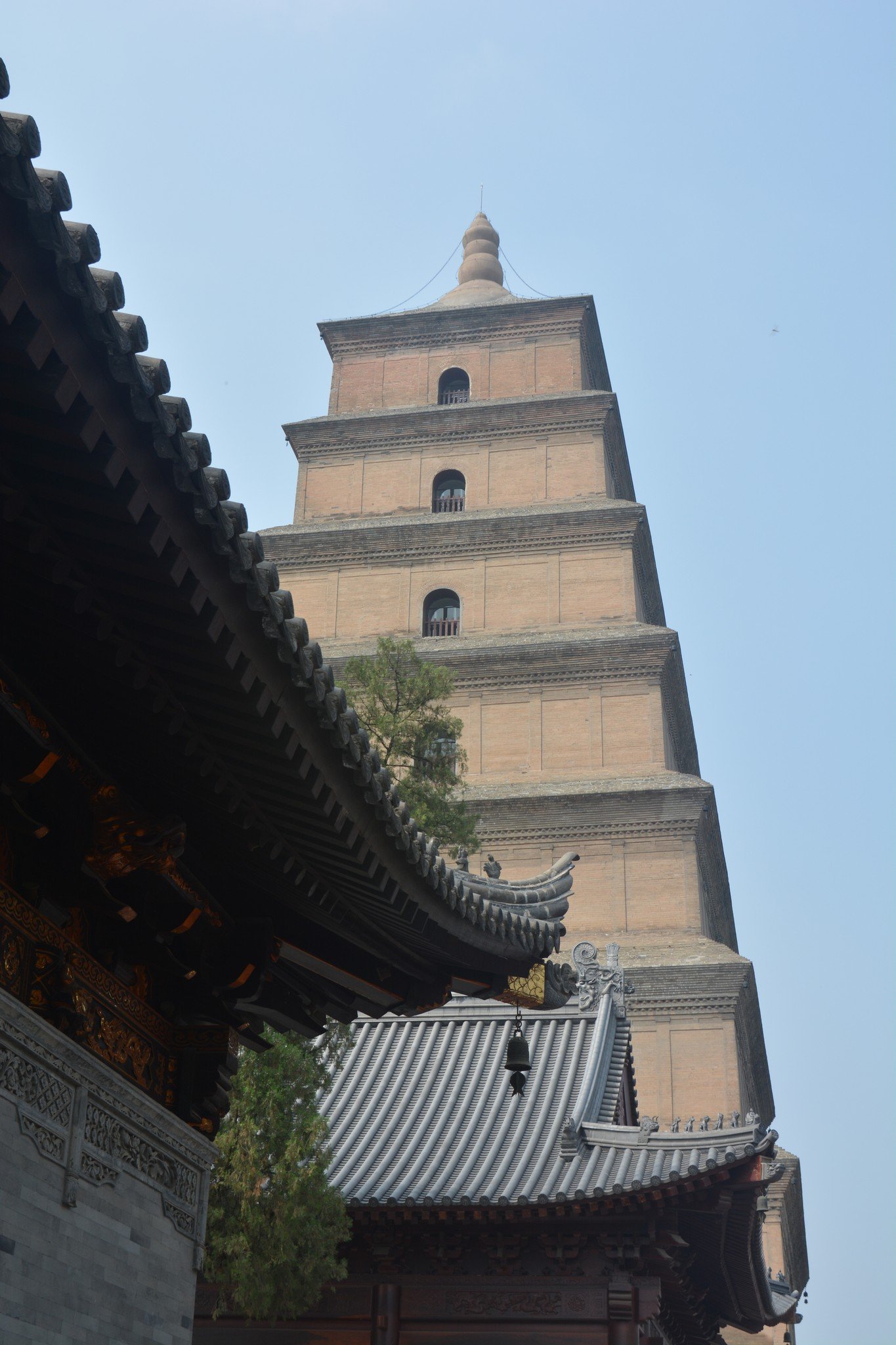
Wild Goose Pagoda, Temple, Xi'an, China
Looking up at Wild Goose Pagoda from the Temple Grounds. The pagoda is part of a large Buddhist temple complex built in 648 or 649 during the Tang Dynasty to hold sutras brought from India. The story of bringing sutras from India forms the core of the famous Chinese novel "Journey to the West."
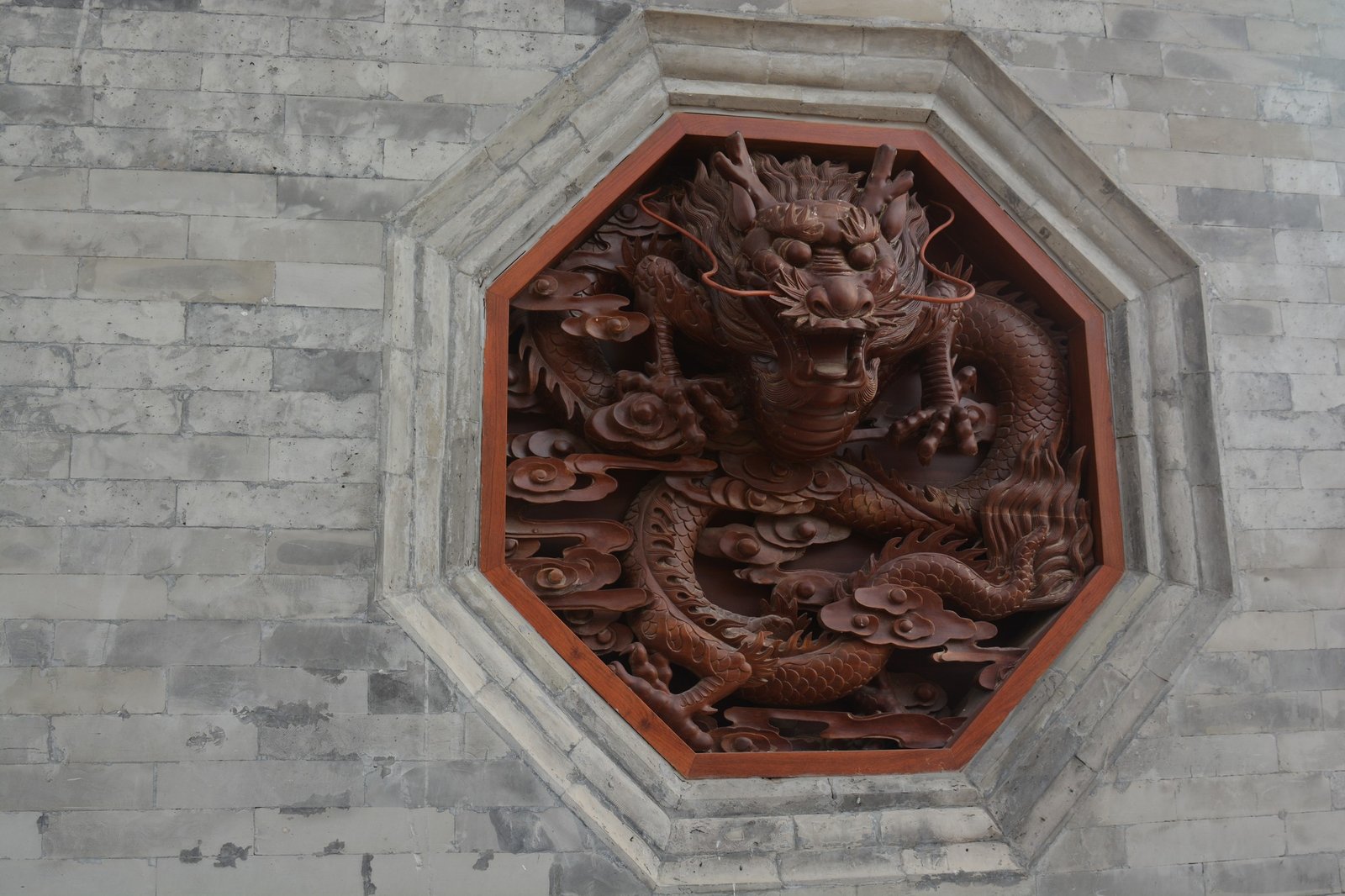
A Red Dragon of Daci'en Temple complex in Xi'an, China.
Building detail of Daci'en Temple complex, which contains the Wild Goose pagoda, Xi'an, China. Dragons in Chinese culture often symbolize power, strength, and good fortune, and are also traditionally seen as protectors against fire.
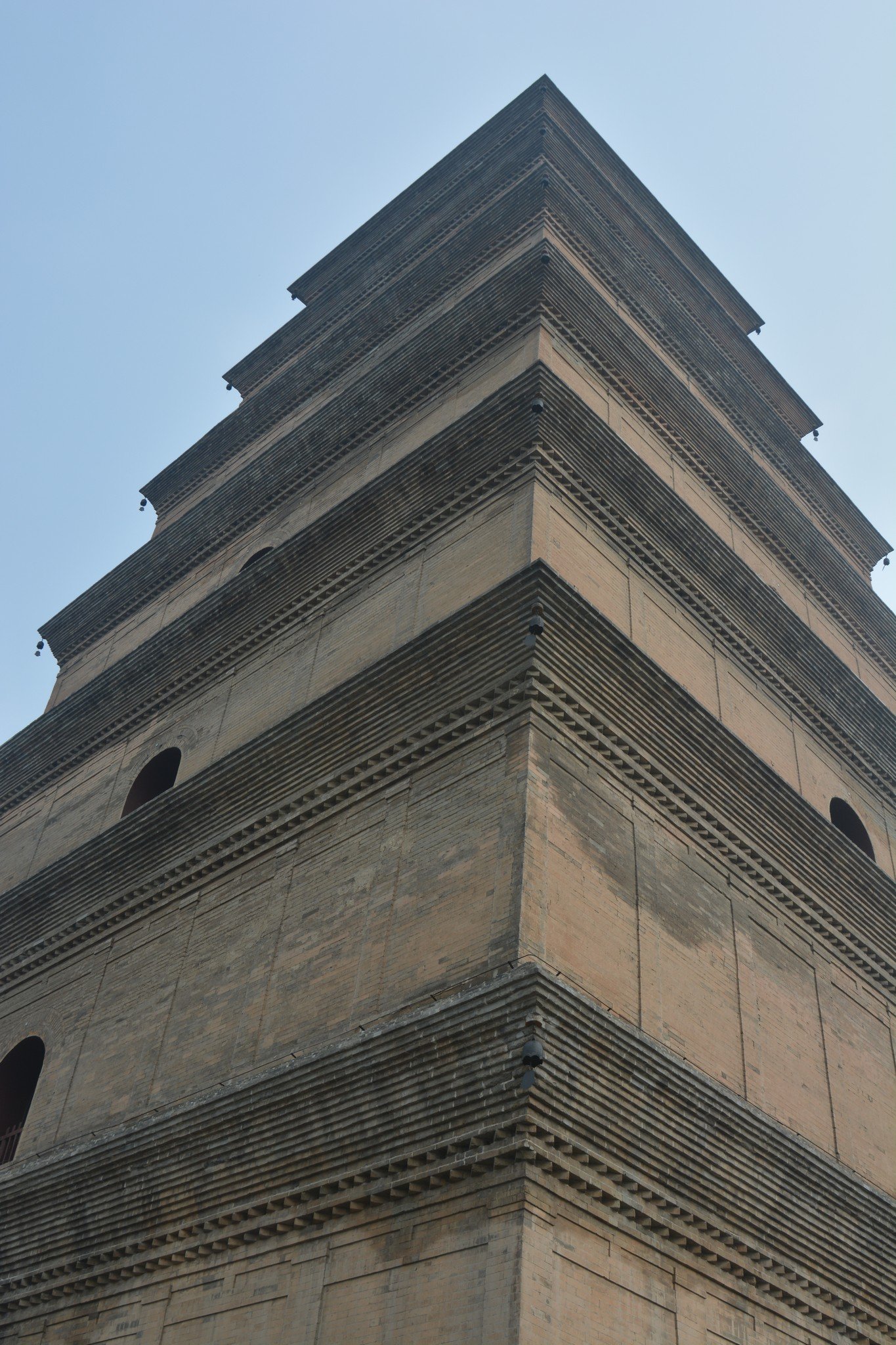
Giant Wild Goose Pagoda, also known as the Dayan Pagoda
Looking up at the Giant Wild Goose Pagoda from the Temple Grounds, Xi'an, China. A brick structure, it was built in AD 652 during the Tang dynasty. The structure originally featured five stories before later expansions. The structure was constructed to house Buddhist sutras brought back from India by the monk Xuanzang, which forms the basis of the Chinese novel "Journey to the West." This is is recognized as a UNESCO World Heritage site.
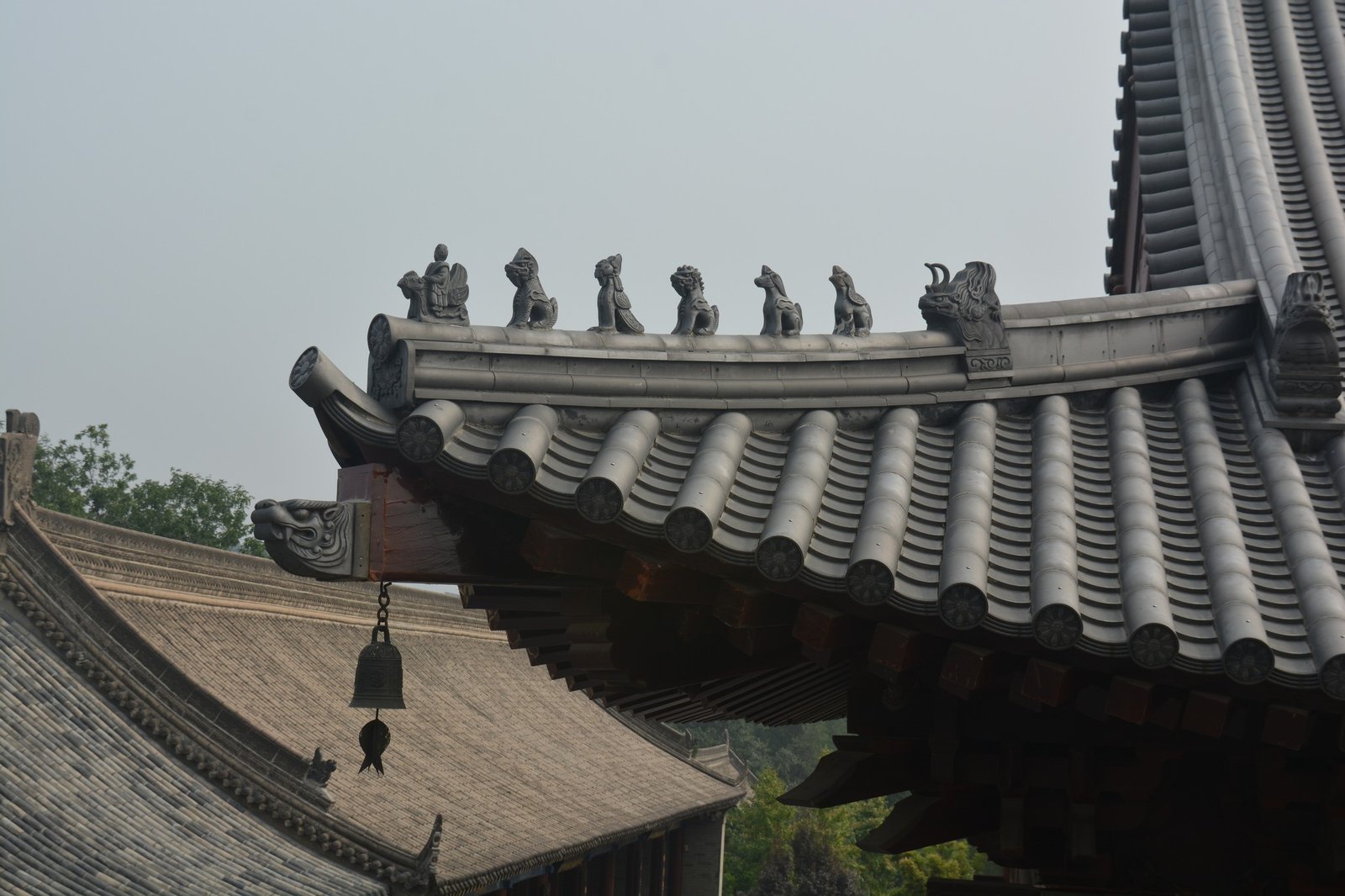
Details of a Temple Roof
Detail of a roof decorated with a series of small, molded figures. One of the buildings on the temple grounds of Wild Goose Pagoda, Xi'an, China
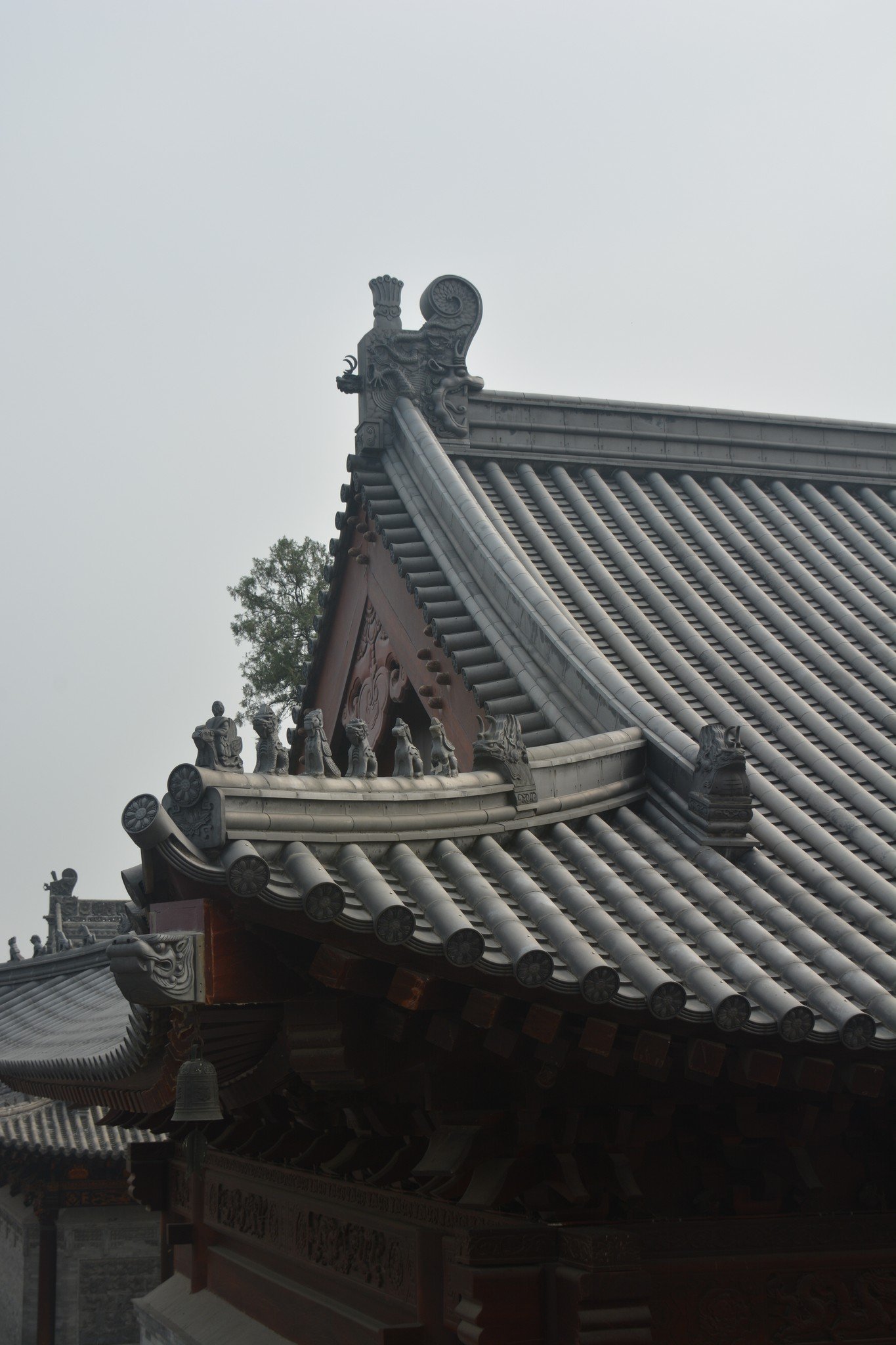
Details of a Temple Roof
Details of a traditional Chinese temple roof. This is a classic Chinese hip-and-gable roof with flying eaves (upturned corners) and pronounced ridge tiles. The decorative figures, known as roof charms or figures, traditionally protect the building and symbolize its status.
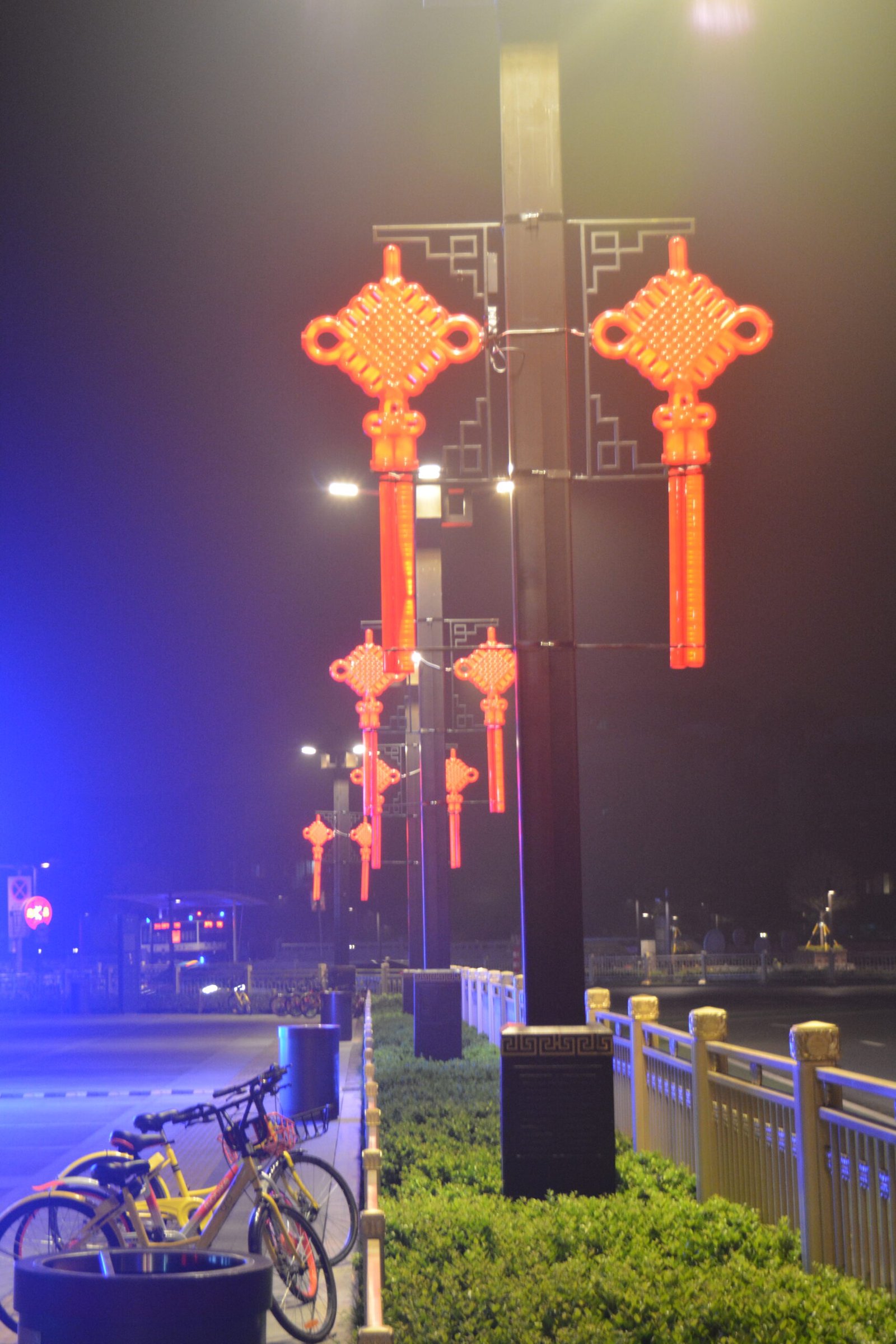
Nighttime Street Scene in Xi'an
A nighttime view of a city street in modern Xi'an. The red Chinese knot LED lanterns are used for festive decorations. As traditional folk handicrafts they symbolize good fortune, reunion, and harmony.
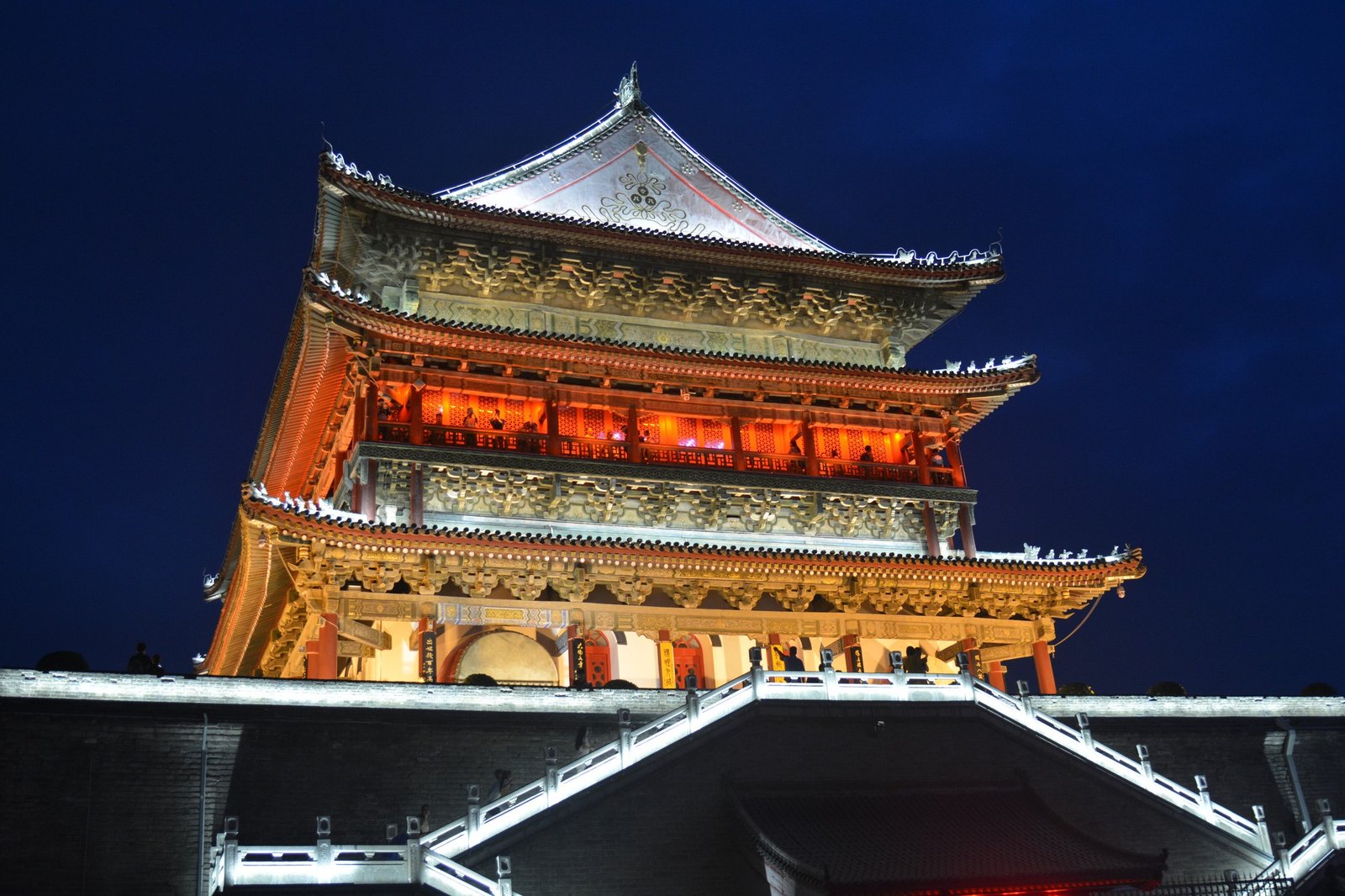
A Nighttime View of the Drum Tower of Xi'an
A Nighttime view of the illuminated Drum Tower of Xi'an. Erected in 1380 during the early Ming Dynasty, it once served as the city's clock, with the beating of drums marking the hours after sunset. Located in the heart of Xi'an city, near the Muslim Quarter.
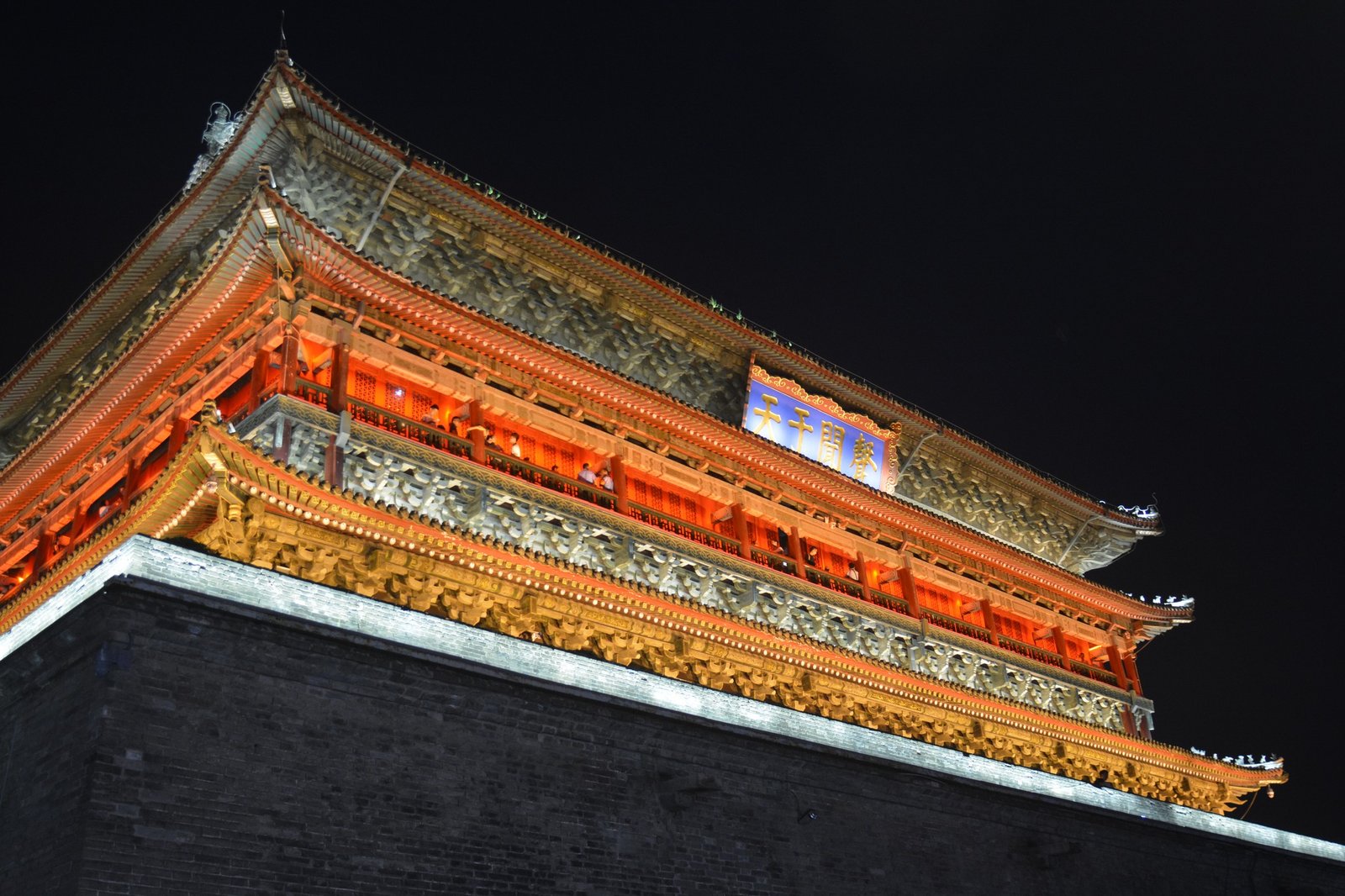
Drum Tower in Xi'an, China
Another Nighttime view of the illuminated Drum Tower of Xi'an. Erected in 1380 during the early Ming Dynasty, it once served as the city's clock, with the beating of drums marking the hours after sunset. Located in the heart of Xi'an city, near the Muslim Quarter.
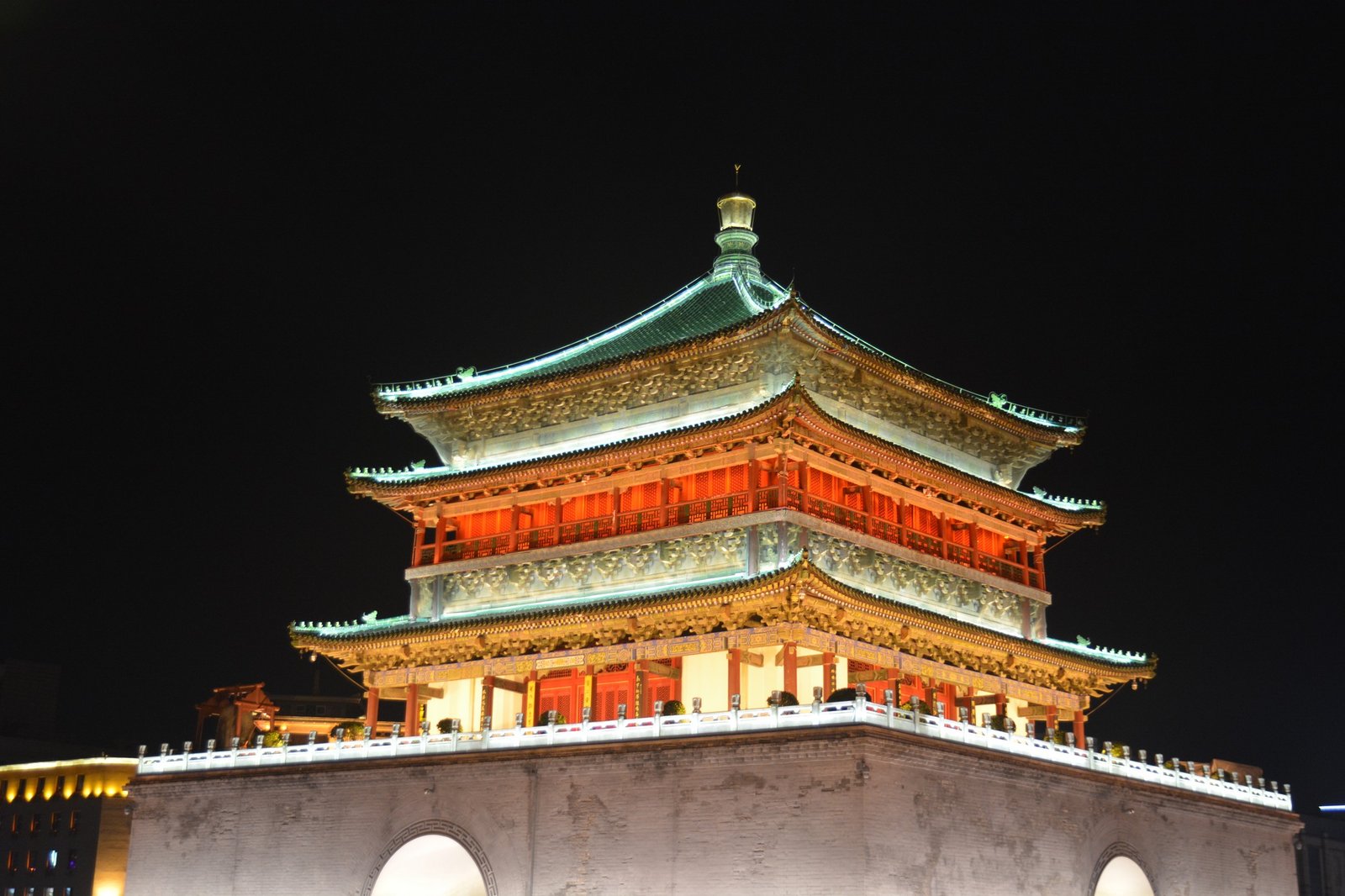
Drum Tower in Xi'an, China
Another Nighttime view of the illuminated Drum Tower of Xi'an. Erected in 1380 during the early Ming Dynasty, it once served as the city's clock, with the beating of drums marking the hours after sunset. Located in the heart of Xi'an city, near the Muslim Quarter.
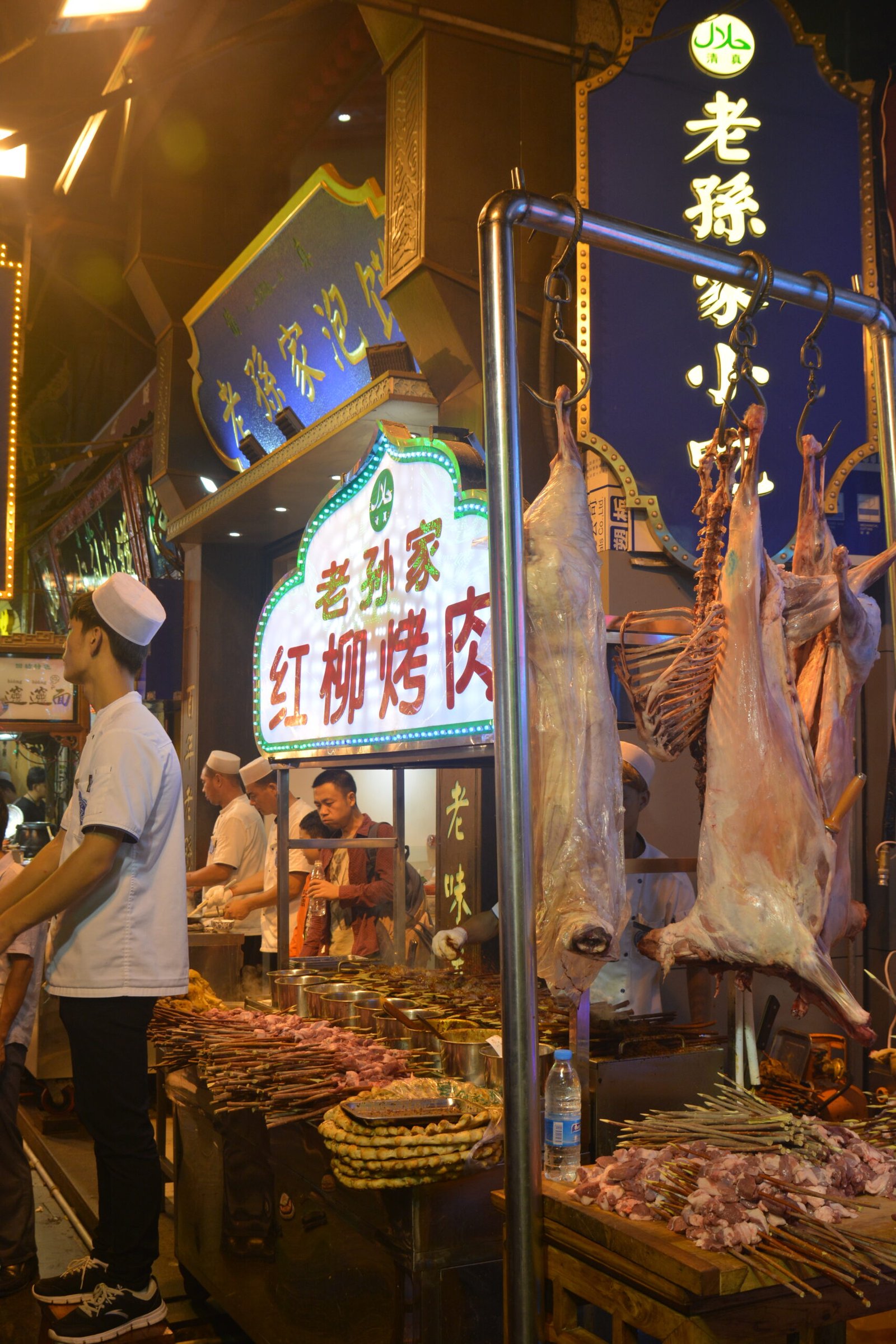
Nightlife in the Muslim Quarter of Oldtown Xi'an
A night time meat market in the bustling muslim quarter of old town Xi'an
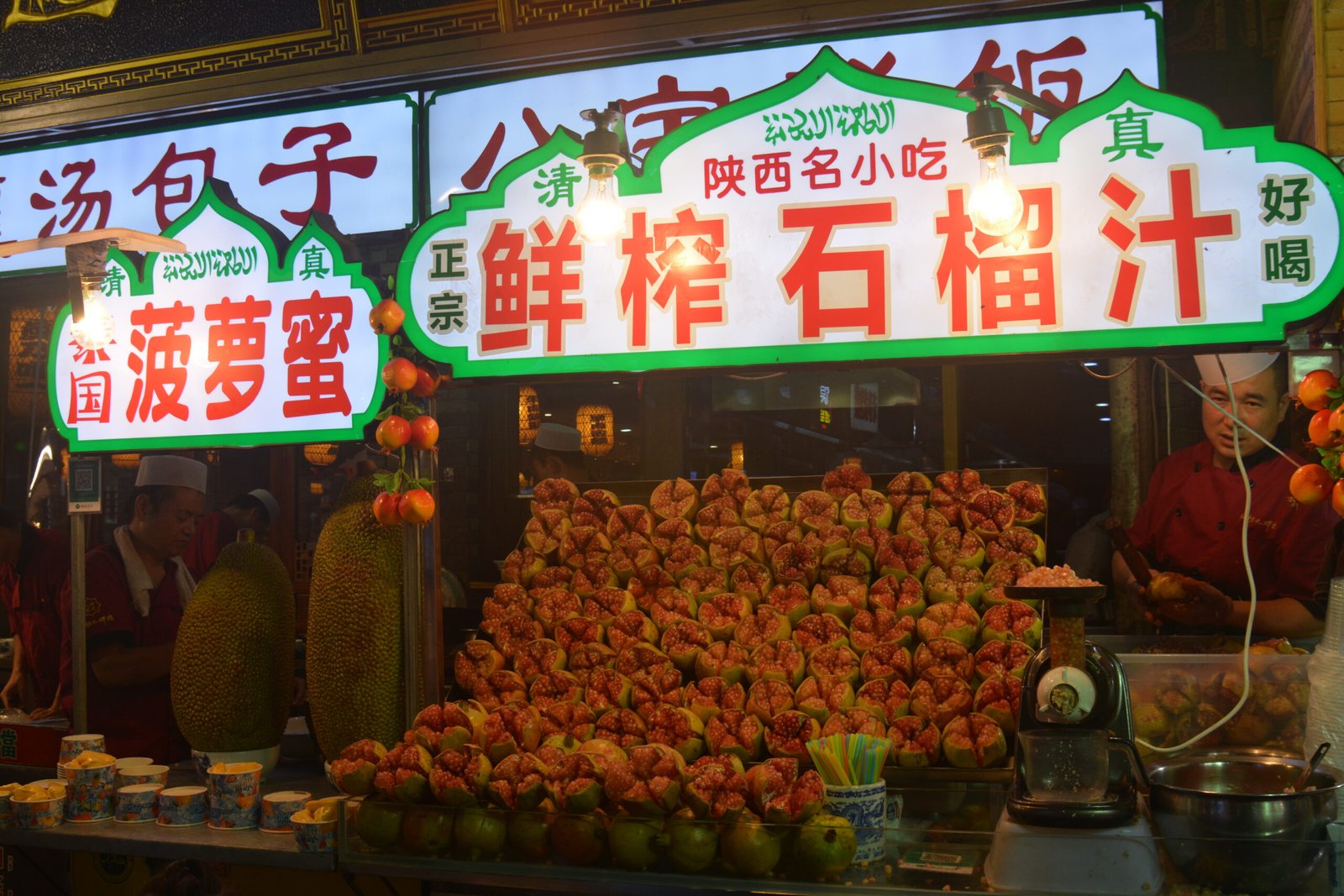
Nightlife in the Muslim Quarter of Oldtown Xi'an
A fruit stand in the muslim quarter of old town Xi'an. The large spiky fruit on the left side of this stand is a "Jack Fruit," a very popular tree fruit in southeast Asia.
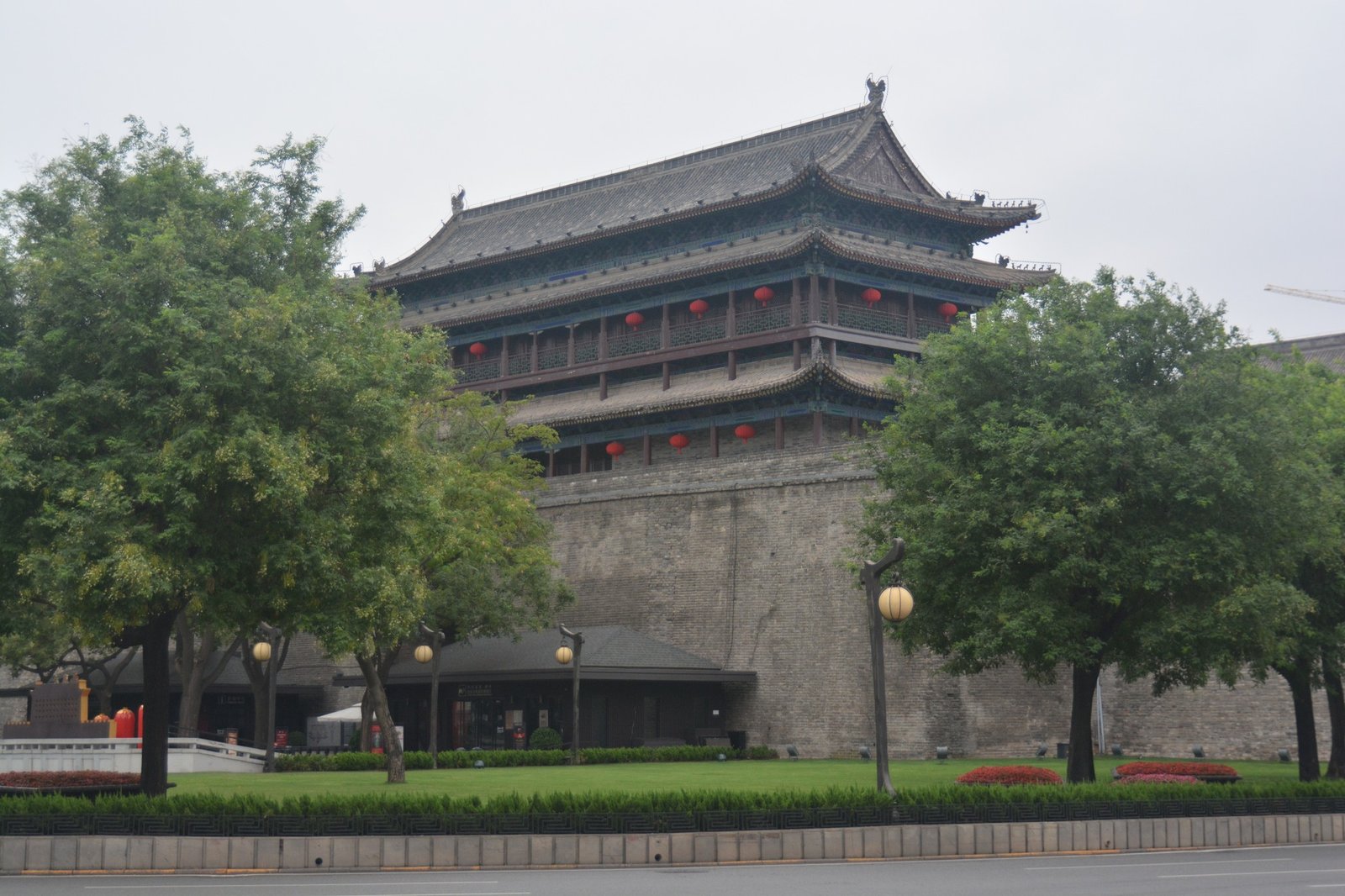
A View of Xi'an City Wall with Guard Post
The Xi'an City Wall is one of the oldest, largest, and best-preserved Chinese city wall. It is the only surviving complete wall surrounding a city in China, and measures 49 - 59 feet at the base and 40-45 feet across the top. At carious points there are staircases from ground level to the top, and visitors can walk or ride bicycles completely around the old city area of Xi'an.
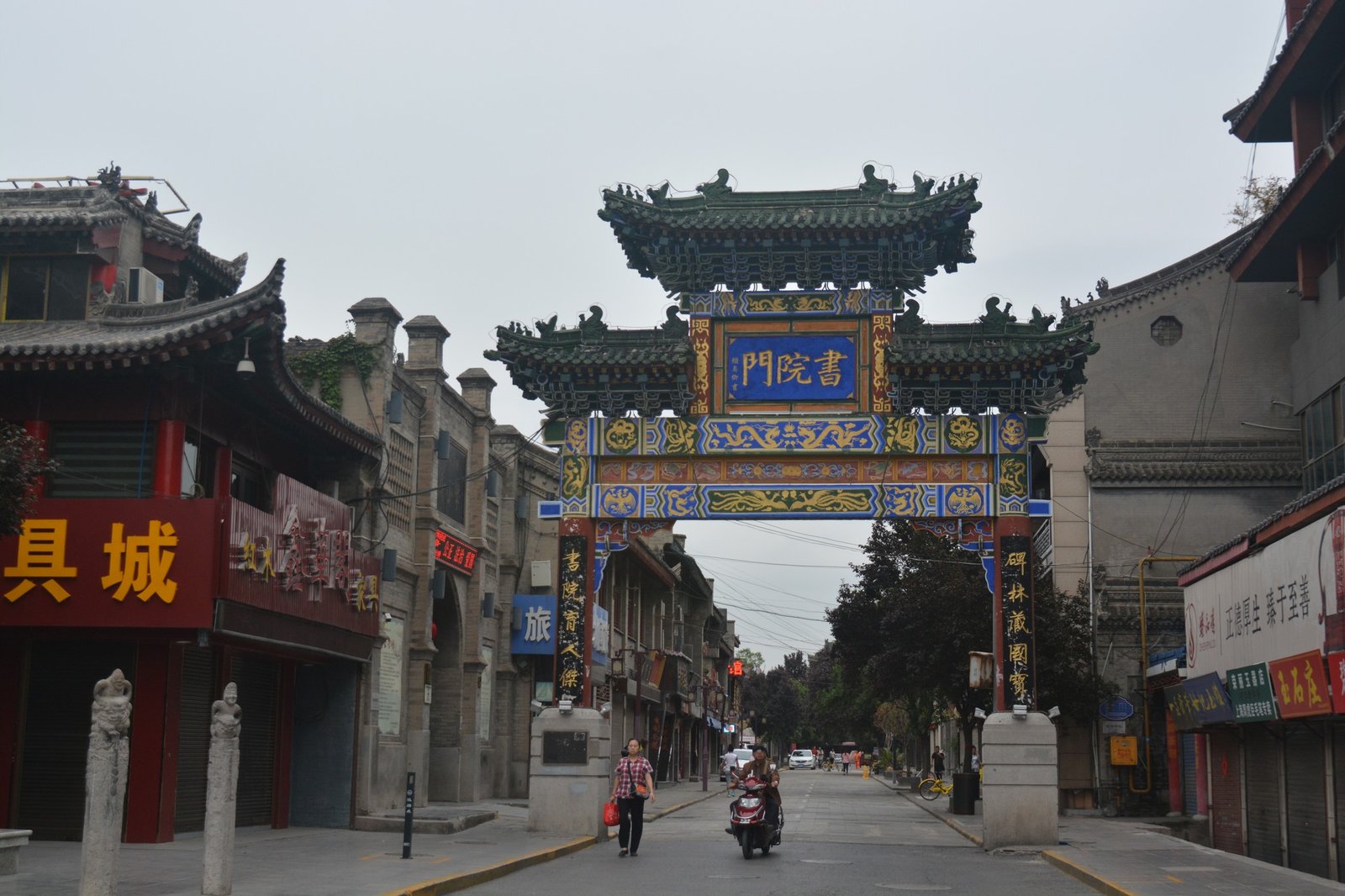
Shuyuanmen Street (Academy Gate) in Xi'an
The Shuyuanmen Street (Academy Gate) in Xi'an. The street is a cultural center near the South Gate of the city wall, famous for calligraphy and traditional arts. It's current restoration reflects the architectural style of the Ming and Qing dynasties.
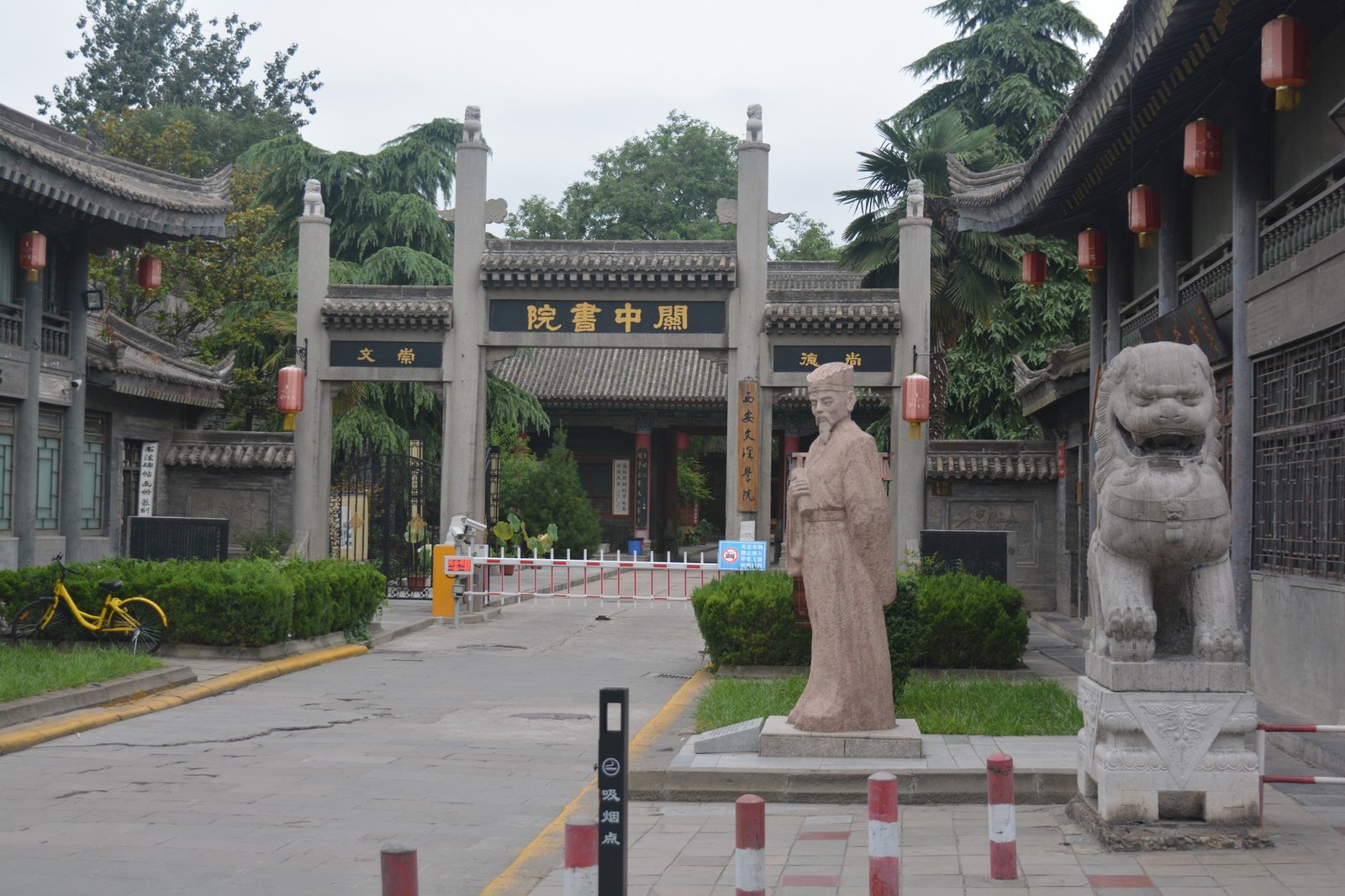
Entrance to entrance to the Guanzhong Academy of Xi'an
The the Guanzhong Academy is situated at the west end of Academy Gate Street (Shuyuanmen) near the South Gate of the ancient city wall. During the Ming and Qing Dynasties is was one of the four most famous academies in China.
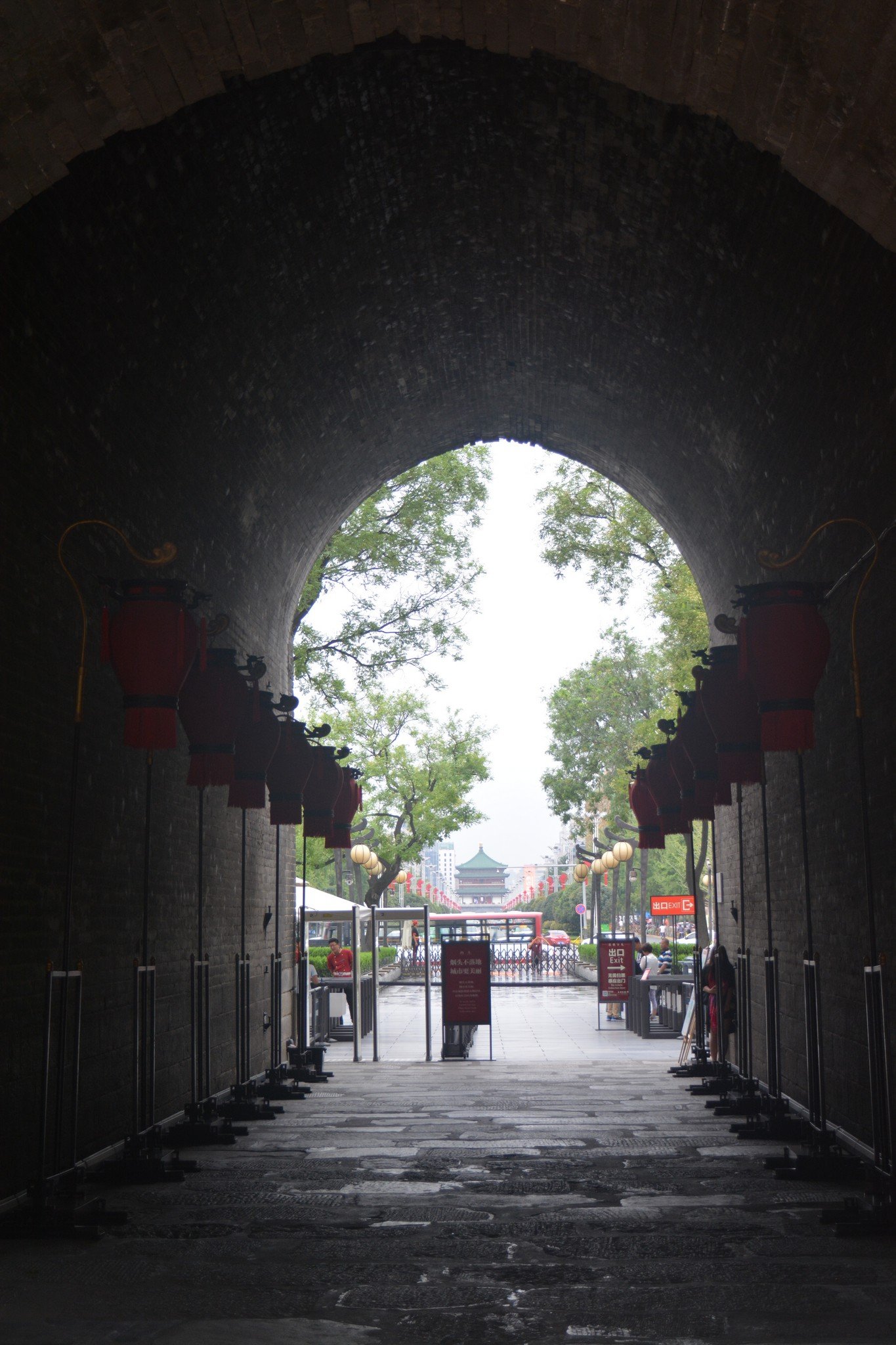
A View from Inside the Historical Xi'an City Wall
Looking through the Xi'an City wall towards the city, with traditional red lanterns lining the archway. The wall was originally built during the Ming Dynasty to protect the city.
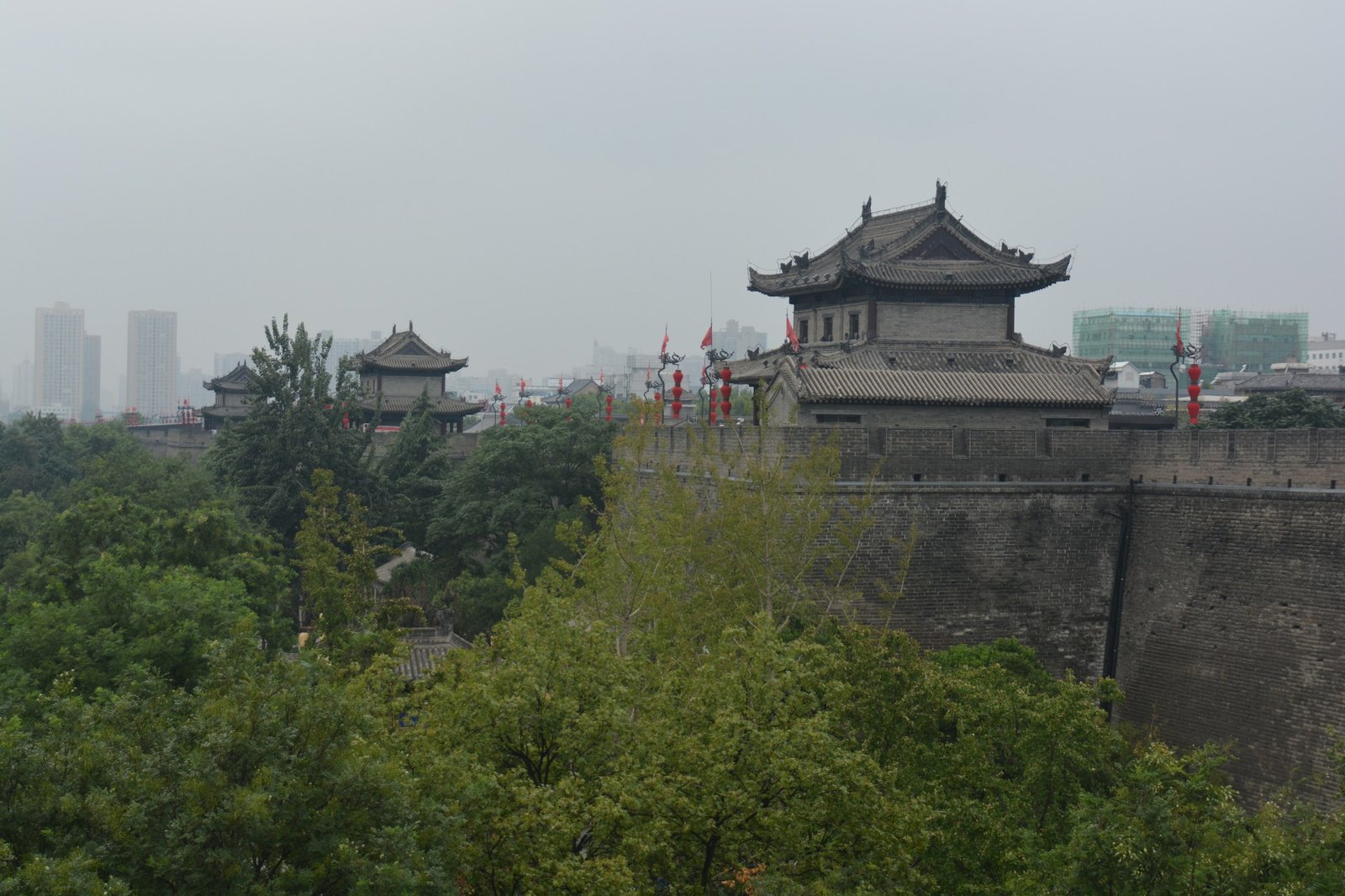
Looking Across The City Wall Around Xi'an
Looking at the outside of the historic Xi'an City Wall from one of the guard posts. Mostly built during the Ming Dynasty, some parts of the wall date back to 194 BC.
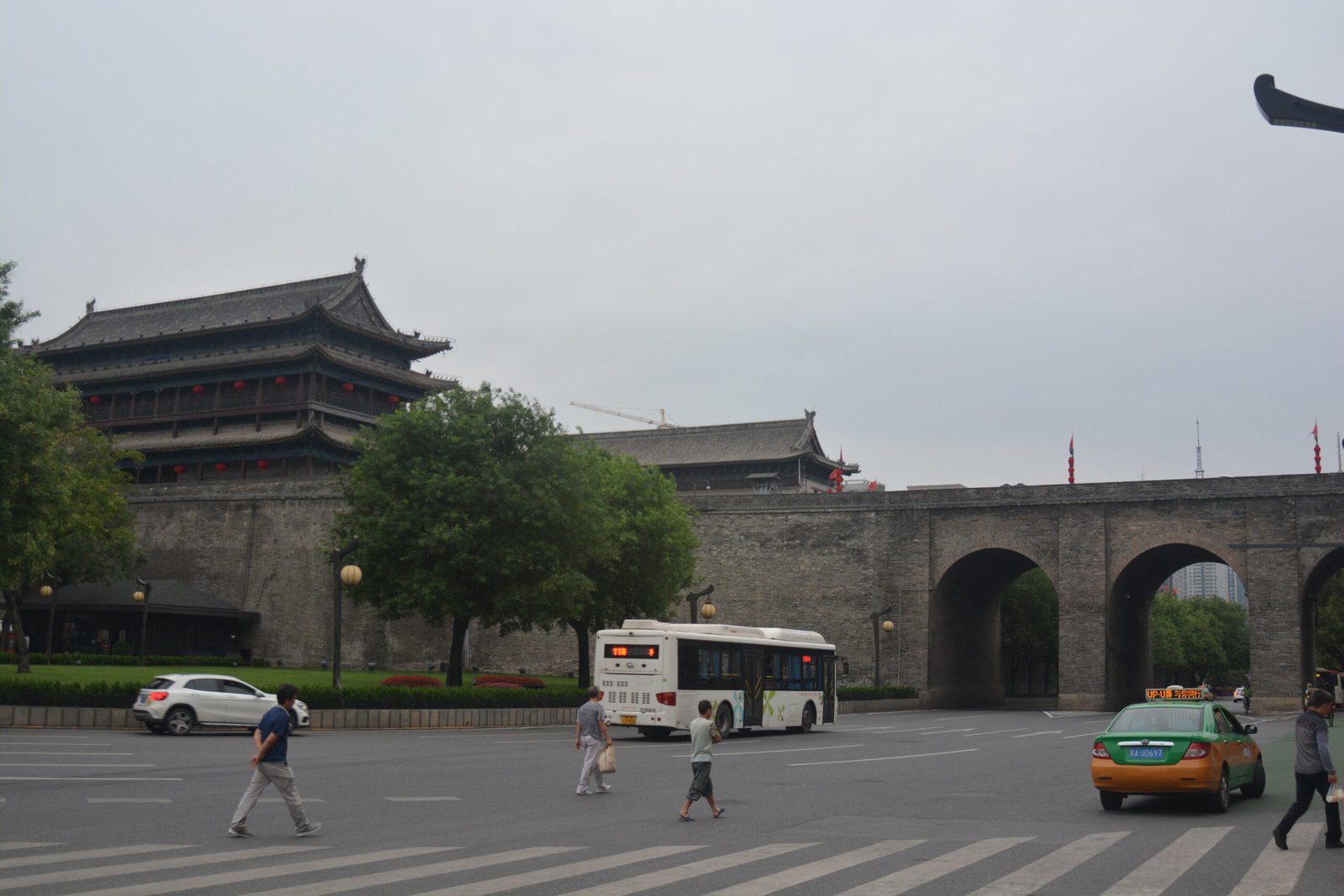
Modernizing The Walls of Ancient Xi'an
The walls around the old city of Xi'an are the most intact and best-preserved city walls of any ancient Chinese city. To modernize, the Chinese built tunnels through the 50-foot thick walls to support modern traffic flows.
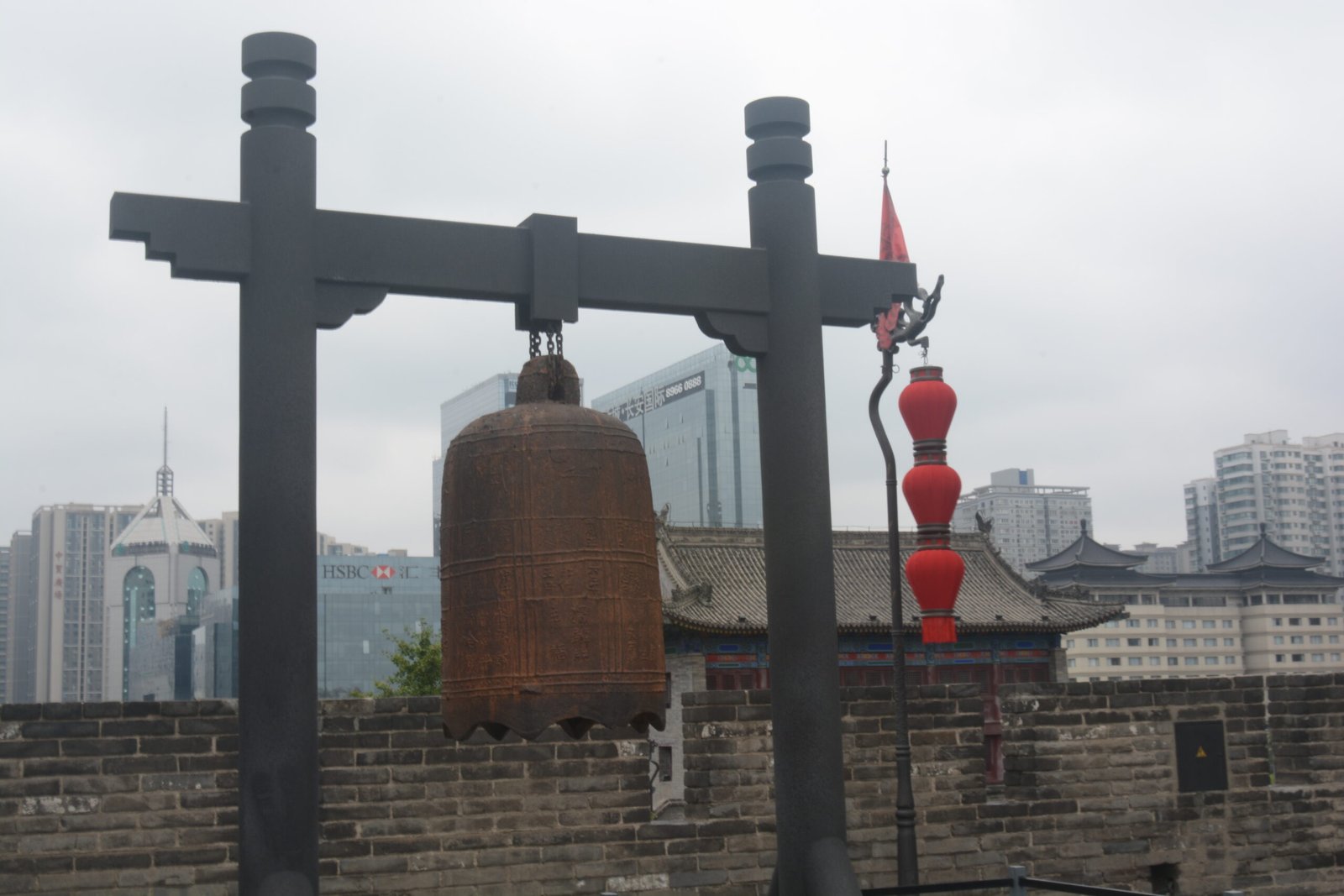
A Large Iron bell On The Ancient City Wall of Xi'an
A large iron bell located at the Yongning South Gate, on the ancient city wall of Xi'an. This bell was cast during the reign of Yongzheng of the Qing Dynasty.
These bells were historically used to signal time or warn of impending danger across the city. These ancient bells had engravings of text characters and decorative patterns, depending upon their function. The modern city of Xi'an, outside the old walls, are in the background.
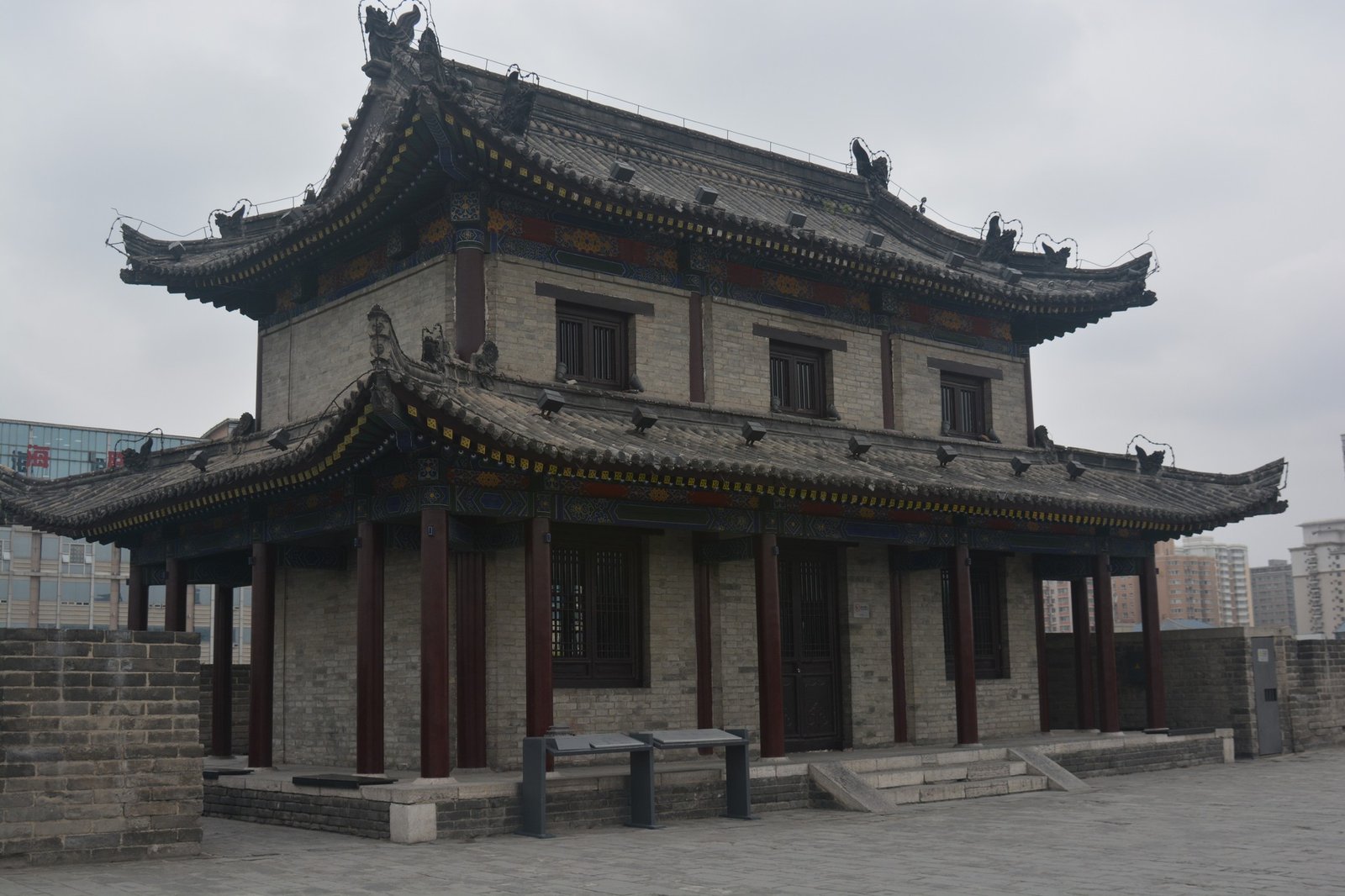
A Guardhouse on Top of the City Wall of Xi'an
The Xi'an city wall is one of the oldest, largest and best preserved Chinese city walls. The wall encloses an area of about 5.4 square miles, with a total length of 8.7 miles. There are regularly-spaced guard houses along the entire wall.
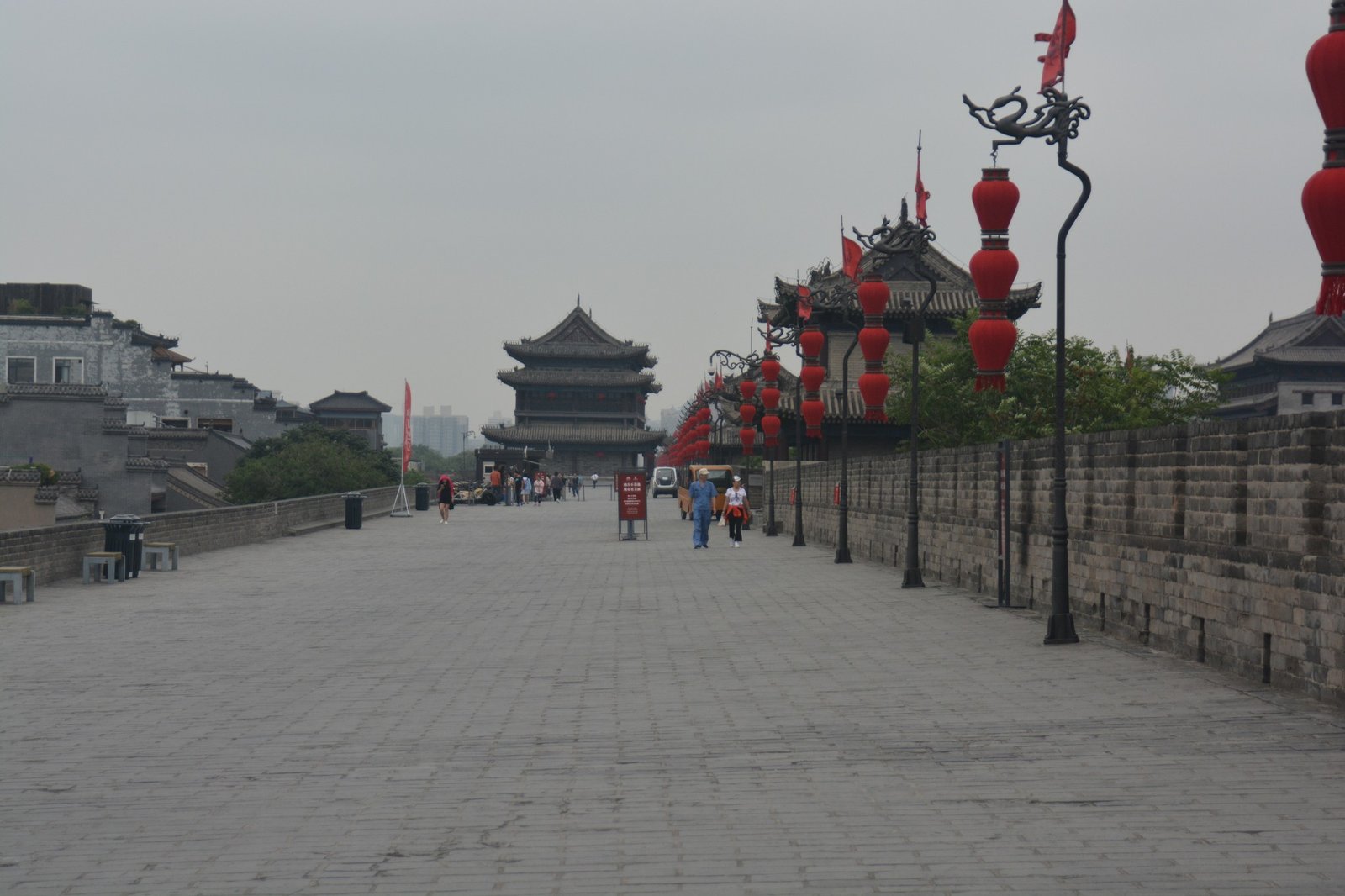
The Top Of Xi'an City Wall
The Xi'an city wall is one of the oldest, largest and best preserved Chinese city walls. The wall encloses an area of about 5.4 square miles, a total length of 8.7 miles. The base of the wall is 49 feet thick, at the top it is wide enough to ride bicycles. Xi'an, China
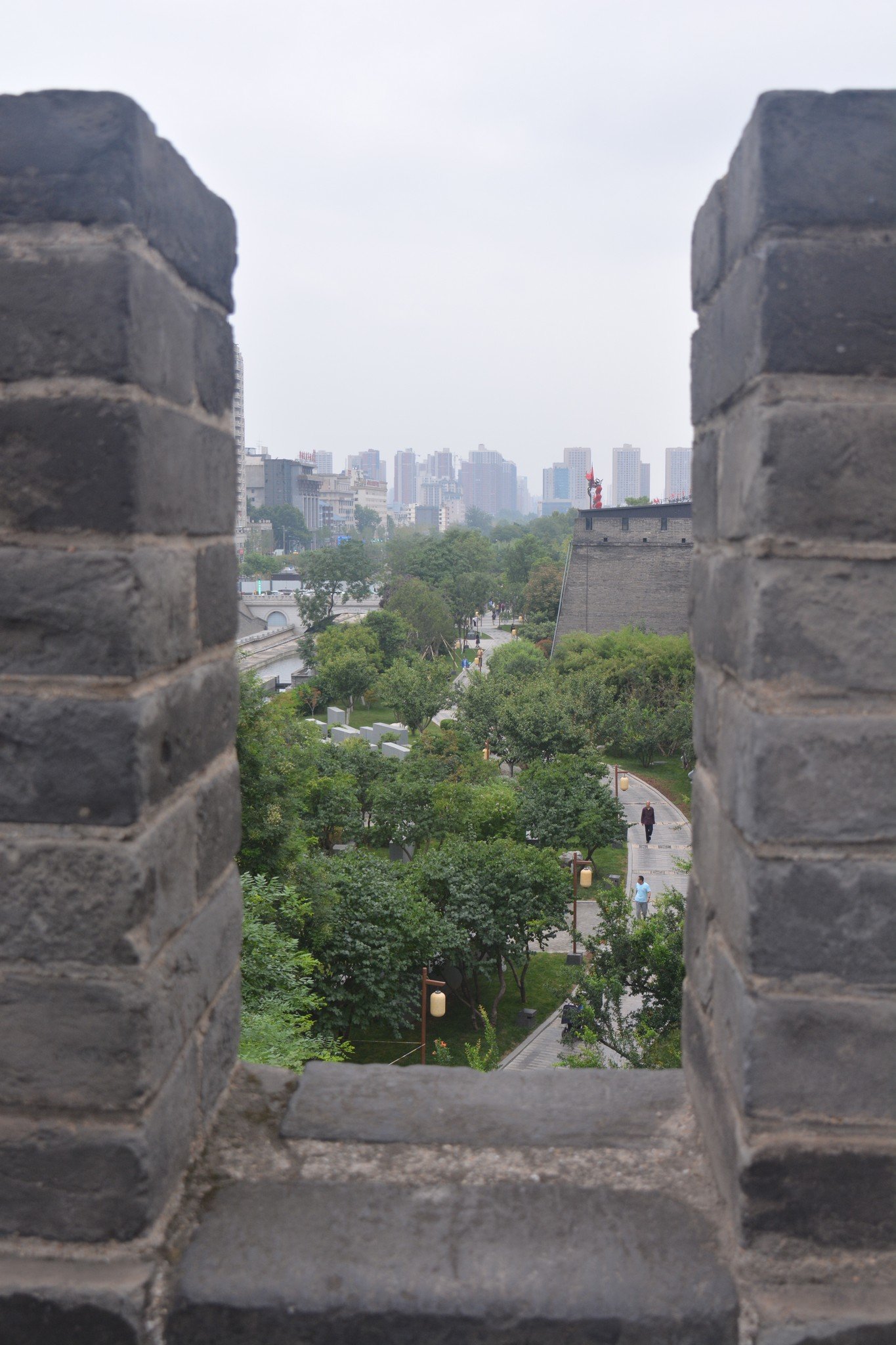
Looking Through a Battlement of Xi'an City Wall
Looking through a Battlement of the city wall surrounding Xi'an, China. The Xi'an city wall is one of the oldest, largest and best preserved Chinese city walls. The wall encloses an area of about 5.4 square miles, a total length of 8.7 miles, and measures 49 - 59 feet at the base and 40-45 feet across the top.
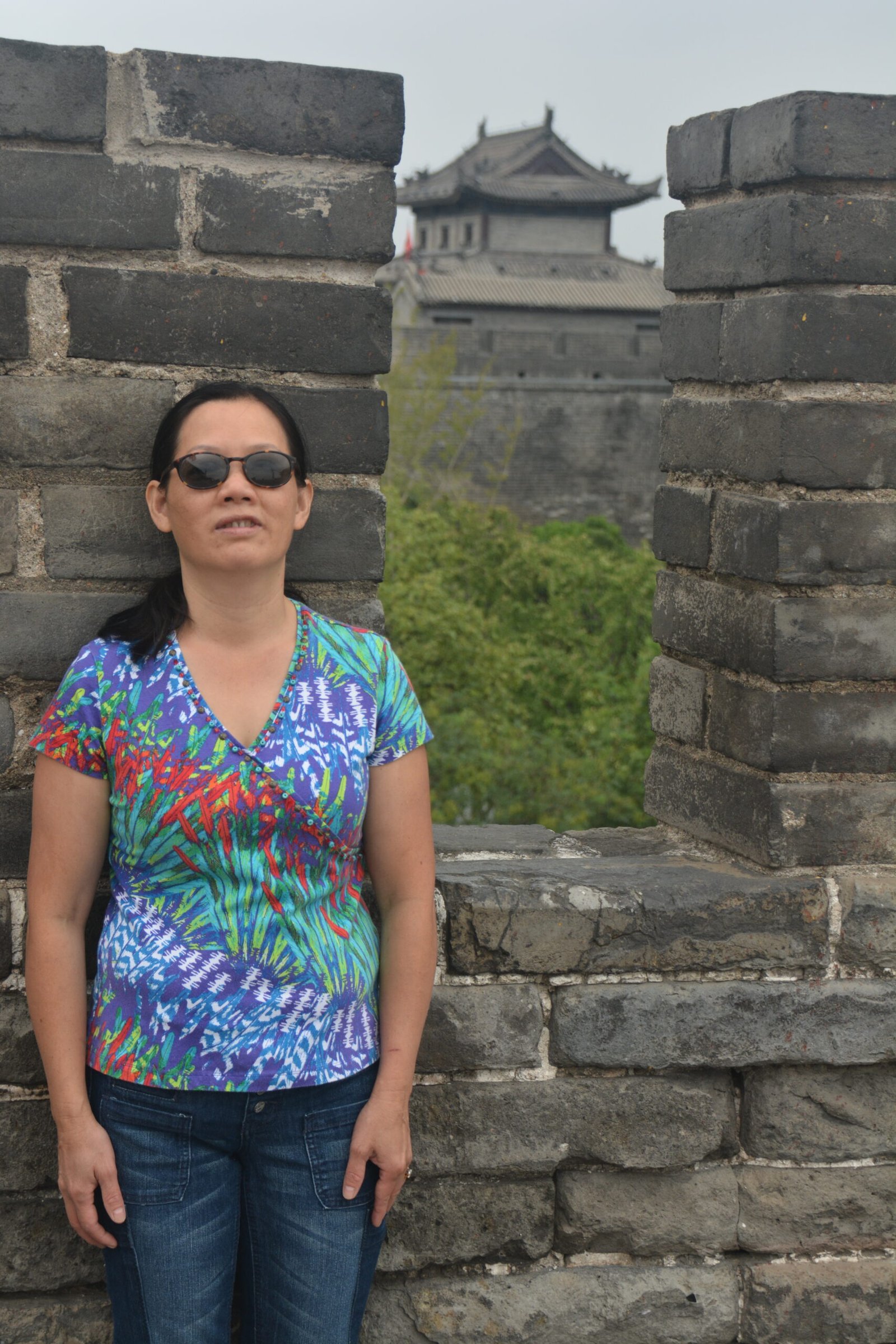
Winnie Guarding a Battlement on the Old Xi'an City Wall
Winnie posing next to one of the battlements of the old Xi'an fortification wall. One of the guardhouses on top of the wall can be seen through the battlement.
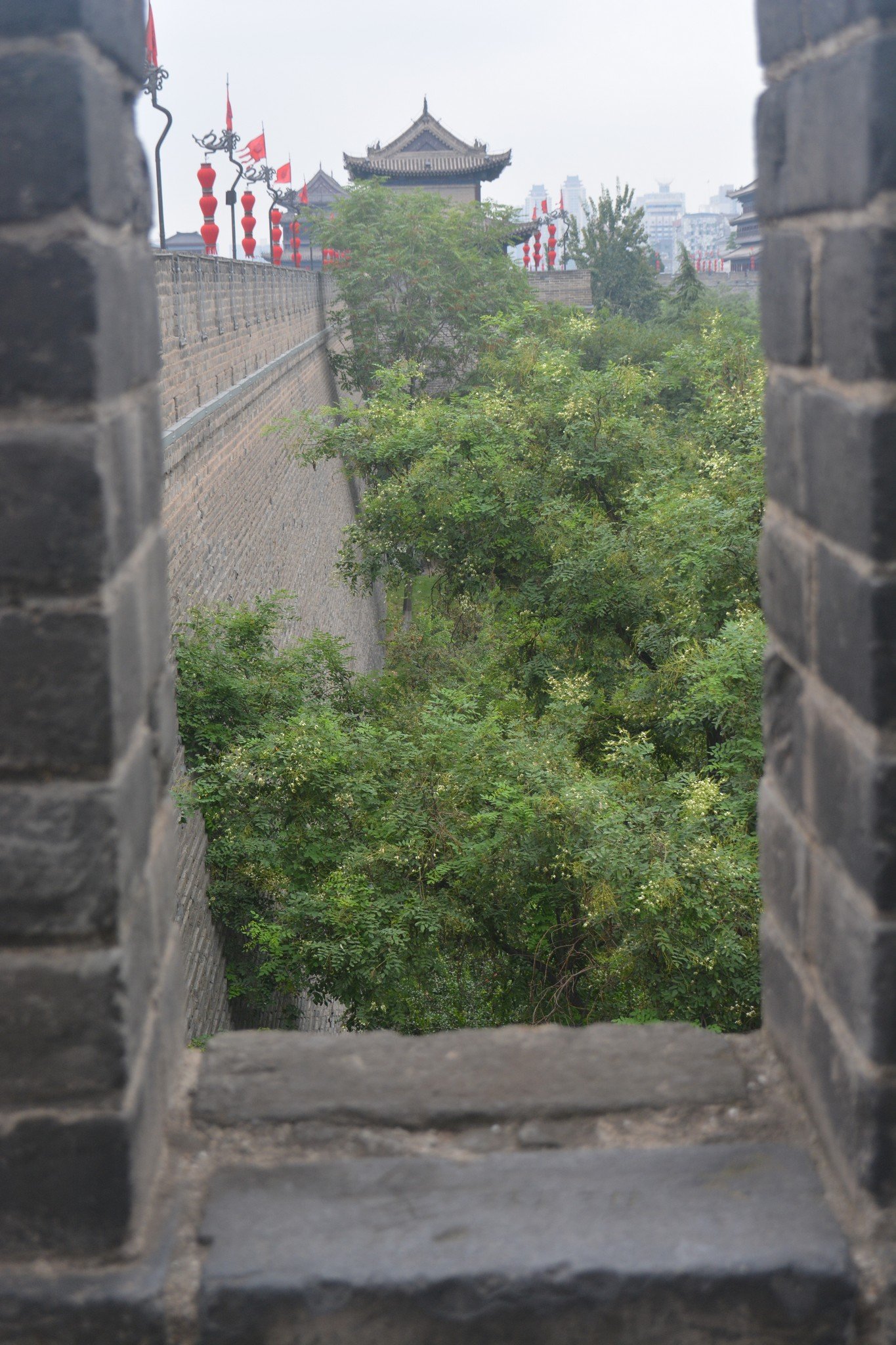
Looking Through a Battlement of Xi'an City Wall
Looking through a Battlement of the city wall surrounding Xi'an, China. The Xi'an city wall is one of the oldest, largest and best preserved Chinese city walls. The wall encloses an area of about 5.4 square miles, a total length of 8.7 miles. One of the guard posts built on top of the wall is in the distance.
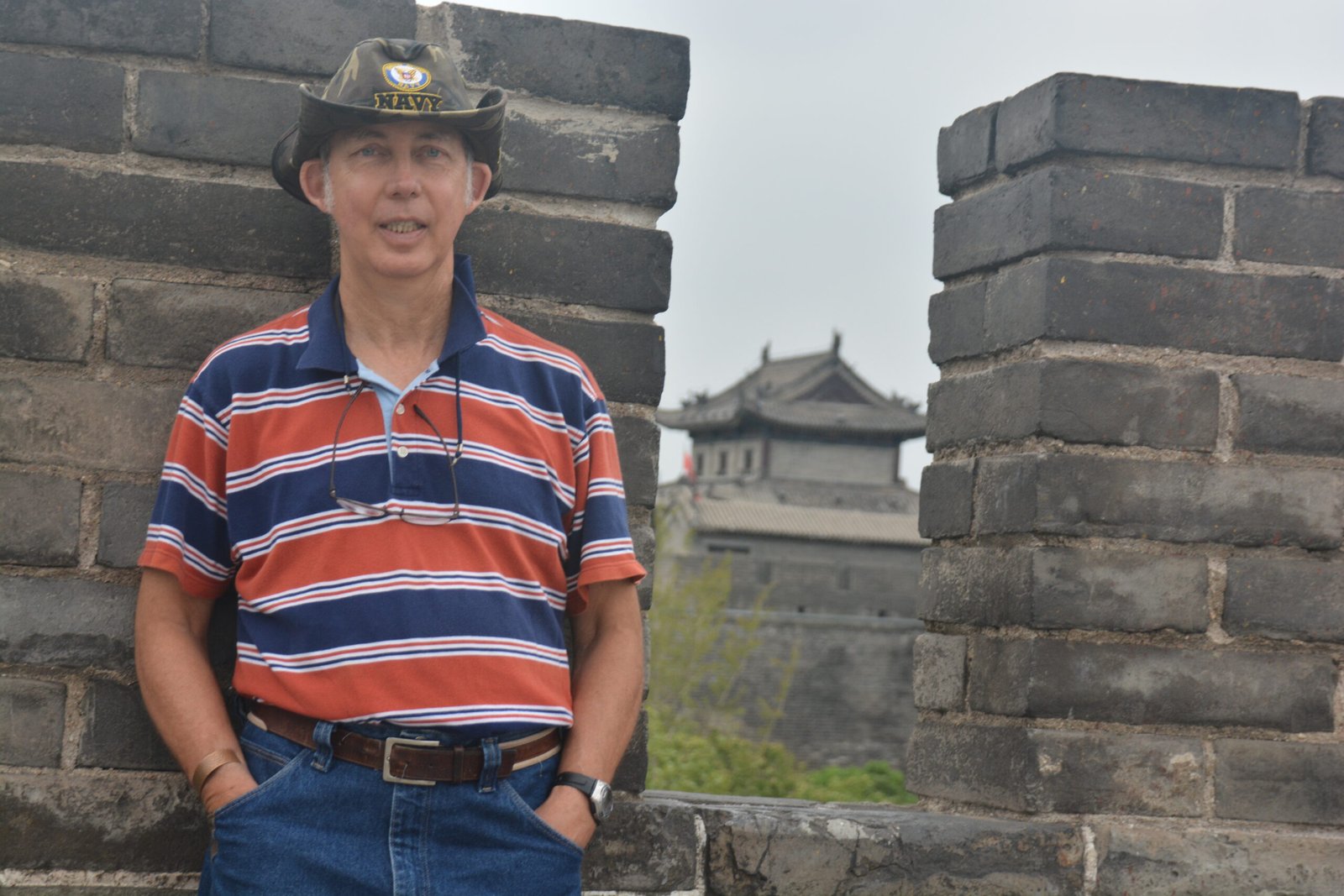
Ron Guarding a Battlement on the Old Xi'an City Wall
Ron posing next to one of the battlements of the old Xi'an fortification wall. One of the guardhouses on top of the wall can be seen through the battlement.
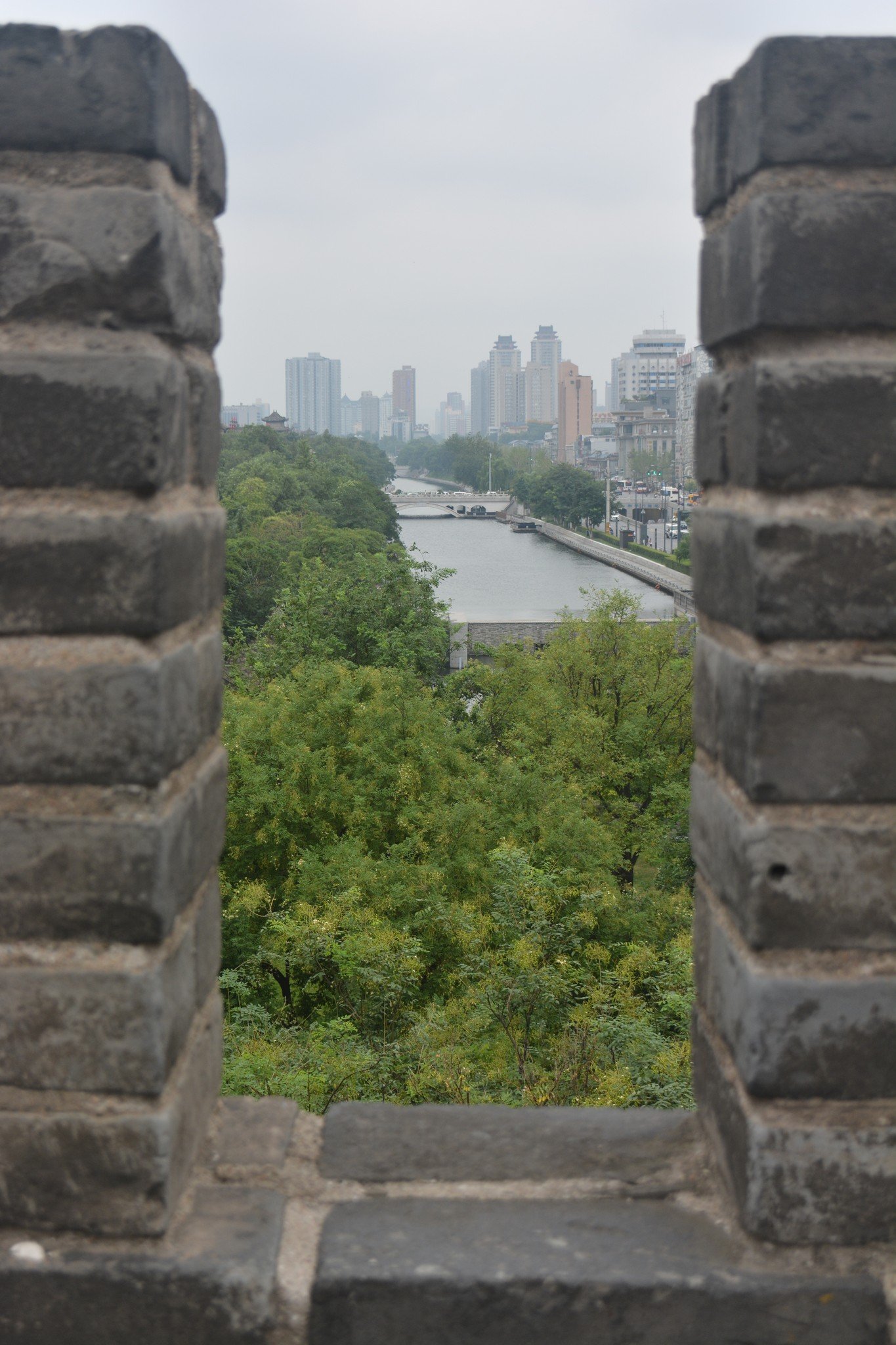
Looking Through a Battlement of Xi'an City Wall
Looking through a Battlement of the city wall surrounding Xi'an, China, with a view of the surrounding moat. The Xi'an city wall is one of the oldest, largest and best preserved Chinese city walls. The wall encloses an area of about 5.4 square miles, a total length of 8.7 miles. The modern section of Xi'an is in the distance.
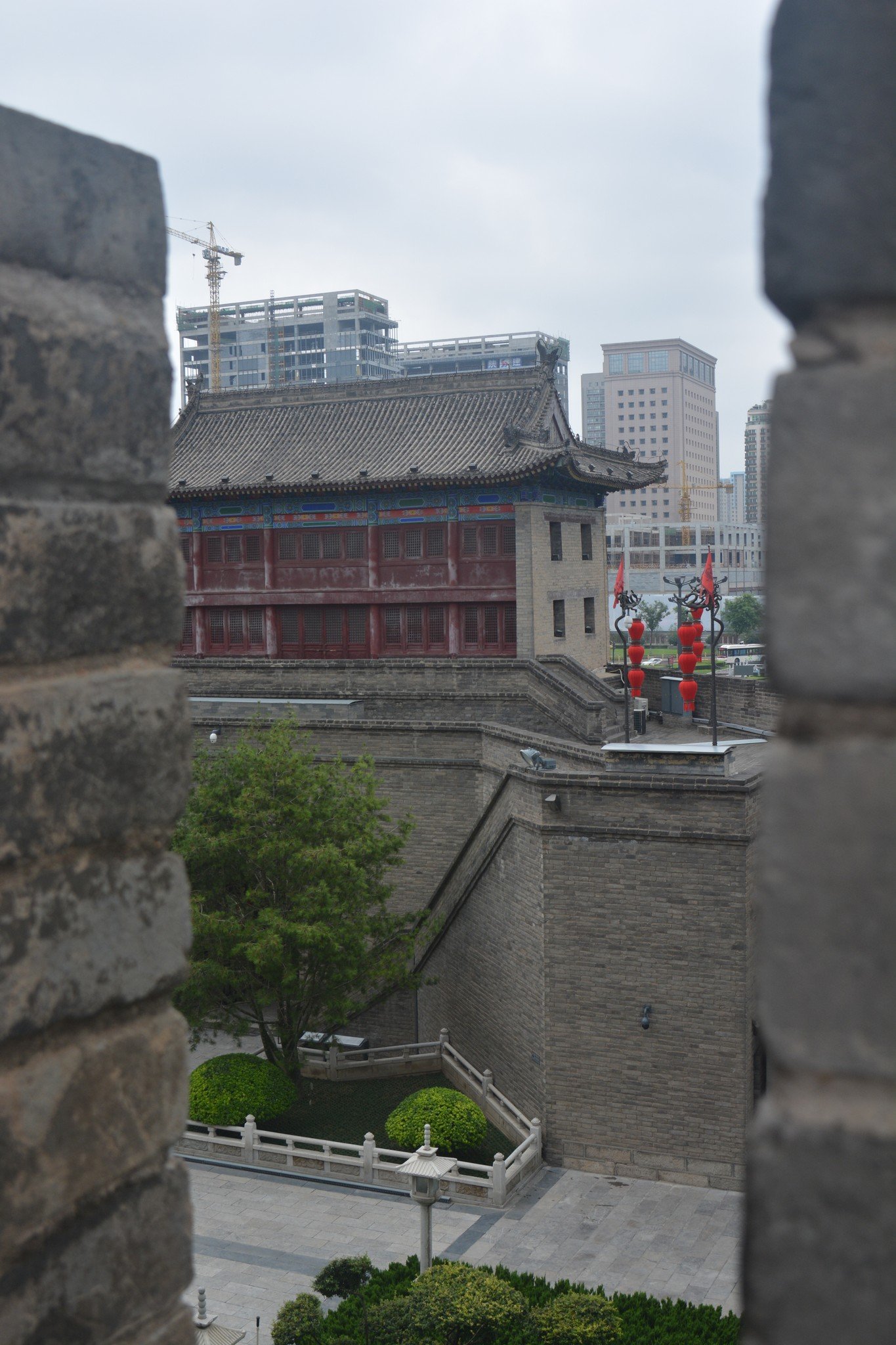
Looking Through a Battlement of Xi'an City Wall
Looking through a Battlement of the city wall surrounding Xi'an, China, with a view of the opposite wall and guardhouse. The Xi'an city wall is one of the oldest, largest and best preserved Chinese city walls. The wall encloses an area of about 5.4 square miles, a total length of 8.7 miles. A guard post built on top of the wall is in the distance, with a building in the modern section of Xi'an behind it.
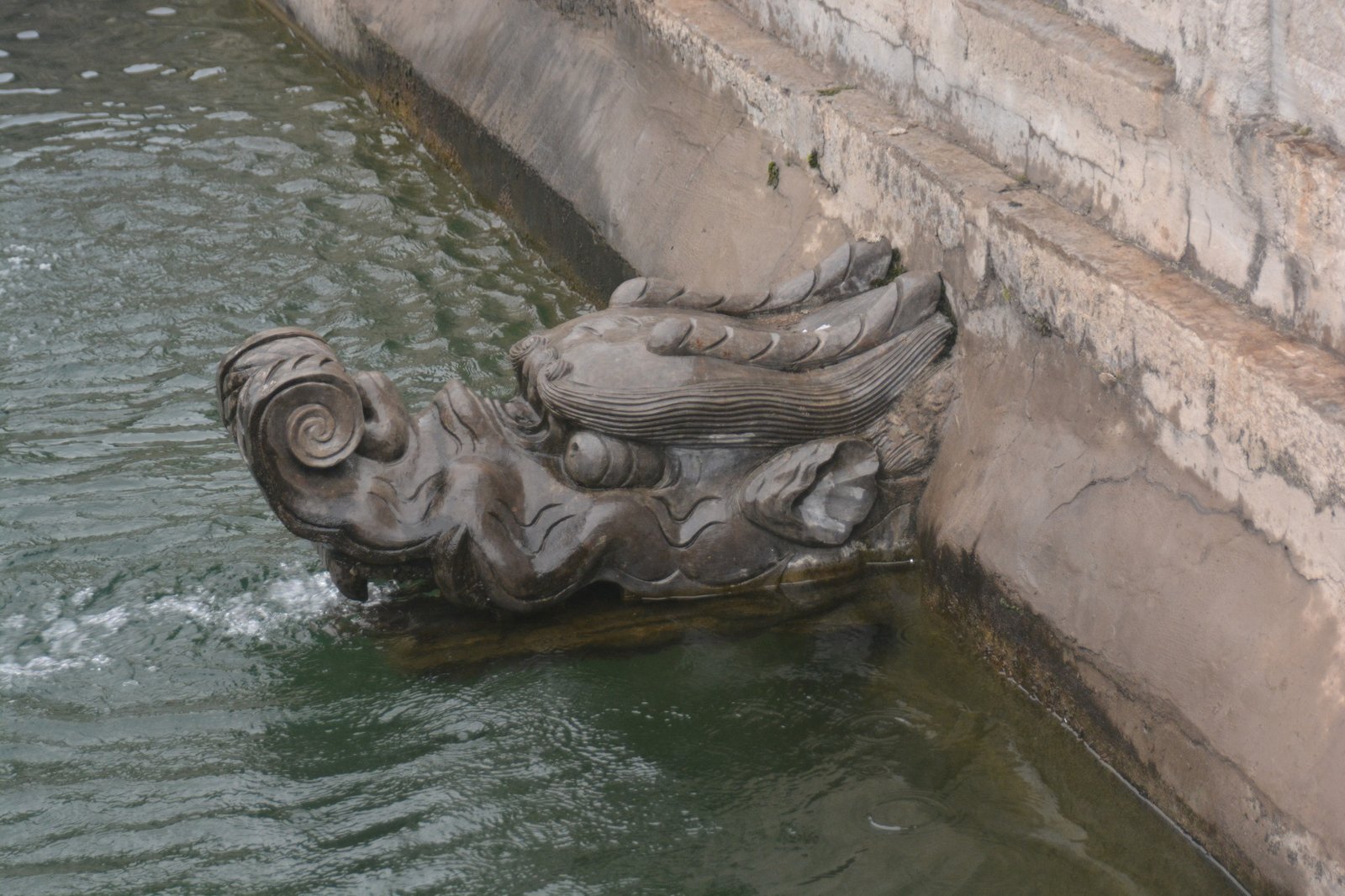
Stone Dragon Water Fountain, Xi'an
A detail of a carved stone dragon head used as part of a fountain. Part of the stone fountain located in the Xi'an Forest of Steles Museum.
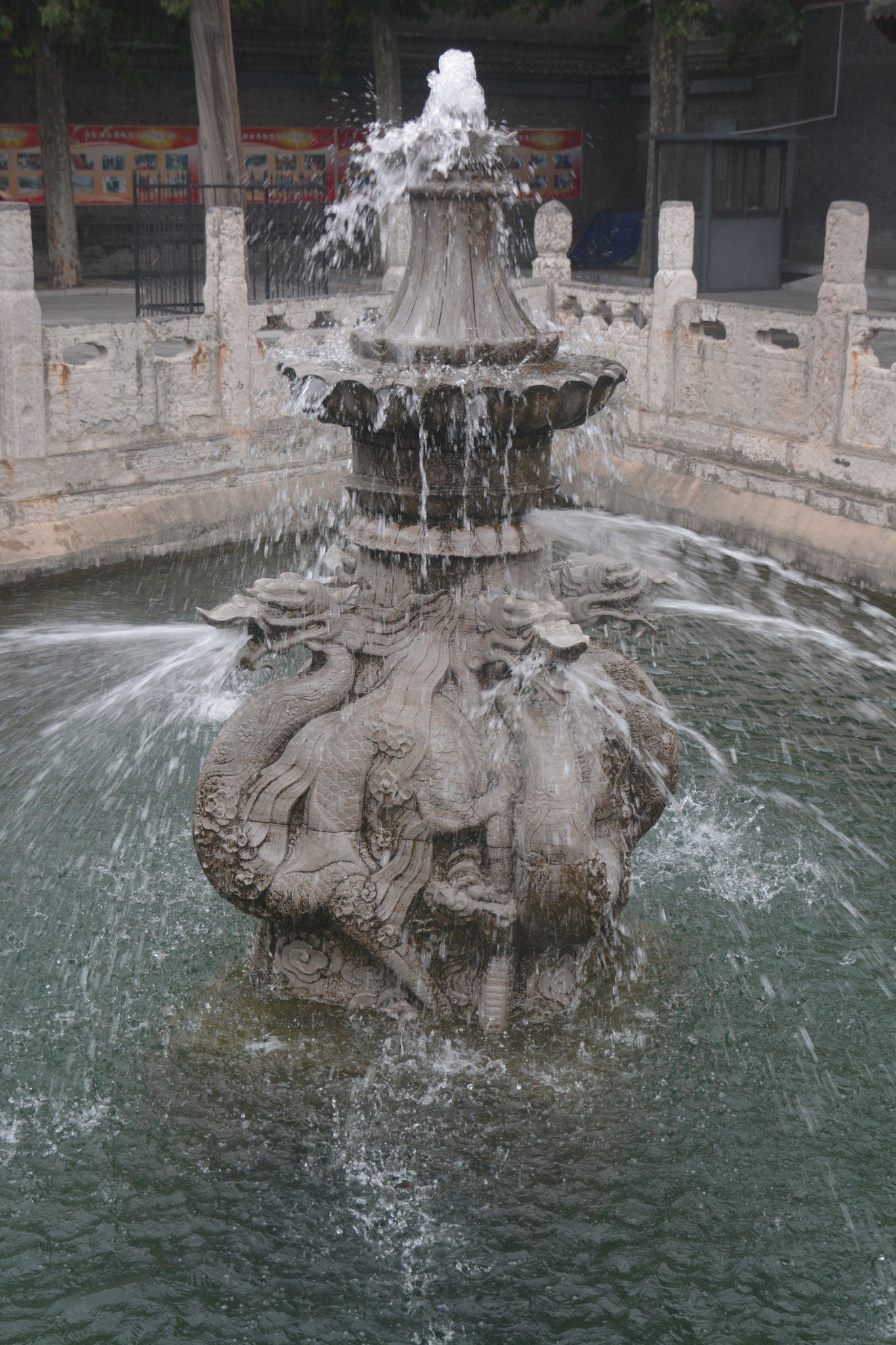
Old Fountain in Xi'an
Details of a lovely stone fountain located in the Xi'an Forest of Steles Museum.
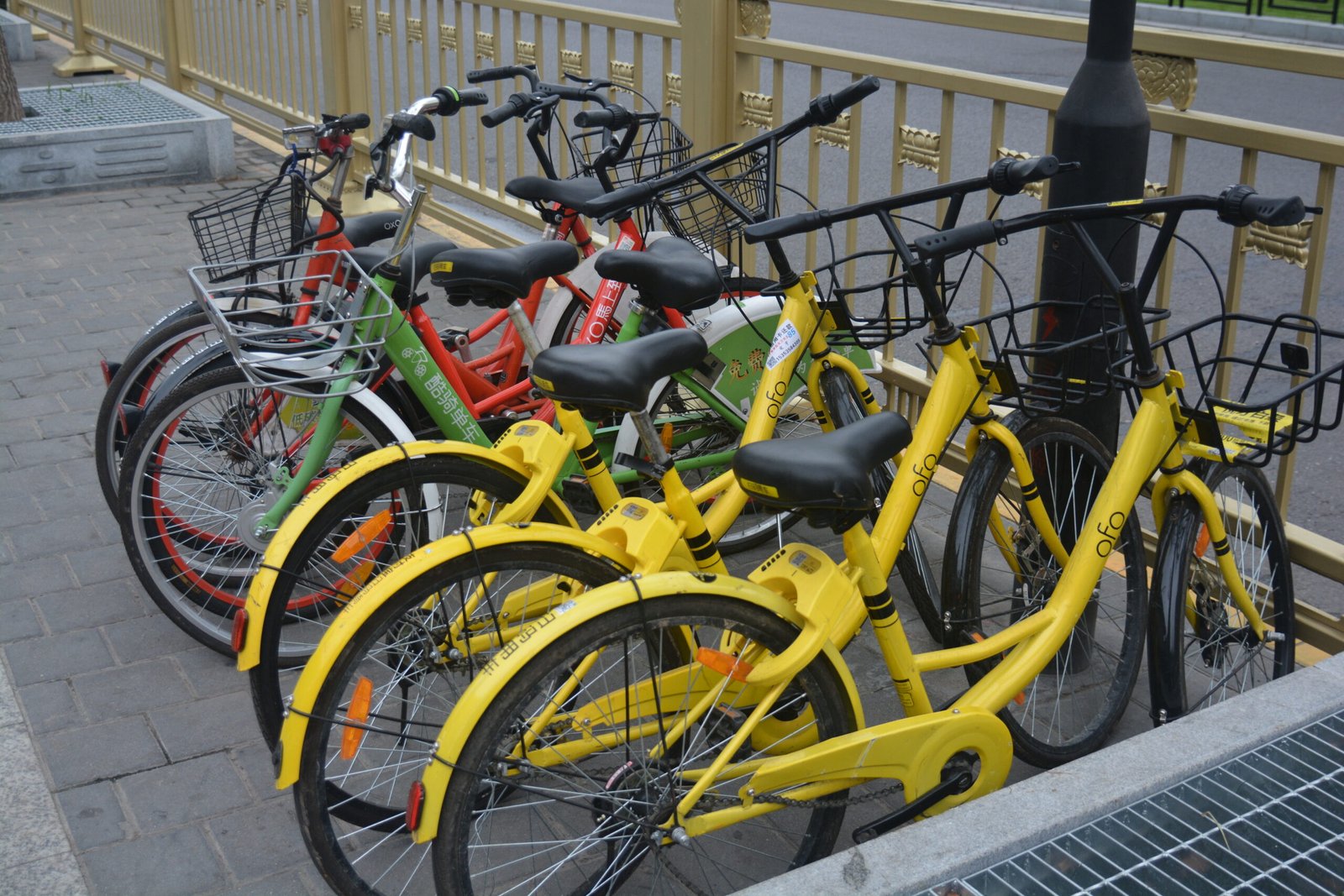
A Bevy of Rental Bikes in Xi'an
On my first trip to China in 2003, almost everyone rode bicycles. The better-off folks (like Winnie) owned mopeds. Cars (and utility trucks) were almost exclusively used for commercial purposes. By the time of our 2017 trip, cars for personal use were common, mopeds were common, and bicycles were used almost exclusively for rental purposes like these.
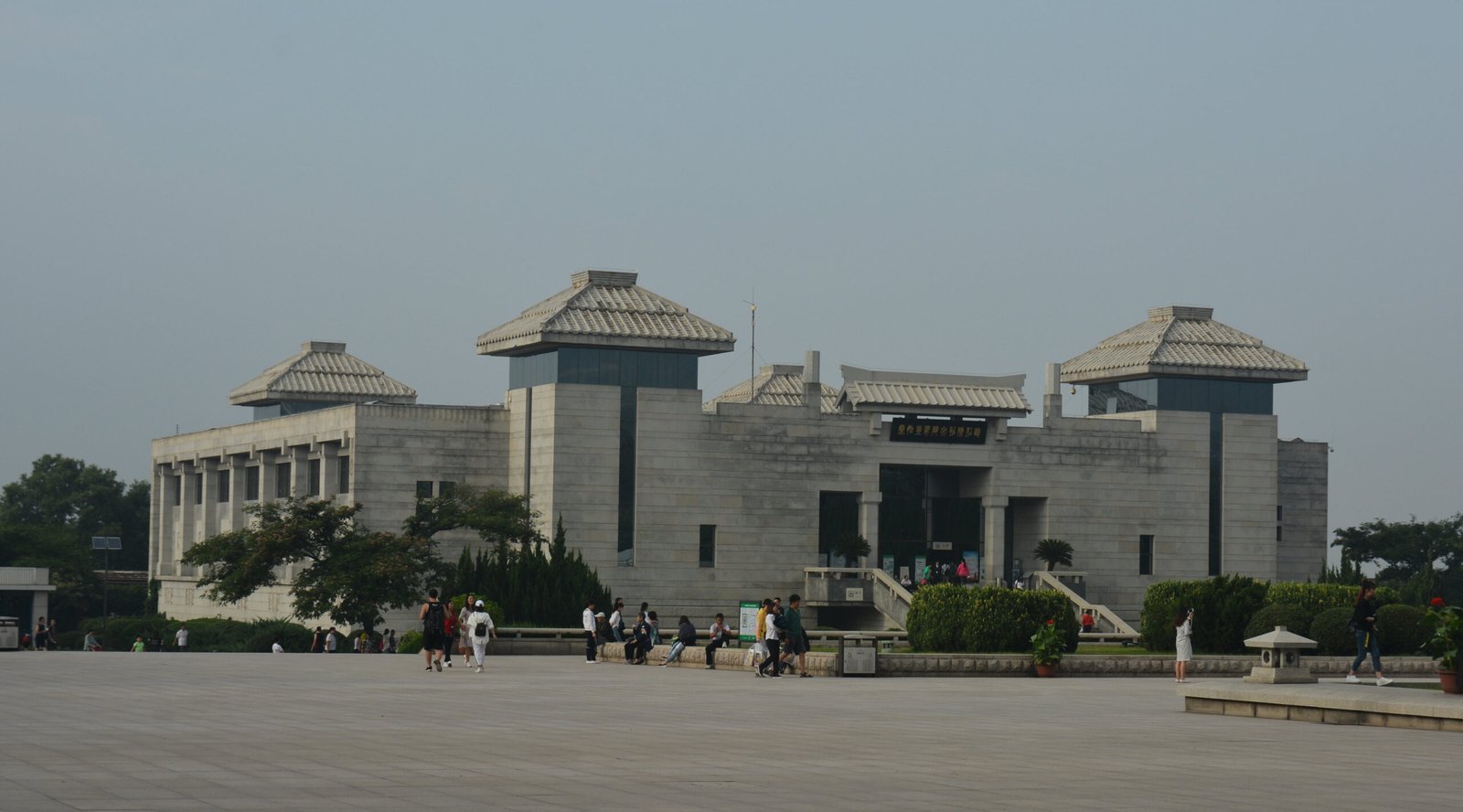
Emperor Qinshihuang's Mausoleum Site Museum in Xi'an
Front view of the Emperor Qinshihuang's Mausoleum Site Museum, located near Lishan Mountain outside Xi'an. It preserves over 8,000 life-sized terracotta warriors, horses, and chariots buried to protect the first emperor of China in the afterlife. This museum is also the site of archeological restorations and contains workshops and several public display areas.
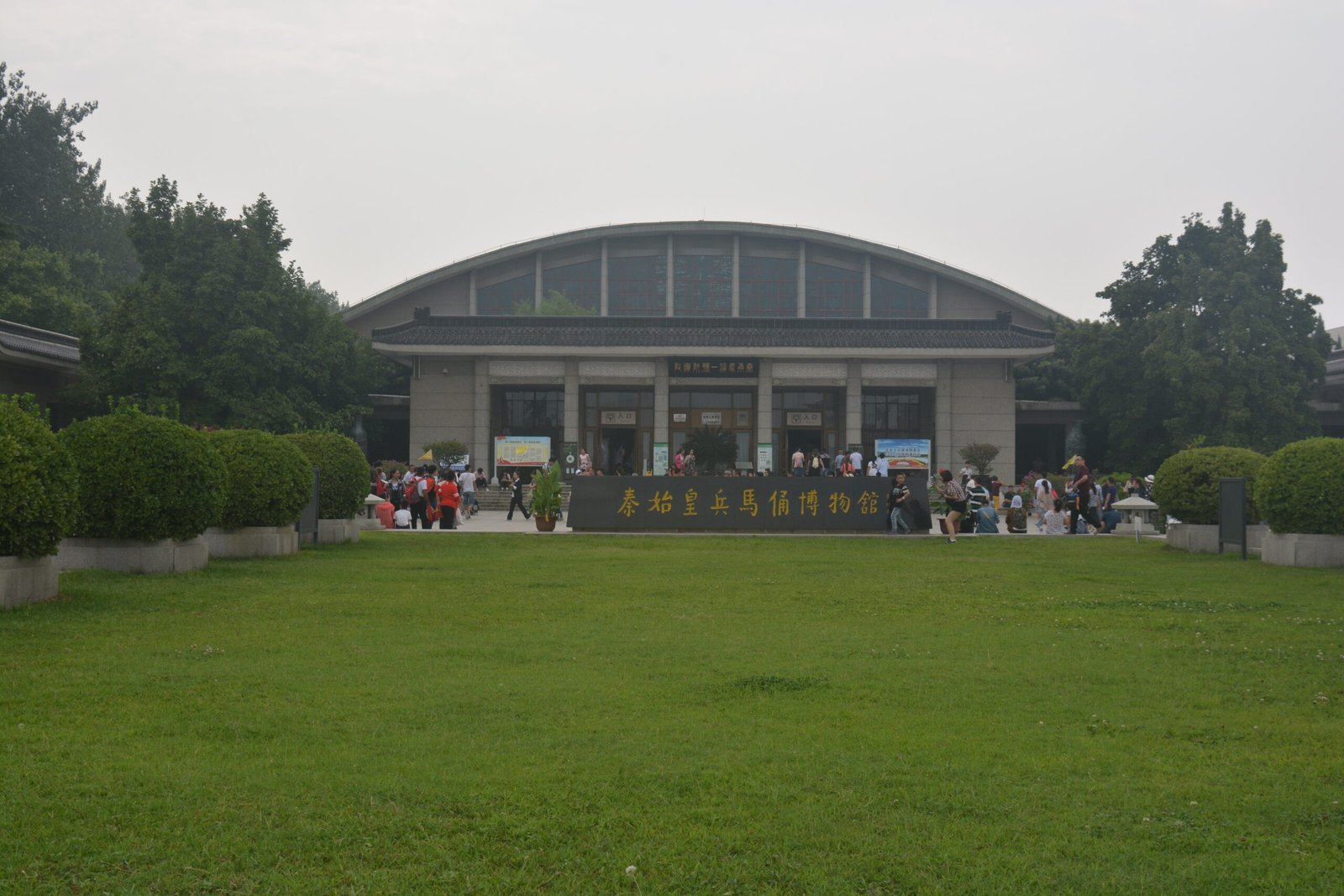
The Modern Home of the Terracotta Warriors of Xi'an
Inside the grounds of the Emperor Qinshihuang's Mausoleum Site Museum. This particular building covers the main excavation site of the Terracotta warriors for weather and security protection.
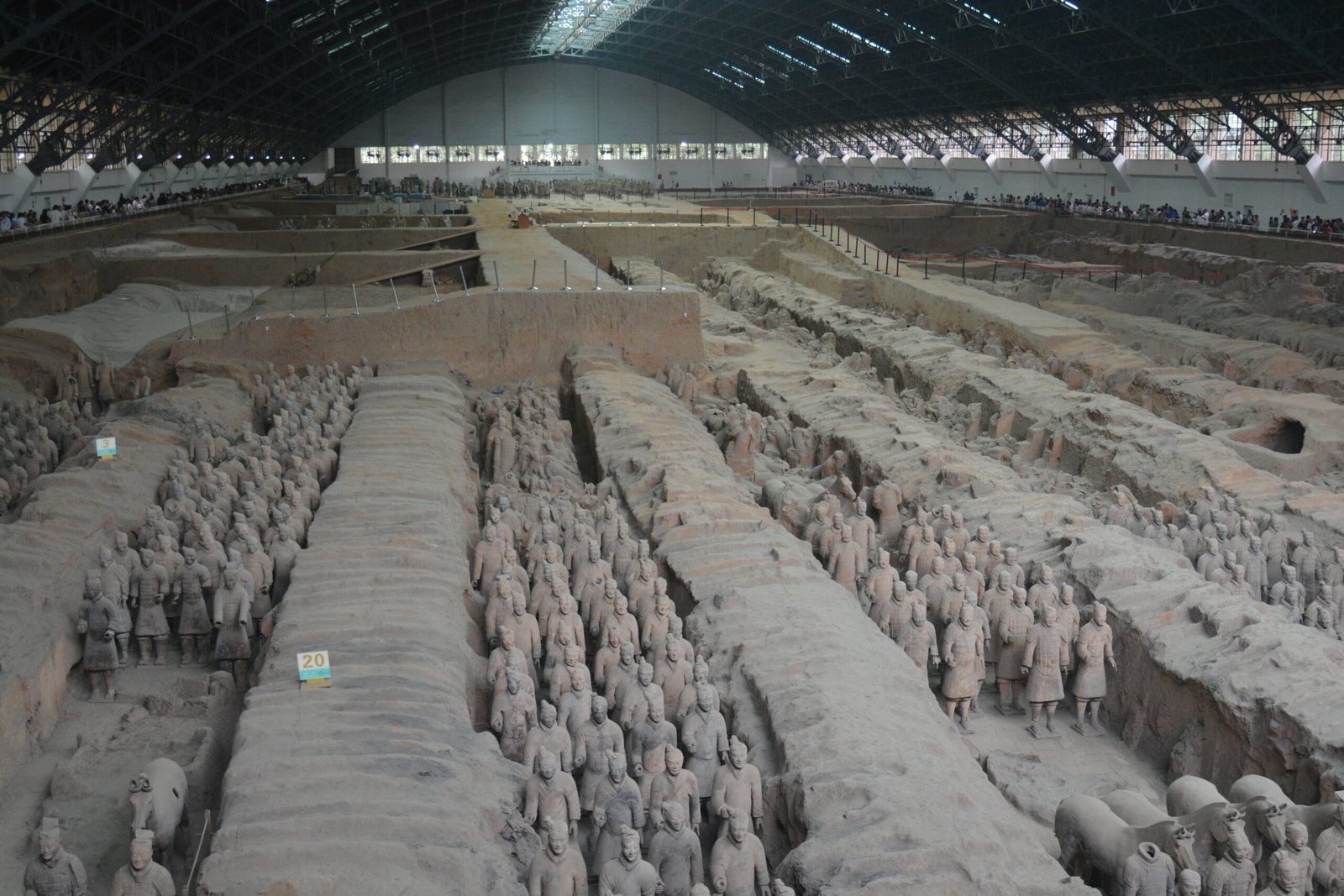
Rows of Terracotta Warriors
The interior of Emperor Qinshihuang's Mausoleum Site Museum in Xi'an. The domed structure was built to protect the excavated rows of Terracotta warriors created to defend the Emperor in his afterlife. The excavated section represents only a small section of the entire mausoleum complex. I created a special gallery for more images of the Terracotta warriors.
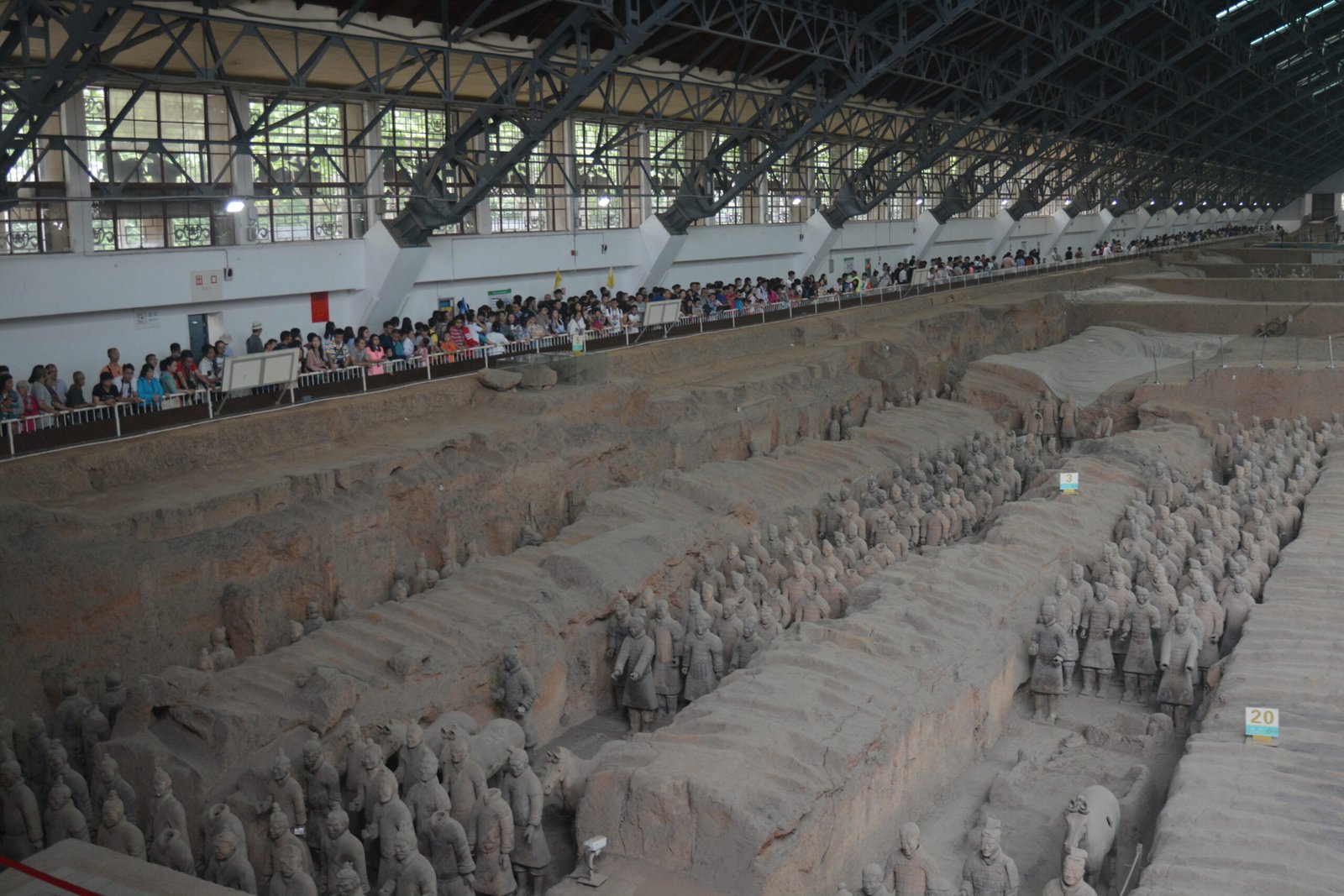
DSC_2707
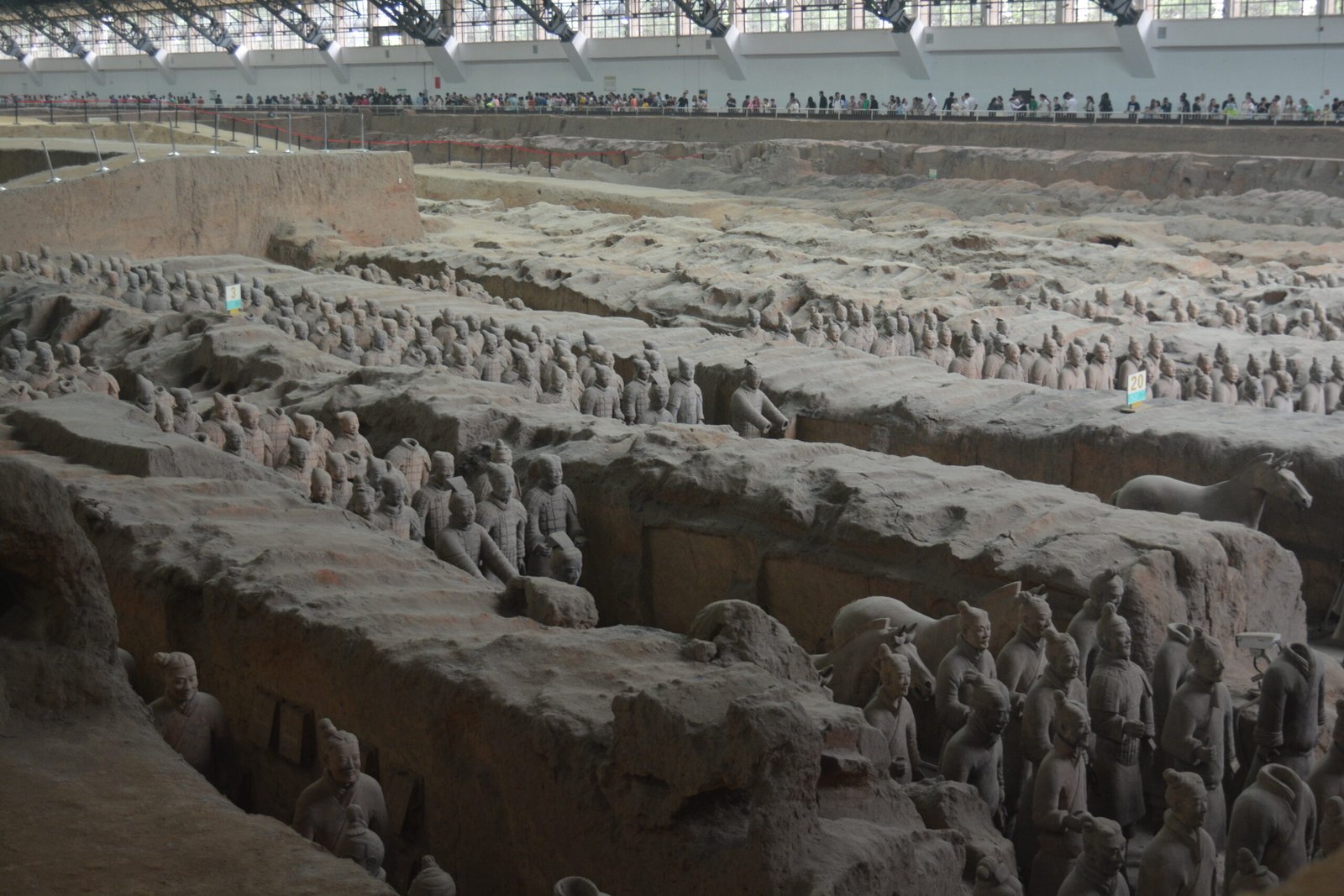
The Terracotta Warriors in Formation
Another view of the excavations. The warriors, and horses, were placed in proper military formation then buried. They were intended to protect the emperor in his afterlife.
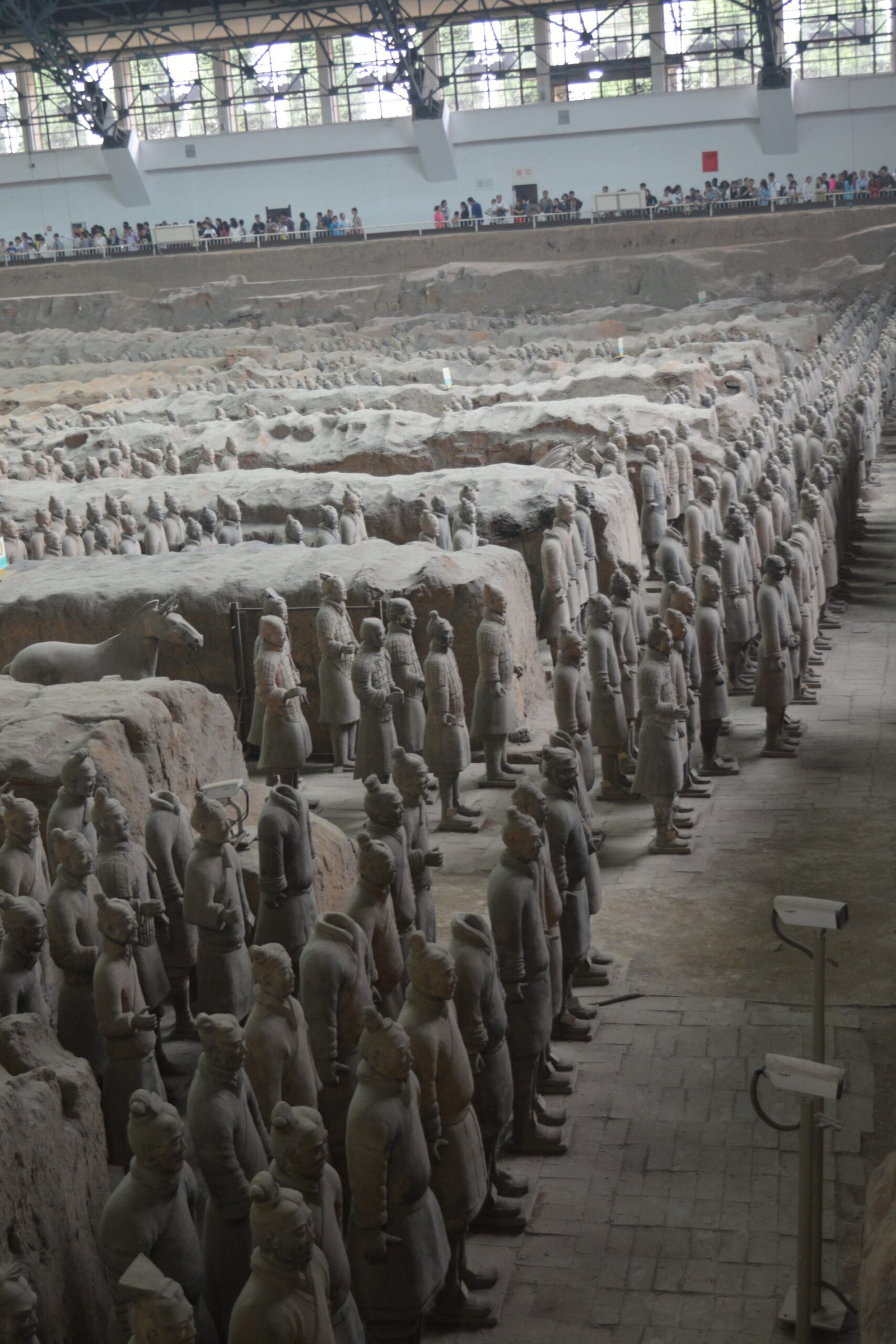
The Terracotta Warriors in Formation
Another view of the excavations. The warriors, and horses, were placed in proper military formation then buried. They were intended to protect the emperor in his afterlife.
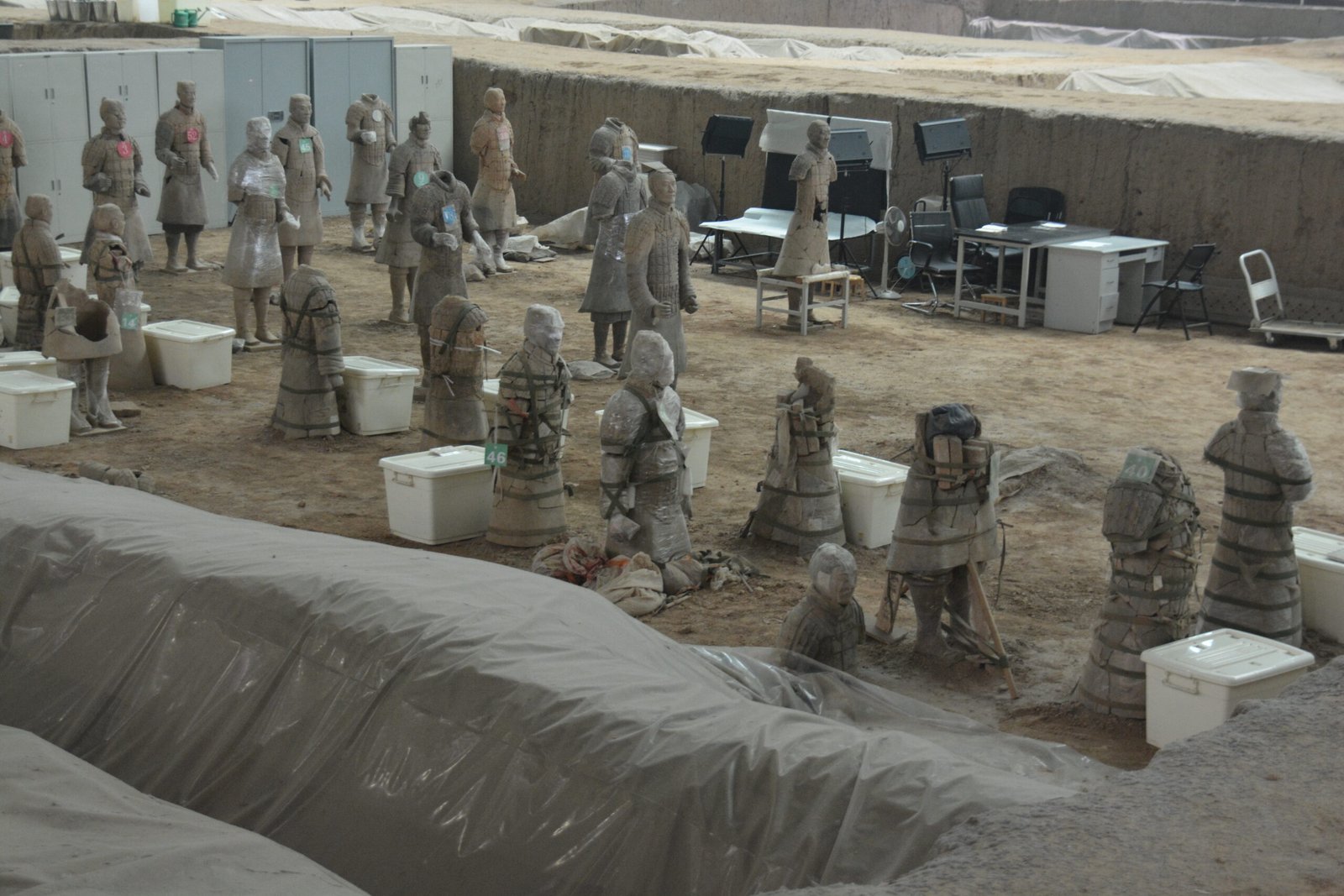
Restoration in Process
When figures are excavated broken, the pieces are carefully collected, labeled, and moved to the back of the museum. Archeologists carefully piece the figures back together and when finished, move them back to the area they were excavated. One interesting point is that these terracotta figures were painted at the time they were created. Due to age and being buried for centuries, within minutes of being exposed to air the remaining paint colors fades away.
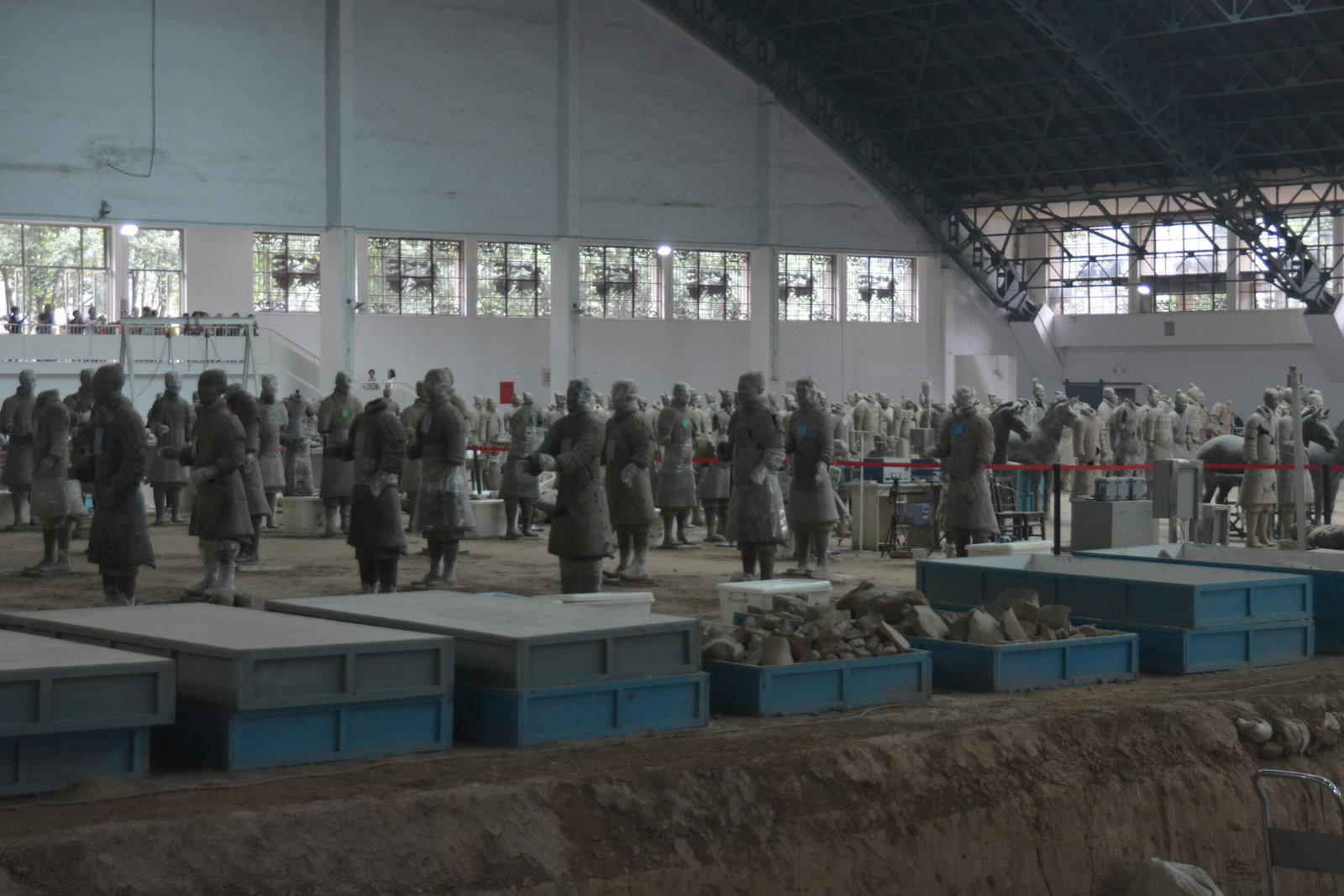
Restoration in Process
When figures are excavated broken, the pieces are carefully collected, labeled, and moved to the back of the museum. Archeologists carefully piece the figures back together and when finished, move them back to the area they were excavated.
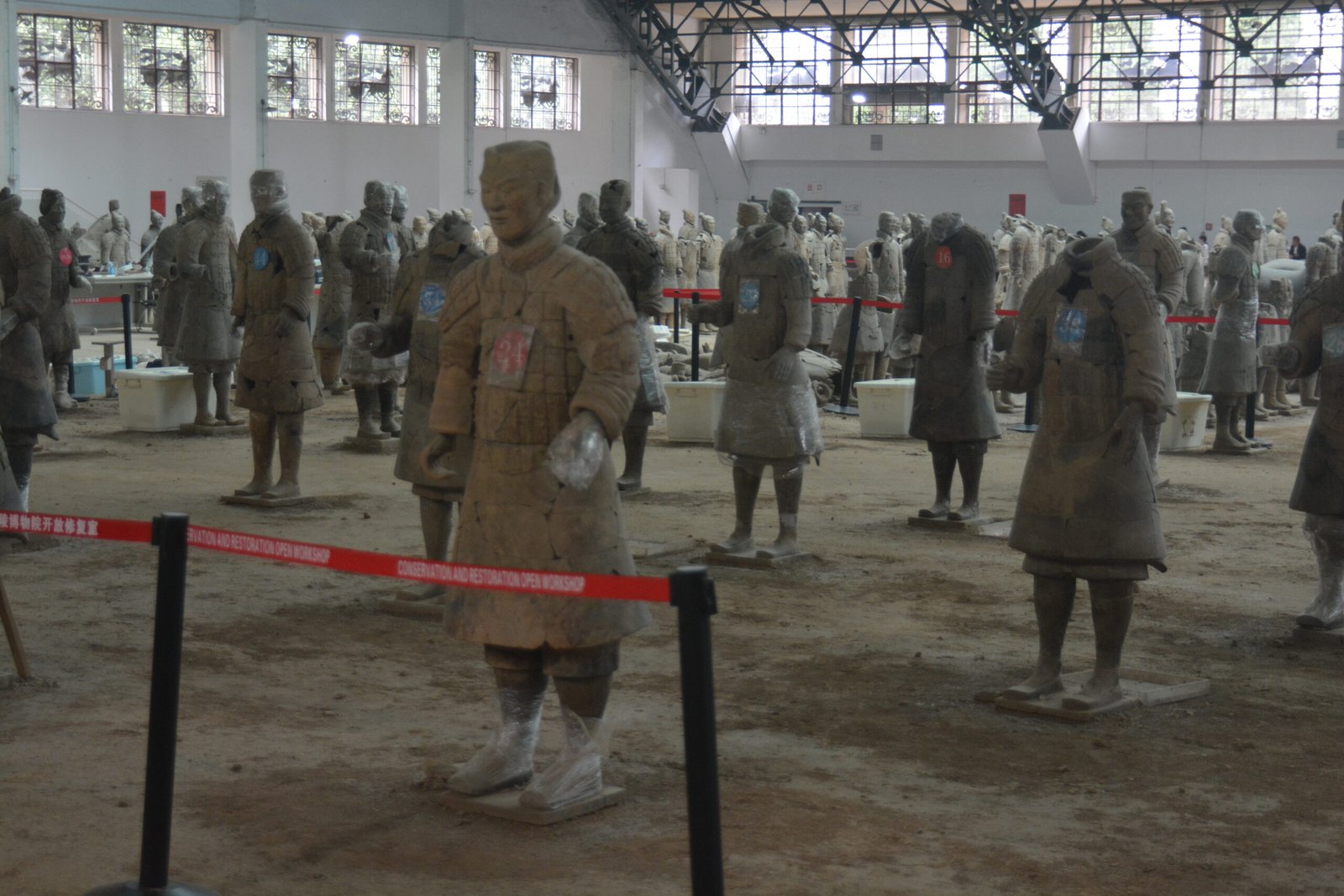
Restoration in Process
When figures are excavated broken, the pieces are carefully collected, labeled, and moved to the back of the museum. Archeologists carefully piece the figures back together and when finished, move them back to the area they were excavated.
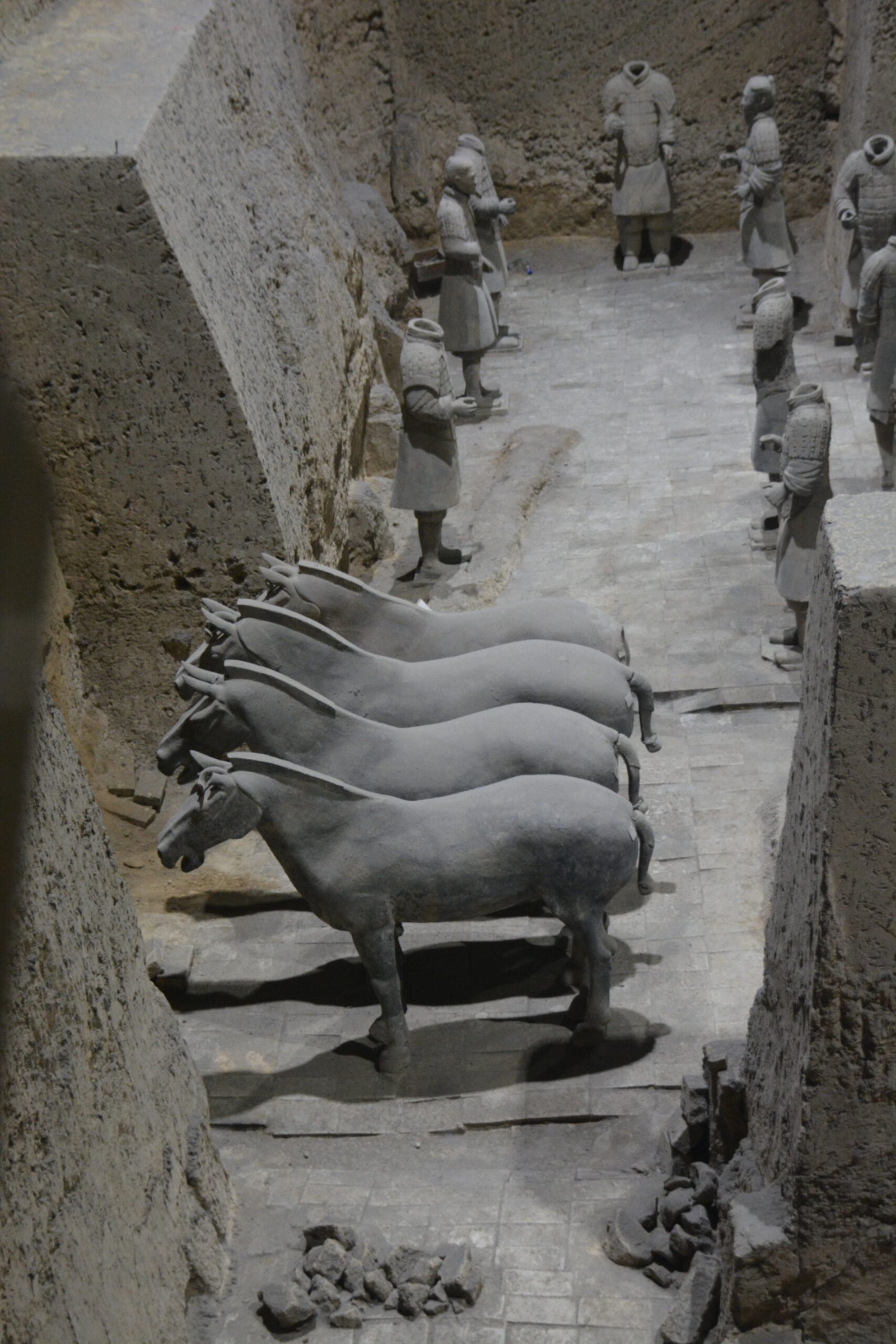
And the Horse You Rode in On
Terracotta figures of warriors were buried here along with terracotta figures of war horses. In this trench most of the figures were excavated in good repair.
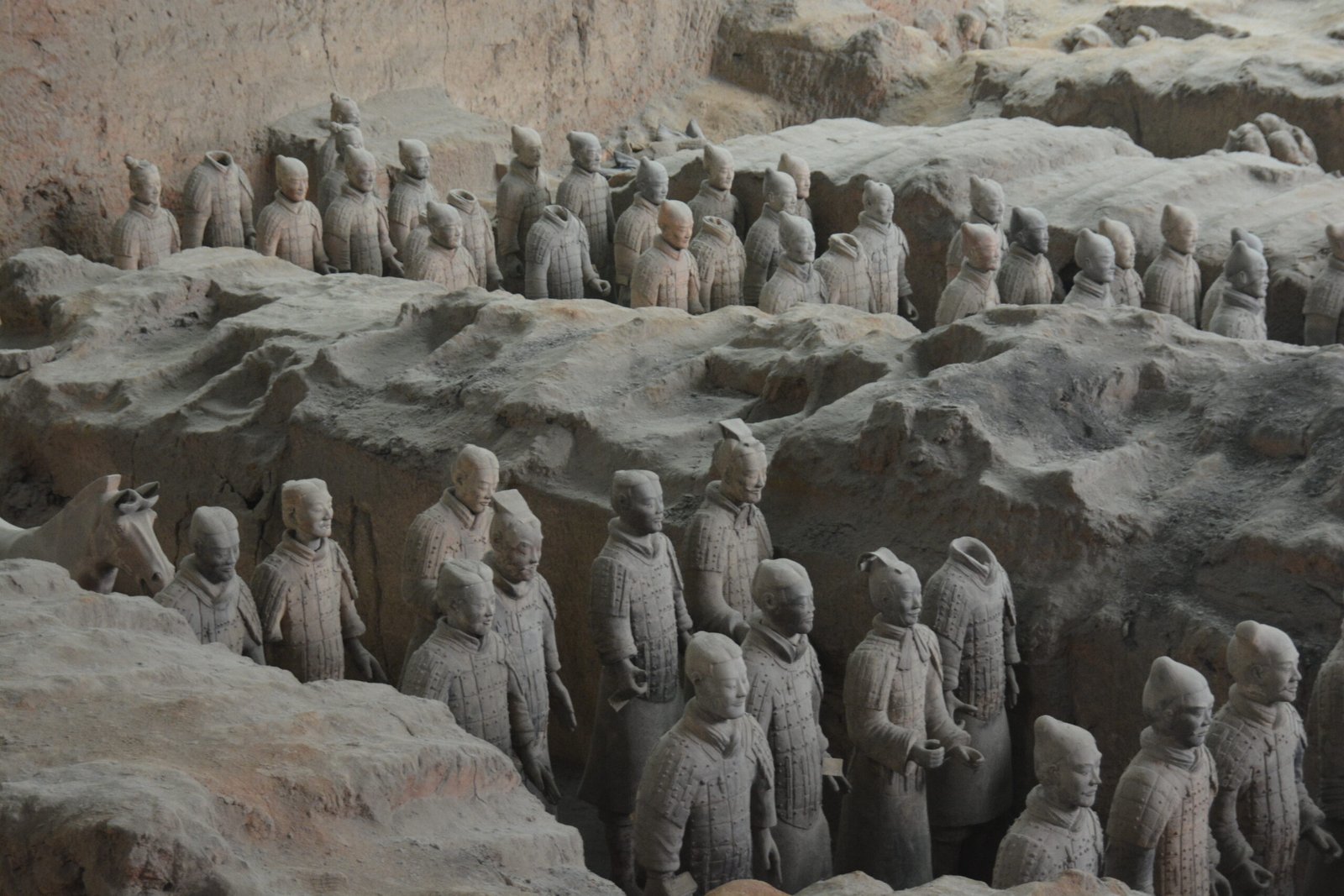
The Terracotta Warriors in Formation
Another view of the excavations. The warriors, and horses, were placed in proper military formation then buried. Not all warriors survived the centuries intact. Archeologists are working to restore the broken figures.
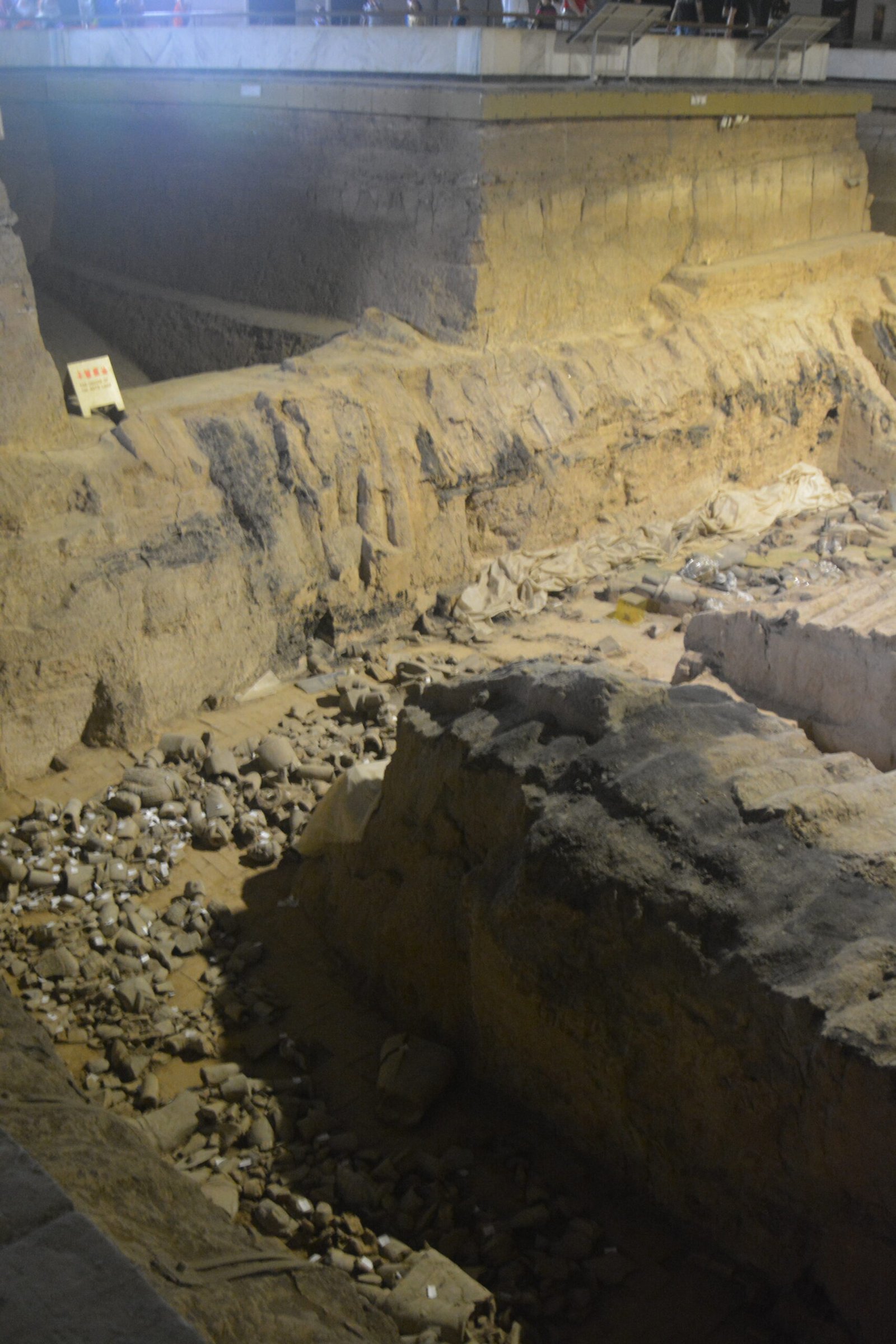
A Trench of Disrepair
Several of the open trenches contained only fragments of the warriors. At some point, archeologists will try to reassemble these fragments back into the compee warriors.
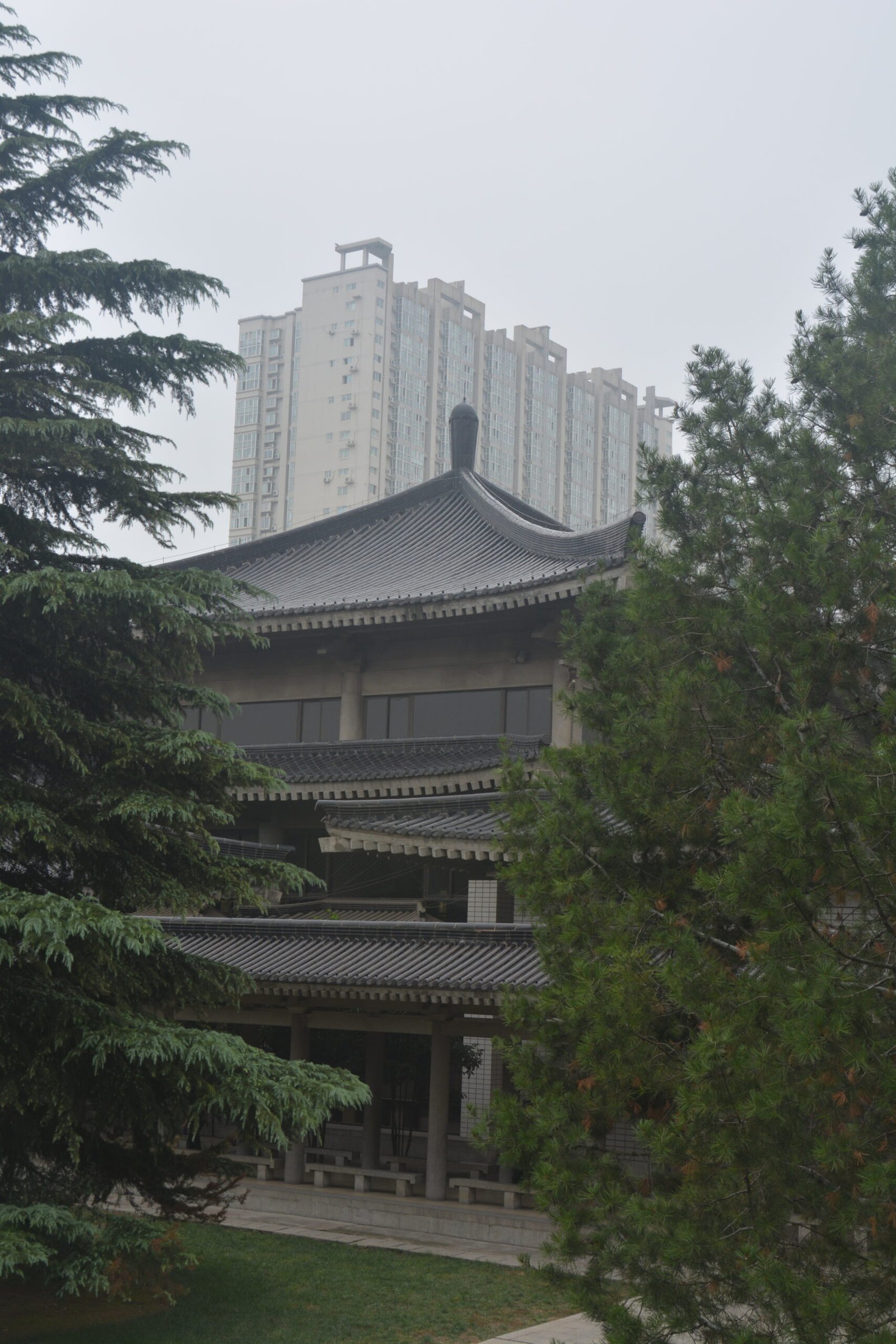
The Shaanxi History Museum in Xi'an
Another world-renowned archeological museum in Xi'an. With architecture inspired by traditional Tang Dynasty palaces, this museum houses over 370,000 cultural relics, including murals, bronze statues, and tools. These artifacts span thousands of years of Chinese history, and include some of the best examples of terracotta warrior figures excavated at the nearby Emperor Qinshihuang's Mausoleum Site Museum.
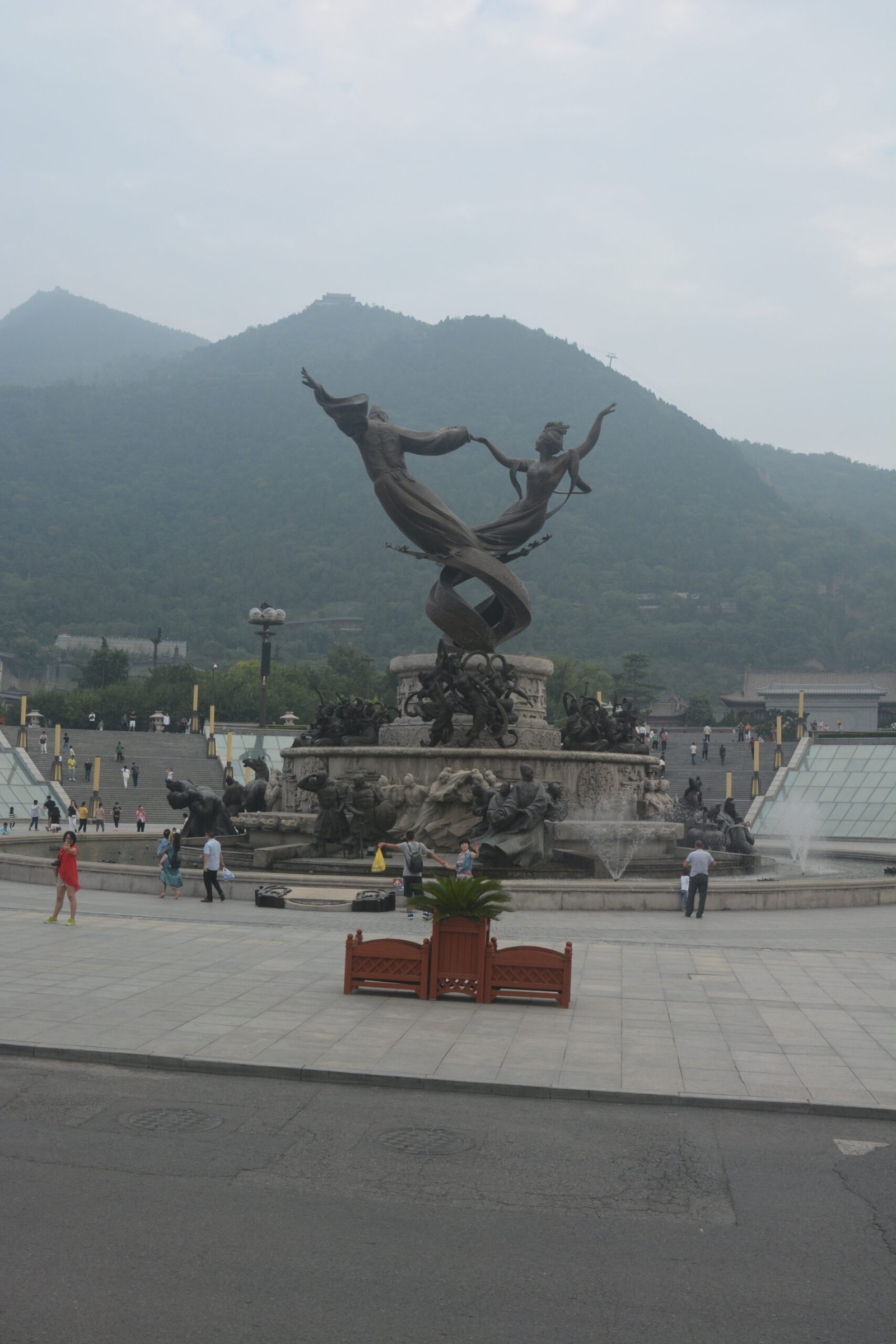
Bronze sculpture in front of the Huaqing Pool scenic area in Xi'an
A bronze sculpture of the Chinese mythological figures Nüwa and Fuxi intertwined in a dance, symbolizing the creation myth. Located at the Huaqing Pool scenic area in Xi'an.
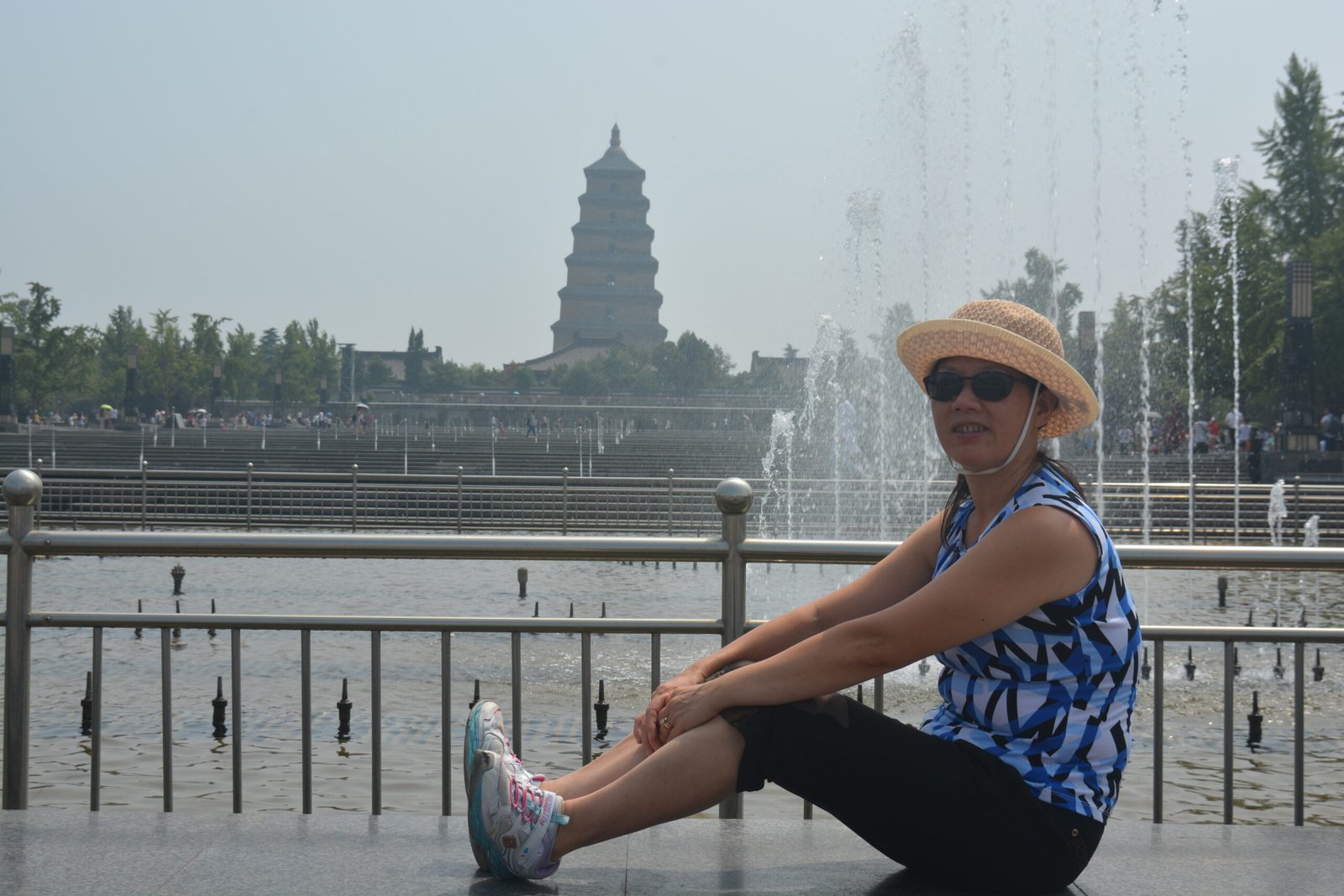
Winnie Taking A Break
Winnie resting her feet in front of the Plaza Water Fountain in the center of modern Xi'an. The Giant Wild Goose Pagoda (or Big Wild Goose Pagoda) is in the background
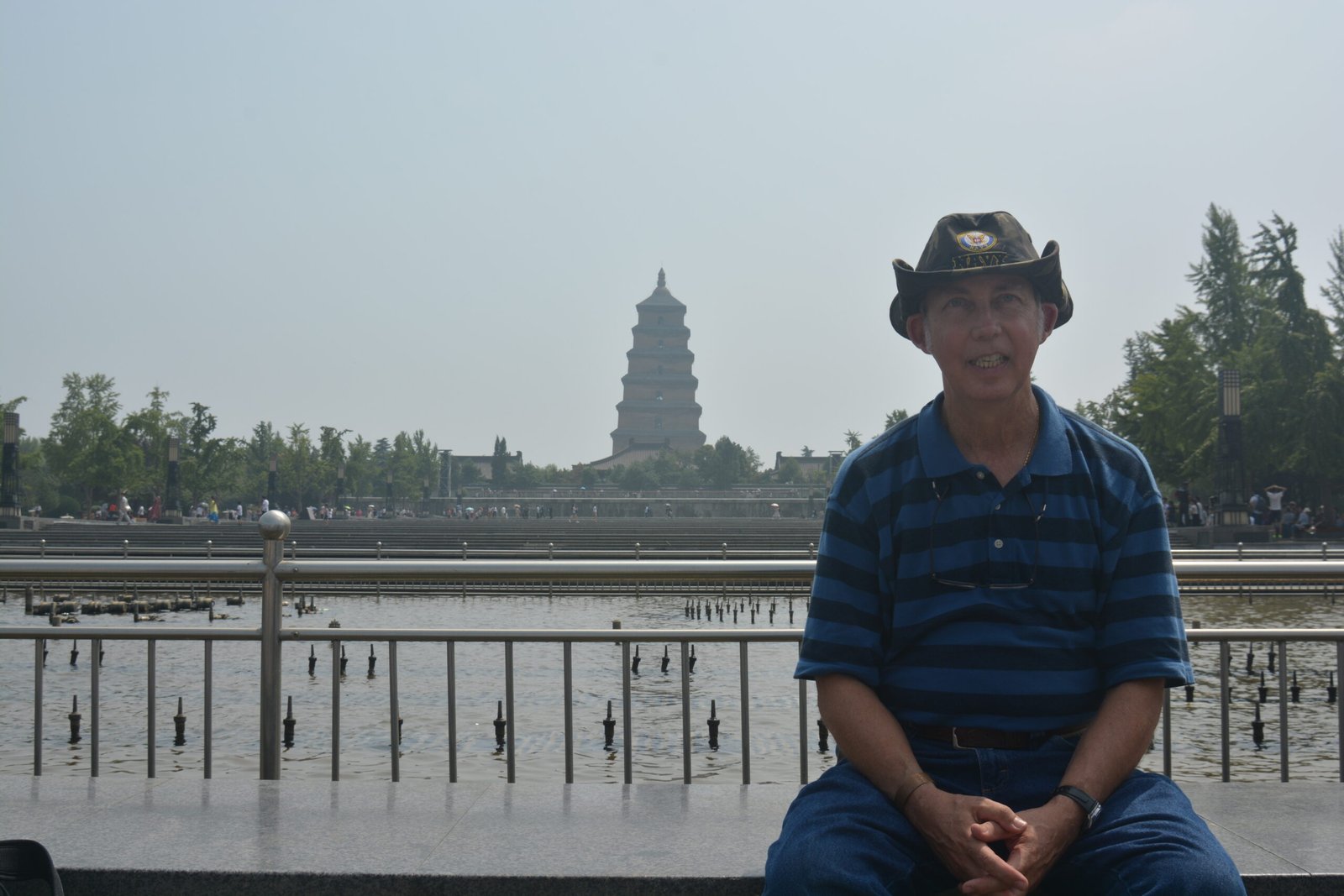
Ron Taking A Break
Ron resting his feet in front of the Plaza Water Fountain in the center of modern Xi'an. The Giant Wild Goose Pagoda (or Big Wild Goose Pagoda) is in the background
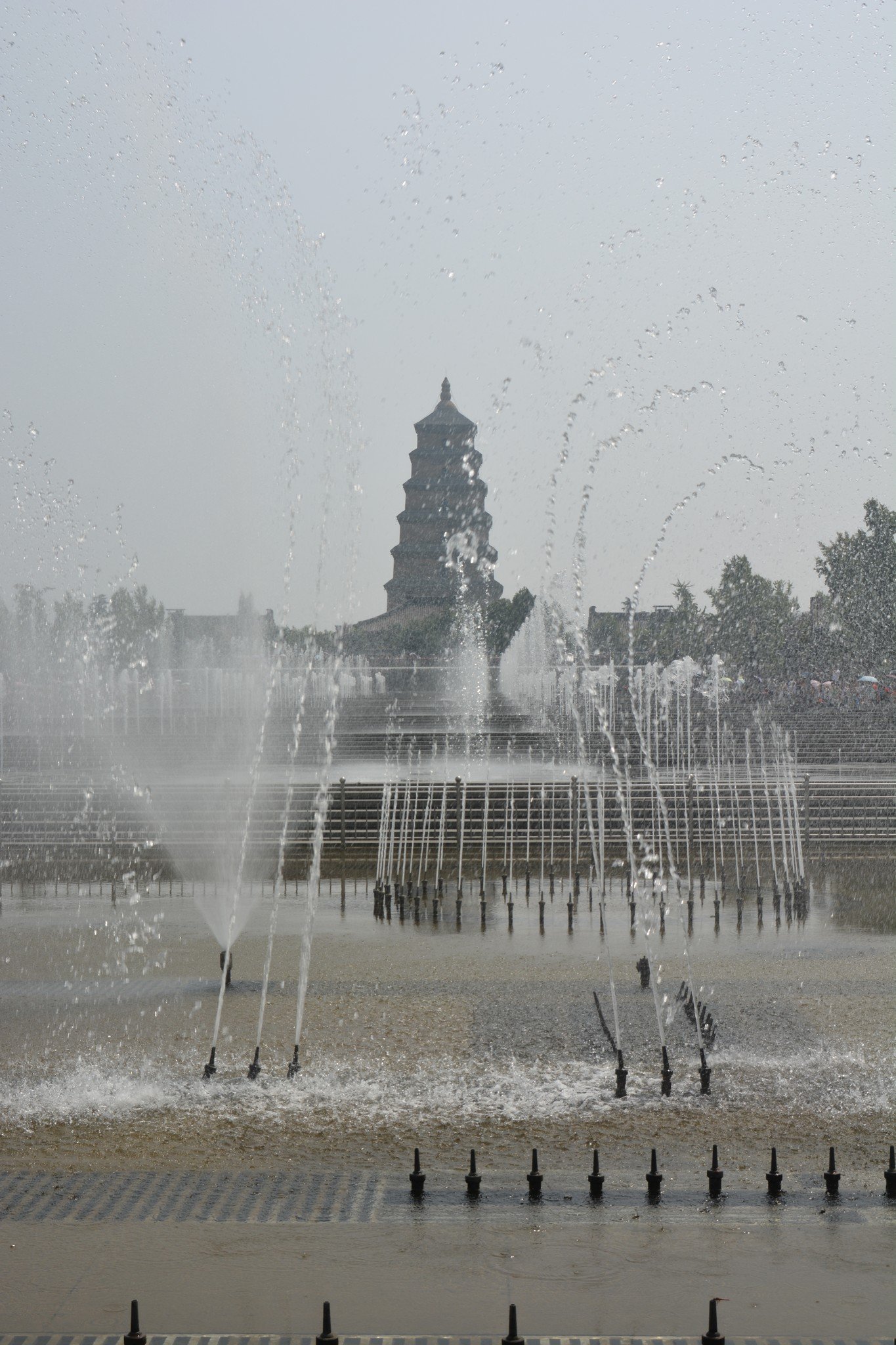
Looking Across a Plaza Water Fountain Towards Wild Goose Pagoda
Looking Across a Plaza Water Fountain Towards Wild Goose Pagoda. This fountain has a music accompaniment to the water flows. This is a major plaza within modern Xi'an, China
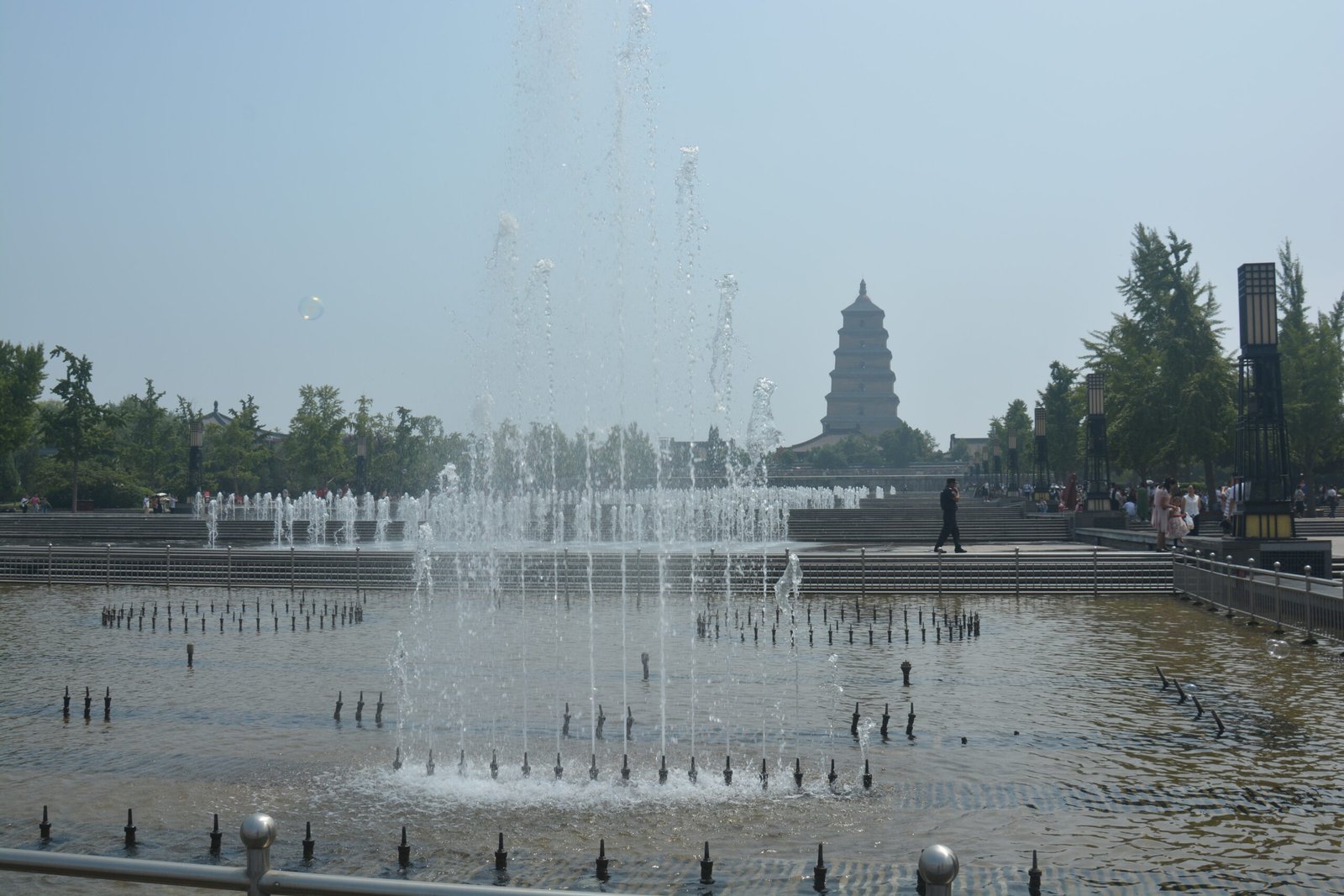
Looking Across a Plaza Water Fountain Towards Wild Goose Pagoda
Another view of a Plaza Water Fountain looking towards Wild Goose Pagoda. This fountain has a music accompaniment to the water flows. This is a major plaza within modern Xi'an, China
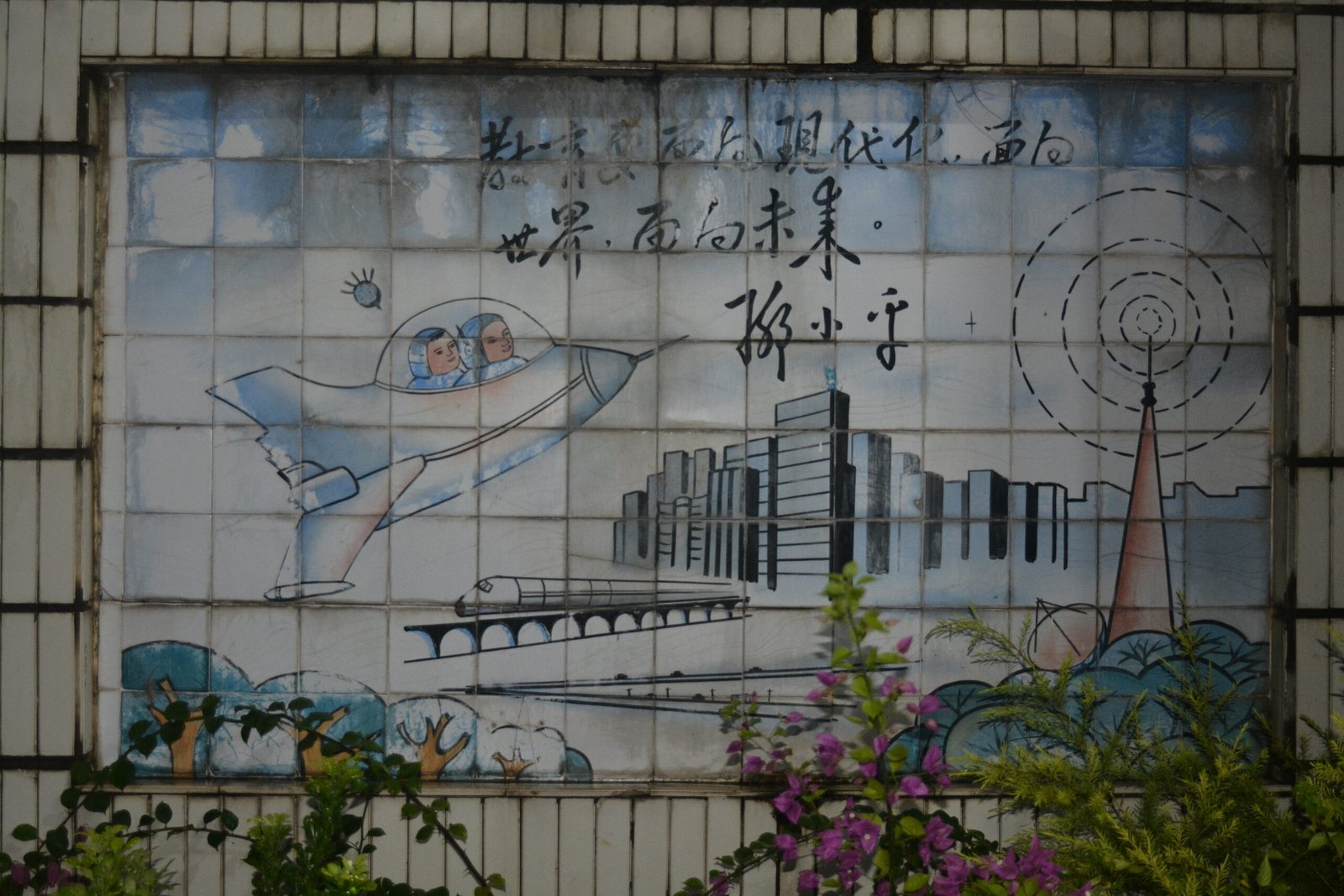
Tile Mural On A Chinese School
This tile mural is displayed at the entrance to the school complex in Luchuan, where my sister-in-law Yufeng teaches English. I first saw this on my 2003 trip, and it has always had a profound impact on me. I feel this mural show's China's commitment to education as a way of improving their country, leading them to a new future. The text translations are:
The text "世界,面向未果。" translates to "World, facing the future."
The text "扮小学." translates to "Act as primary school."
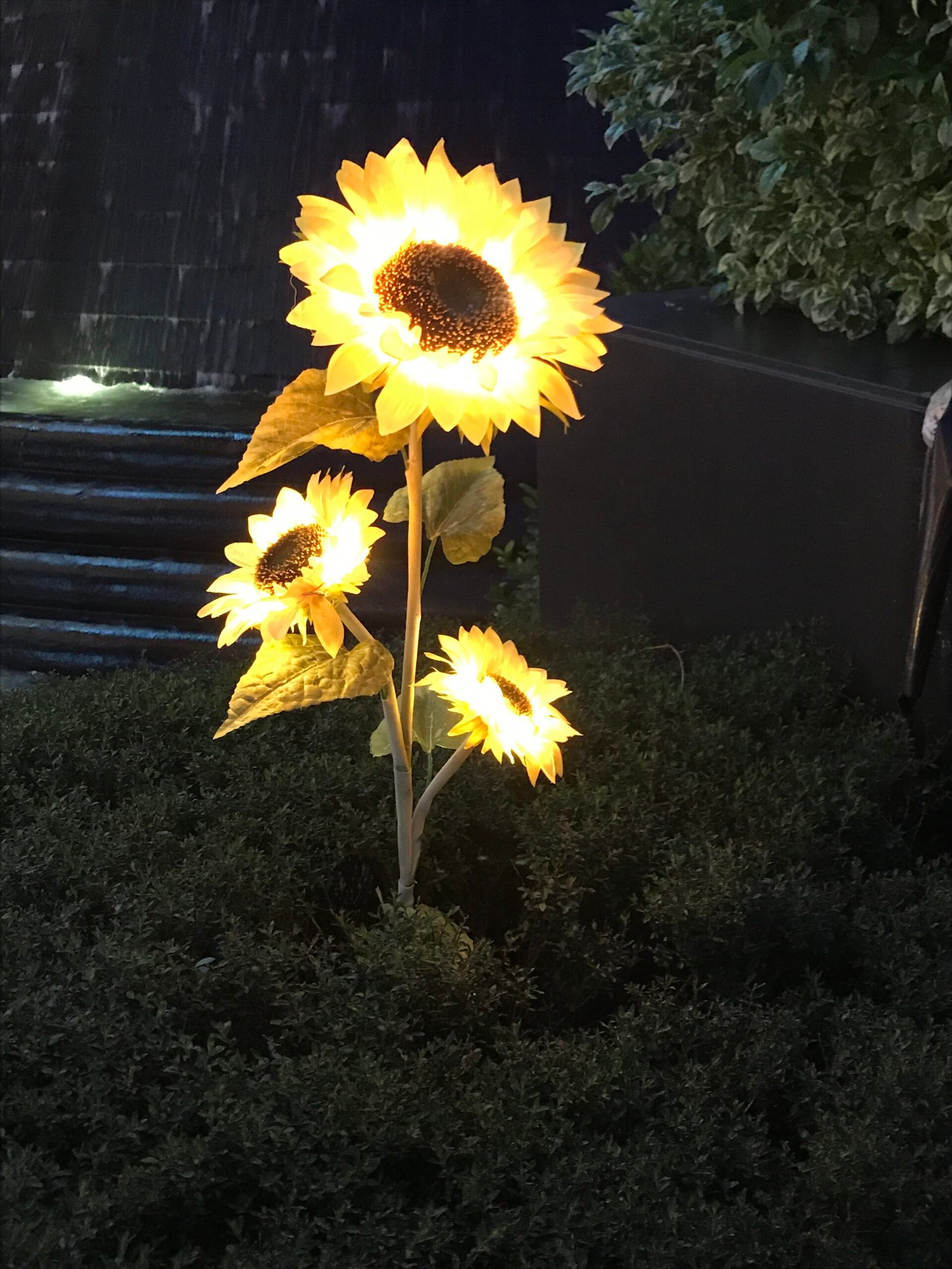
Illuminated Sunflowers
One of the artificial sunflowers with internal illumination, decorating a city plaza in Nanning.
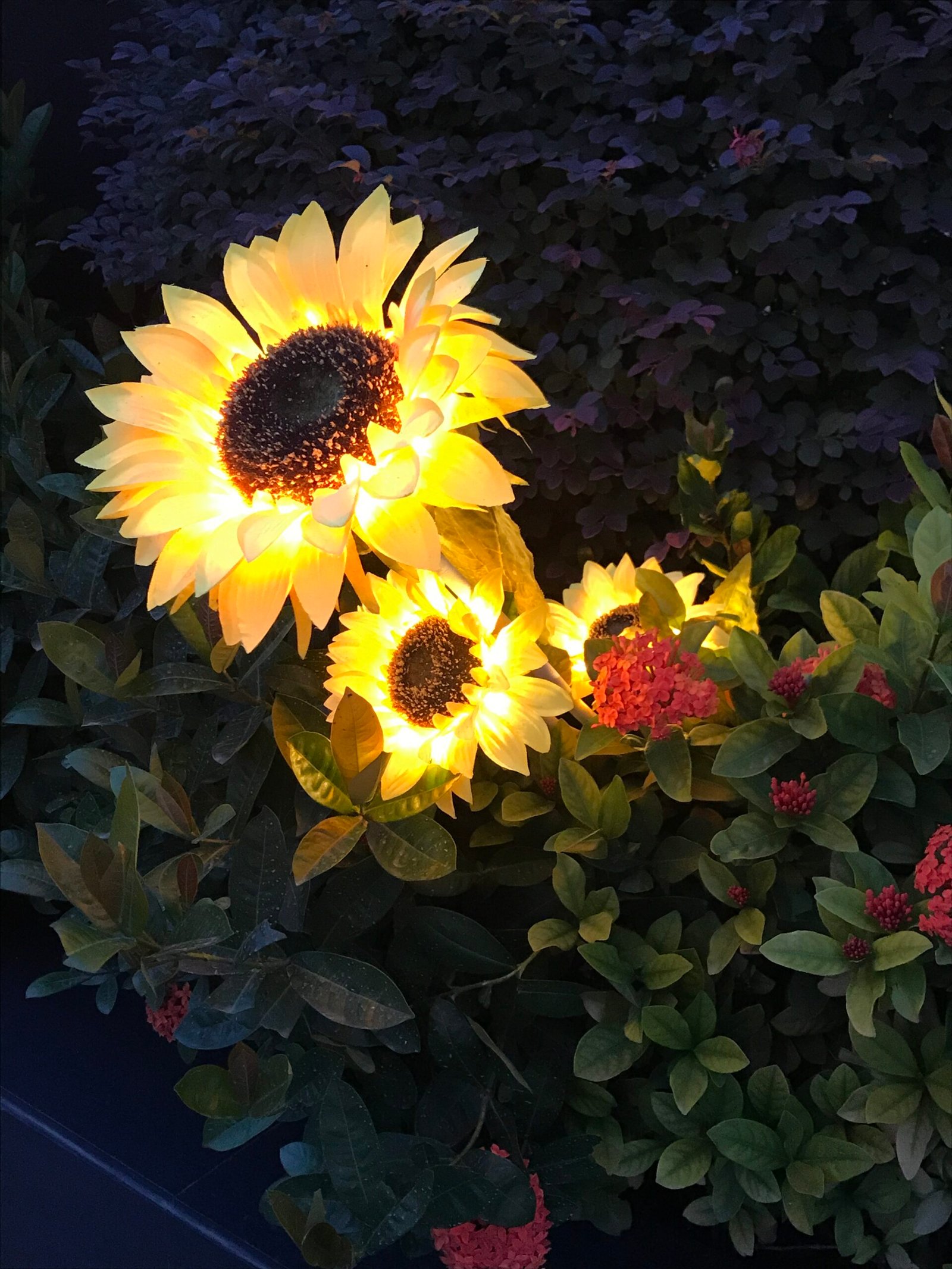
Illuminated Sunflowers
One of the artificial sunflowers with internal illumination, decorating a city plaza in Nanning.

Winnie Next To An Artificial Sunflower
One of the city plazas we saw in Nanning was decorated with fake sunflowers that were internally illuminated at night.
Return to Exploring China Homepage
Related Posts
(Visited 19 times, 1 visits today)