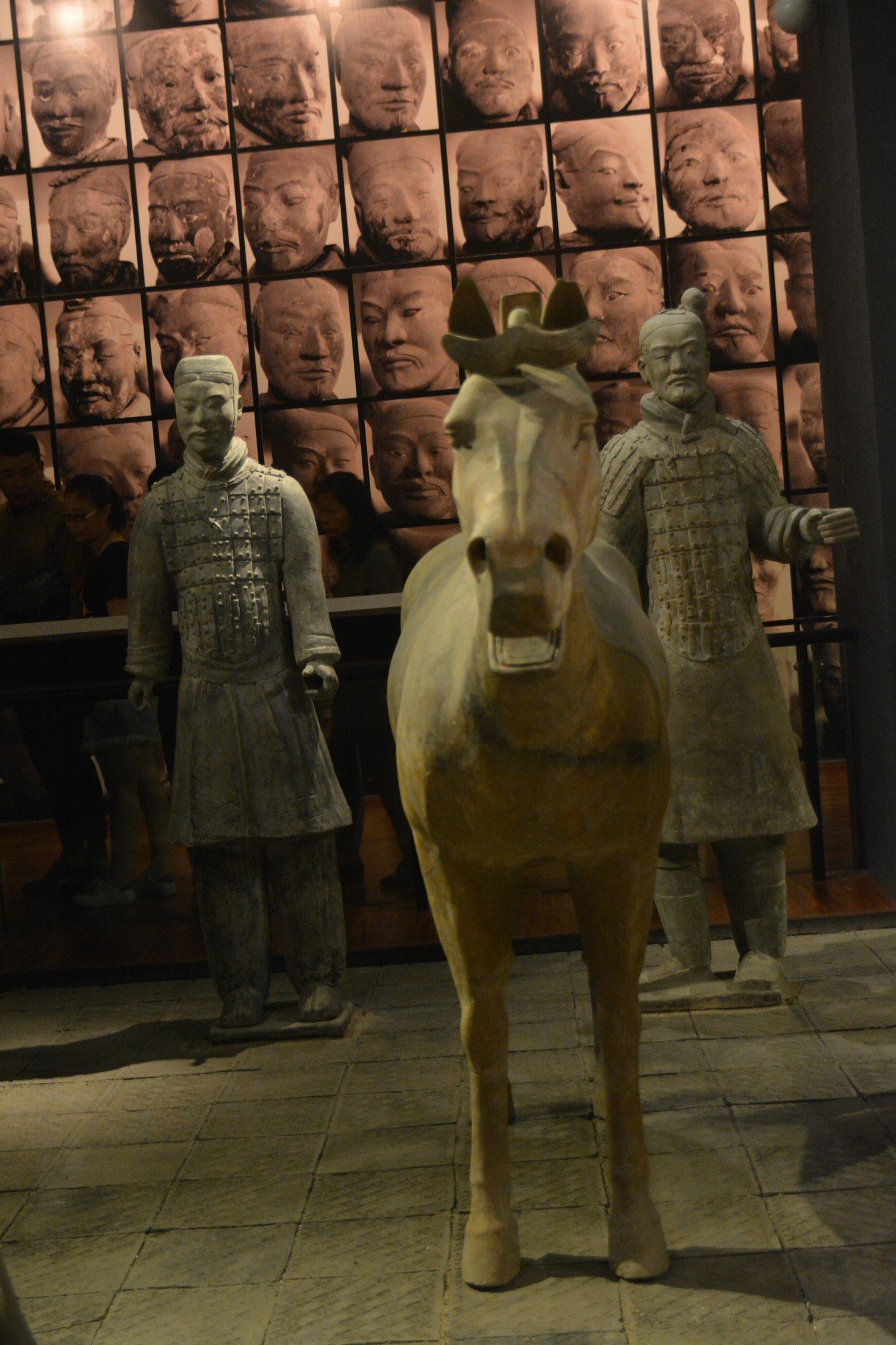
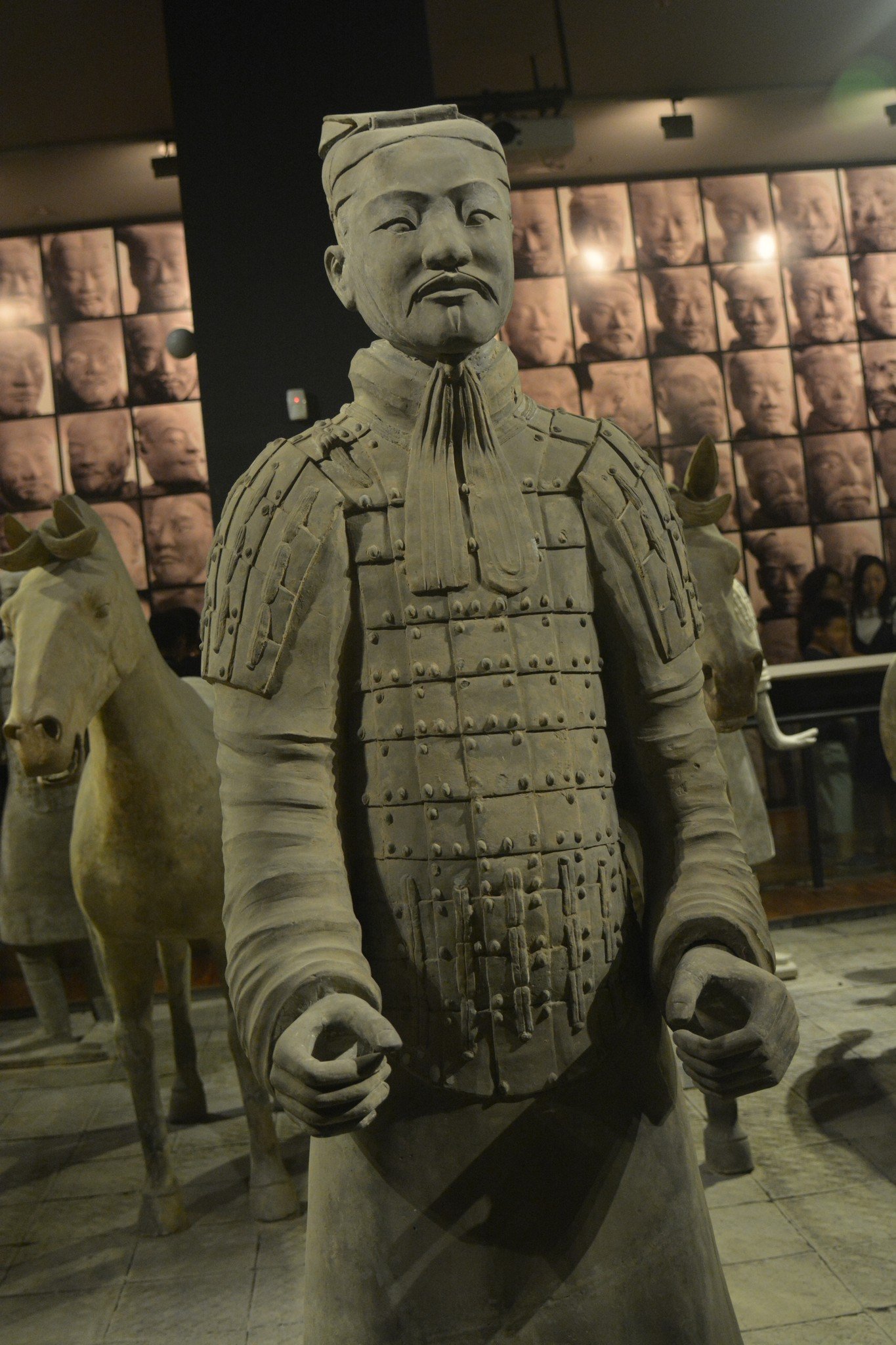
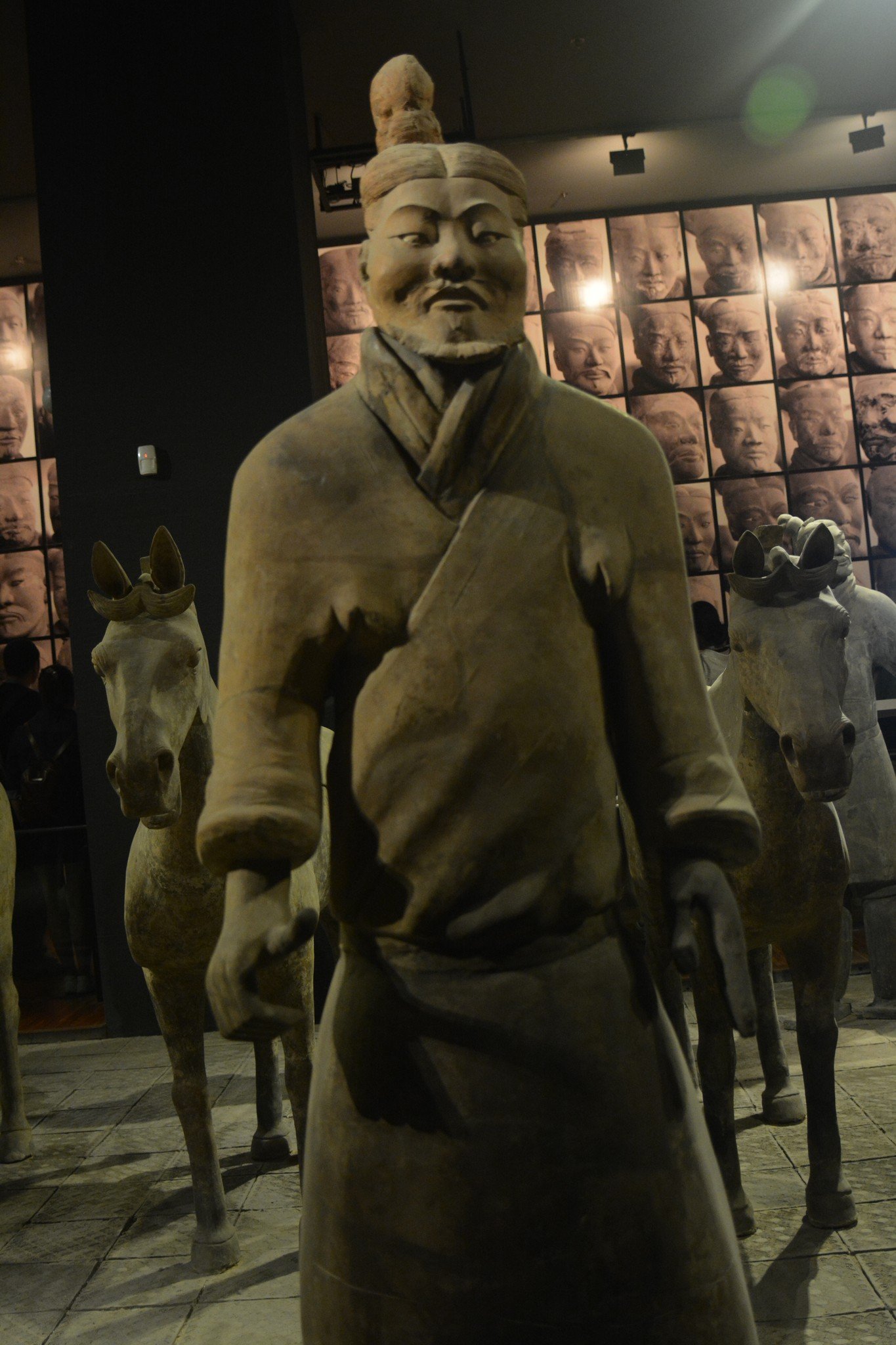
One of the many places I’ve wanted to visit included the terracotta army of Xi’an, China. I first saw a small collection of these figures at the Honolulu Museum, on a traveling exhibition hosted by the Chinese Government in 1995. This small teaser of figures fascinated me and I knew I had to one day visit their home location.
I had my chance during my fourth trip to China with Winnie in August – September 2017. Our first stop on a whirlwind cross-country Chinese trip was to Xi’an, and we toured several archeological sites dotting the area around this ancient city. I felt these proud warriors deserved their own photo gallery in my humble collection of images.
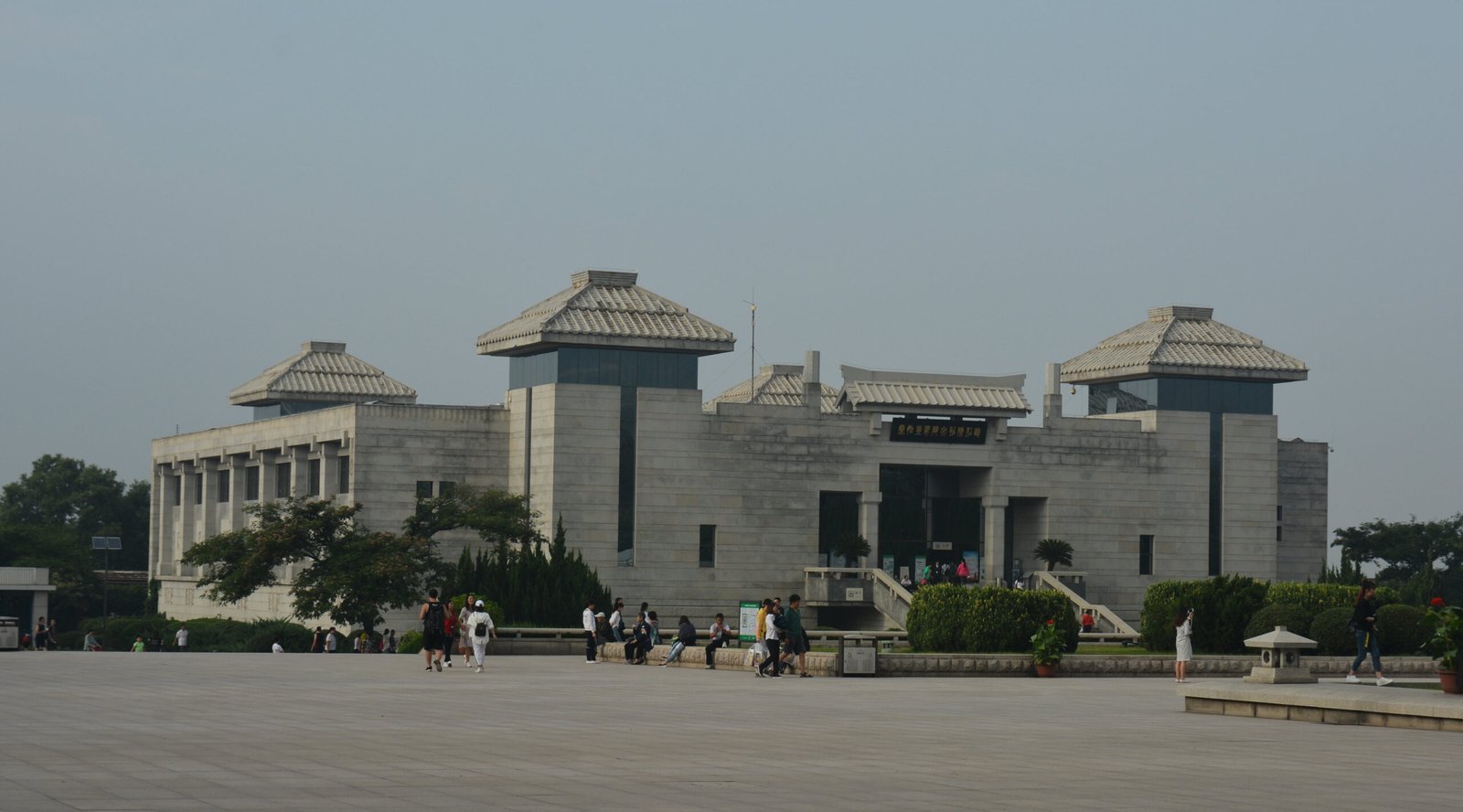
Emperor Qinshihuang's Mausoleum Site Museum in Xi'an
Front view of the Emperor Qinshihuang's Mausoleum Site Museum, located near Lishan Mountain outside Xi'an. It preserves over 8,000 life-sized terracotta warriors, horses, and chariots buried to protect the first emperor of China in the afterlife. This museum is also the site of archeological restorations and contains workshops and several public display areas.
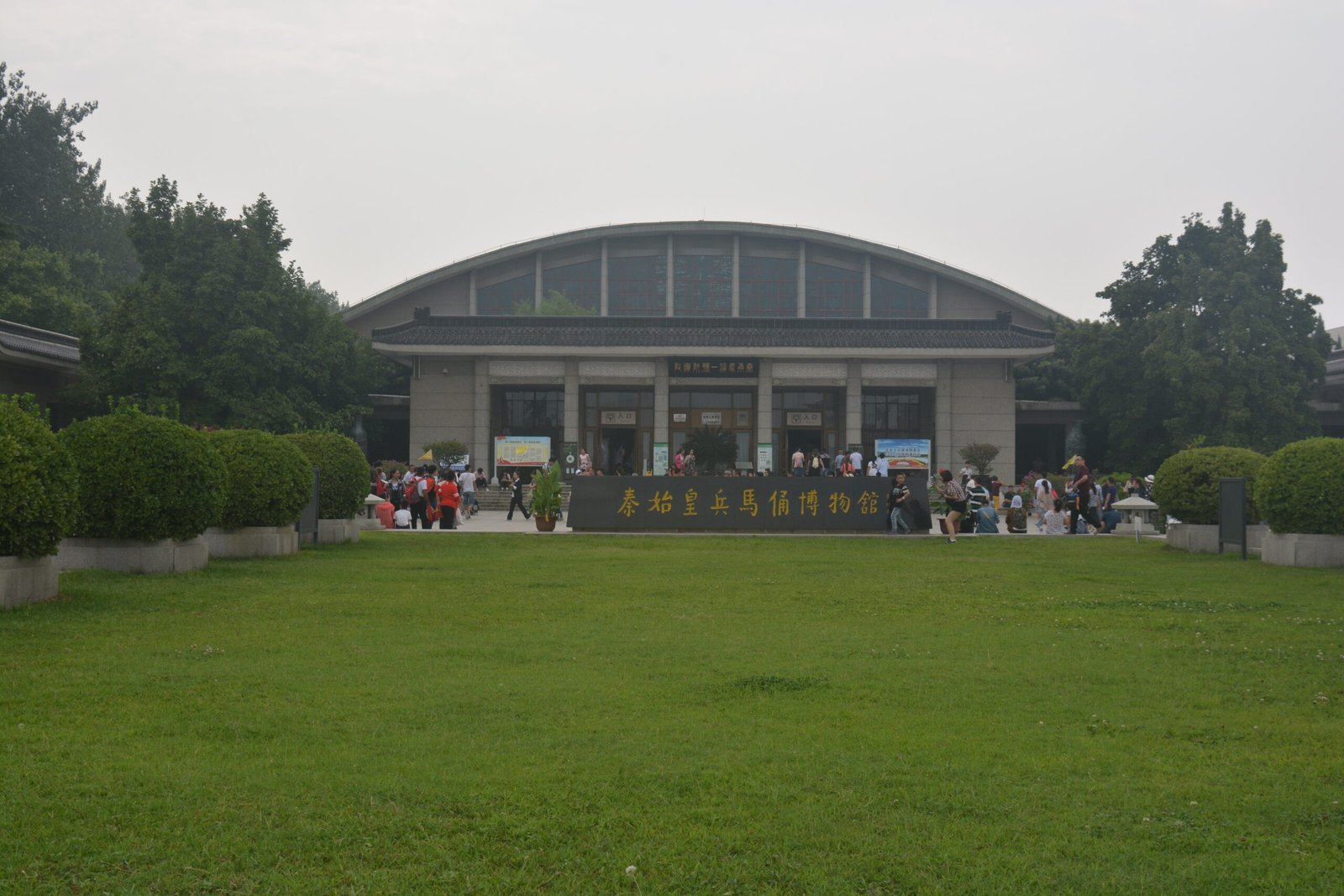
The Modern Home of the Terracotta Warriors of Xi'an
Inside the grounds of the Emperor Qinshihuang's Mausoleum Site Museum. This particular building covers the main excavation site of the Terracotta warriors for weather and security protection.
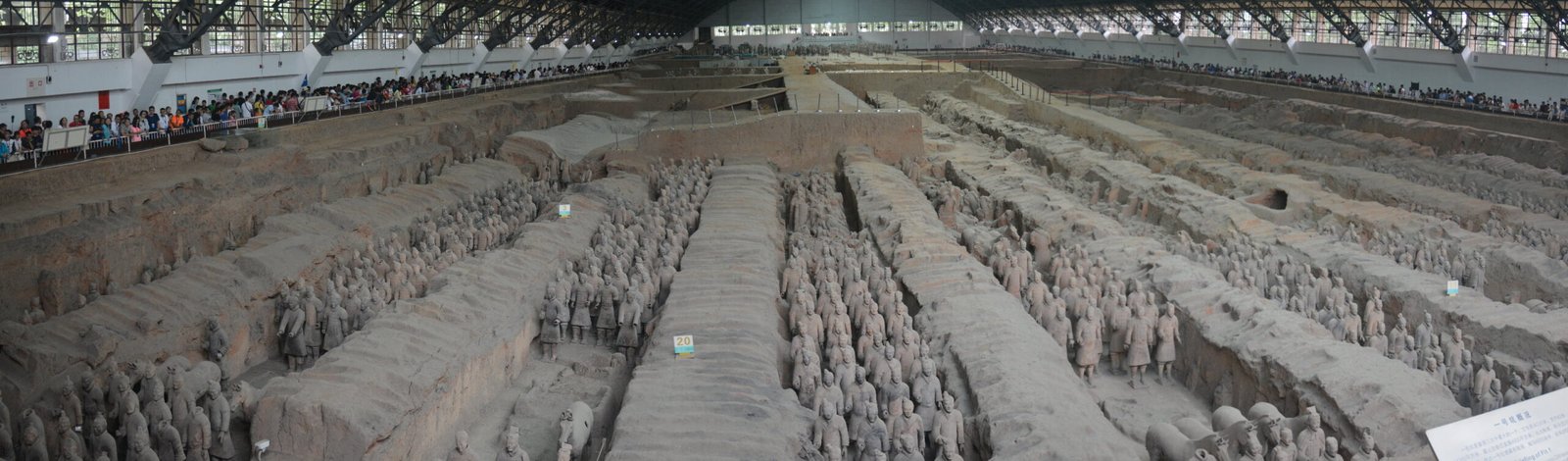
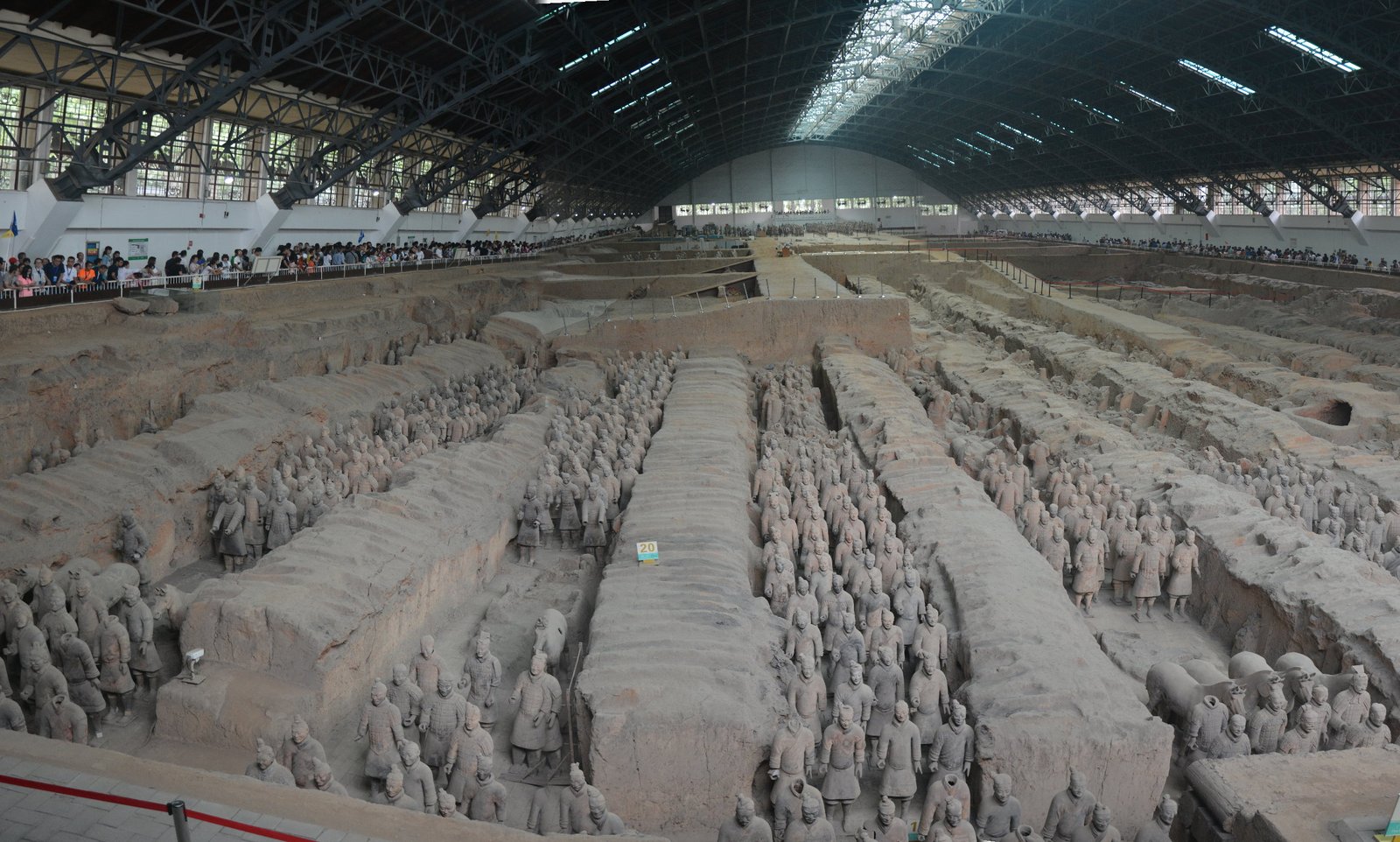
Panoramic View of the Main Terracotta Warrior Excavation
Showing the interior of Emperor Qinshihuang's Mausoleum Site Museum in Xi'an. This is a panoramic view of the main excavation site. There are three major excavation locations, this is the one with the best-preserved figures. The domed structure was built to protect the excavated rows of Terracotta warriors. At the rear of this site is an area used for repairing and restoring the figures that are excavated with damage.
Panoramic View of the Main Terracotta Warrior Excavation
Looking down the length of the Emperor Qinshihuang's Mausoleum Site Museum in Xi'an. There are three major excavation locations, this is the one with the best-preserved figures.
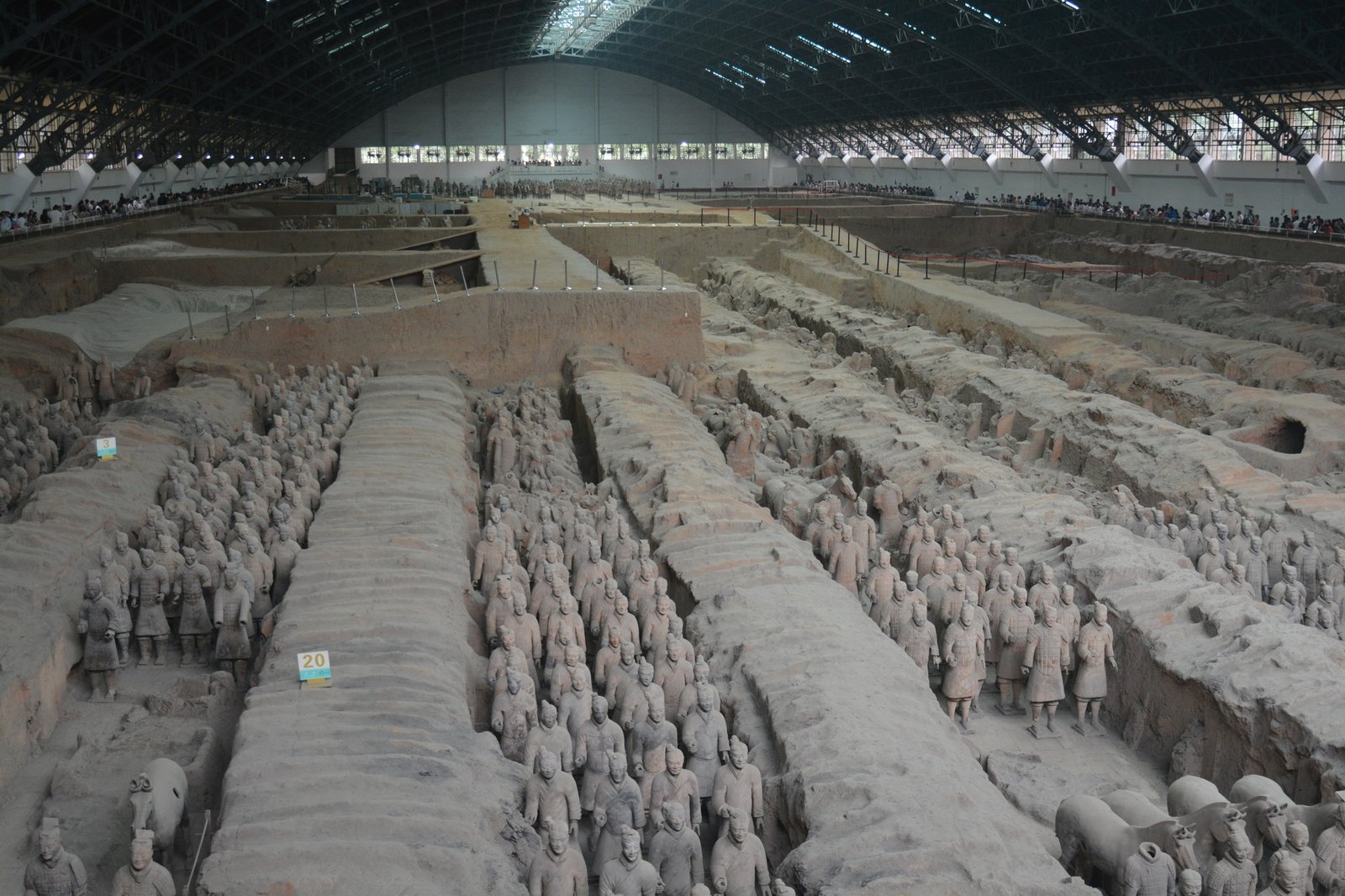
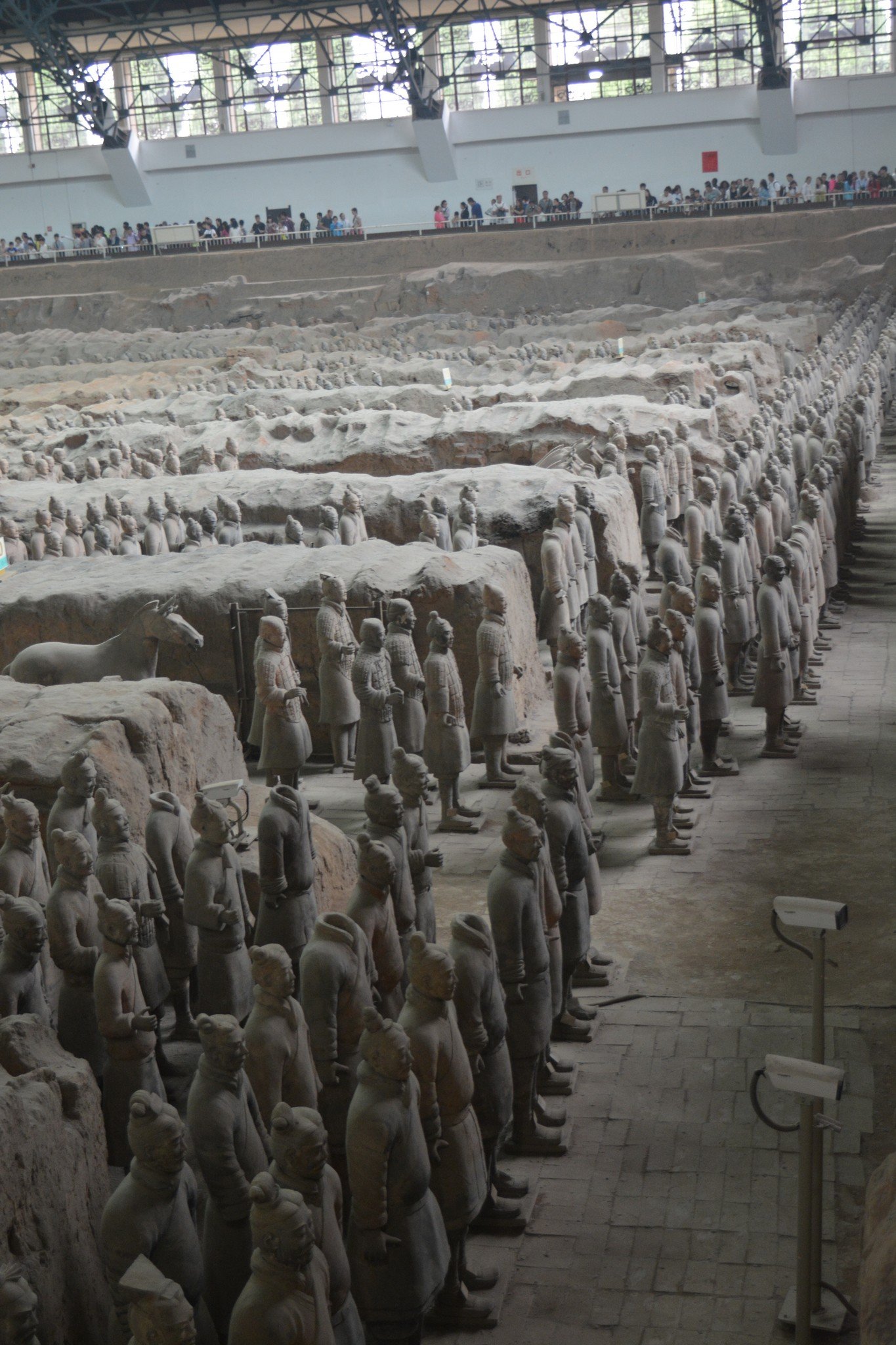
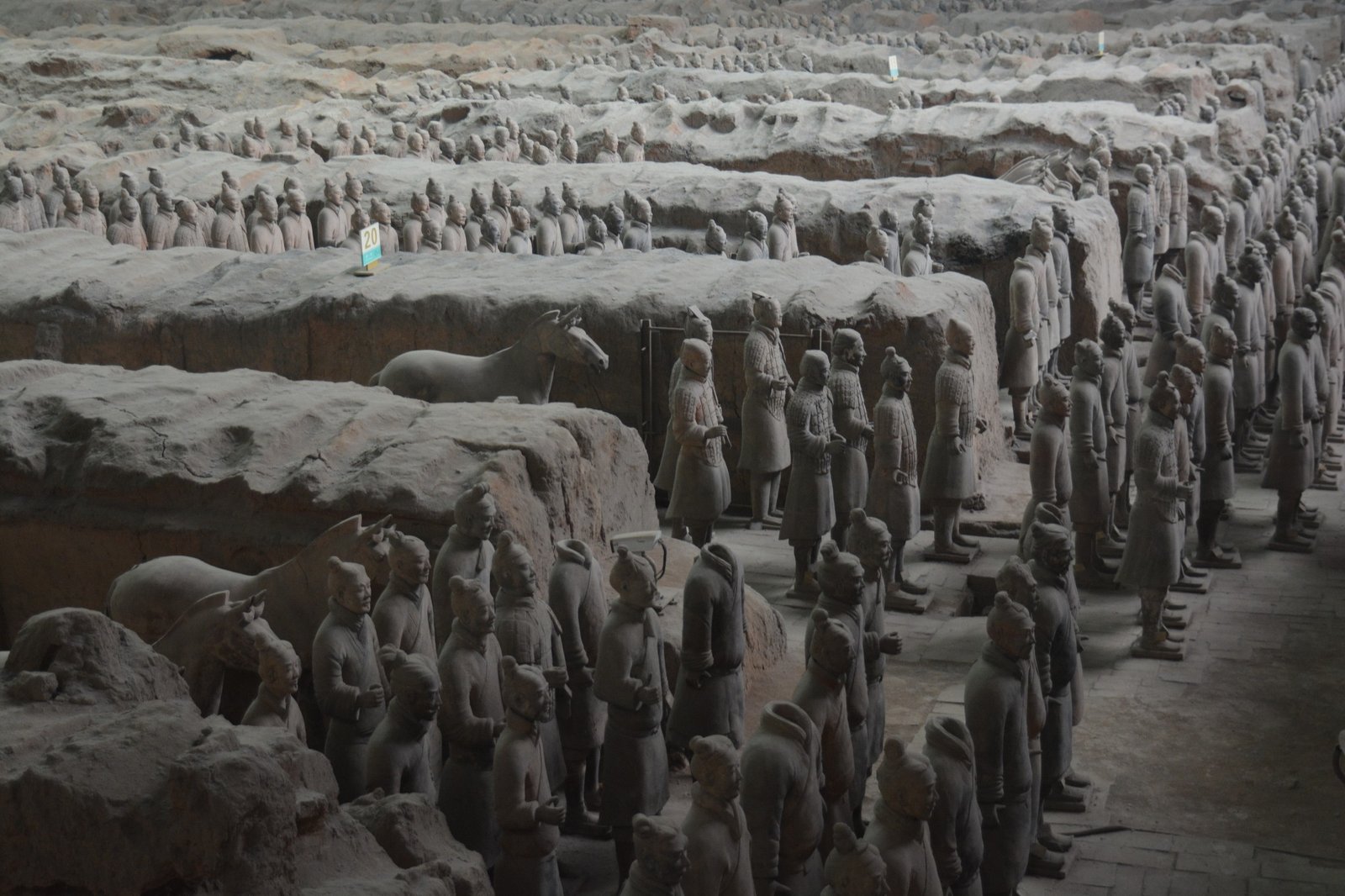
A Standing Army
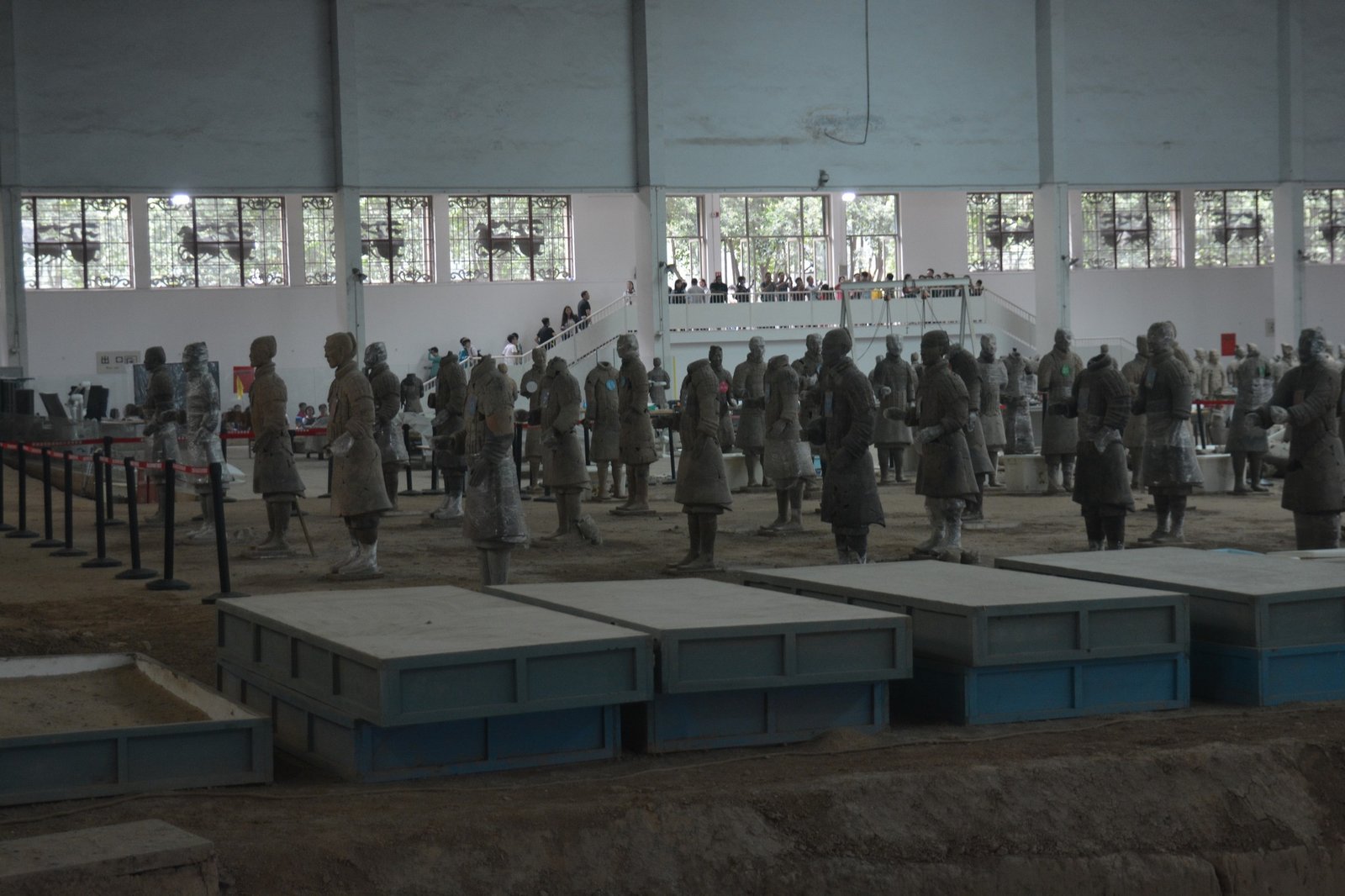
The primary excavation site of the terracotta warriors of Xi'an, China. Shown from inside the main entrance of the Emperor Qinshihuang's Mausoleum Site Museum.
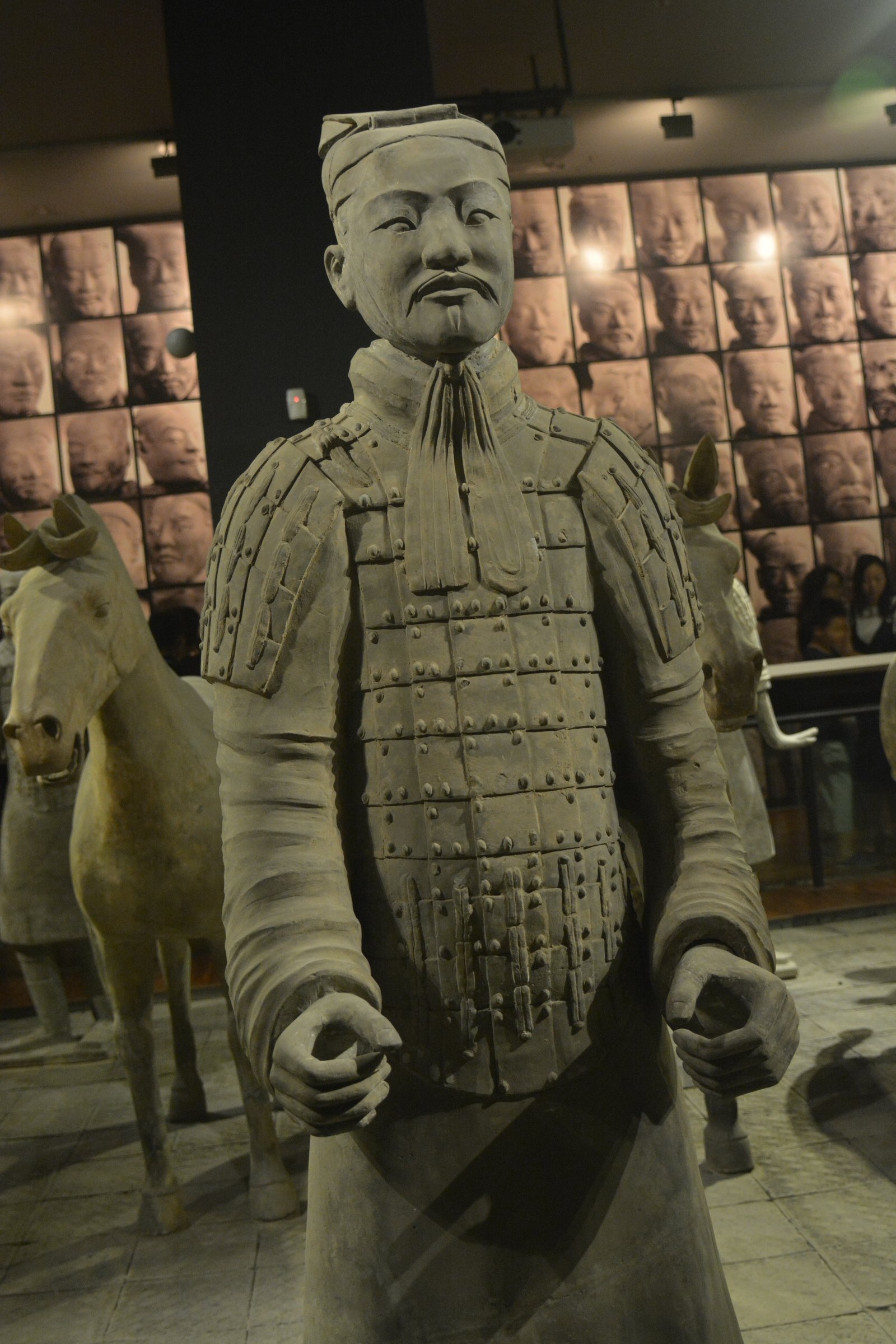
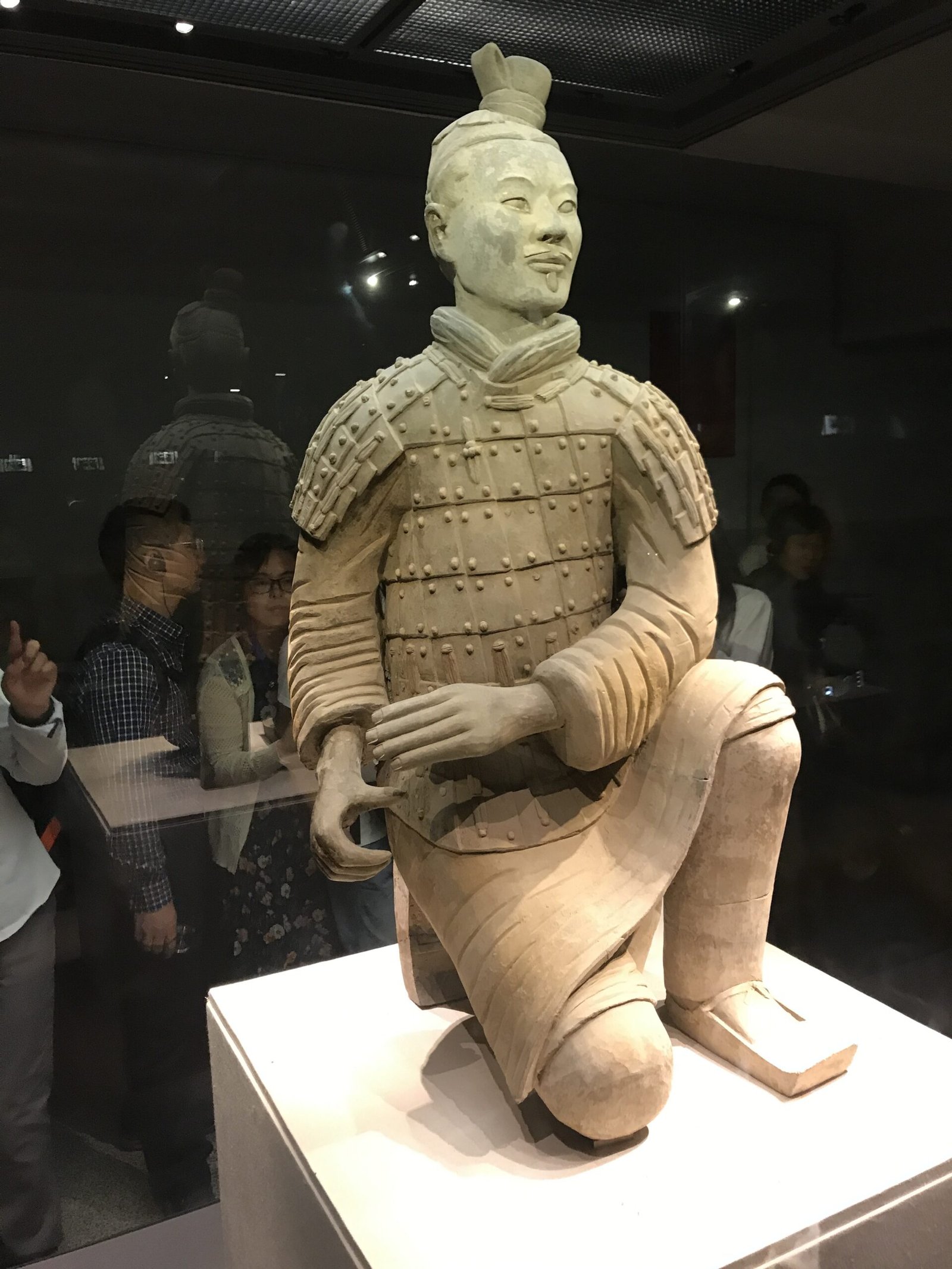
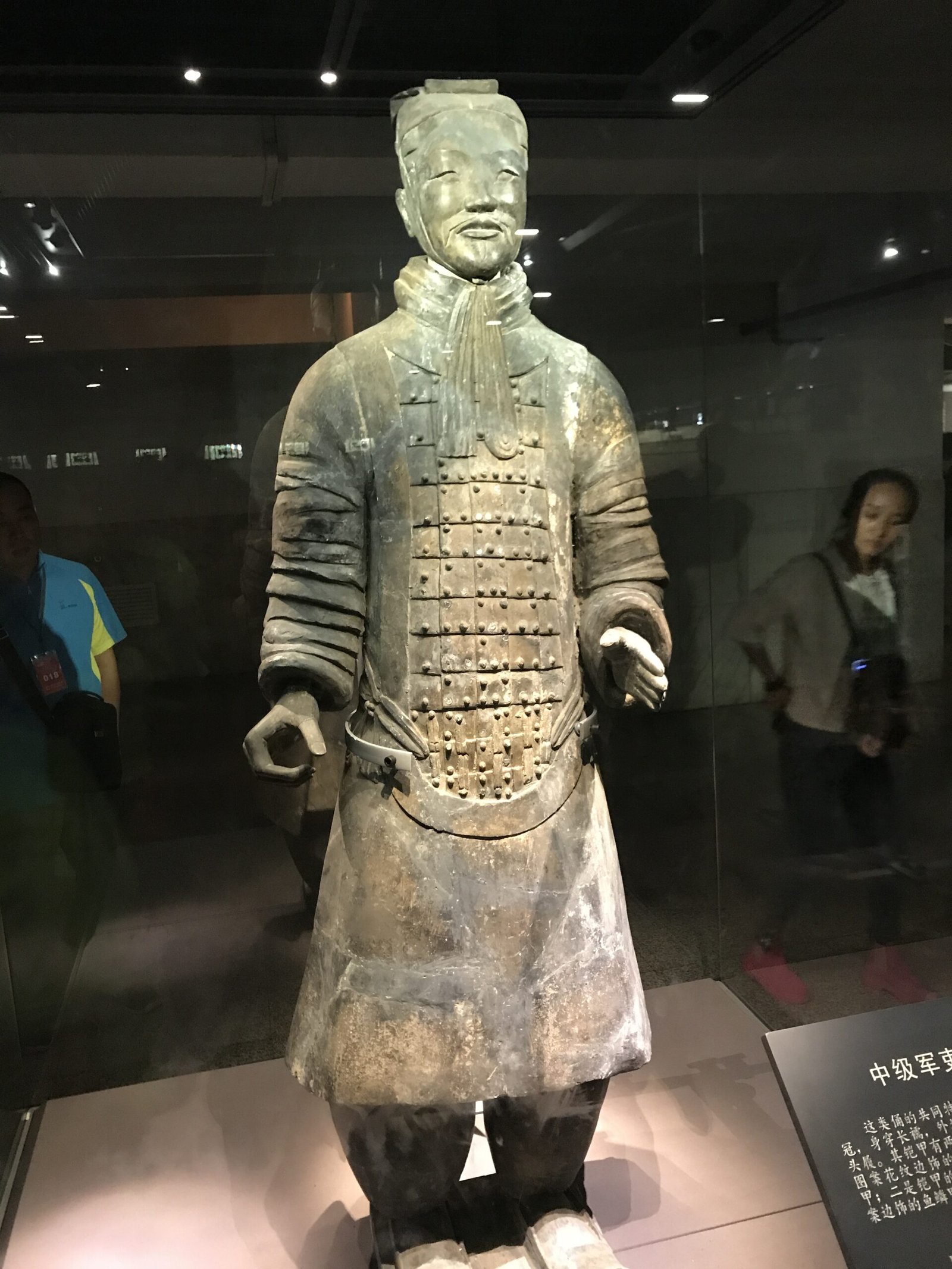
Warrior Under Glass
One of several well-preserved terracotta warrior figures displayed inside a glass enclosure at the Shaanxi History Museum in Xi'an.
A Standing Army
The primary excavation site of the terracotta warriors of Xi'an, China. Shown from inside the main entrance to the Emperor Qinshihuang's Mausoleum Site Museum that now encloses the archeological dig.
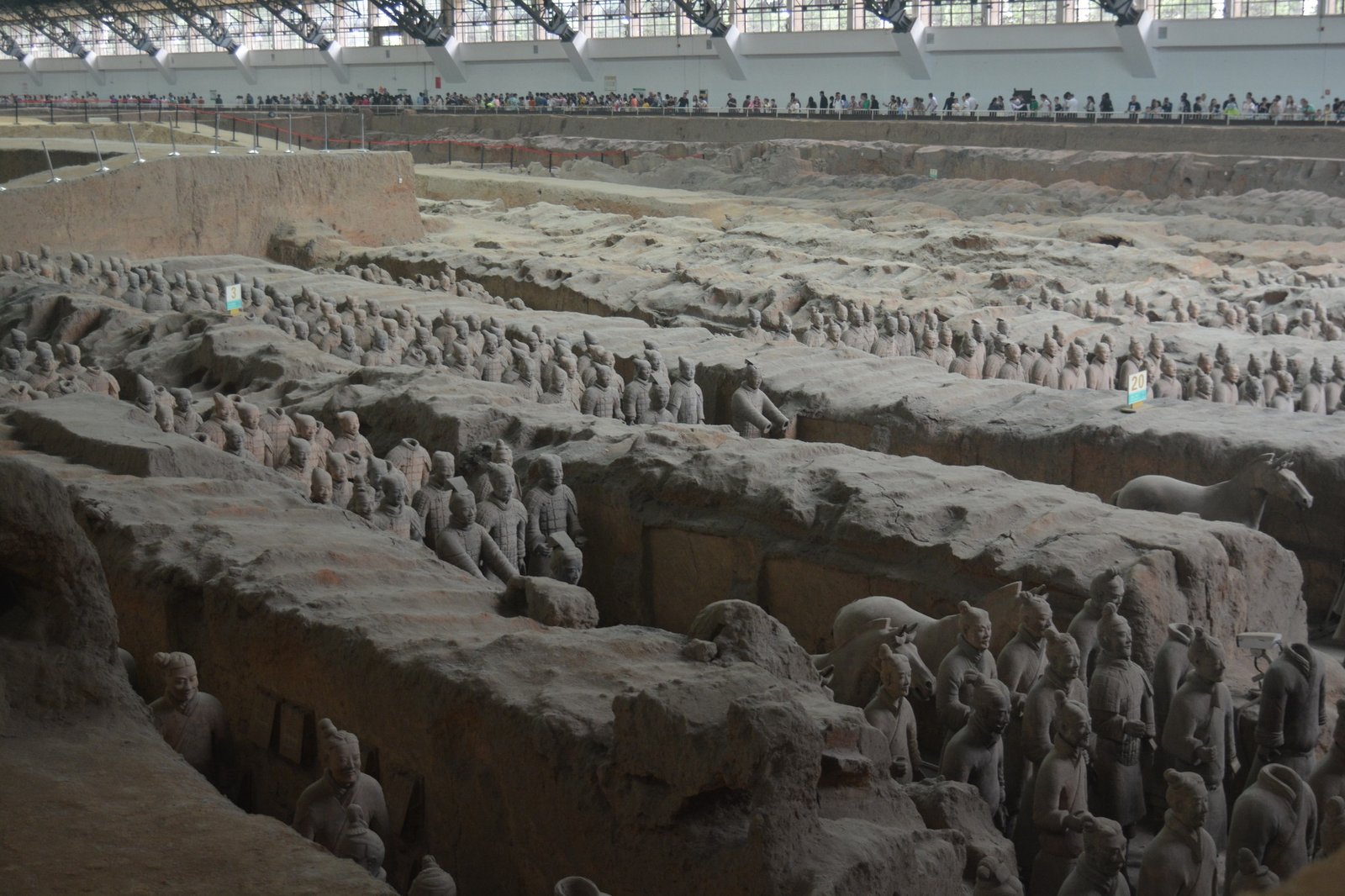
A Standing Army
The primary excavation site of the terracotta warriors of Xi'an, China. Shown from the left side of the viewing gallery that runs around the excavation as entering from the main entrance.
A Standing Army
The primary excavation site of the terracotta warriors of Xi'an, China. Shown from the left side of the viewing gallery that runs around the excavation as entering from the main entrance.
Warrior Under Glass
One of several well-preserved terracotta warrior figures displayed inside a glass enclosure at the on-site archeological museum. Xi'an, China.
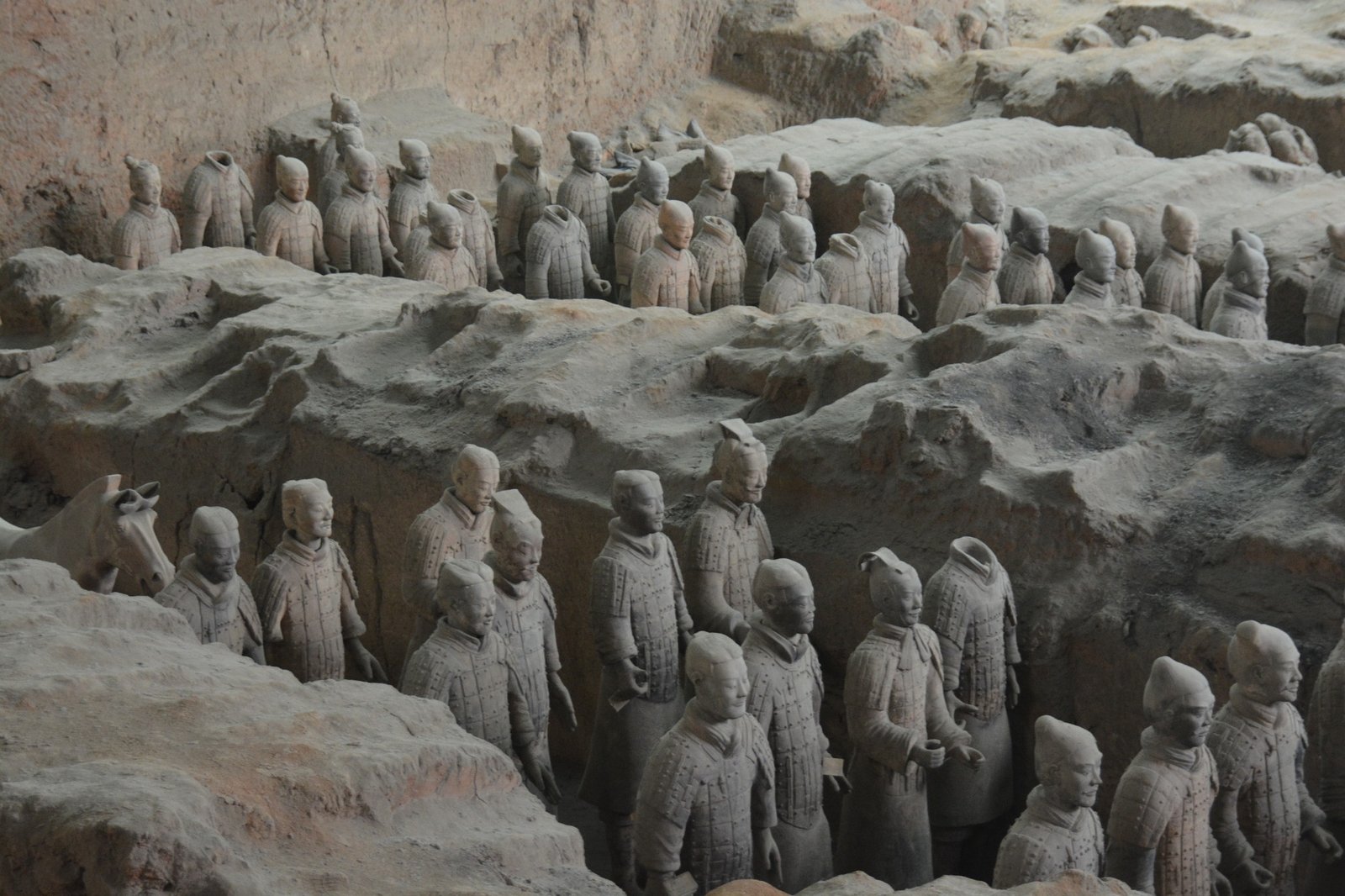
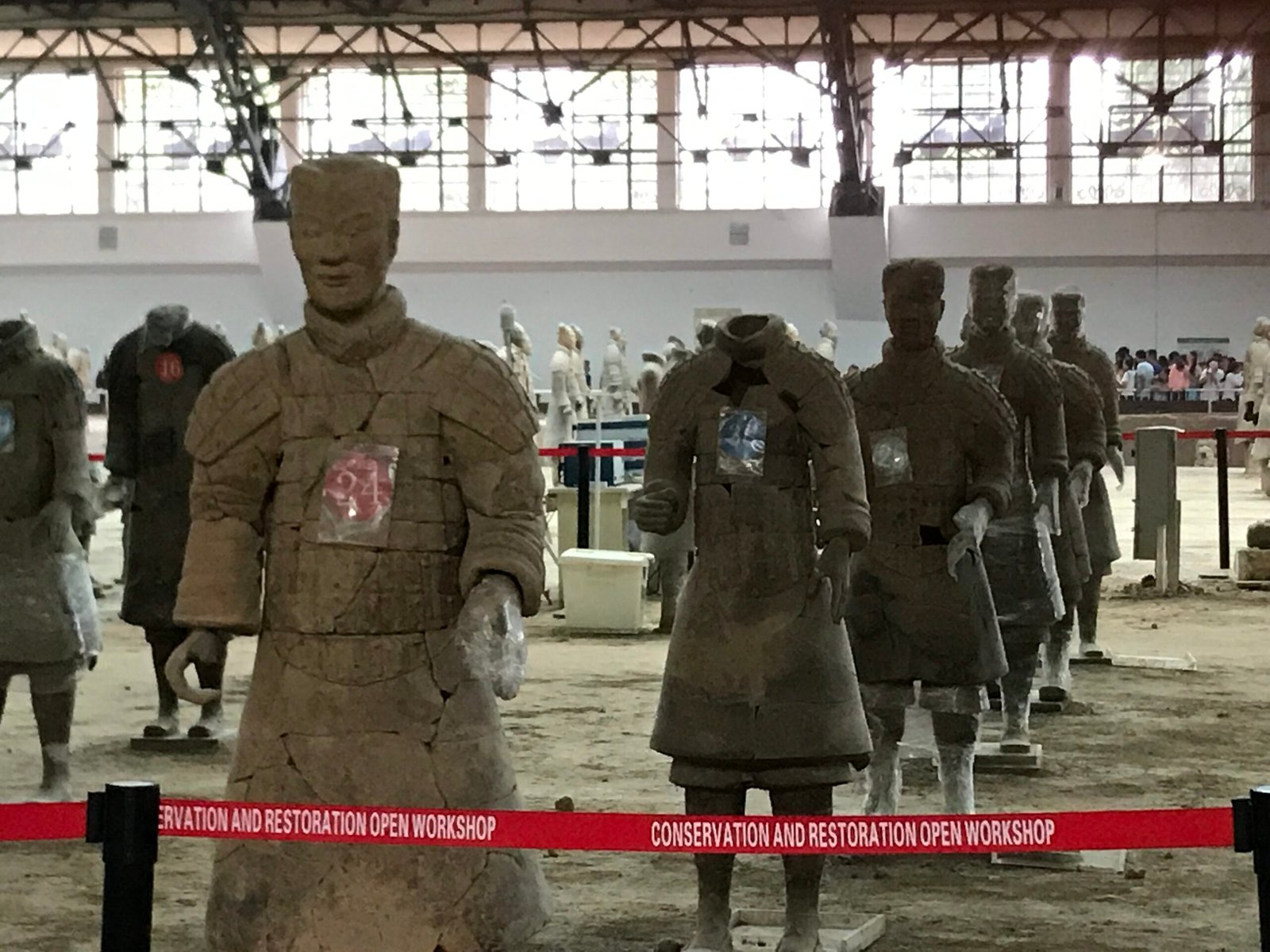
Close-Up Images of the Terracotta Warriors
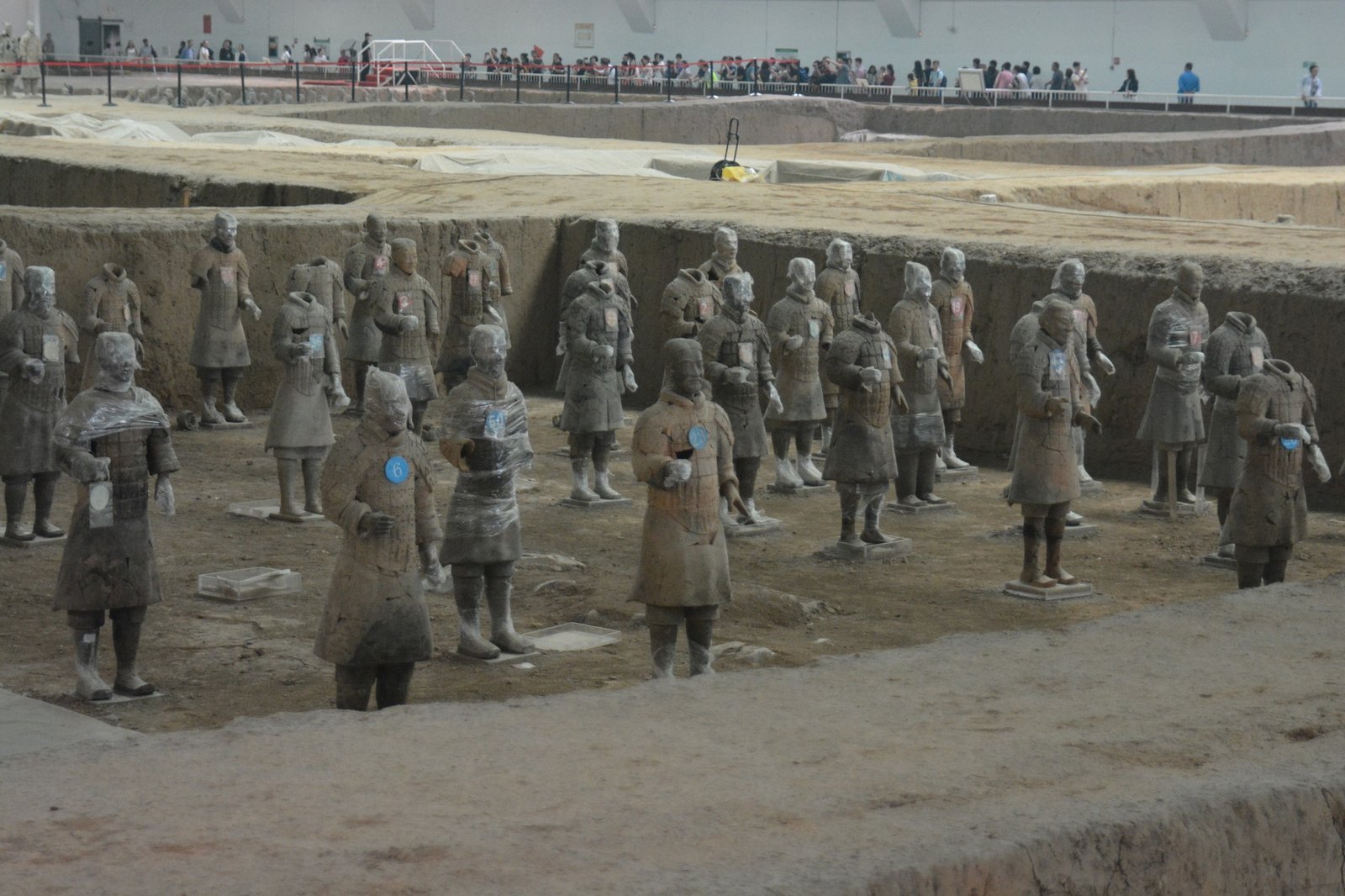
Close-up images of some of the warriors. Some are missing their heads but otherwise still intact. No two figures have the exact same facial features.
Close-Up Images of the Terracotta Warriors
Close-up images of some of the warriors. Some are missing their heads but otherwise still intact. No two figures have the exact same facial features. Close-up images of some of the warriors. Some are missing their heads but otherwise still intact. No two figures have the exact same facial features. These are at the back of the main excavation area being repaired.
Close-Up Images of the Terracotta Warriors
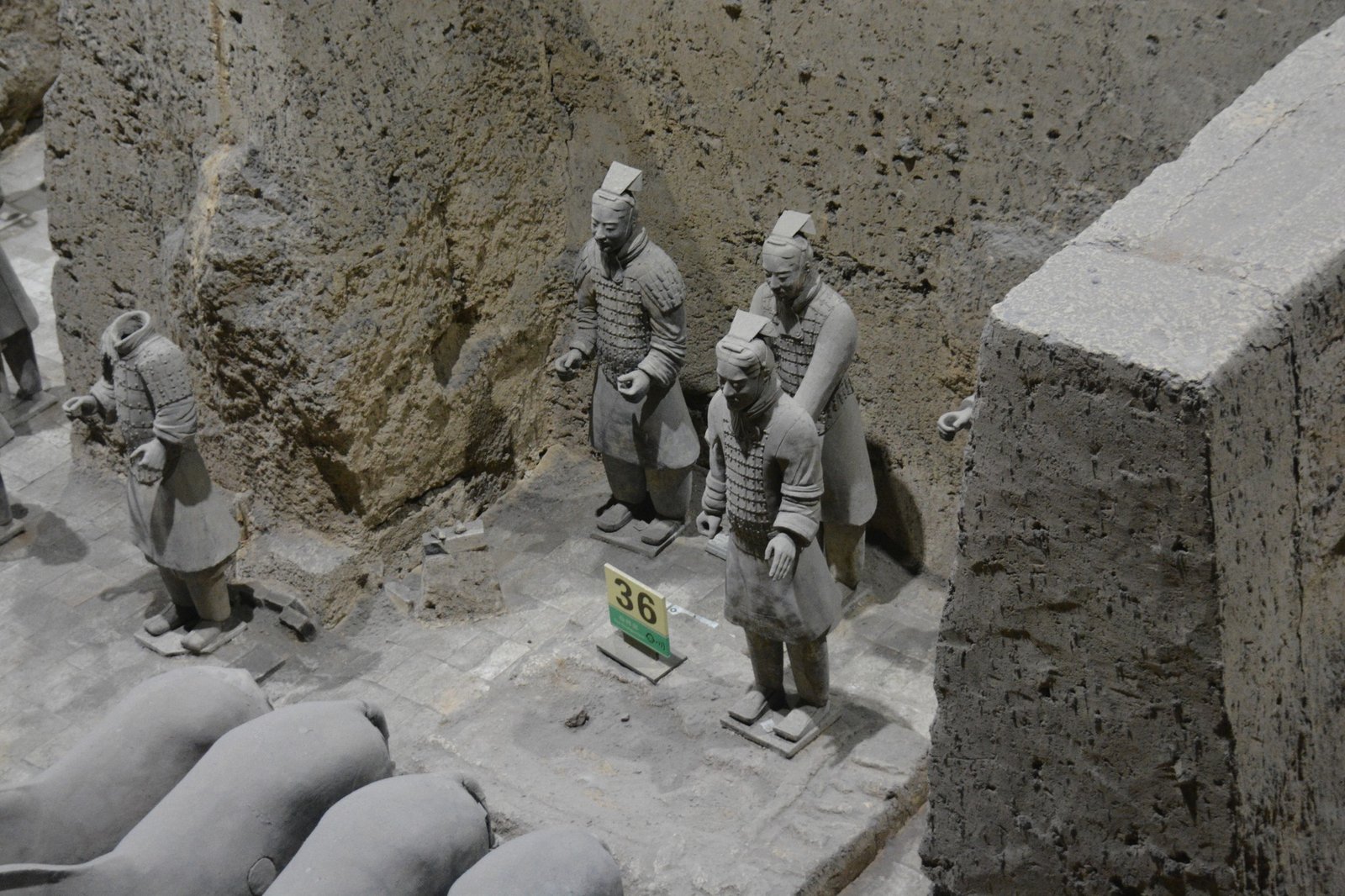
Close-up images of some of the warriors. Some are missing their heads but otherwise still intact. Archeologists believe that these figures once held weapons made of wood, based on the positions of the figures and shapes of their hands. These figures were also painted, but over the centuries of burial the paint has deteriorated. ANy remaining paint quickly disappears once a figure is exposed to air.
Warrior Under Glass
One of several well-preserved terracotta warrior figures displayed inside a glass enclosure at the on-site archeological museum. Xi'an, China.
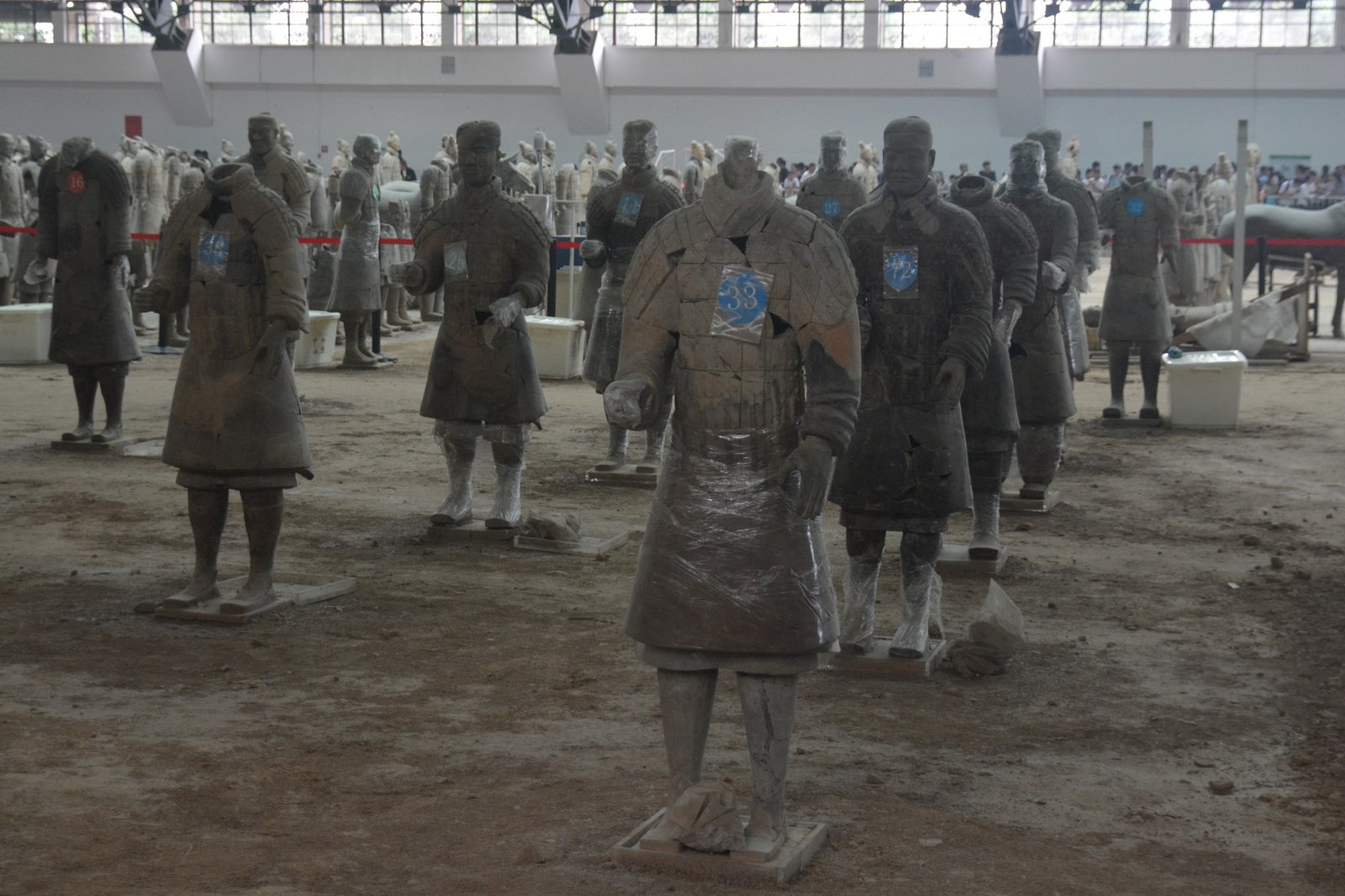
Warriors Under Repair
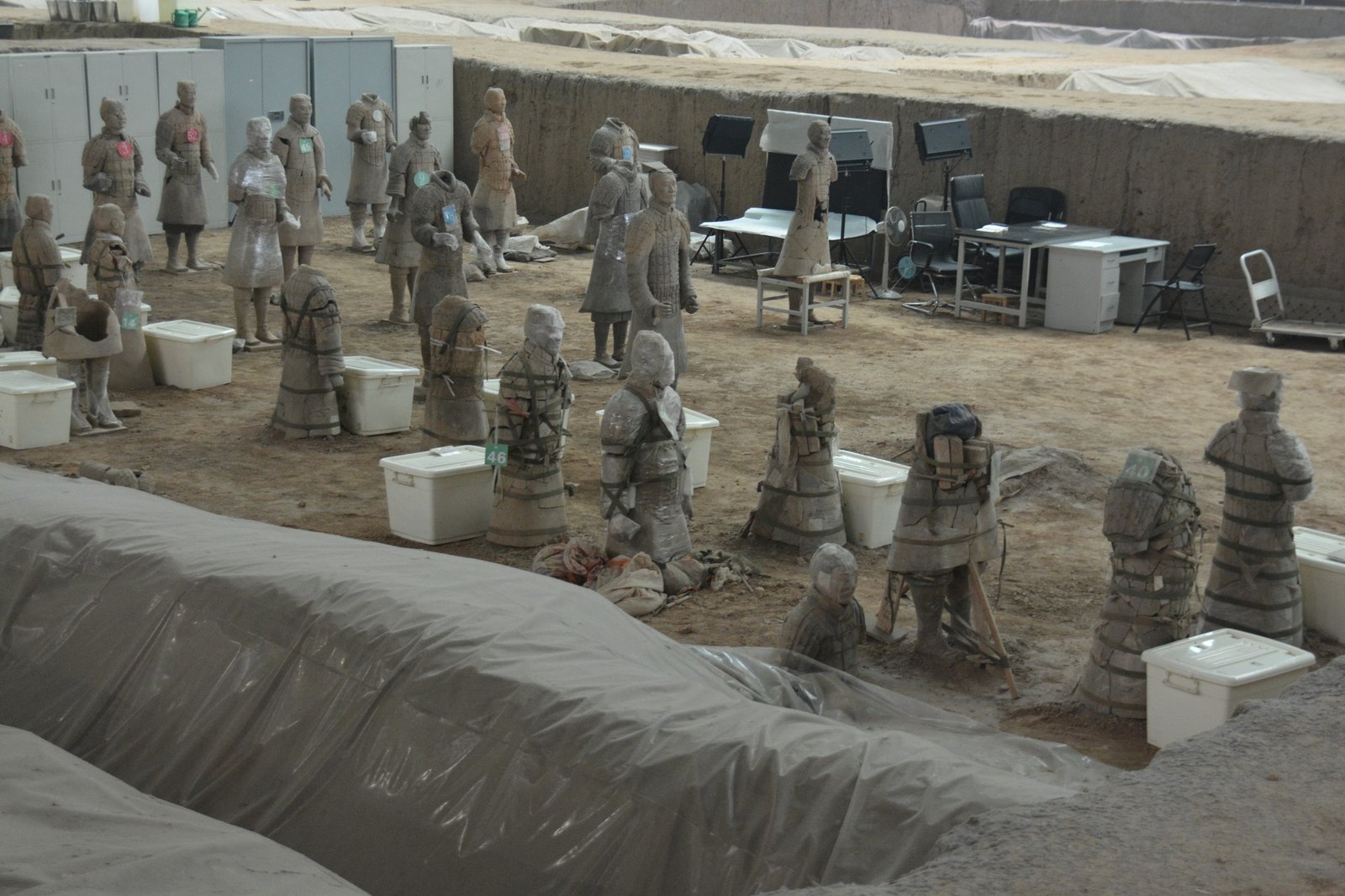
Although many of the warrior figures are still intact, many have been damaged after being buried for centuries. As damaged figures are uncovered, they are moved to a back area and restored as best as possible. This is an on-going process.
Warriors Under Repair
Although many of the warrior figures are still intact, many have been damaged after being buried for centuries. As damaged figures are uncovered, they are moved to a back area and restored as best as possible. This is an on-going process.
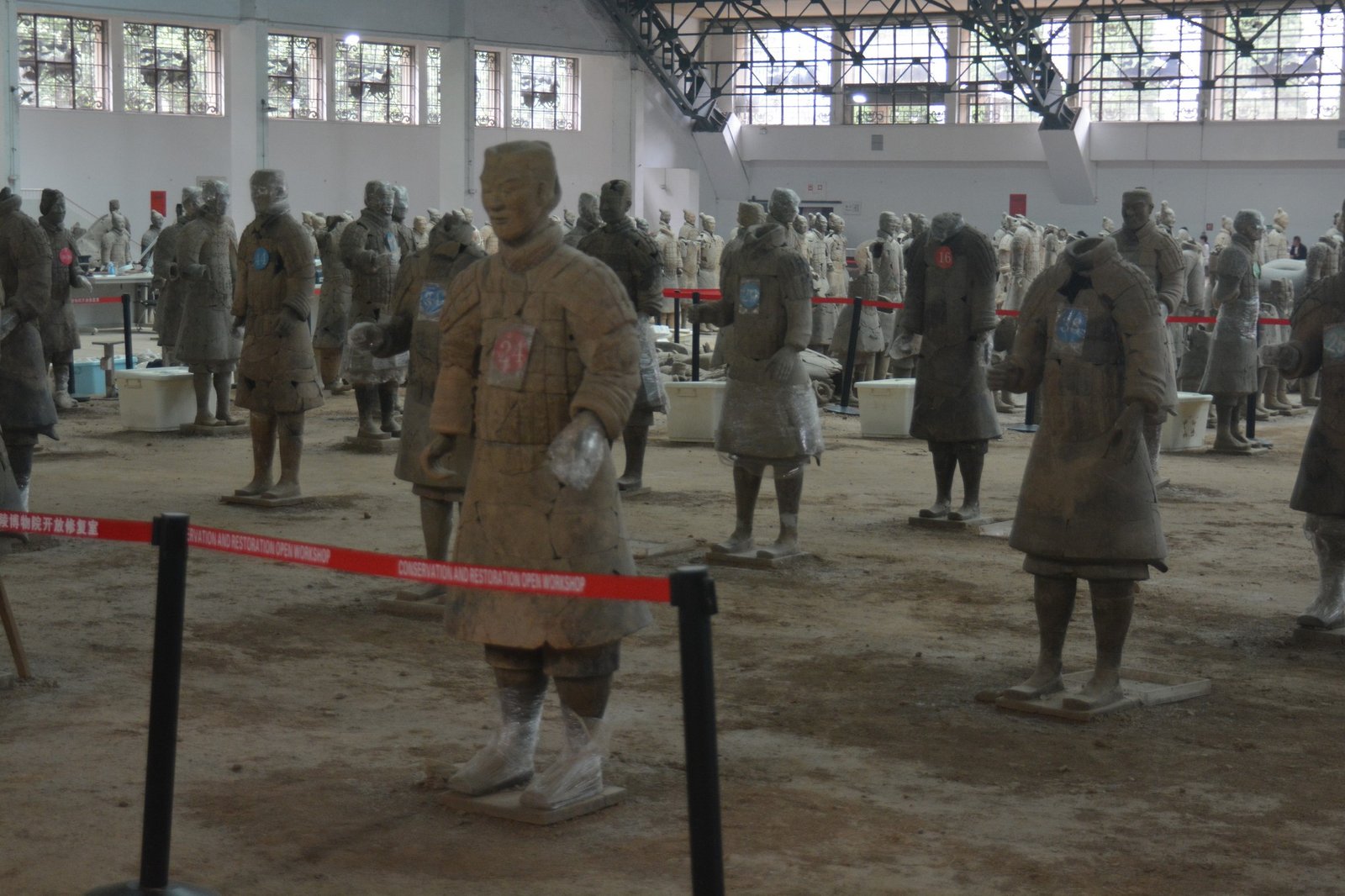
Back Gallery Area For Repairs
At the back of the main archeological dig, damaged figures are restored, and staged until returned back to the location they were uncovered. Each figure is tagged for identification.
Public Conservation and Restoration Area
Although many of the warrior figures are still intact, many have been damaged after being buried for centuries. As damaged figures are uncovered, they are moved to a back area and restored as best as possible. This is an on-going process.
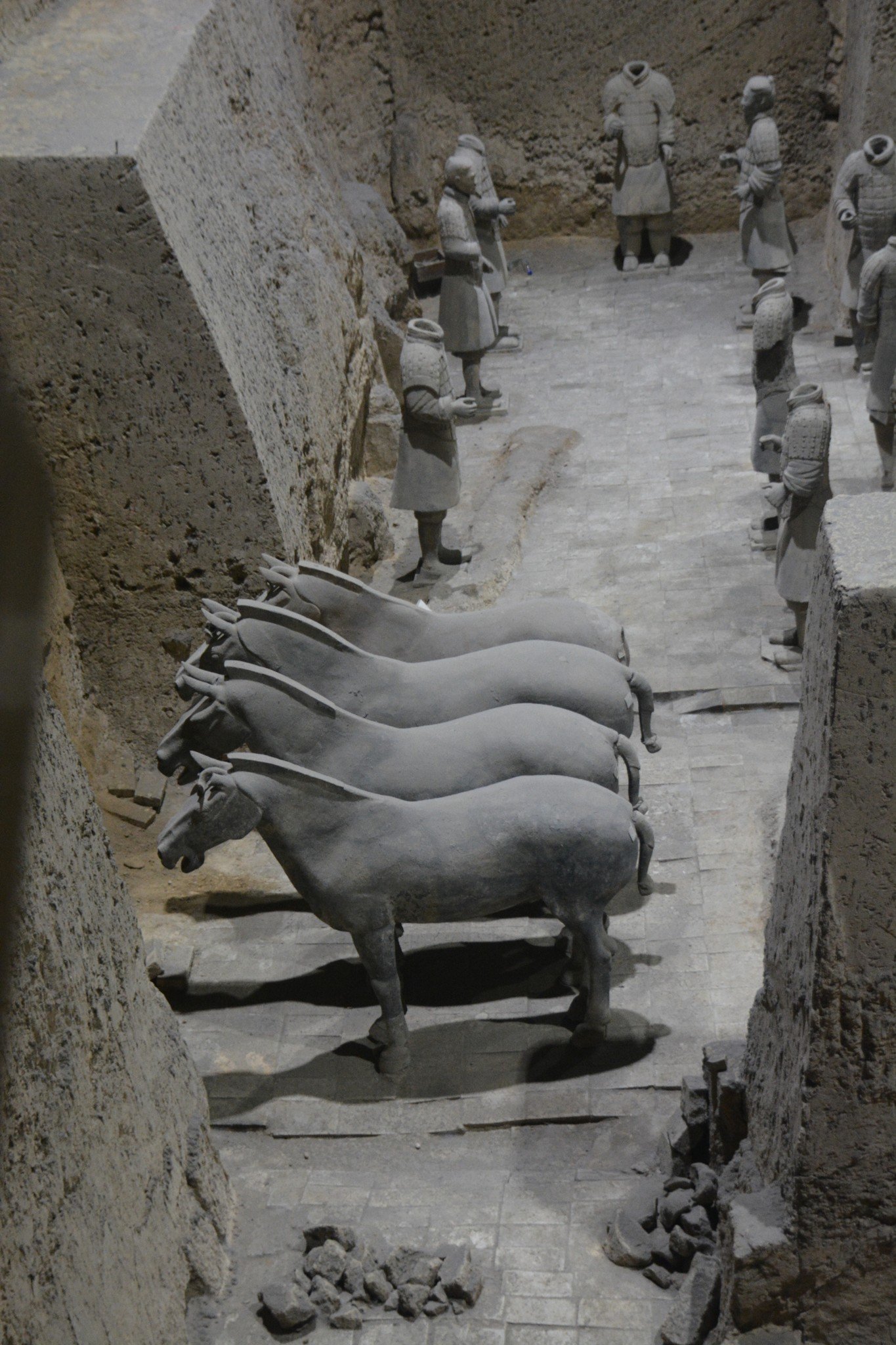
And The Horses They Rode In On
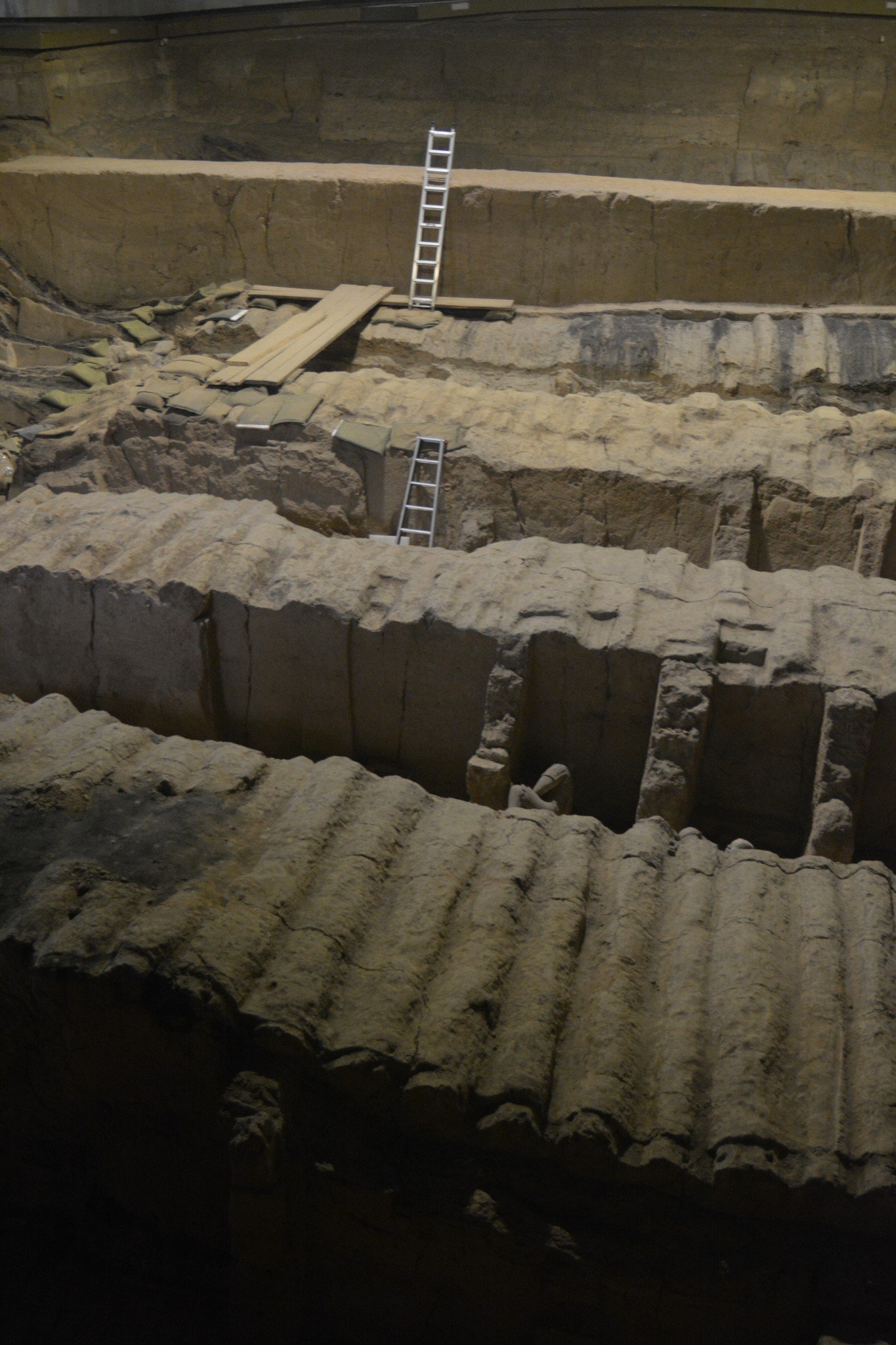
The army of terracotta warrior figures does not just include people, it also includes the horses an army of that time would have relied upon. This is a second archeological dig where a number of terracotta horse figures have been recovered.
Additional Excavations
Terracotta warrior figures in a second excavation site. These were uncovered well-preserved.
A Horse with Warriors Under Glass
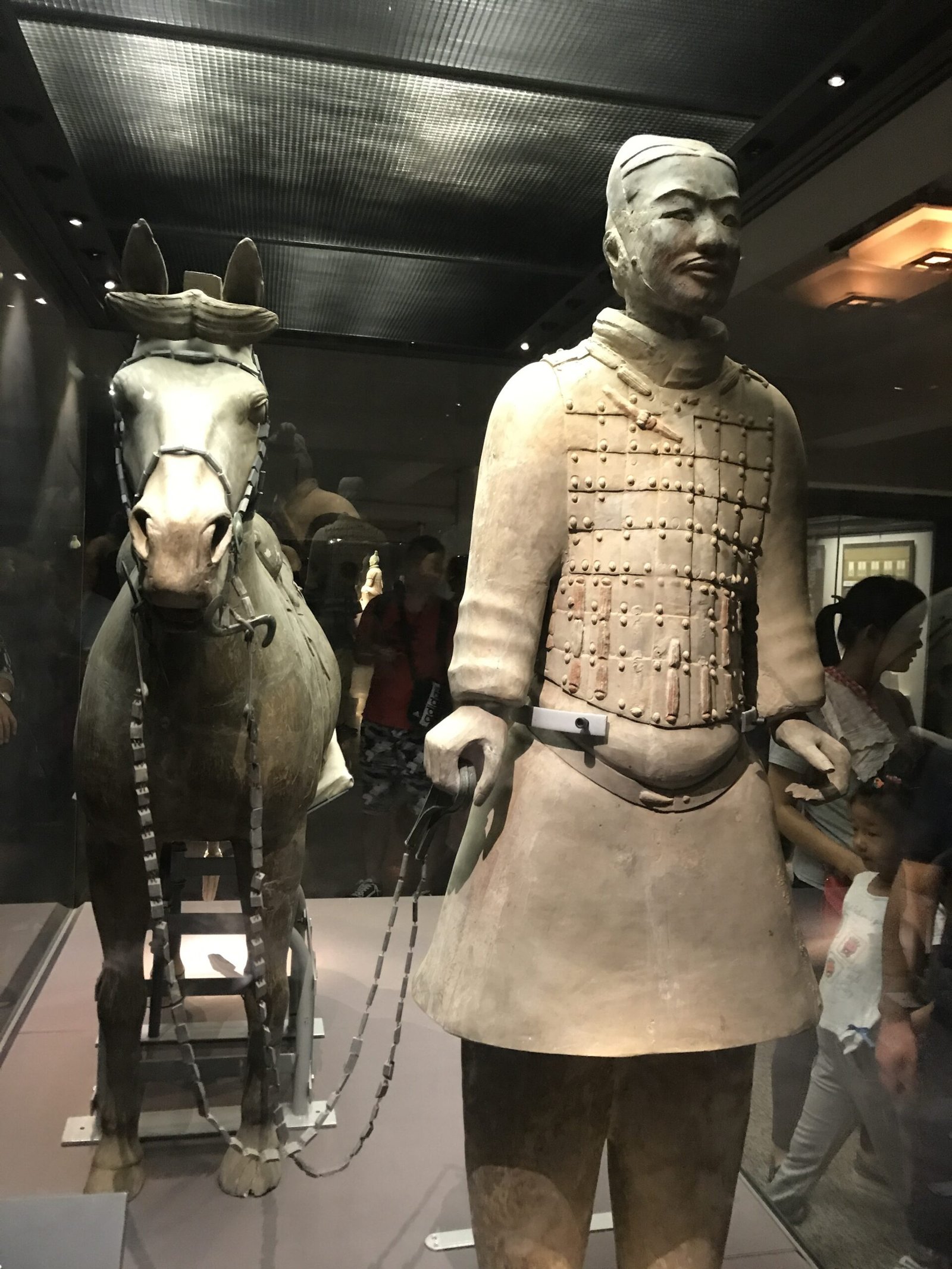
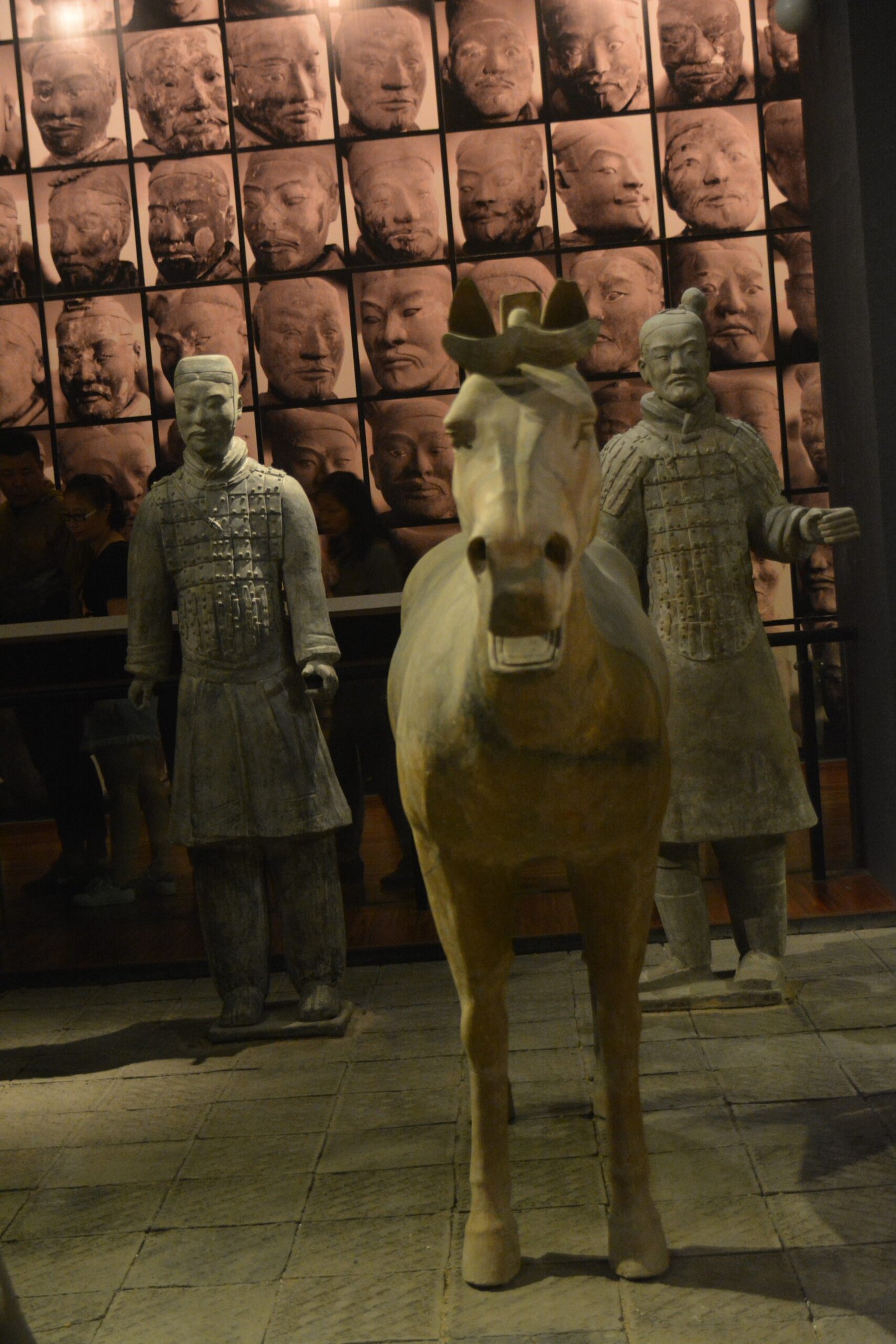
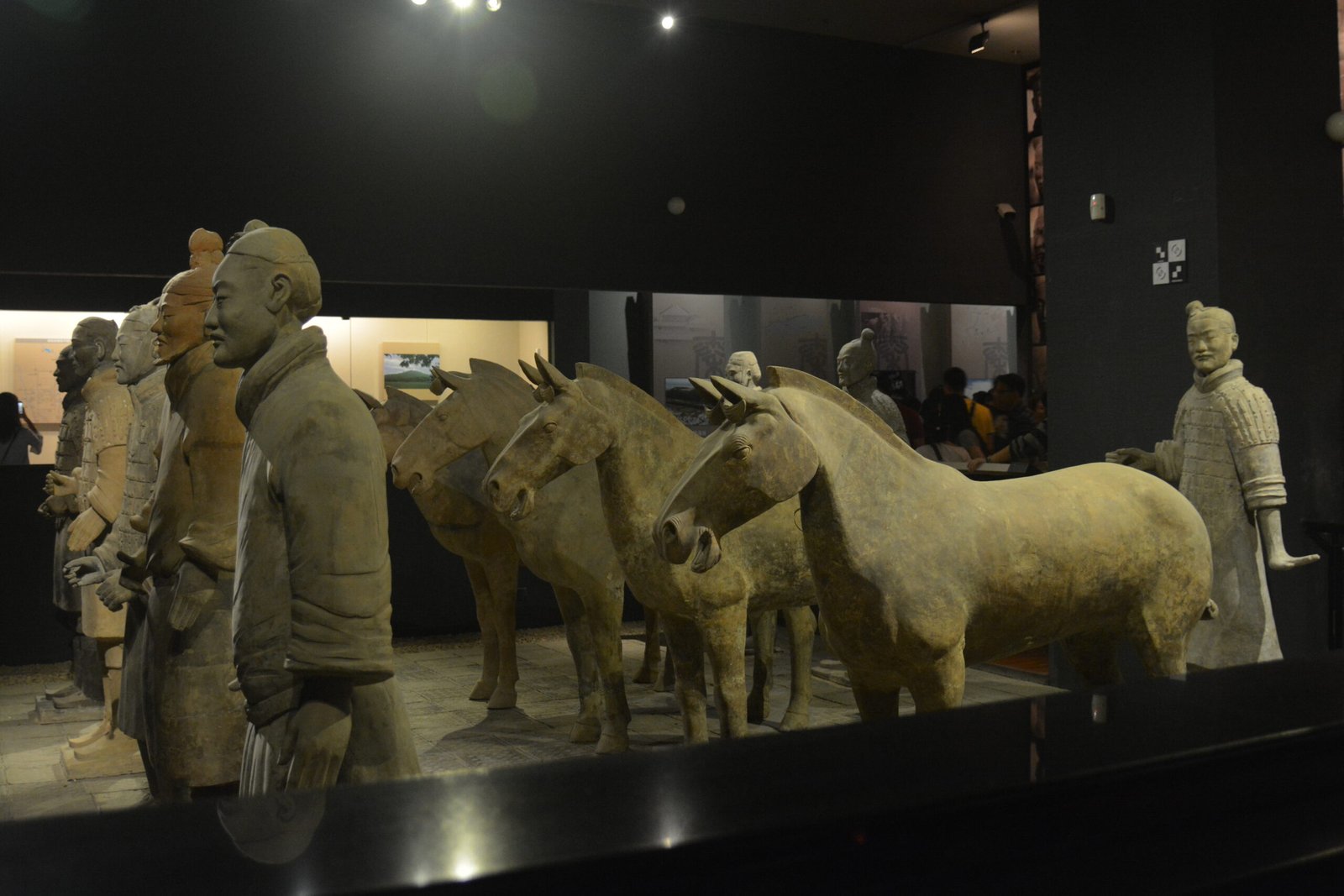
Some of the best-preserved terracotta warriors have been relocated to other museums. This is one of a collection of intact figures now on display in the Shaanxi History Museum in Xi'an. Of the several thousand terracotta warriors uncovered so far, no two have the same face.
Pieces of Warriors
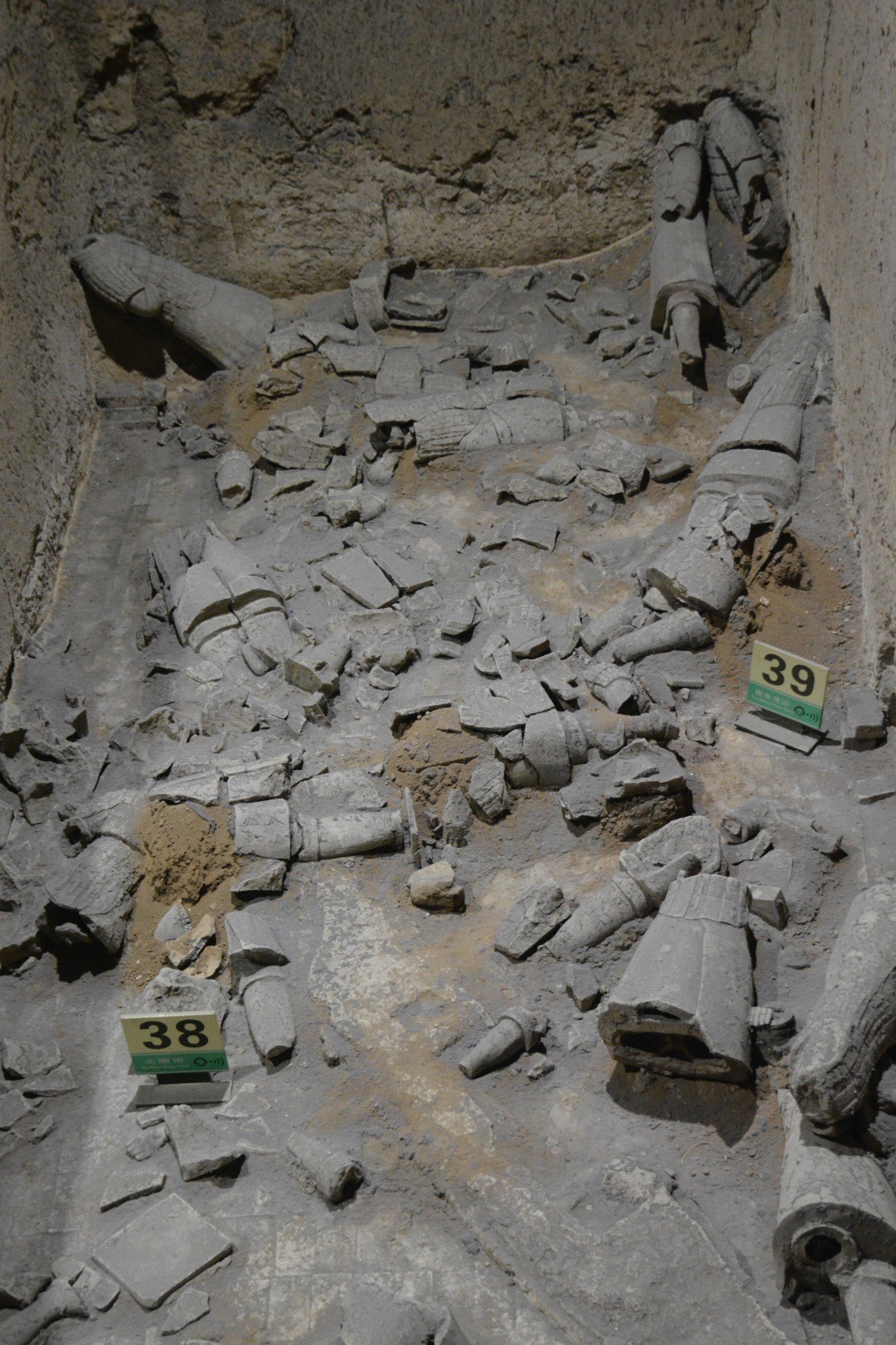
Some excavation sites uncover figures that are heavily damaged after being buried for centuries. As archeologists uncover these figures, they carefully collect the pieces, move them to a repair center in the main excavation area, and attempt to piece them back together.
Pieces of Warriors
Some excavation sites uncover figures that are heavily damaged after being buried for centuries. As archeologists uncover these figures, they carefully collect the pieces, move them to a repair center in the main excavation area, and attempt to piece them back together.
On-Going Excavations
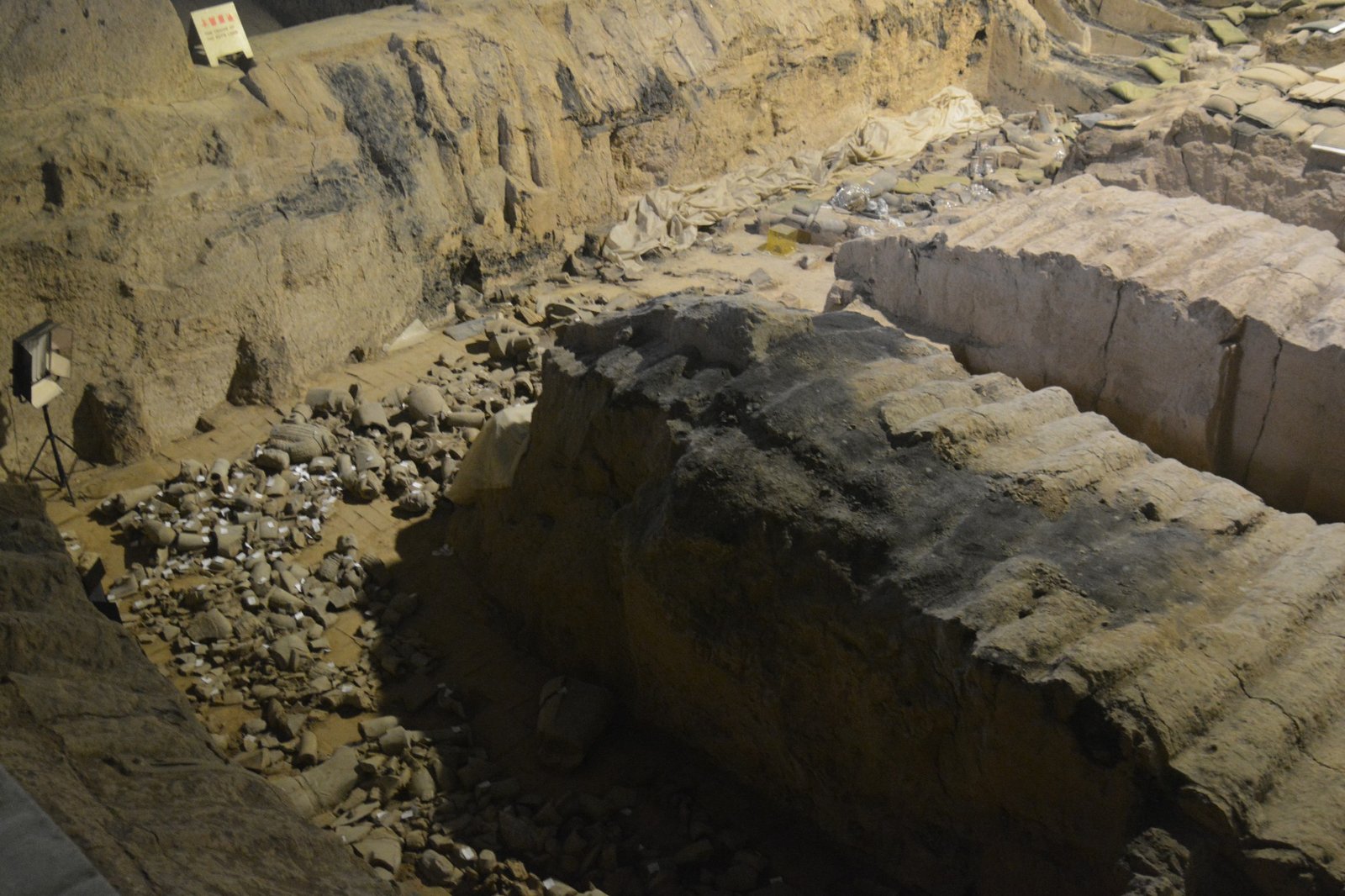
This is a satellite area where excavation work continues and more terracotta figures are uncovered.
Warriors and Horses Under Glass
a unit of warriors with their horses in a protective glass case. On display at the Shaanxi History Museum in Xi'an
Detailed Terracotta Warrior
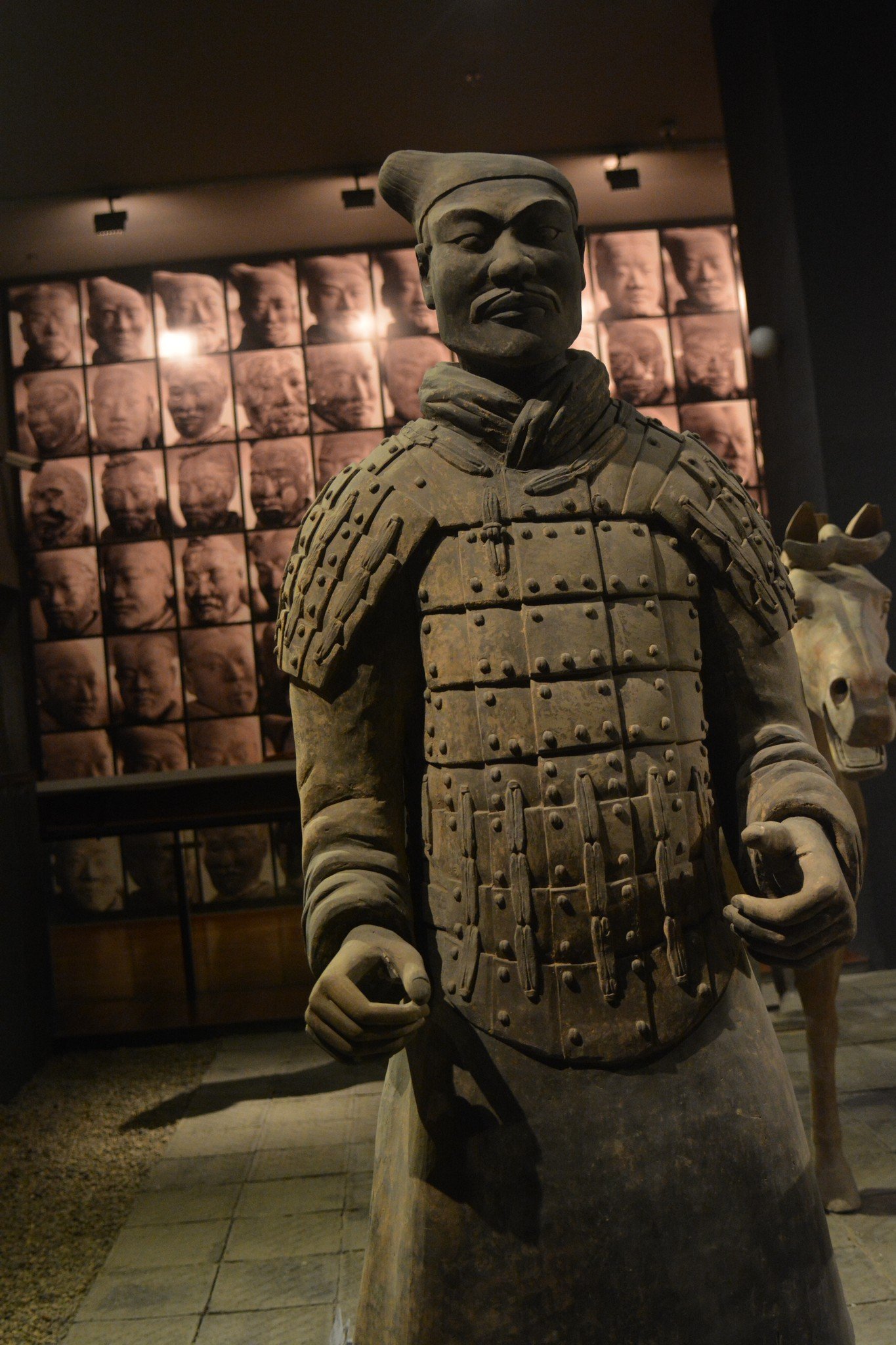
Some of the best-preserved terracotta warriors have been relocated to other museums. This is one of a collection of intact figures now on display in the Shaanxi History Museum in Xi'an
Detailed Terracotta Warrior
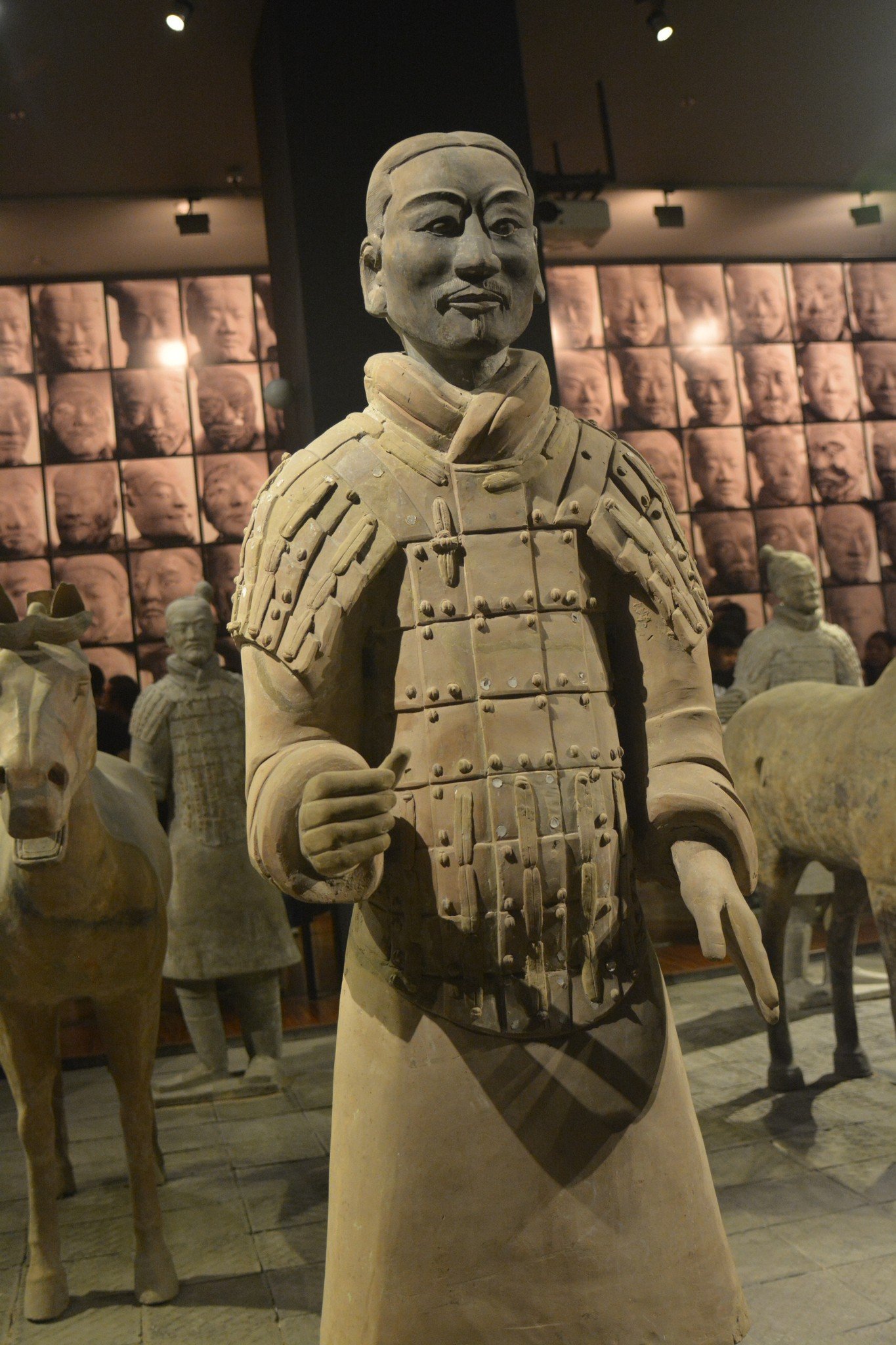
Some of the best-preserved terracotta warriors have been relocated to other museums. This is one of a collection of intact figures now on display in the Shaanxi History Museum in Xi'an
Detailed Terracotta Warrior
Some of the best-preserved terracotta warriors have been relocated to other museums. This is one of a collection of intact figures now on display in the Shaanxi History Museum in Xi'an
Detailed Terracotta Warrior
Some of the best-preserved terracotta warriors have been relocated to other museums. This is one of a collection of intact figures now on display in the Shaanxi History Museum in Xi'an.
Detailed Terracotta Warrior
Some of the best-preserved terracotta warriors have been relocated to other museums. This is one of a collection of intact figures now on display in the Shaanxi History Museum in Xi'an.
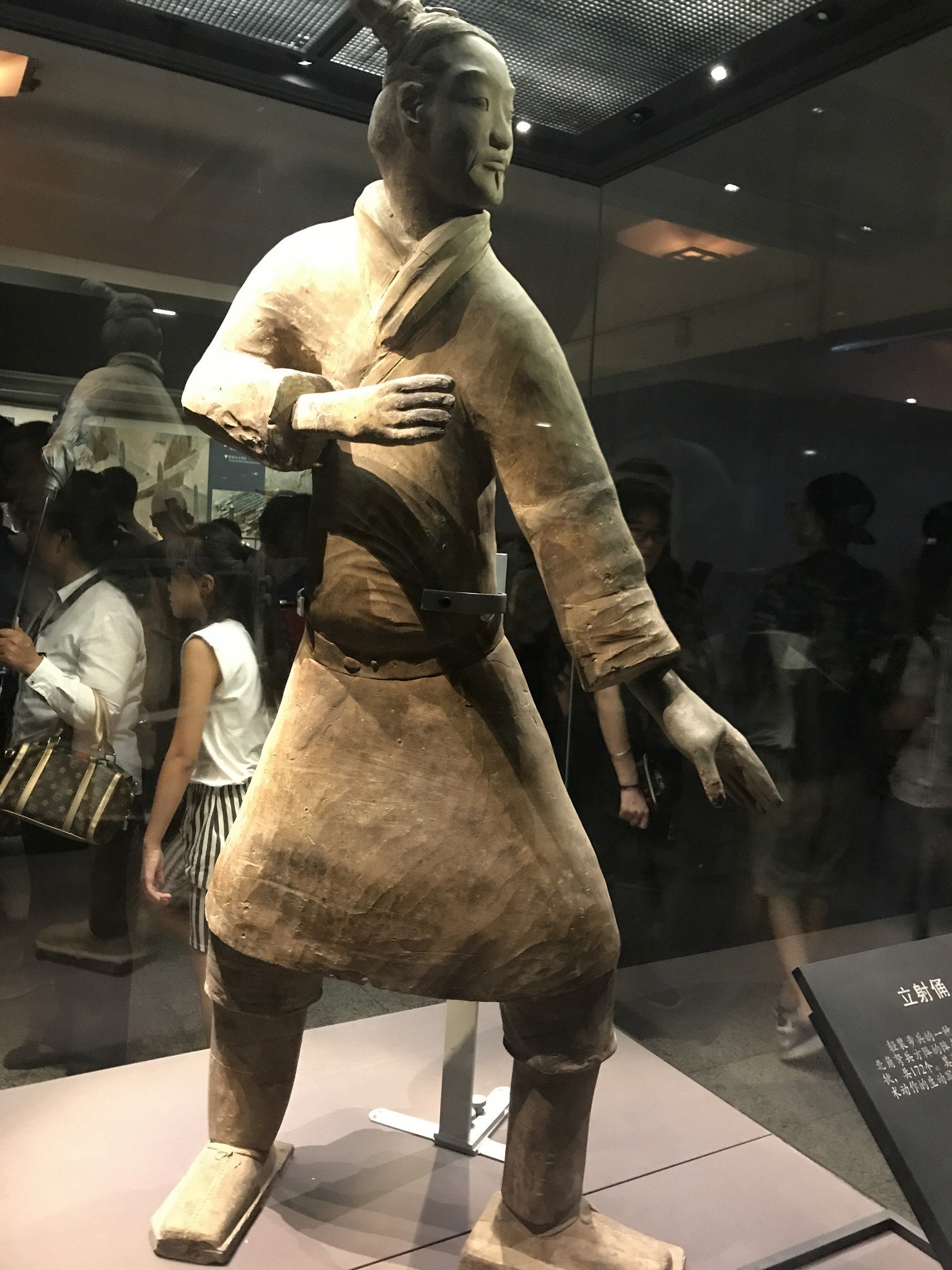
A Kung Fu Fighter
One of several well-preserved terracotta warrior figures displayed inside a glass enclosure at the Shaanxi History Museum in Xi'an.
The History
Some history of these fascinating warriors, from the ever-wonderful Wikipedia entry:
The Terracotta Army was discovered on 29 March 1974 to the east of Xi’an in Shaanxi province by farmers digging a water well approximately 1.5 kilometers (0.93 mi) east of the Qin Emperor’s tomb mound at Mount Li (Lishan), a region riddled with underground springs and watercourses. For centuries, occasional reports mentioned pieces of terracotta figures and fragments of the Qin necropolis – roofing tiles, bricks, and chunks of masonry. This discovery prompted Chinese archaeologists to investigate, revealing the largest pottery figurine group ever found in China.
The figures date from approximately the late third century BCE. They vary in height according to their roles, with the tallest being the generals. The figures include warriors, chariots, and horses. Estimates from 2007 were that the three pits containing the Terracotta Army held more than 8,000 soldiers, 130 chariots with 520 horses and 150 cavalry horses, the majority of which remained buried in the pits nearby Qin Shi Huang’s mausoleum. Other terracotta non-military figures were found in other pits, including officials, acrobats, strongmen, and musicians.
The Necropolis
The Terracotta Army is part of a much larger necropolis. Ground-penetrating radar and core sampling have measured the area to be approximately 98 square kilometers (38 square miles).
The necropolis was constructed as a microcosm of the emperor’s imperial palace or compound and covers a large area around the tomb mound of the first emperor. The earthen tomb mound is located at the foot of Mount Li and built in a pyramidal shape, and is surrounded by two solidly built rammed earth walls with gateway entrances. The necropolis consists of several offices, halls, stables, other structures as well as an imperial park placed around the tomb mound.
Life-Sized Figures
The terracotta figures are life-sized. They vary in height, uniform, and hairstyle in accordance with rank. Their faces appear to be different for each individual figure, scholars, however, have identified 10 basic face shapes. Originally, the figures were painted with bright pigments, variously colored pink, red, green, blue, black, brown, white and lilac. The colored lacquer finish and individual facial features would have given the figures a realistic feel. However, much of the color coating had flaked off or become greatly faded.
We use cookies on our website to give you the most relevant experience by remembering your preferences and repeat visits. By clicking “Accept”, you consent to the use of ALL the cookies.
This website uses cookies to improve your experience while you navigate through the website. Out of these, the cookies that are categorized as necessary are stored on your browser as they are essential for the working of basic functionalities of the website. We also use third-party cookies that help us analyze and understand how you use this website. These cookies will be stored in your browser only with your consent. You also have the option to opt-out of these cookies. But opting out of some of these cookies may affect your browsing experience.
Necessary cookies are absolutely essential for the website to function properly. These cookies ensure basic functionalities and security features of the website, anonymously.
Cookie
Duration
Description
cookielawinfo-checkbox-analytics
11 months
This cookie is set by GDPR Cookie Consent plugin. The cookie is used to store the user consent for the cookies in the category "Analytics".
cookielawinfo-checkbox-functional
11 months
The cookie is set by GDPR cookie consent to record the user consent for the cookies in the category "Functional".
cookielawinfo-checkbox-necessary
11 months
This cookie is set by GDPR Cookie Consent plugin. The cookies is used to store the user consent for the cookies in the category "Necessary".
cookielawinfo-checkbox-others
11 months
This cookie is set by GDPR Cookie Consent plugin. The cookie is used to store the user consent for the cookies in the category "Other.
cookielawinfo-checkbox-performance
11 months
This cookie is set by GDPR Cookie Consent plugin. The cookie is used to store the user consent for the cookies in the category "Performance".
viewed_cookie_policy
11 months
The cookie is set by the GDPR Cookie Consent plugin and is used to store whether or not user has consented to the use of cookies. It does not store any personal data.
Functional cookies help to perform certain functionalities like sharing the content of the website on social media platforms, collect feedbacks, and other third-party features.
Performance cookies are used to understand and analyze the key performance indexes of the website which helps in delivering a better user experience for the visitors.
Analytical cookies are used to understand how visitors interact with the website. These cookies help provide information on metrics the number of visitors, bounce rate, traffic source, etc.
Advertisement cookies are used to provide visitors with relevant ads and marketing campaigns. These cookies track visitors across websites and collect information to provide customized ads.