I first visited Peru in 1978, during a Navy cruise around South America. During that visit I was able to take a tree-day trip to Cusco and Machu Picchu. What I remembered most from that too-brief visit was the incredible Inca stonework. When I left, I promised myself I’d come back again for an extended visit. That visit finally happened in March 2025. On this visit I did get to see more of Peru and examples of beautiful Inca stonework.
In addition to my other photo galleries of Peru, I created this one specifically for close-up images of Inca stonework. From the ever-wonderful Wikipedia, we have this explanation of Inca architecture and stone construction:
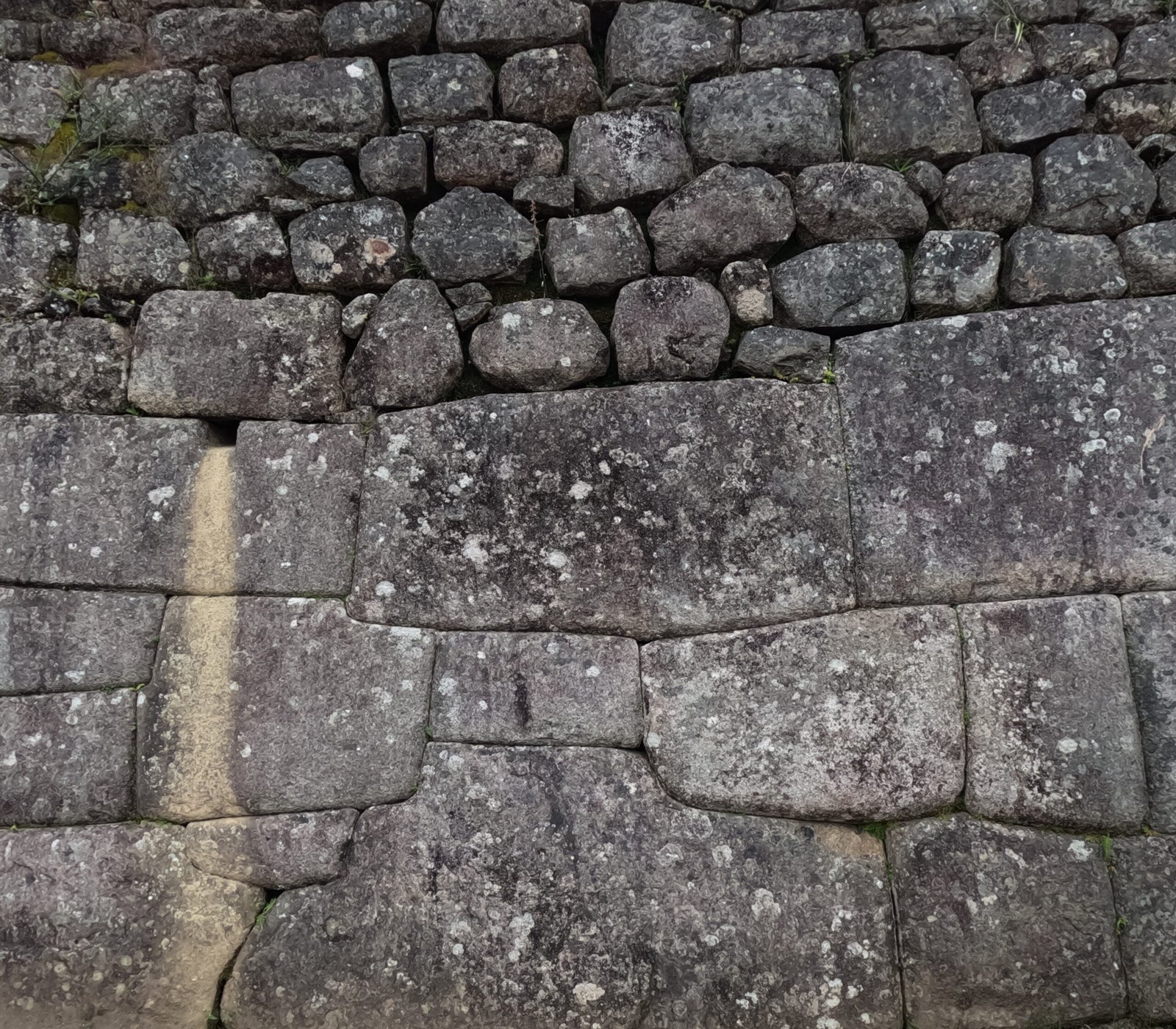
Inca architecture is widely known for its fine masonry, which features precisely cut and shaped stones closely fitted without mortar (“dry”). However, despite this fame, most Inca buildings were actually made out of fieldstone and adobe as described above. More precise fitting masonry was more commonly featured on higher status buildings, such as palaces and temples. In the 1940s, American archaeologist John H. Rowe classified Inca fine masonry in two types: coursed, which features rectangular shaped stones, and polygonal, which features blocks of irregular shape. In the 1980s, Peruvian architect Santiago Agurto established four subtypes by dividing categories previously identified by Rowe:
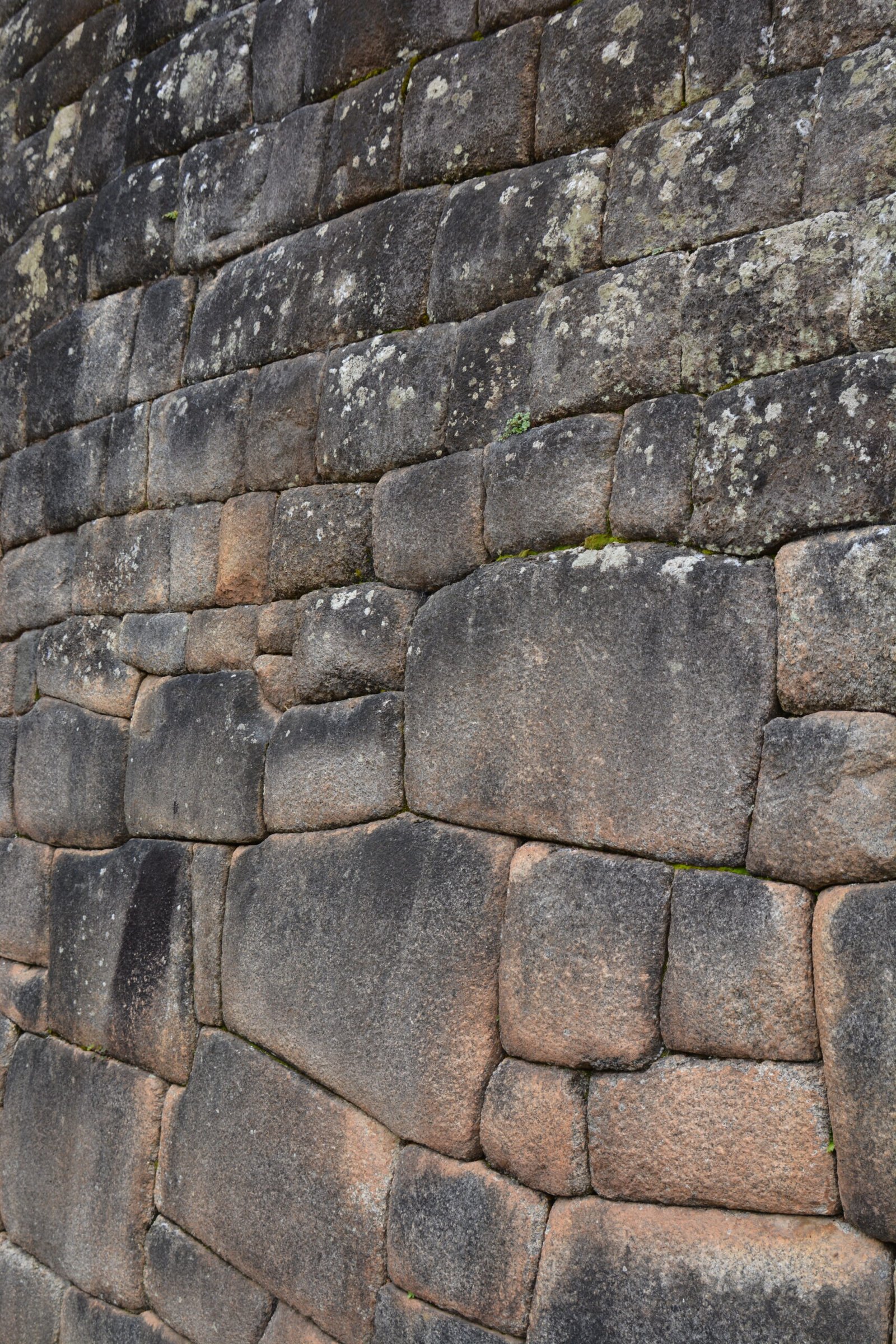
Cellular polygonal masonry: small blocks of cut and dressed stone worked to achieve a specific form, typically rectangular.
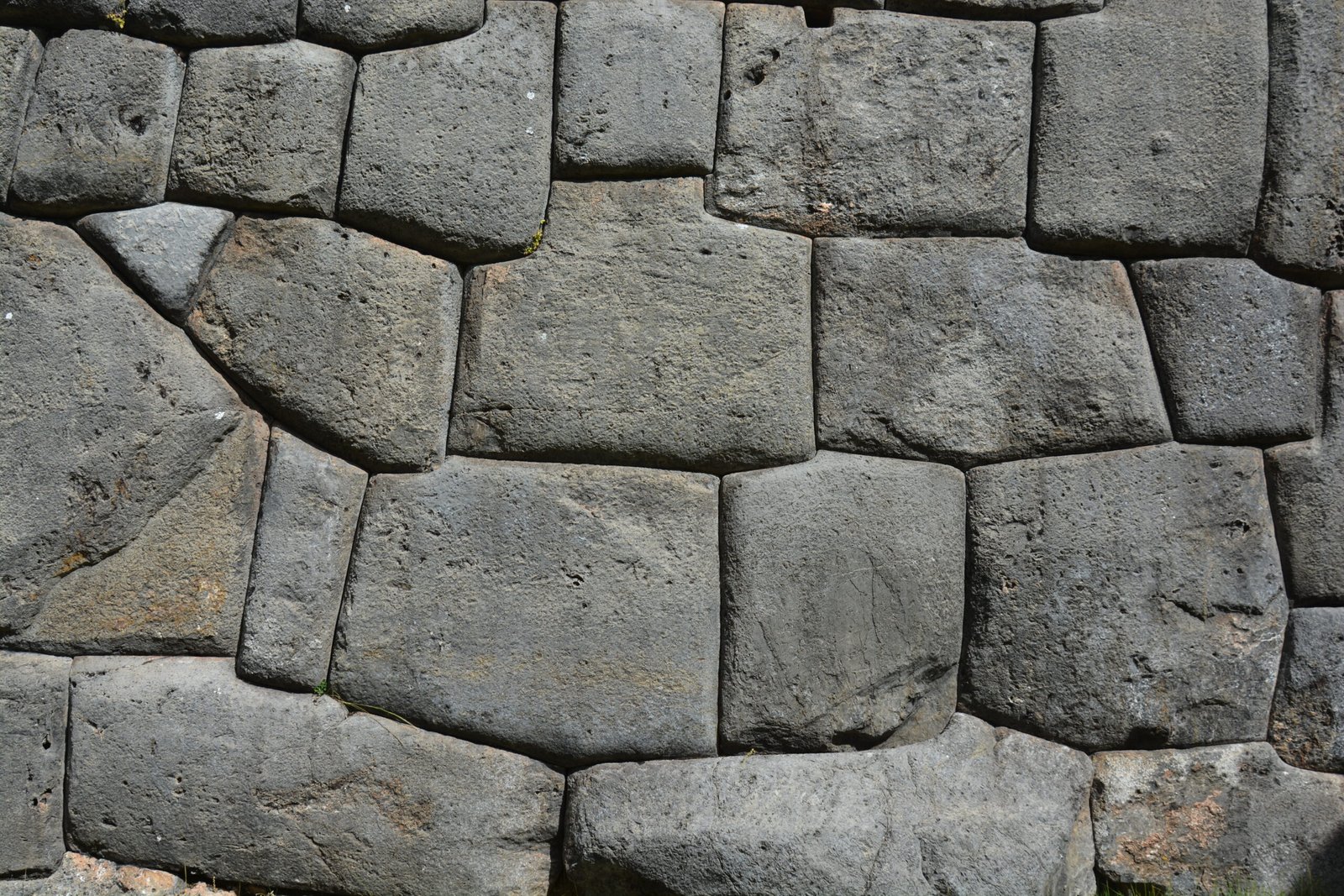
AshlarAshlarAshlar (/ˈæʃlər/) is a term used to describe cut and dressed stone worked to achieve a specific form, typically rectangular; a structure built from such stones; and the look created by the dressing technique. Ashlar stone may be dry laid or bedded in mortar. The dry ashlar of Inca architecture in Cusco and Machu Picchu is particularly fine and famous. polygonal masonry: Very large cut and dressed stone worked to achieve a specific form, typically rectangular.
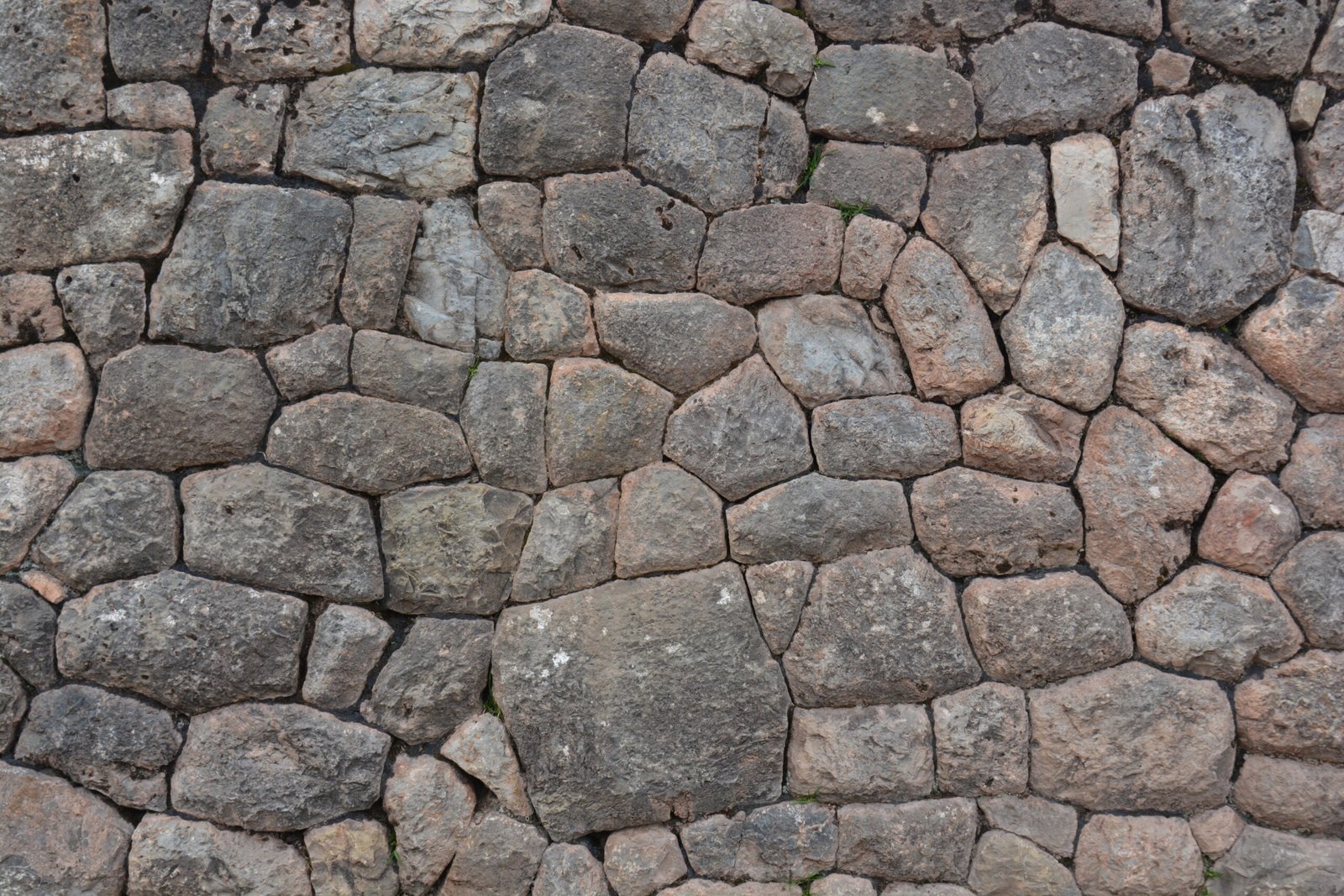
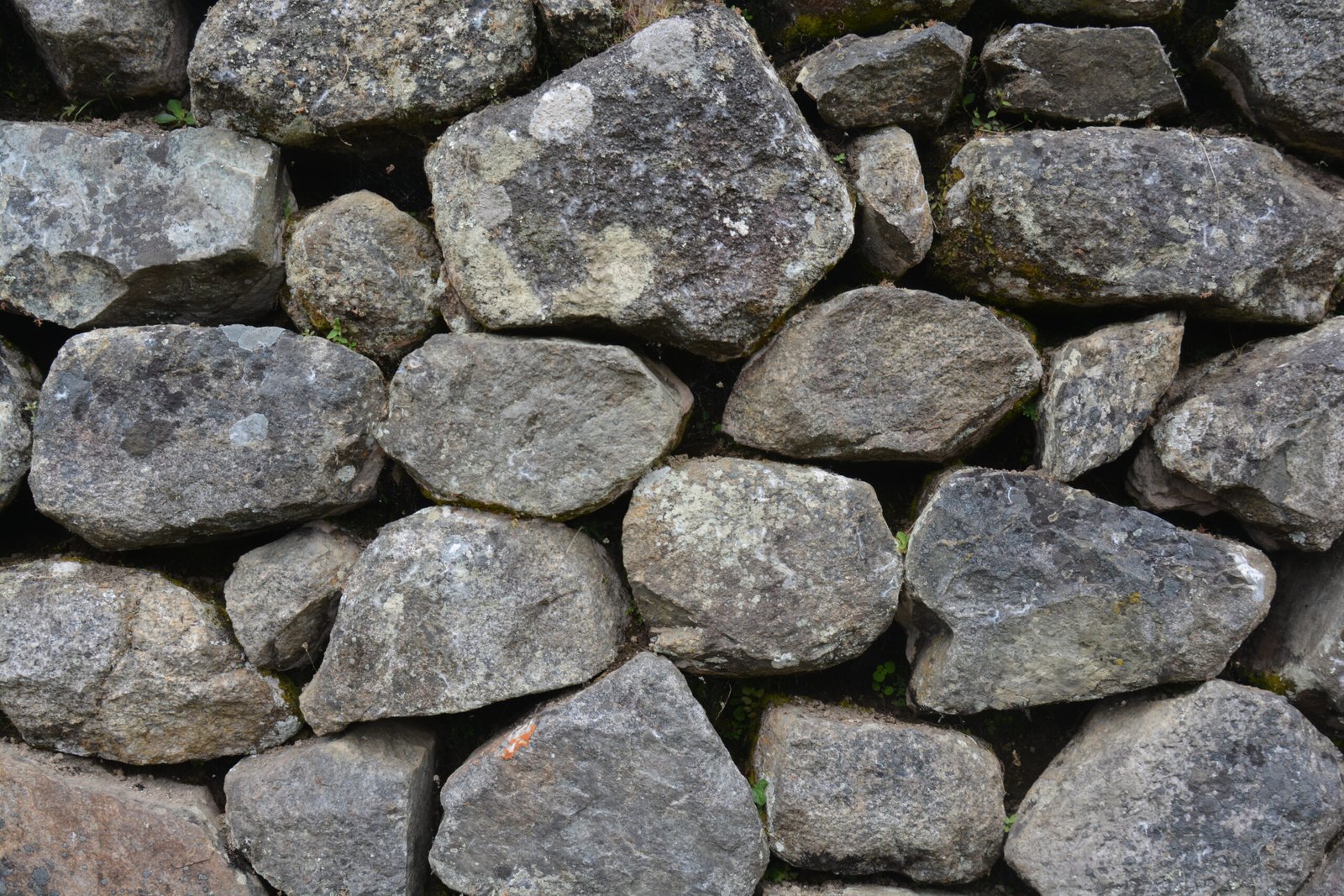
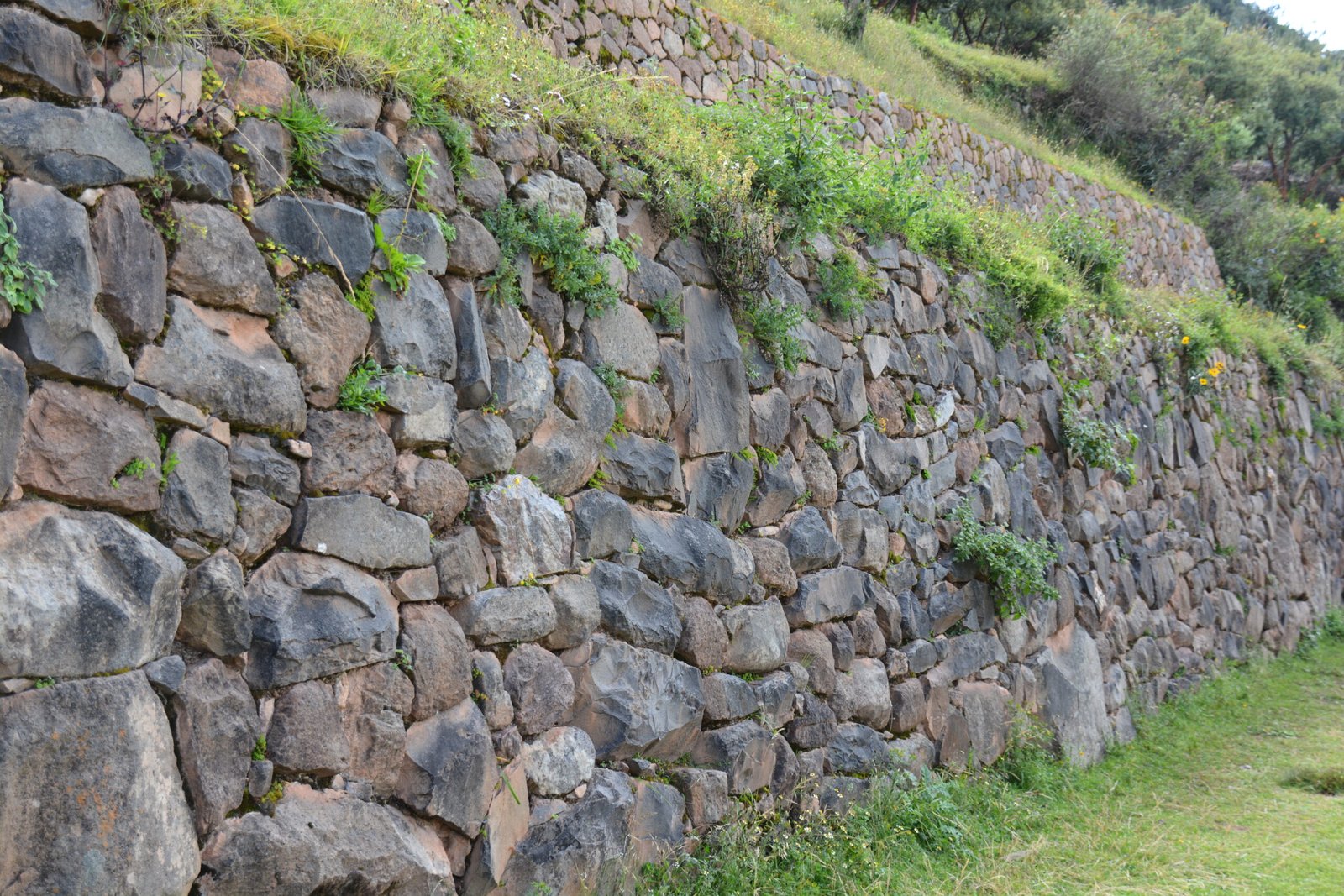
Encased coursed masonry: rough cut or natural stone in which stone blocks are not aligned.
Sedimentary coursed masonry: rough cut or natural stone in which stones are laid out in horizontal rows (i.e., ashlars).
The first two types were used on important buildings or perimeter walls while the last two were employed mostly on terrace walls and river canalization.
In my photo study, I show examples of all four styles of stonework. These images are from Cusco, the Sacred Valley region of Peru, and Machu Picchu, in the Andes Mountains.
Images of Inca Stonework
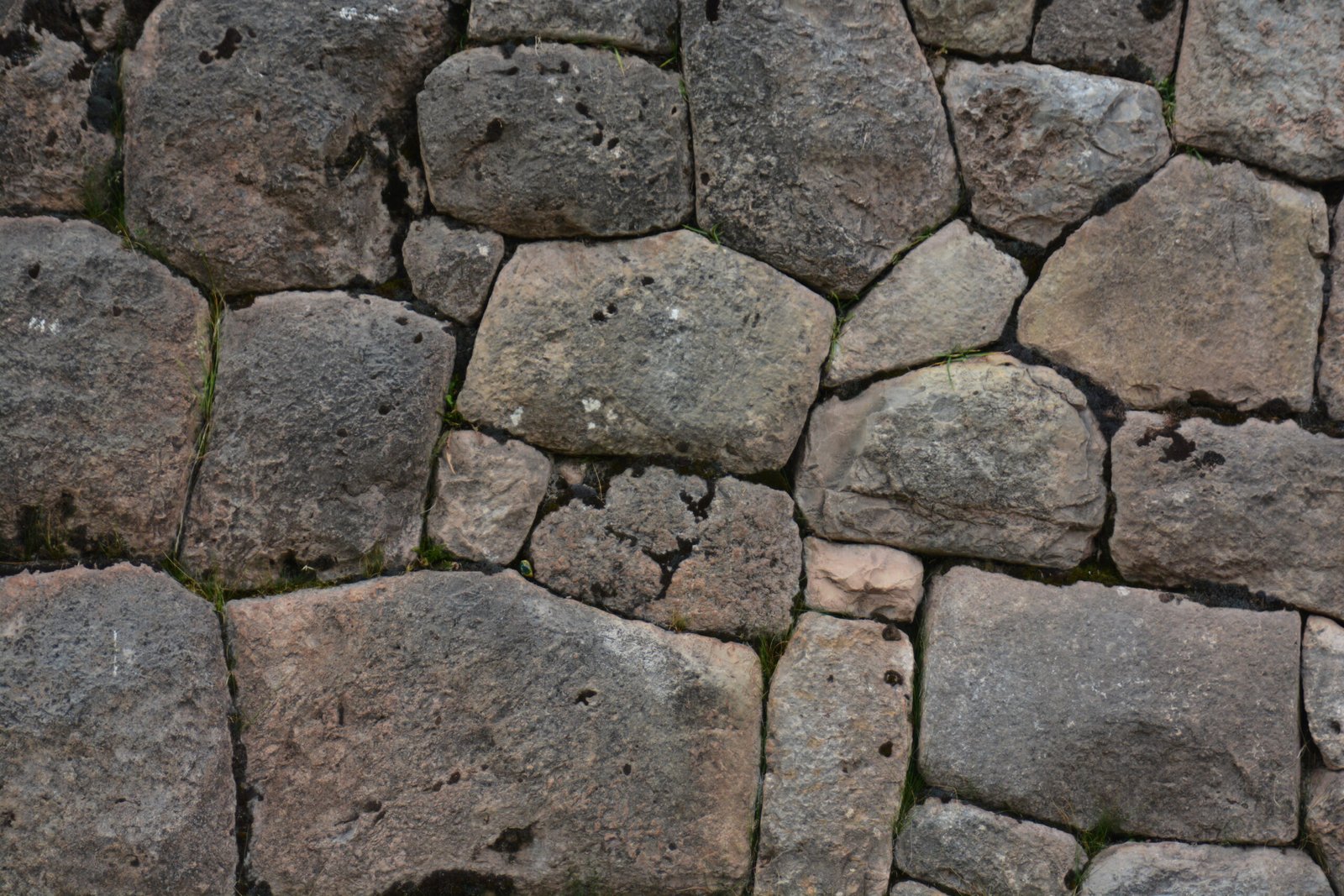
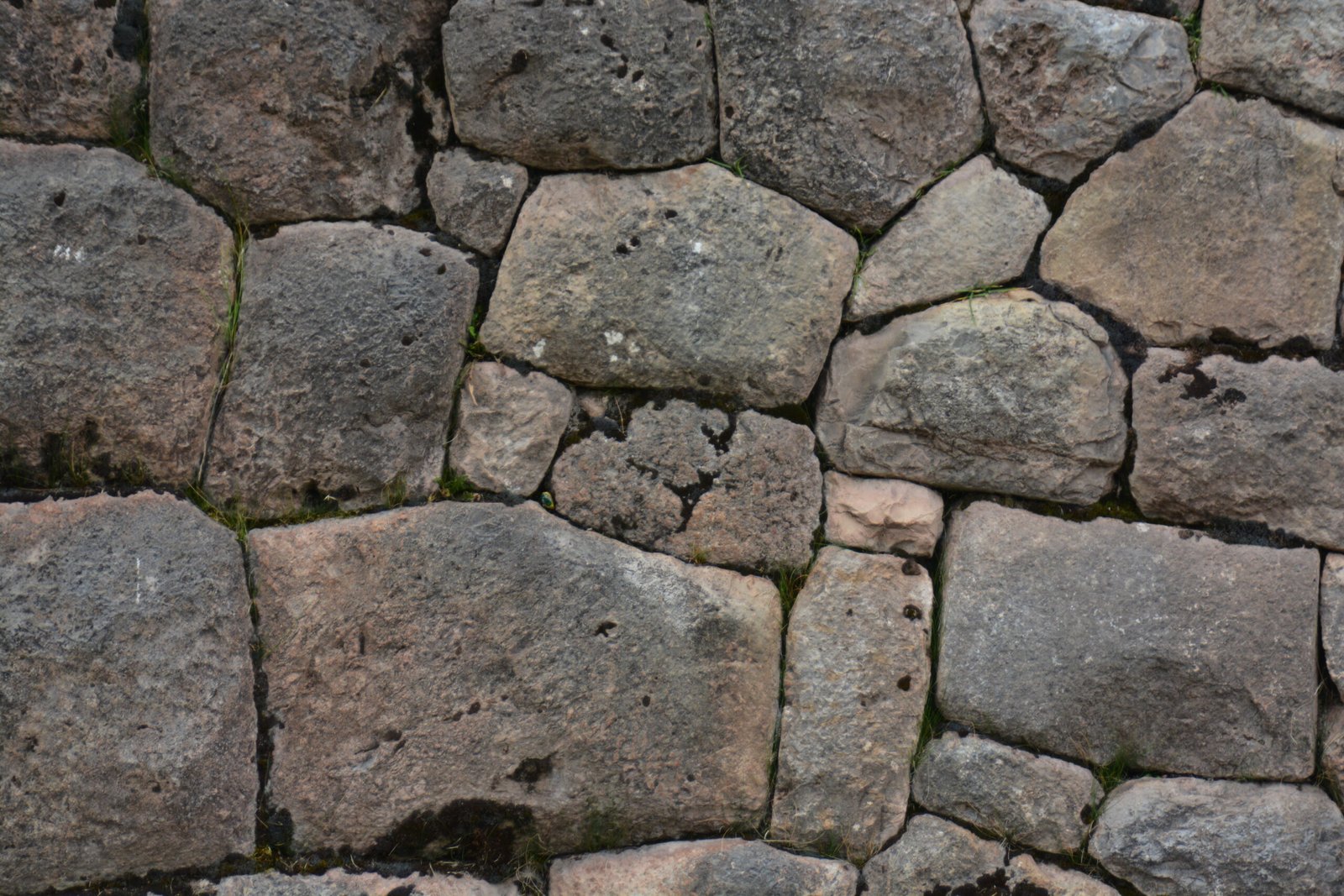
Detail of a Stone Wall in Pukapukara
Detail of a stone wall built in the encased coursed masonry style. Located in teh archeological site of Pukapukara, in the mountains overlooking Cusco.
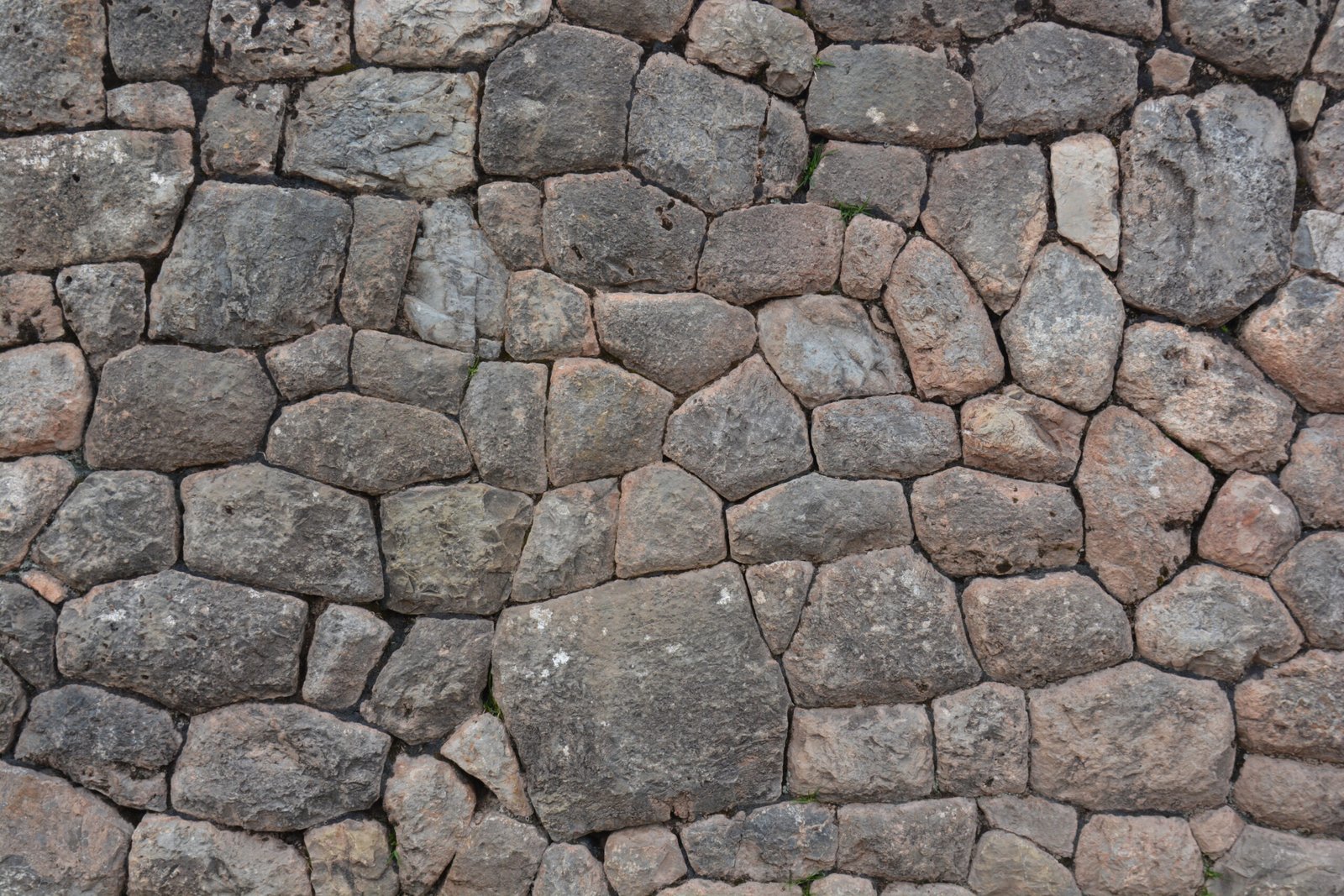
A Stone Wall in Circuito Tambomachay
A stone wall built in the encased coursed masonry style. Located in the archeological site of Circuito Tambomachay, in the mountains overlooking Cusco.
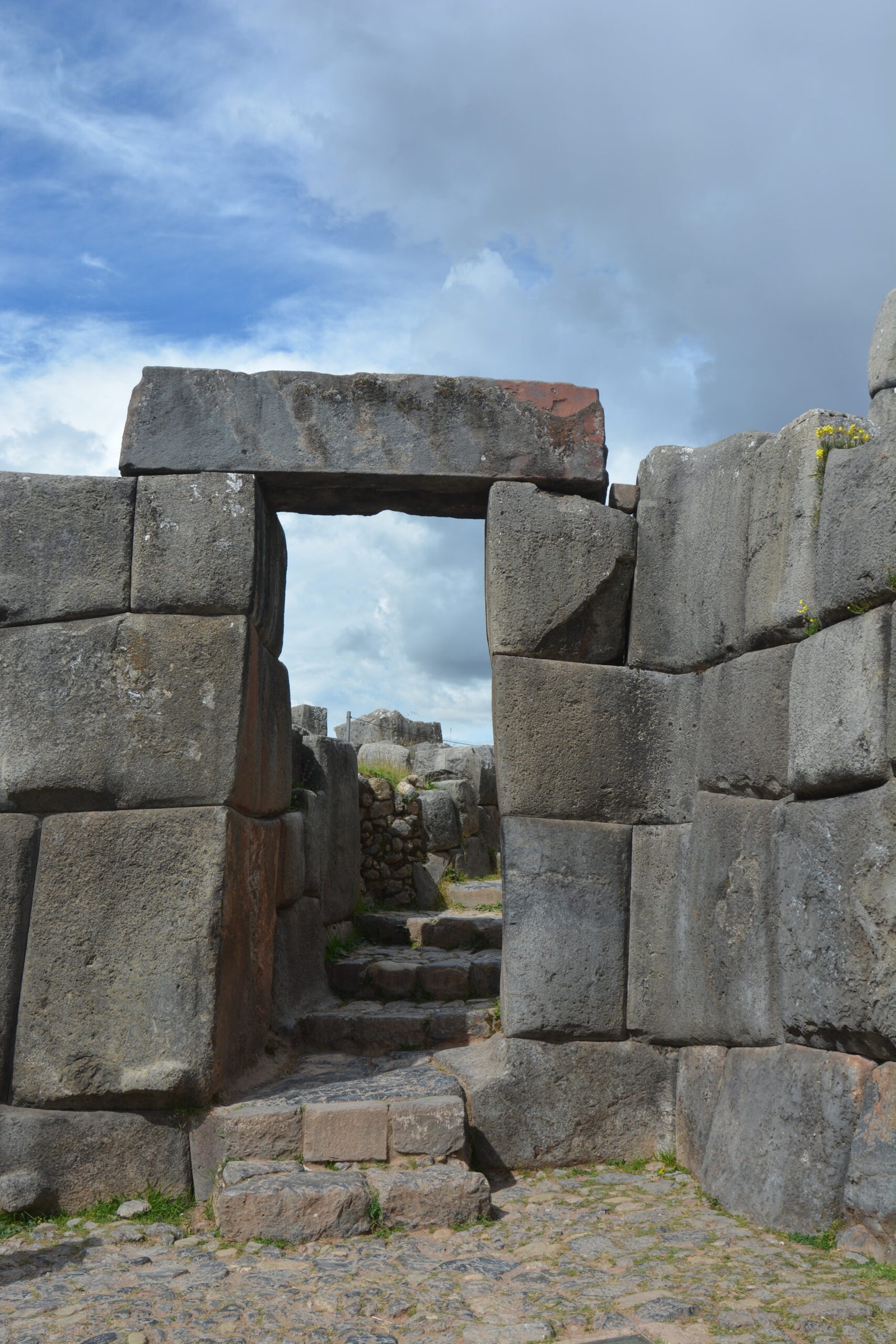
A Doorway leading to Stairs in PukaPukara, in the Hills Overlooking Cusco
A doorway in a wall built in the Ashlar polygonal masonry style. This doorway leads to Stairs going up the hill behind it. In the mountaintop site of PukaPukara, overlooking Cusco.
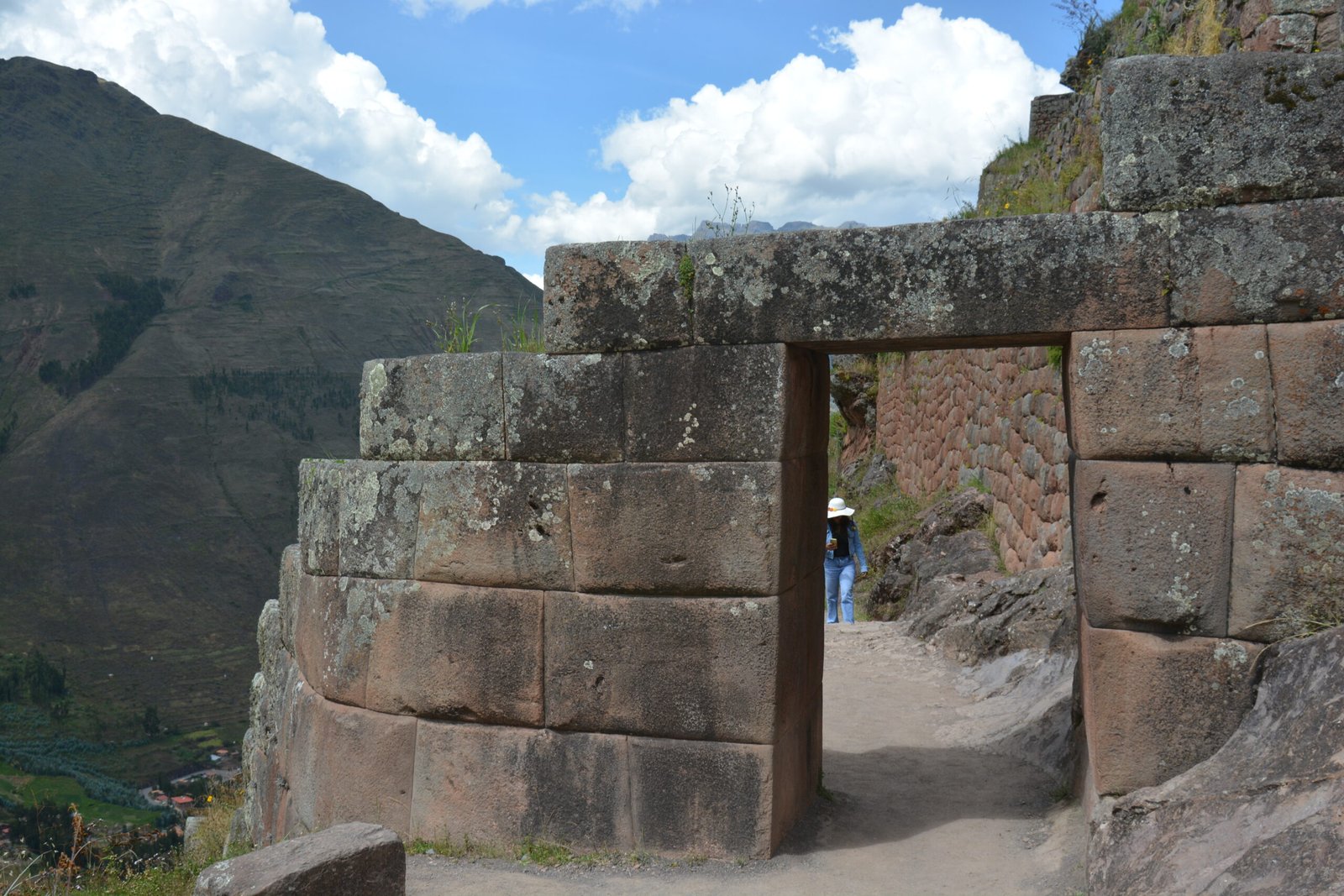
A Doorway Along a Walking Path
A doorway along a walking path in the archeological site of Pisaq (Pisac), in the Sacred Valley region
A Stone Retaining Wall with Drain Hole
A stone retaining wall that uses different levels of construction. The lower section uses ashlar polygonal masonry construction, while the upper levels use sedimentary coursed masonry. In addition, this wall has drain holes to prevent water pressure from building up behind the wall. Located in Machu Picchu.
A Detail of Cellular Polygonal Masonry Construction
A detail view of stone construction in the Temple of The Sun, using the Cellular Polygonal Masonry style. Inca's reserved the highest level of stonework for their most important sites, including temples and public buildings.
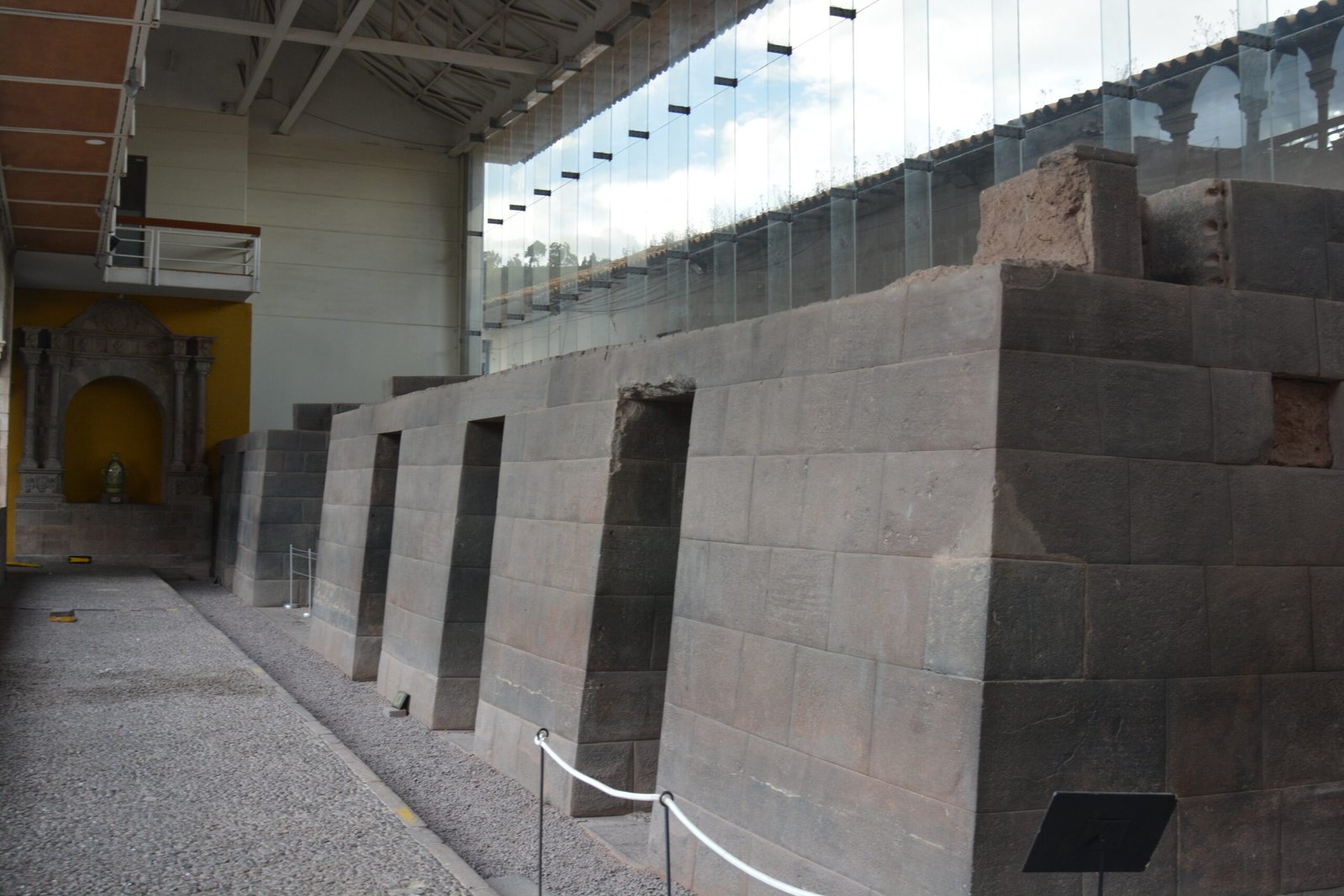
Remnants of the Inca Temple of the Sun, Cusco, Peru
The Stone remains of the Ancient Inca Temple of The Sun, once the central point of the city of Cusco. Now forming the foundation of the Spanish Catholic Temple built on top of it after the Spaniards conquered this region. These stone walls were once covered with a sheet of pure gold, and reflected the sun's rays into the courtyard all day long.
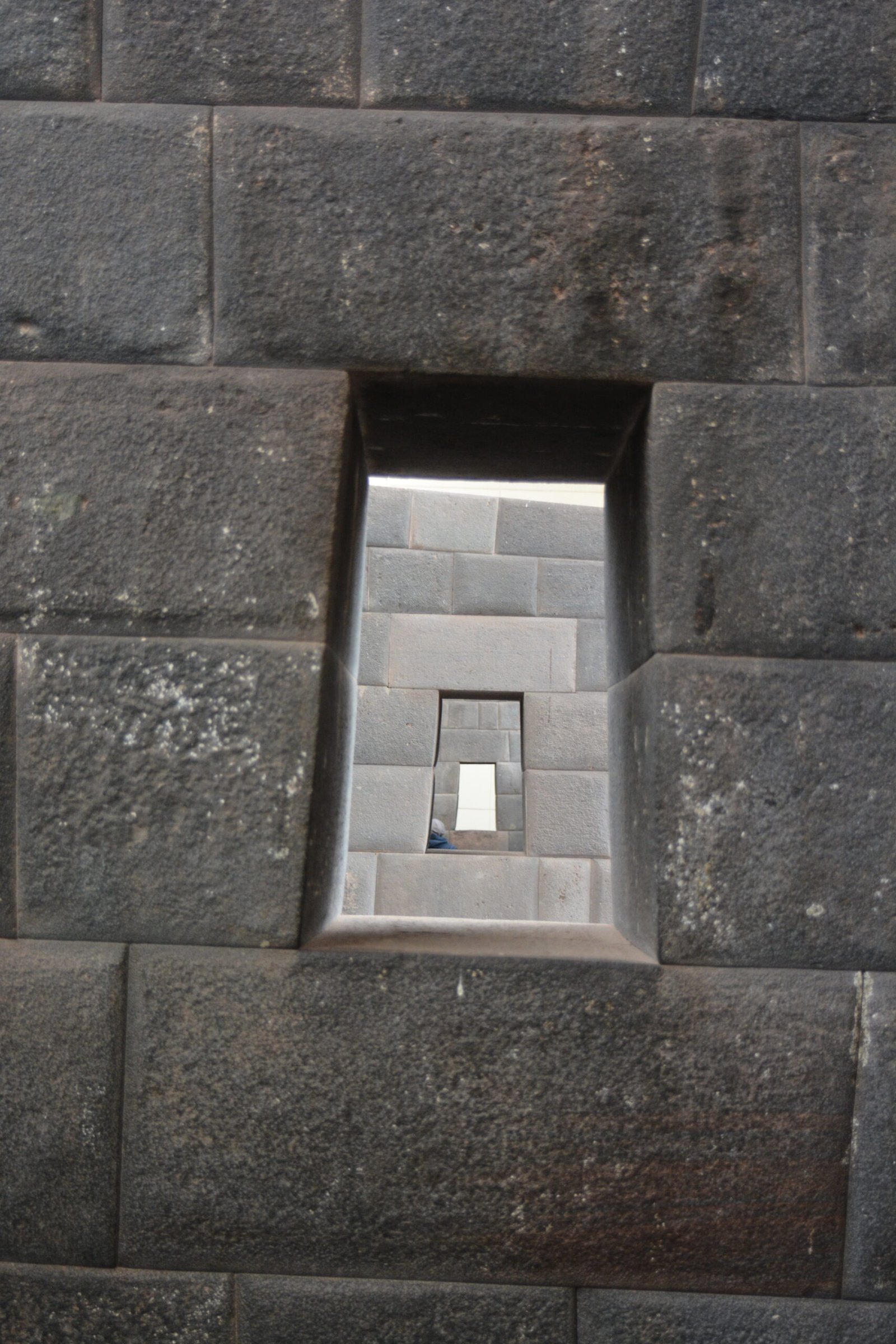
Looking Through The Walls of The Temple of the Sun
Looking through the "windows" created in the interior walls of the former Inca Temple of the Sun, Cusco, Peru. These openings remain perfectly aligned through the row of interior walls centuries after being constructed in an earthquake-prone region. Notice the trapezoid shape. This shape appears to be the norm for all doors, windows and display niche recesses of Inca stonework.
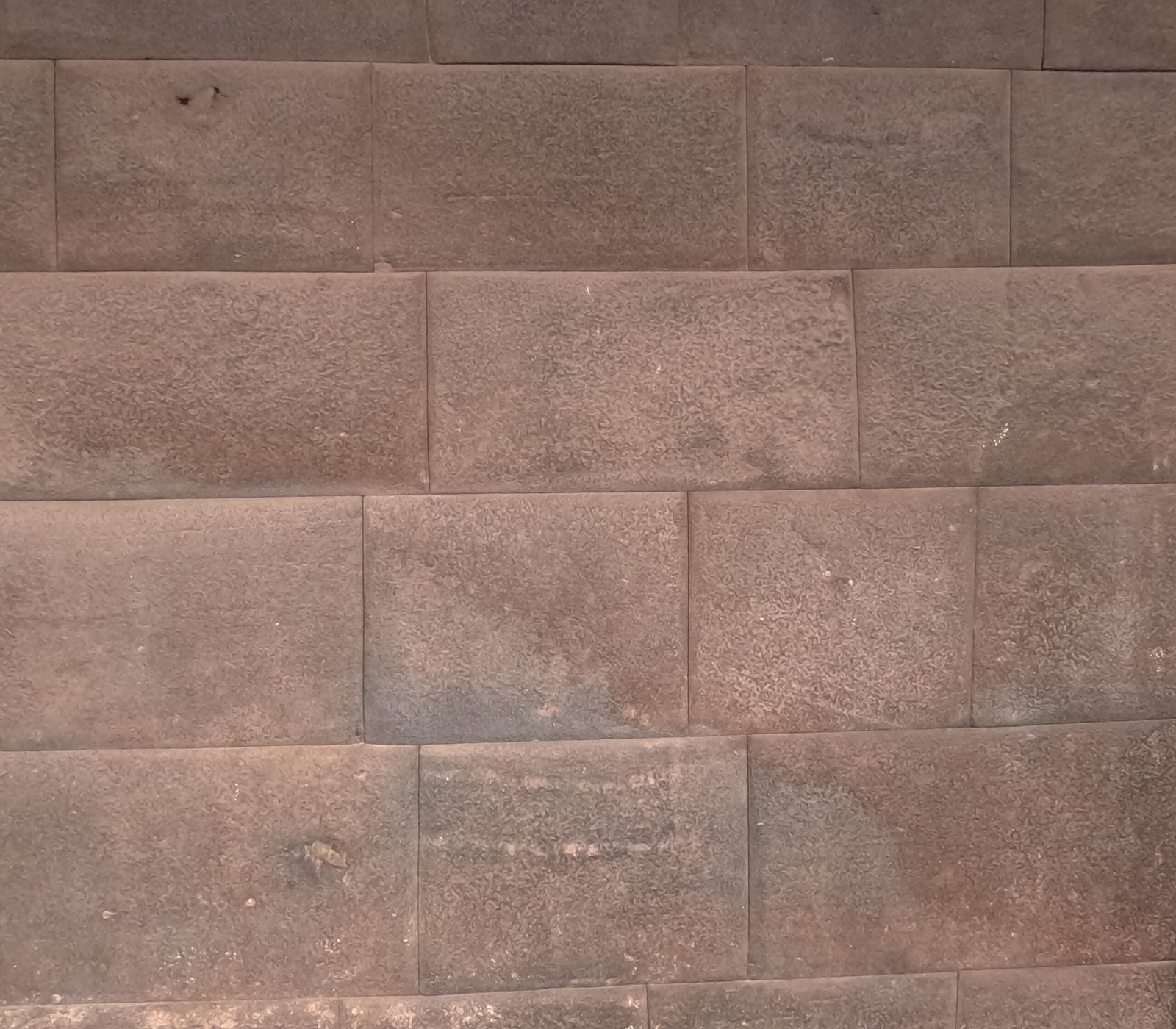
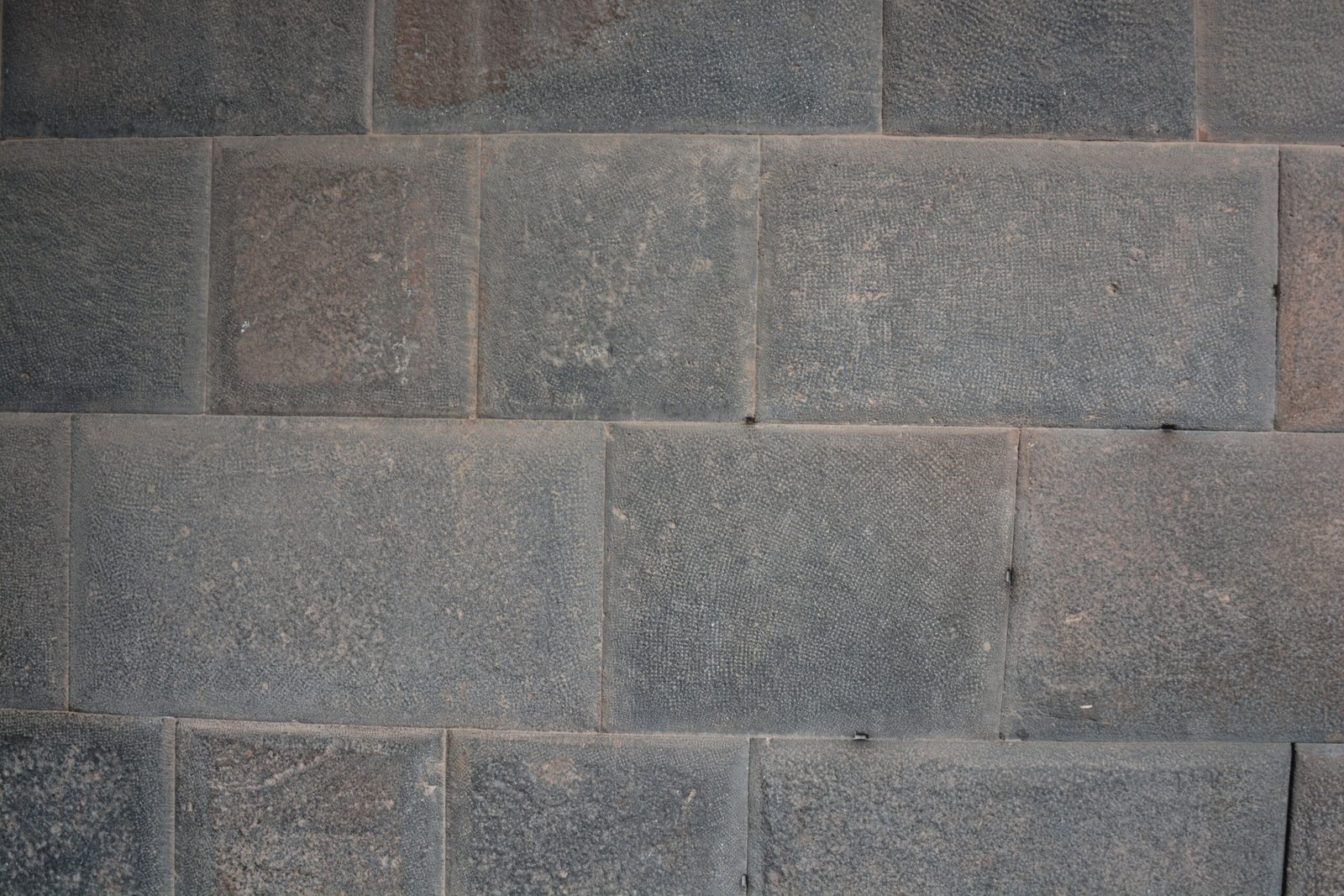
Stonework detail of the Temple of the Sun in Cusco.
Detail of stonework of the ancient Temple of The Sun showing perfectly rectangular-cut blocks of stone. As this was the main temple of the ancient city of Cusco, their temple would have received the most care in cutting and fitting stone. This is an excellent example of cellular polygonal masonry.
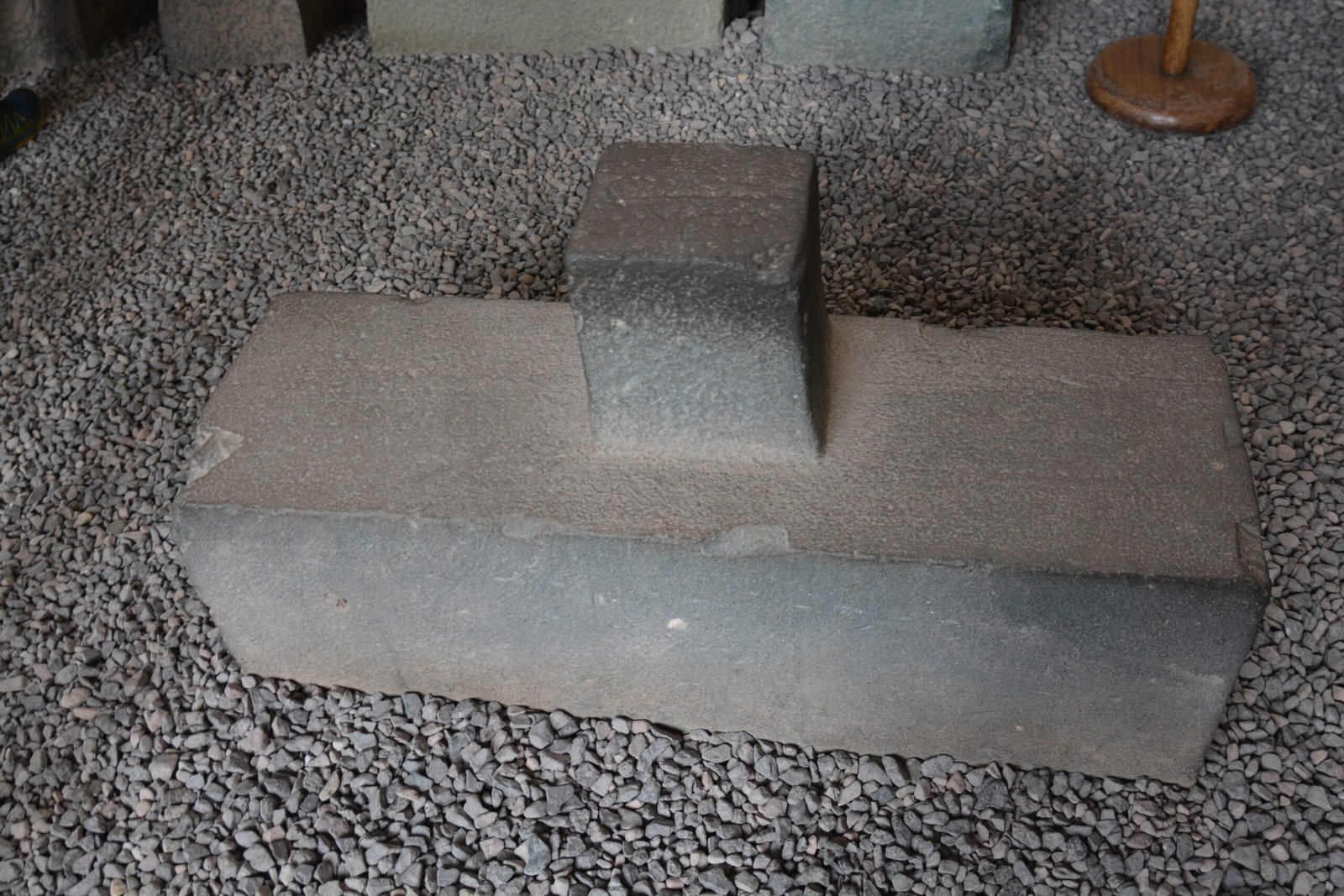
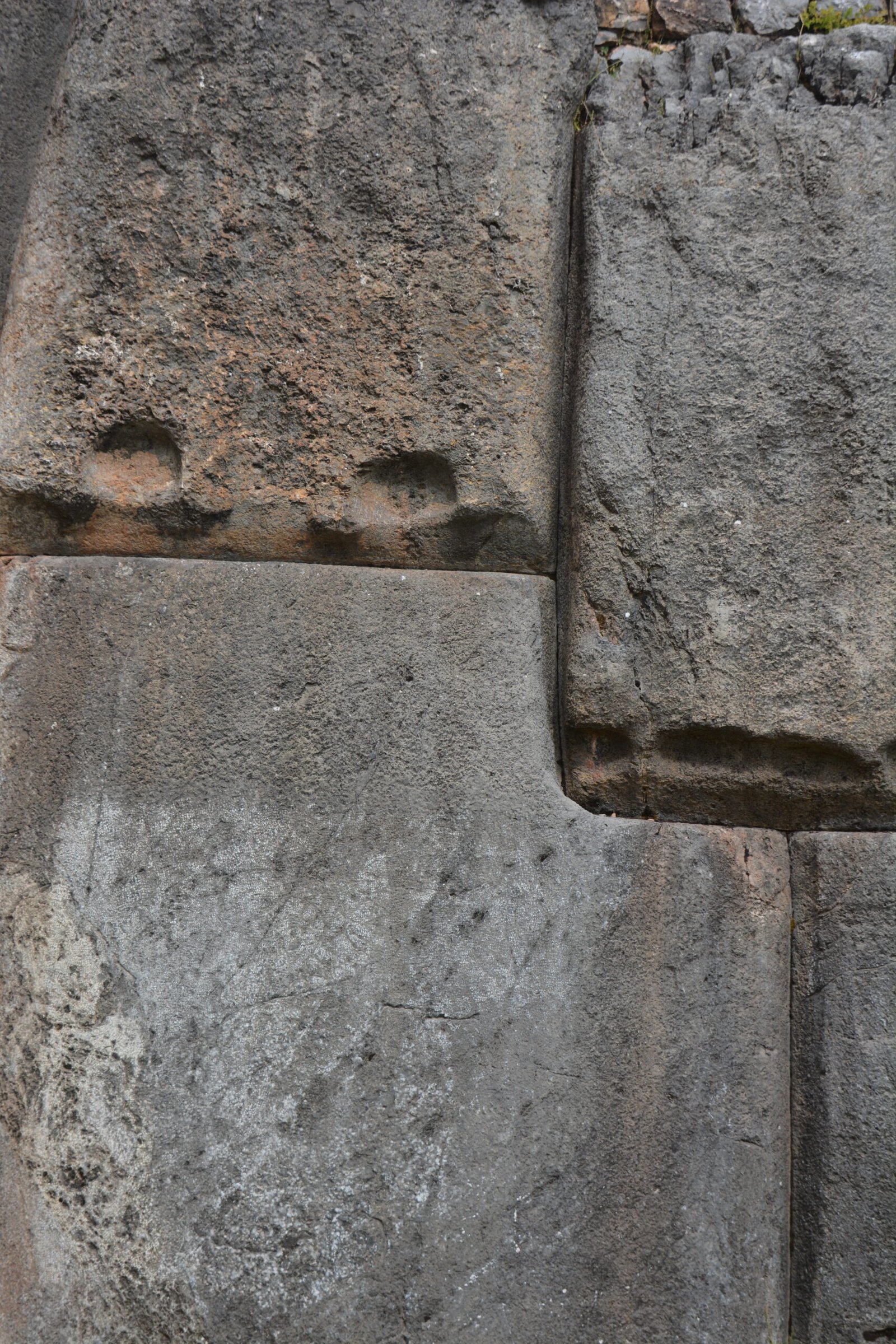
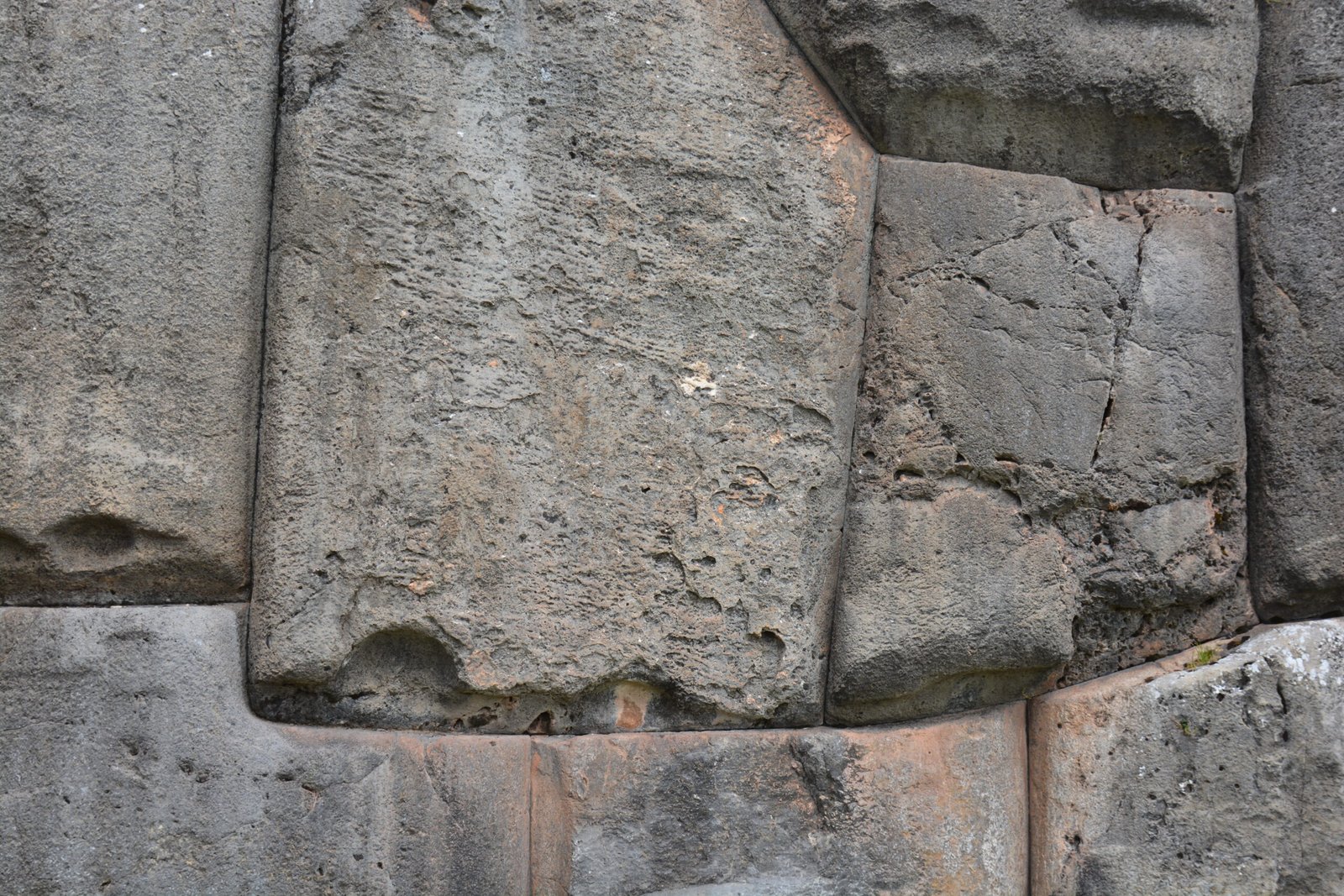
The Interior Shape of Inca Stone
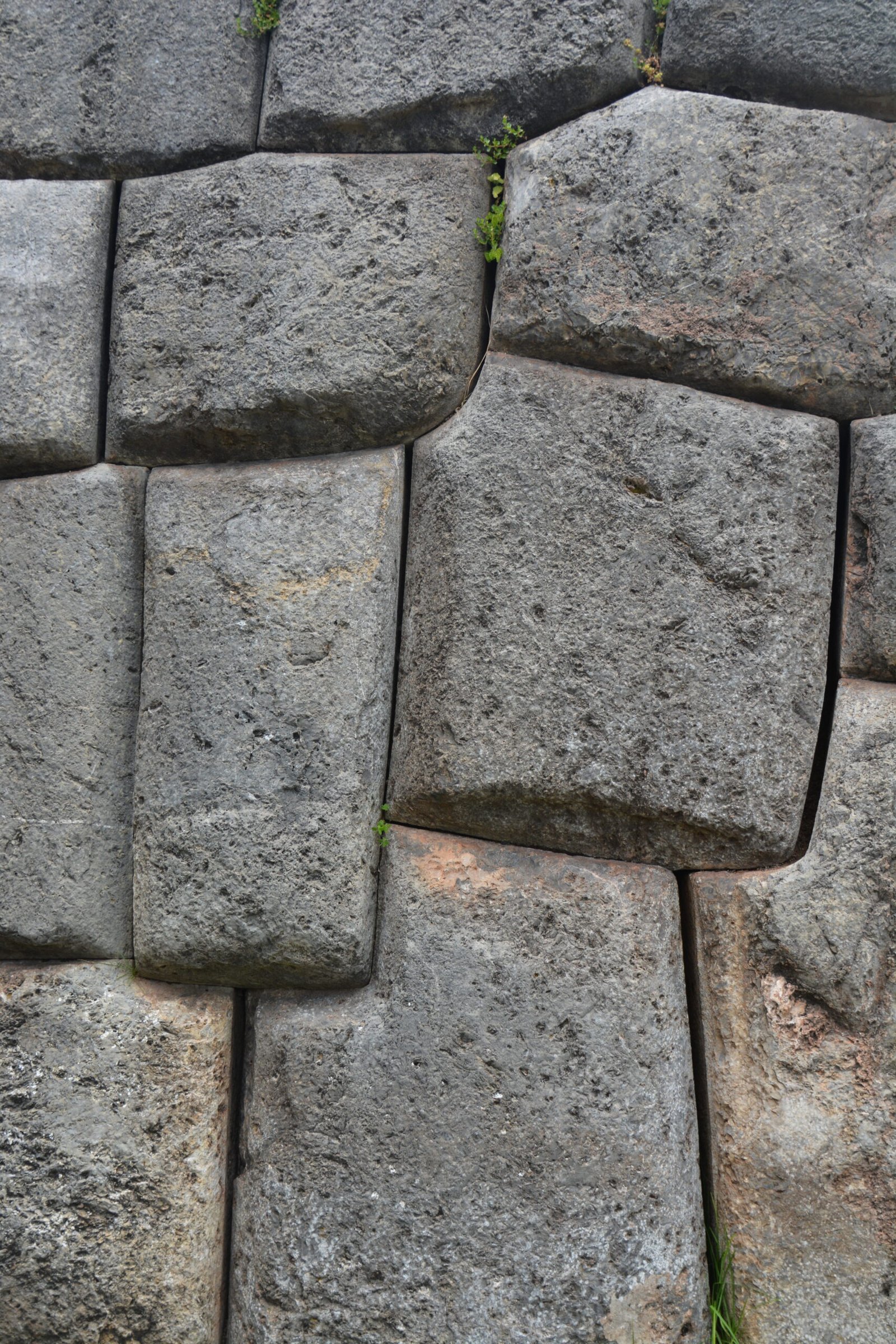
The polygonal stones were not smooth surfaces all around. The surfaces where stones meet were shaped to interlock for greater strength. No mortar was needed and their interlocking shapes have held these walls intact through numerous earthquakes over the centuries, where Spanish-Style construction has failed.
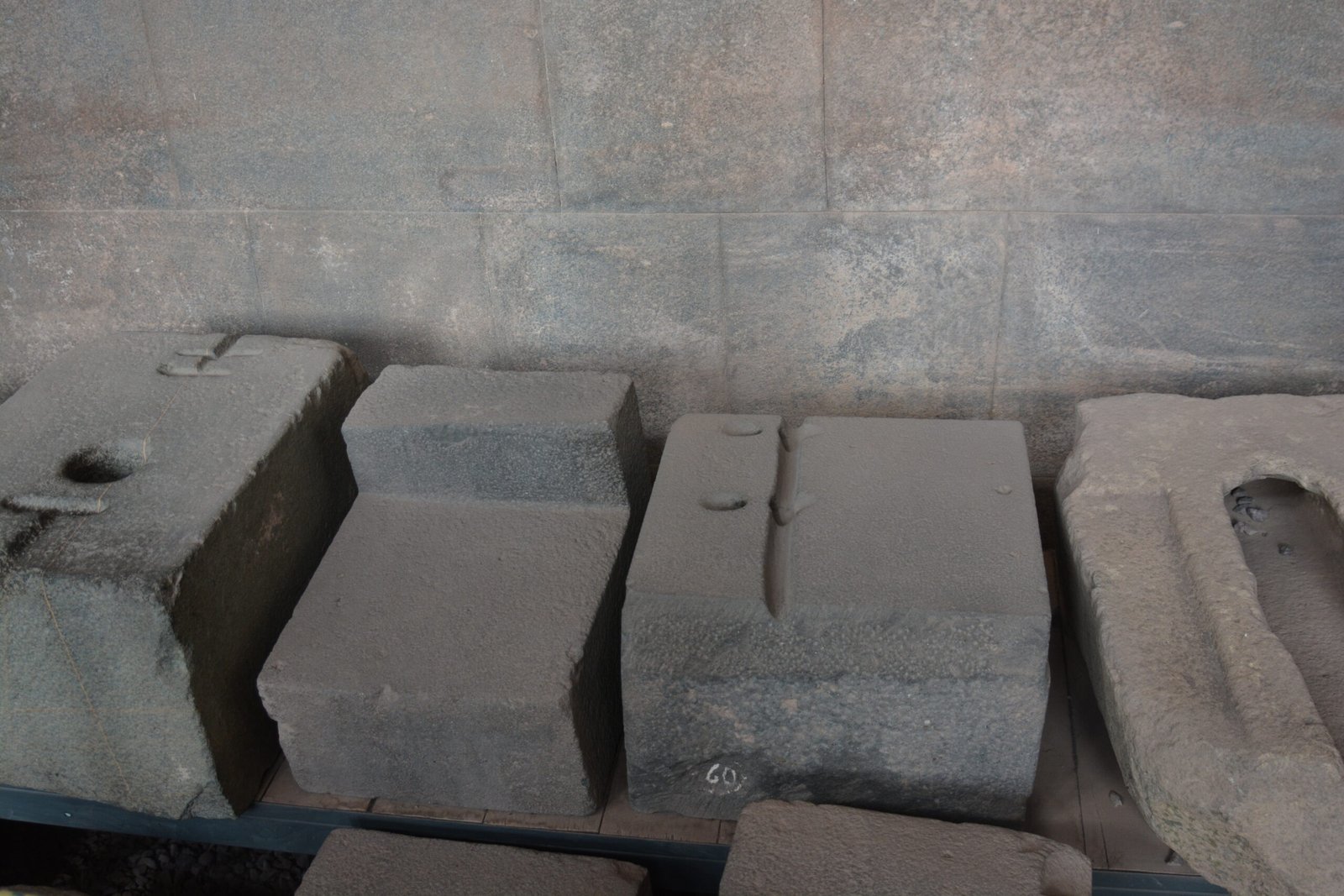
The Interior Shape of Inca Stone
The polygonal stones were not smooth surfaces all around. The surfaces where stones meet were shaped to interlock for greater strength. No mortar was needed and their interlocking shapes have held these walls intact through numerous earthquakes over the centuries, where Spanish-Style construction has failed.
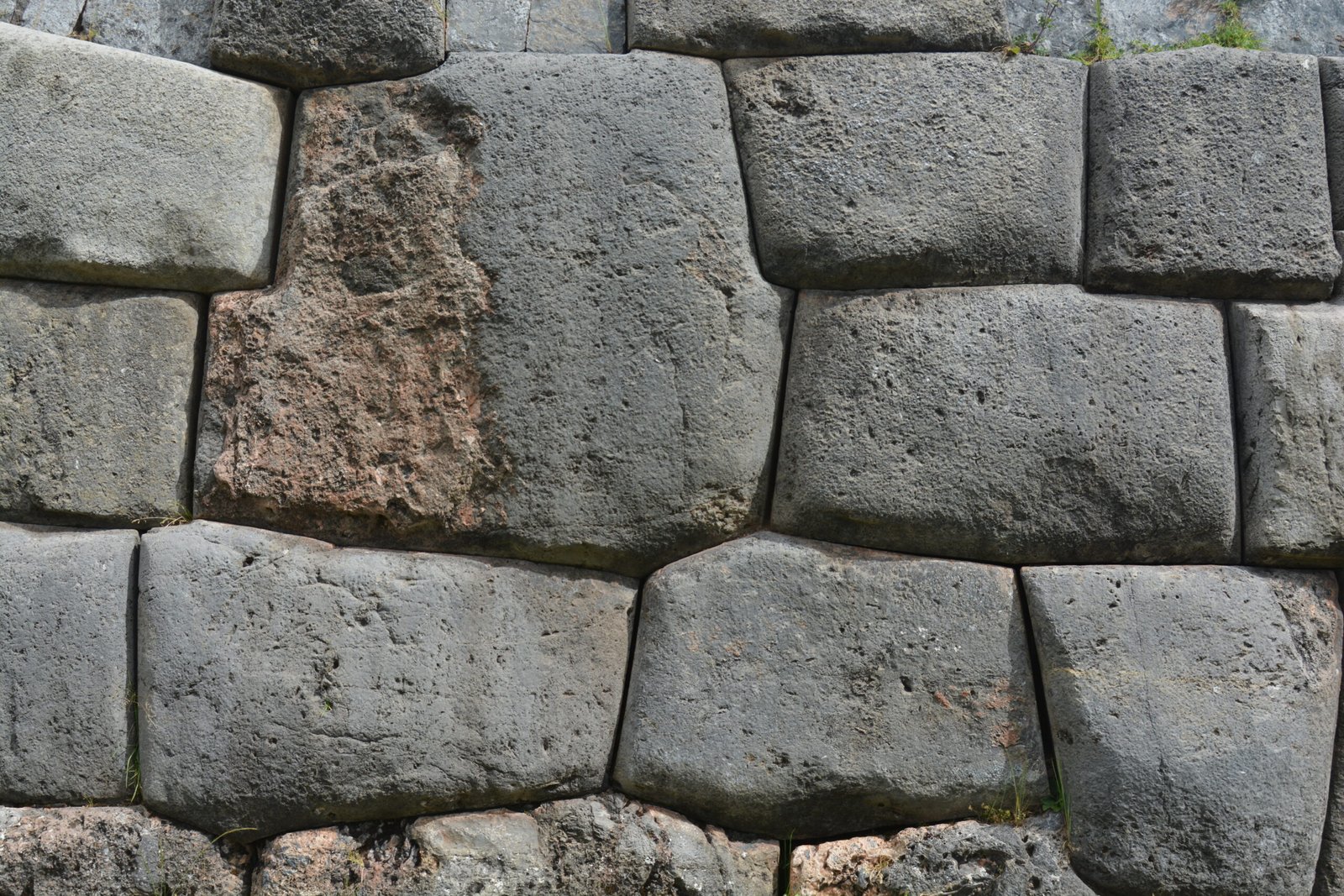
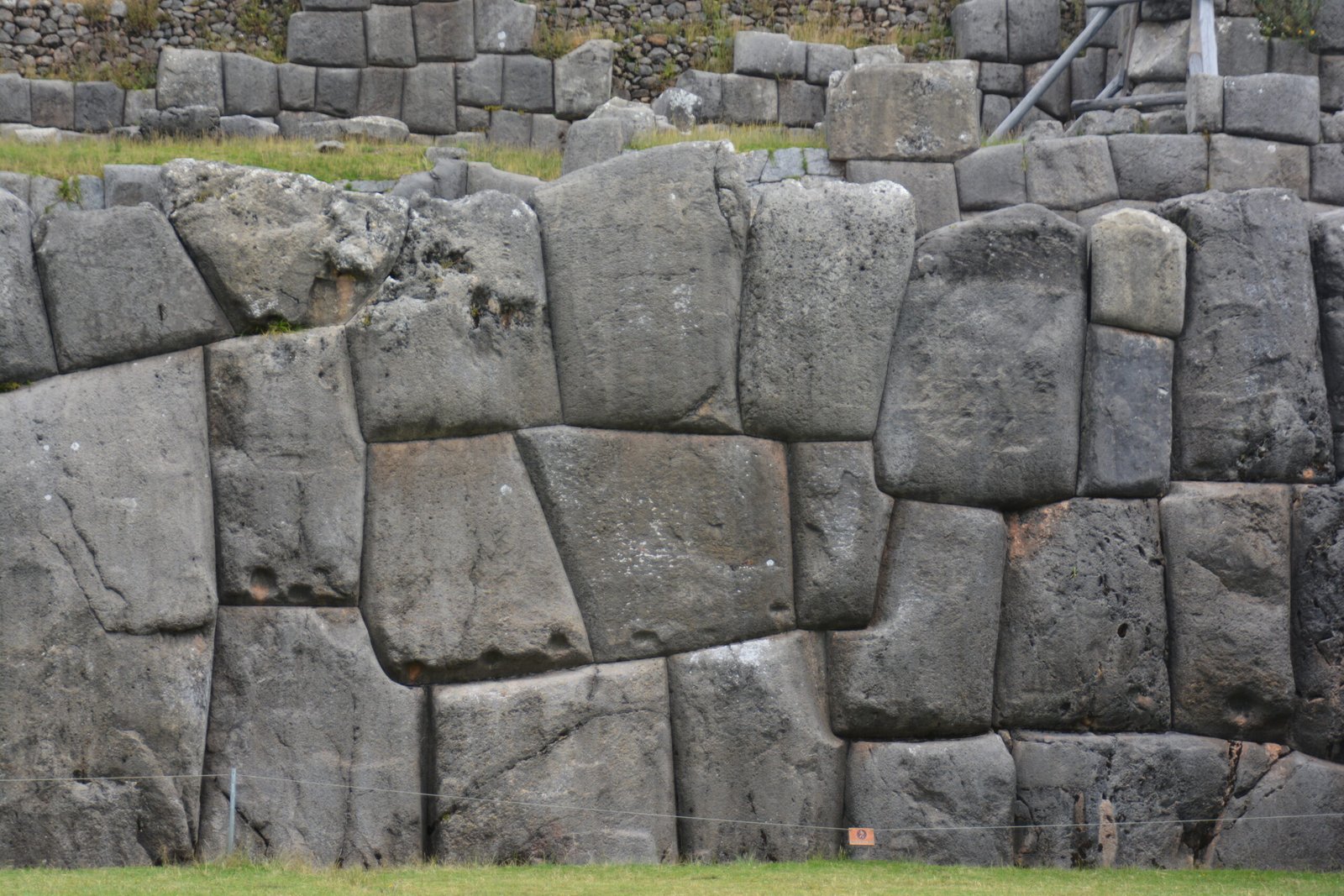
Detail of An Encased Coursed Masonry Wall In Sacsayhuaman
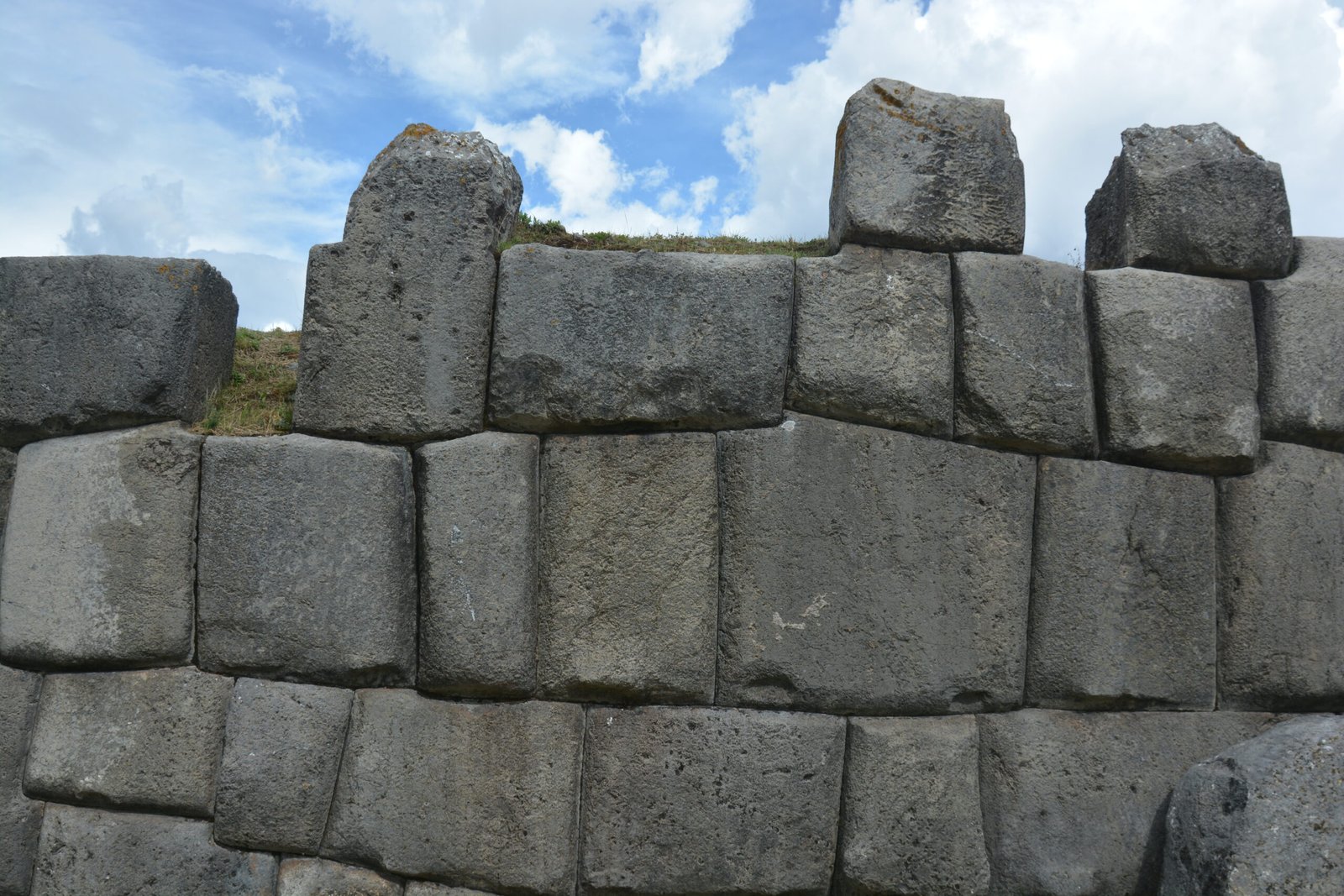
Detailed view of a large encased coursed masonry wall in Sacsayhuaman, on the mountain overlooking Cusco.
Detail of An Encased Coursed Masonry Wall In Sacsayhuaman
Detailed view of a large encased coursed masonry wall in Sacsayhuaman, on the mountain overlooking Cusco.
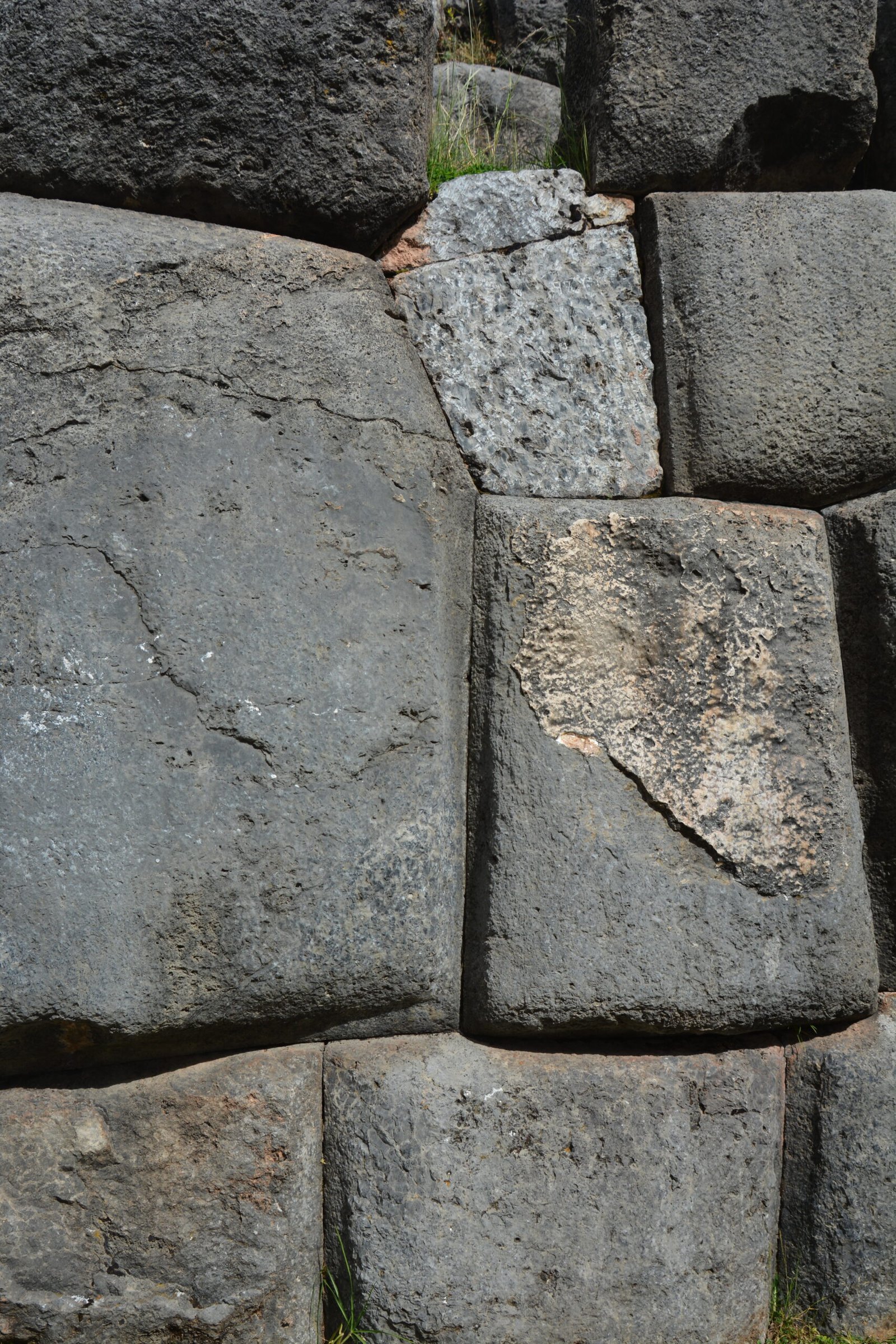
Detail of Cut and Dressed Stone in Sacsayhuaman
A detail view of cut and dressed stone in Sacsayhuaman, on the mountain overlooking Cusco. The larger of these stones were easily four feet tall.
Detail of Cut and Dressed Stone in Sacsayhuaman
A detail view of cut and dressed stone in Sacsayhuaman, on the mountain overlooking Cusco. The larger of these stones were easily four feet tall.
Detail of Cut and Dressed Stone in Sacsayhuaman
A detail view of cut and dressed stone in Sacsayhuaman, on the mountain overlooking Cusco. The larger of these stones were easily four feet tall.
Detail of Cut and Dressed Stone in Sacsayhuaman
A detail view of cut and dressed stone in Sacsayhuaman, on the mountain overlooking Cusco. The larger of these stones were easily four feet tall.
Detail of Cut and Dressed Stone in Sacsayhuaman
A detail view of cut and dressed stone in Sacsayhuaman, on the mountain overlooking Cusco. The larger of these stones were easily four feet tall.
Detail of Cut and Dressed Stone in Sacsayhuaman
A detail view of cut and dressed stone in Sacsayhuaman, on the mountain overlooking Cusco. The larger of these stones were easily four feet tall.
Detail of Cut and Dressed Stone in Sacsayhuaman
A detail view of cut and dressed stone in Sacsayhuaman, on the mountain overlooking Cusco. The larger of these stones were easily four feet tall.
A Stone Wall In Sacsayhuaman
One of the massive stone walls forming the archeological site of Sacsayhuaman, on the mountains overlooking Cusco. The larger blocks were as tall as I am. This construction would be the Ashlar polygonal masonry.
A Very Coarse Stone Construction in Machu Picchu.
This was perhaps the most "coarse" stonework I saw in any Inca site.
Stone Retaining Wall in Machu Picchu
A stone retaining wall in Machu Picchu showing both Ashlar and Cellular polygonal masonry structure.
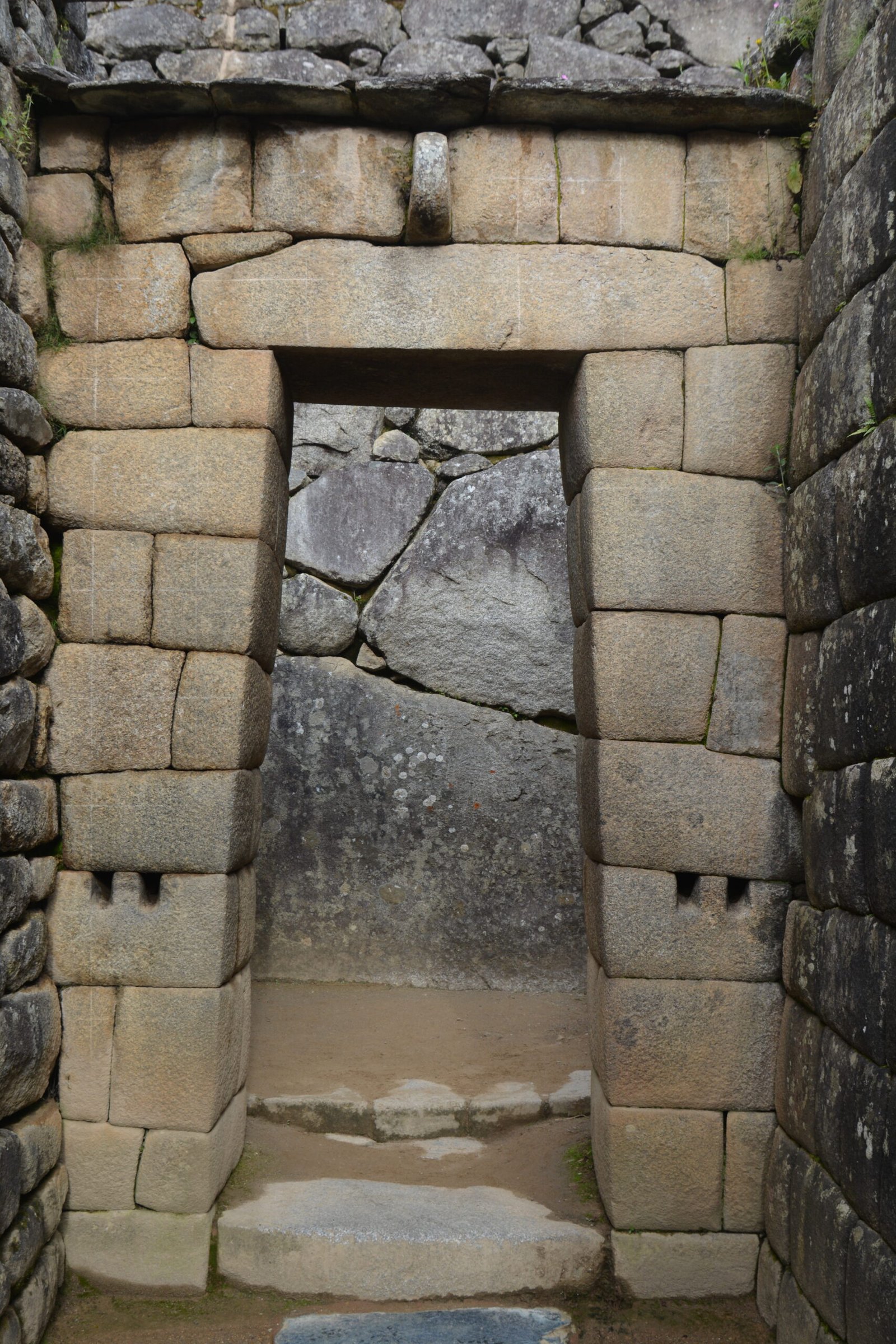
A Doorway in Typical Inca Style, With Rope Holes For Privacy
A typical trapezoidal shaped doorway in a Machu Picchu house. The Incas did not use doors to close off their spaces. If the occupants wanted privacy, they tied a rope across the door opening. This doorway has holes on either side to tie that rope. The construction shows this was for upper class use.
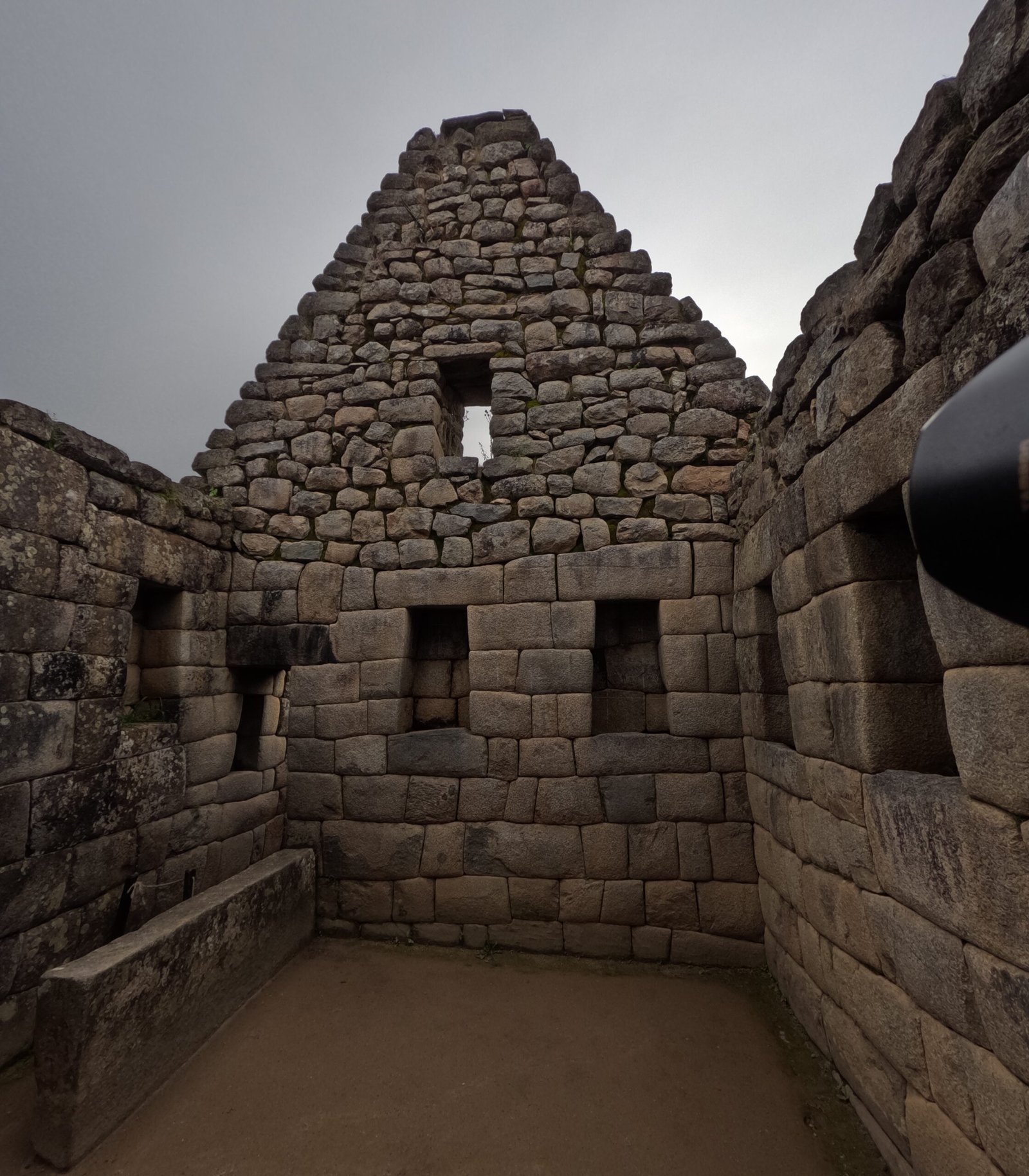
The interior of a Machu Picchu Farmhouse
Interior view of a former farmhouse in Machu Picchu. The construction shows cellular polygonal masonry style on the lower, main floor. The main floor is lined with recessed niches in the walls used for storage, and display of revered objects. The upper attic space was built in encased coursed masonry style. The attic spaces were used for food storage and usually accessed by a ladder into the main living space.
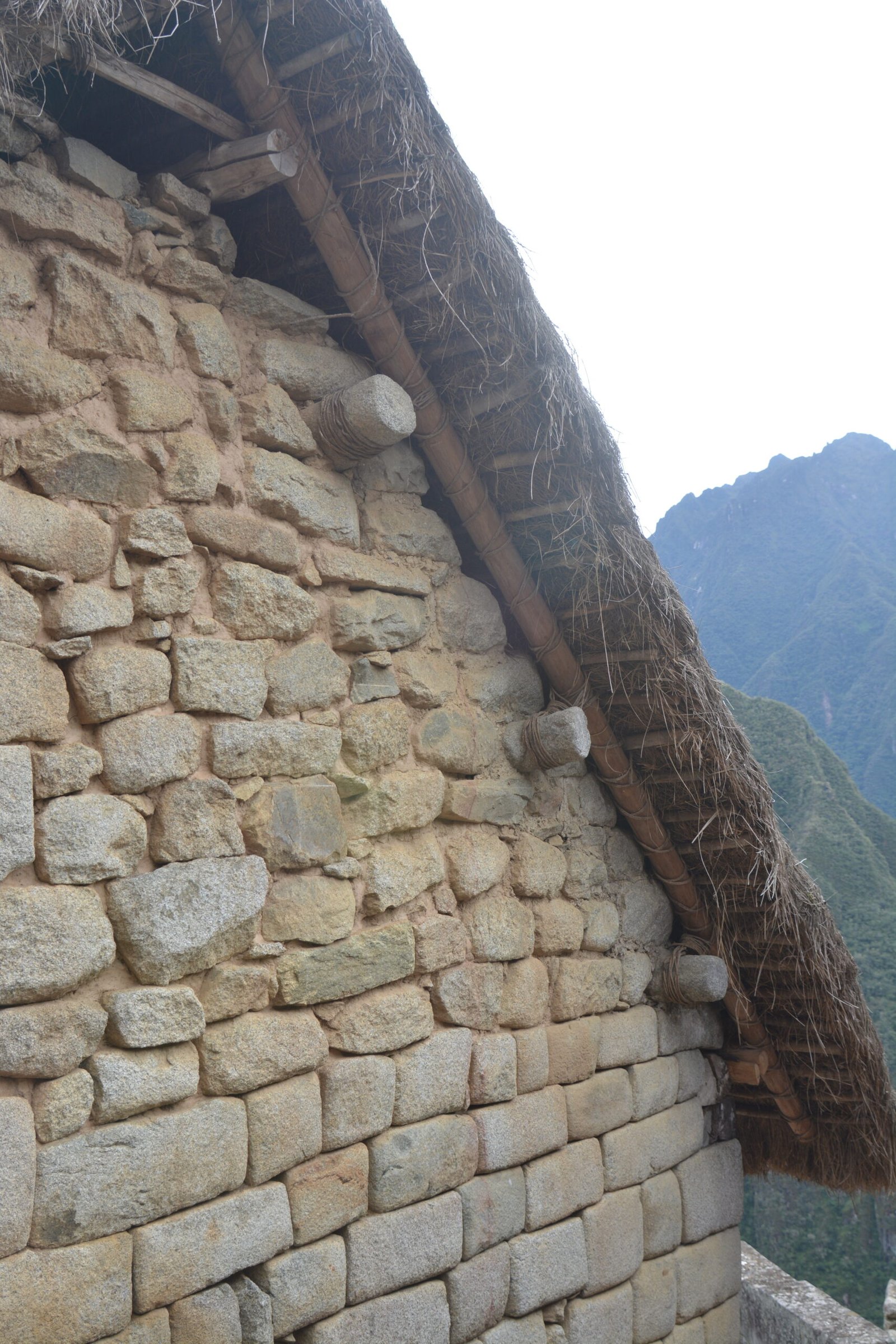
A Detail of Stone Lintels Used To Support a Roof
A detail of a reconstructed stone house in machu Picchu, showing how the stone lintels were used to support the roof poles. A thick layer of thatch (woven grasses) was placed on top of the poles to create a waterproof roofing system.
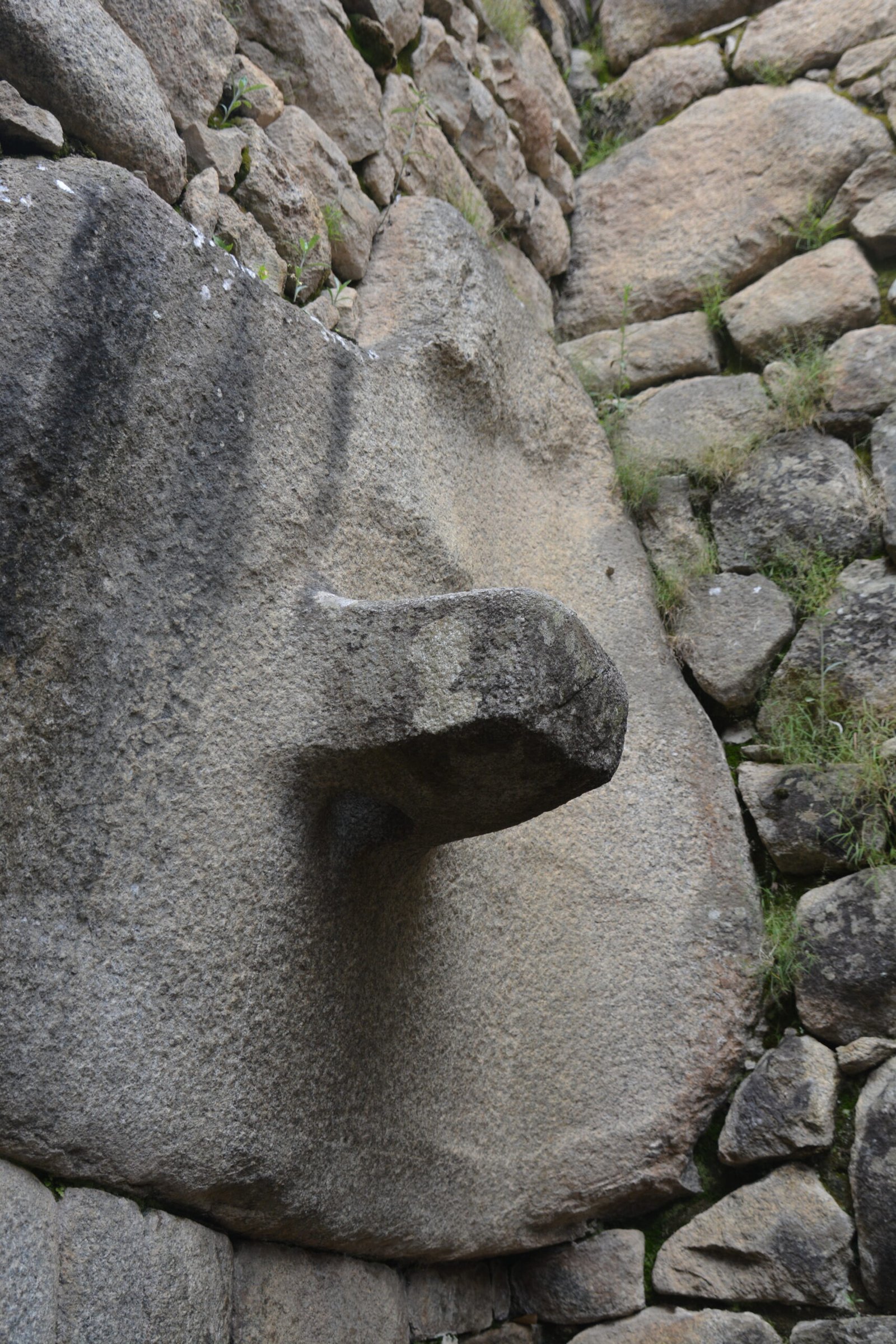
Detail of a Carved Lintel
Lintels were carved into the stones for different functional reasons. This lintel appears to have been used to help lift the stone block into place. Often, after placing the stone the lintel was then carved away.
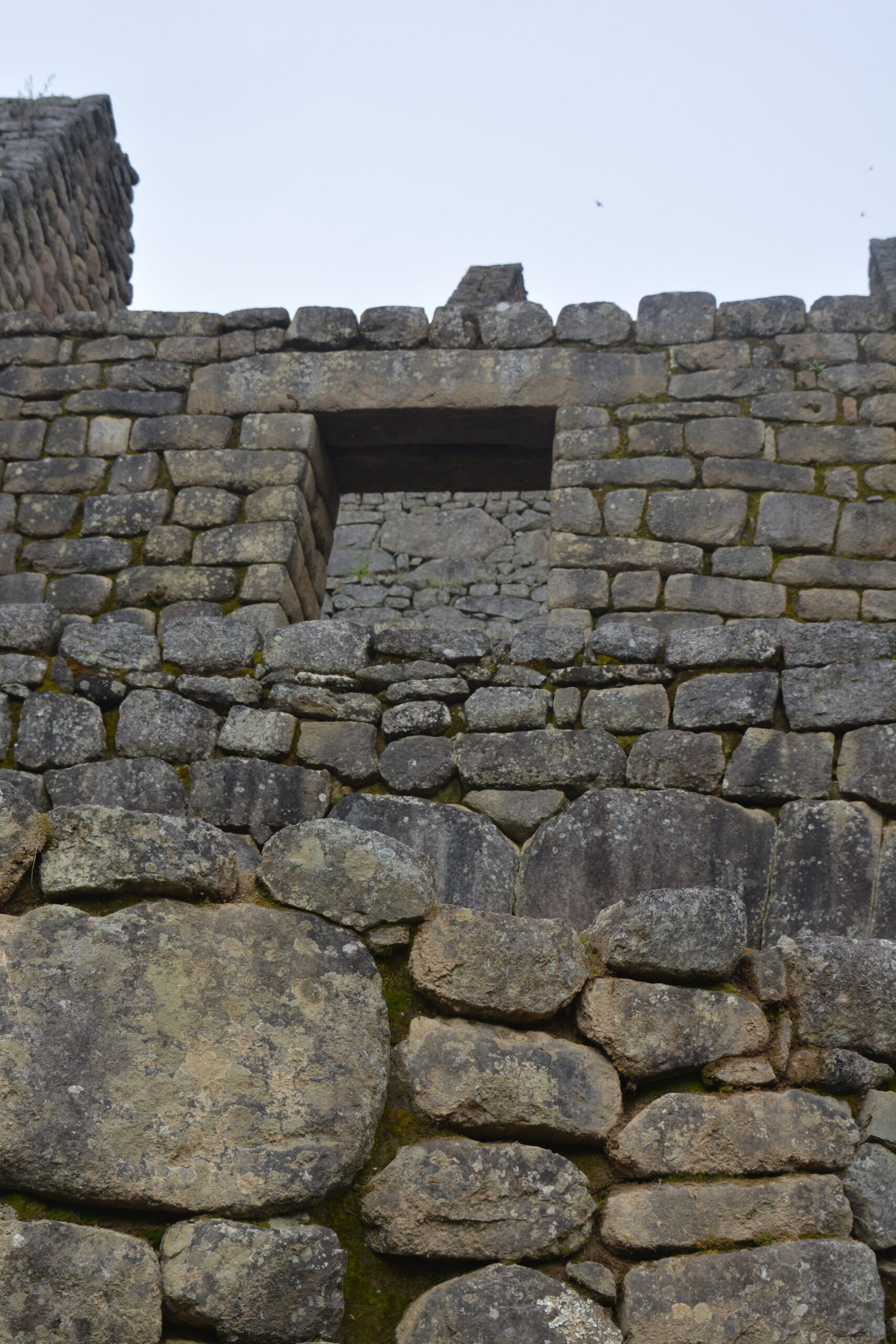
Looking Up A Stone Wall With Window
This is a combination of a stone retaining wall supporting a house in Machu Picchu.
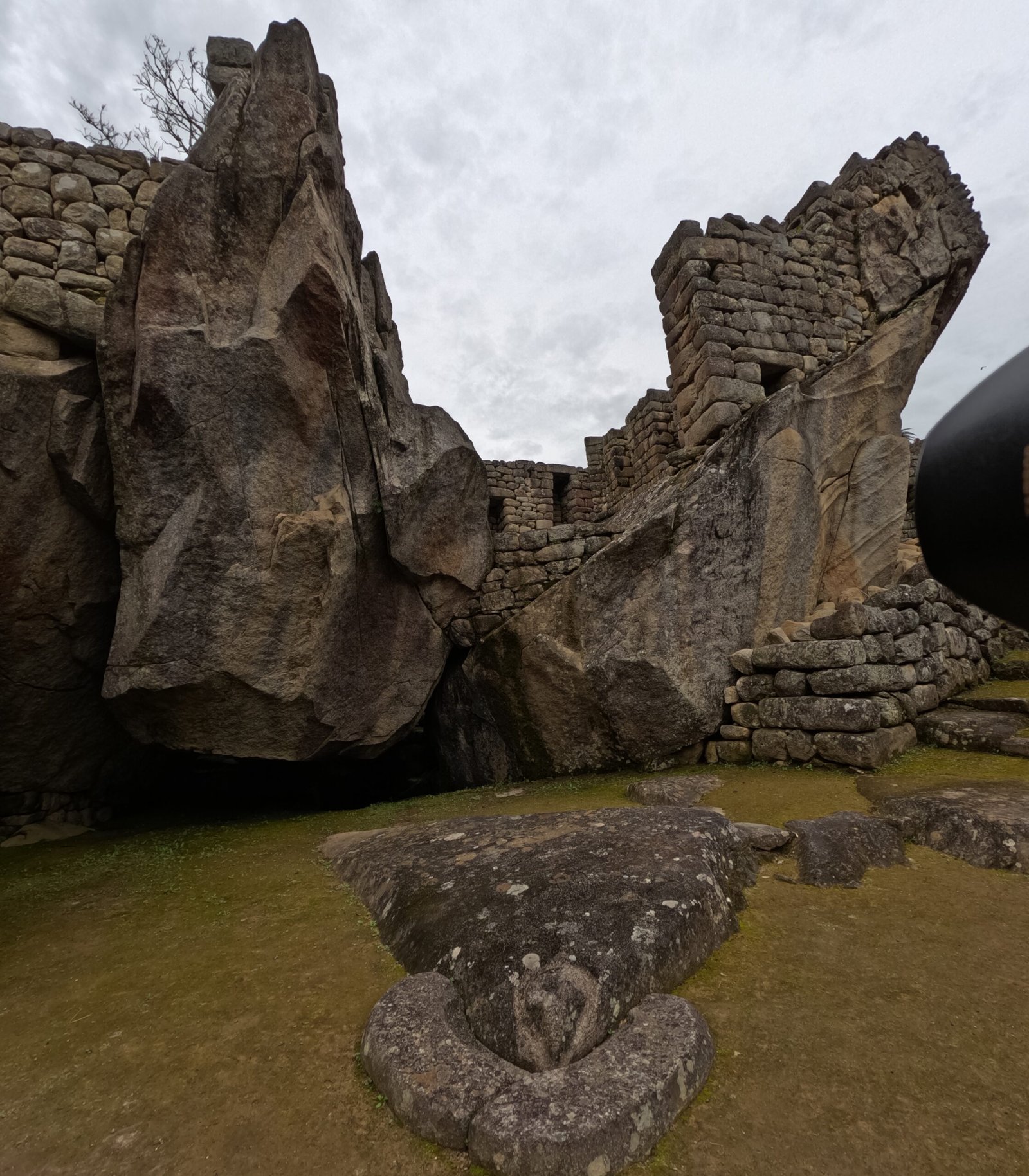
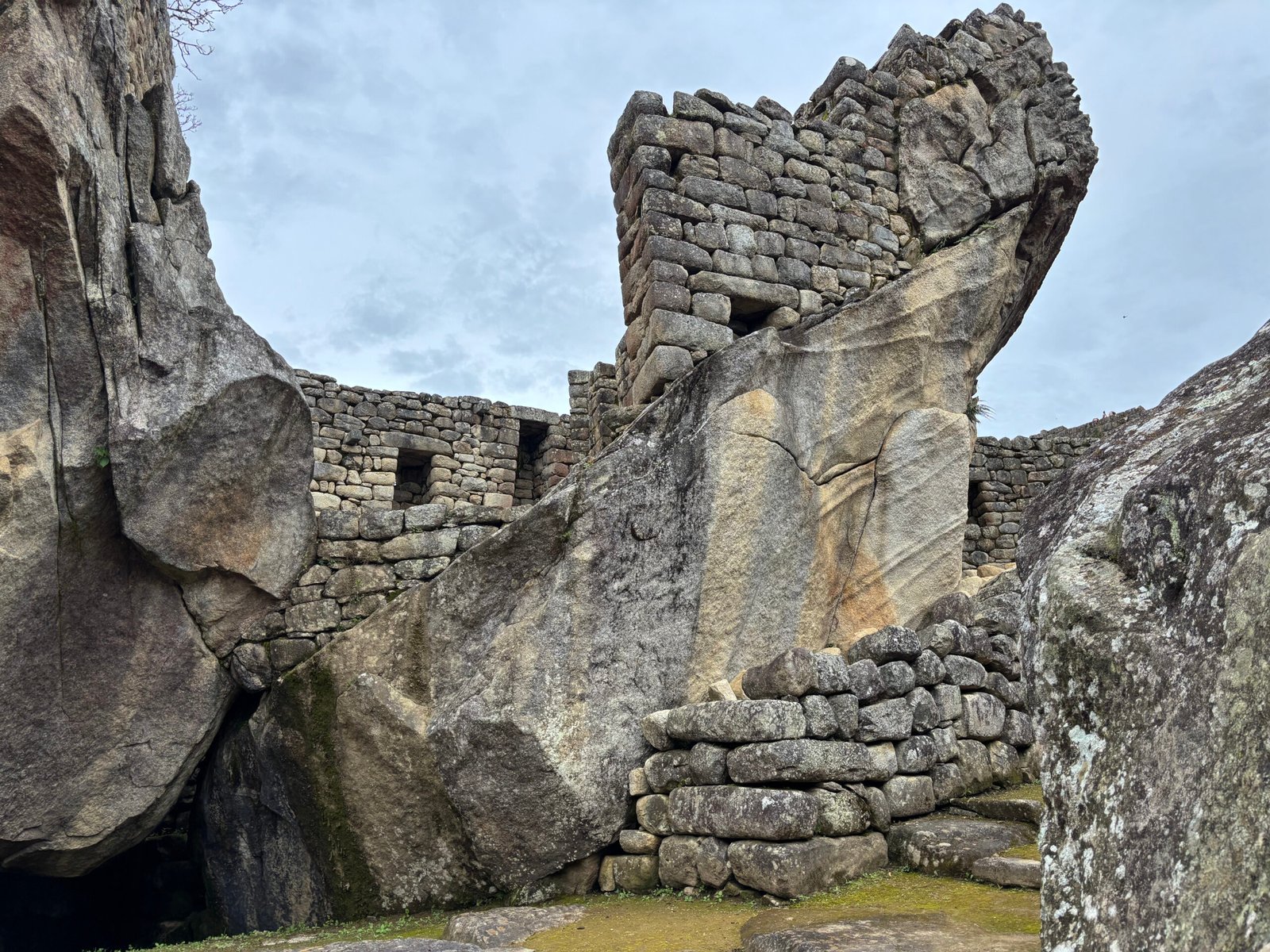
The Condor of Machu Picchu
The Incas were masters of incorporating natural stone formations into their constructions. This is a construction of natural and dressed stone creating a sculpture of a condor. The Condors are the largest flying bird in the world and native to the Andes mountains. These birds were sacred to the Incas.
Natural Stone Formation As Base of A Structure
An example of a natural stone formation used as the foundation of small house structure. The Incas excelled in merging natural stone into their constructions. This was in Machu Picchu. (Photo By Winnie Charest)
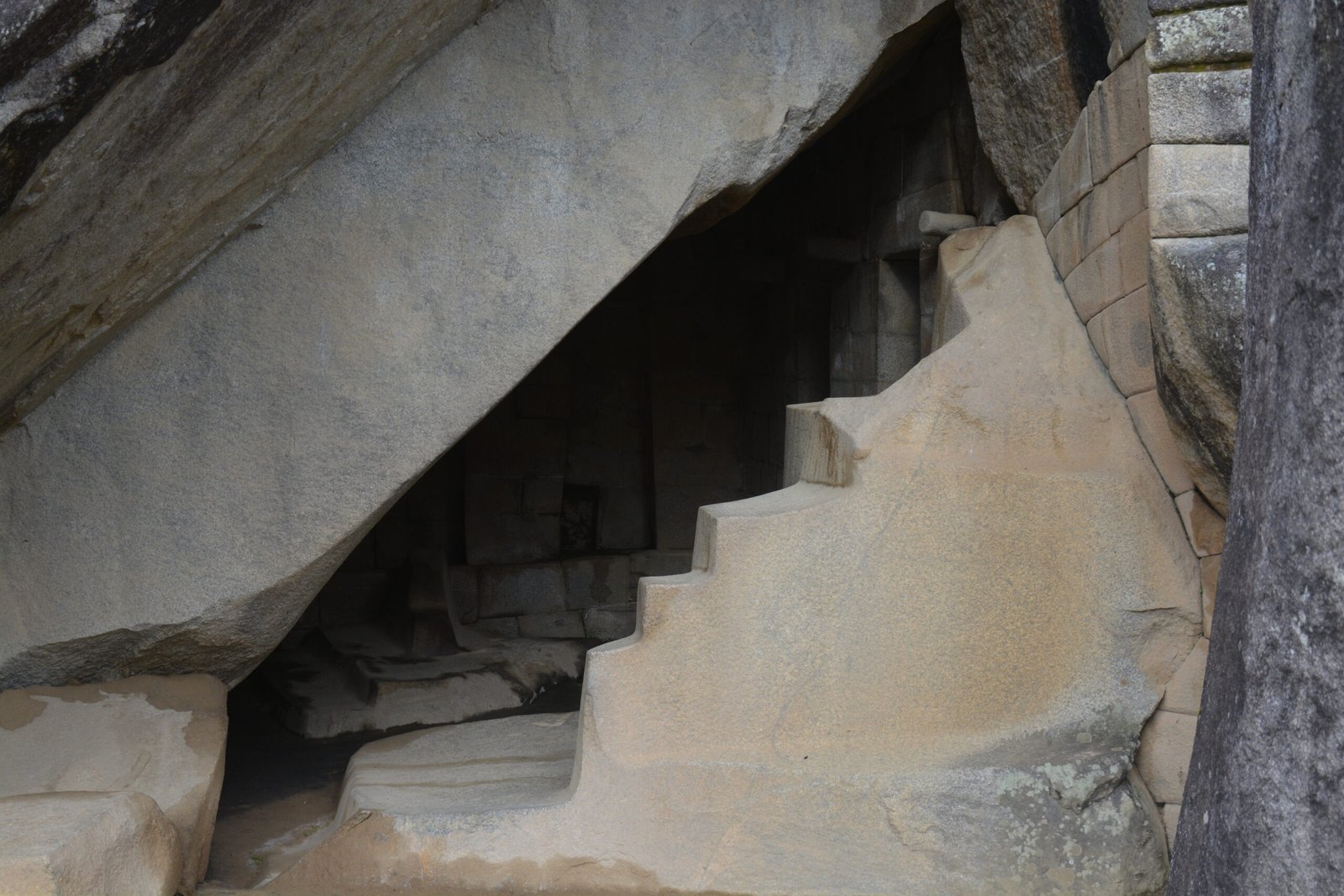
A Storage Grotto in Machu Picchu
This was a storage area built using cut stone and natural stone formation in Machu Picchu.
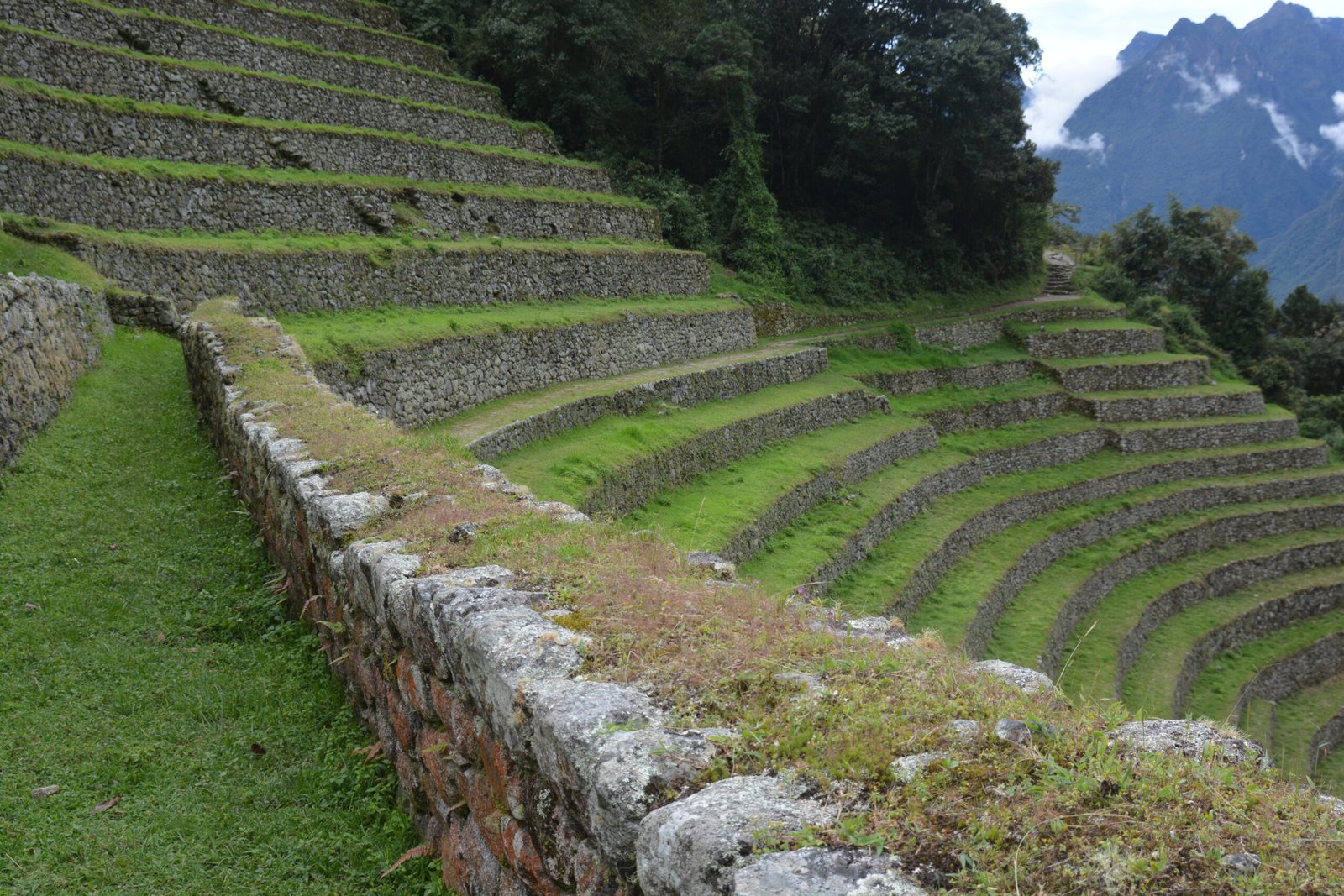
Stone Terraces in the former Farming Village of Wiñay Wayna
Stone terraces running down the mountainside in the former Farming Village of Wiñay Wayna (Forever Young). These terraces created farmland used for growing corn and potatoes.
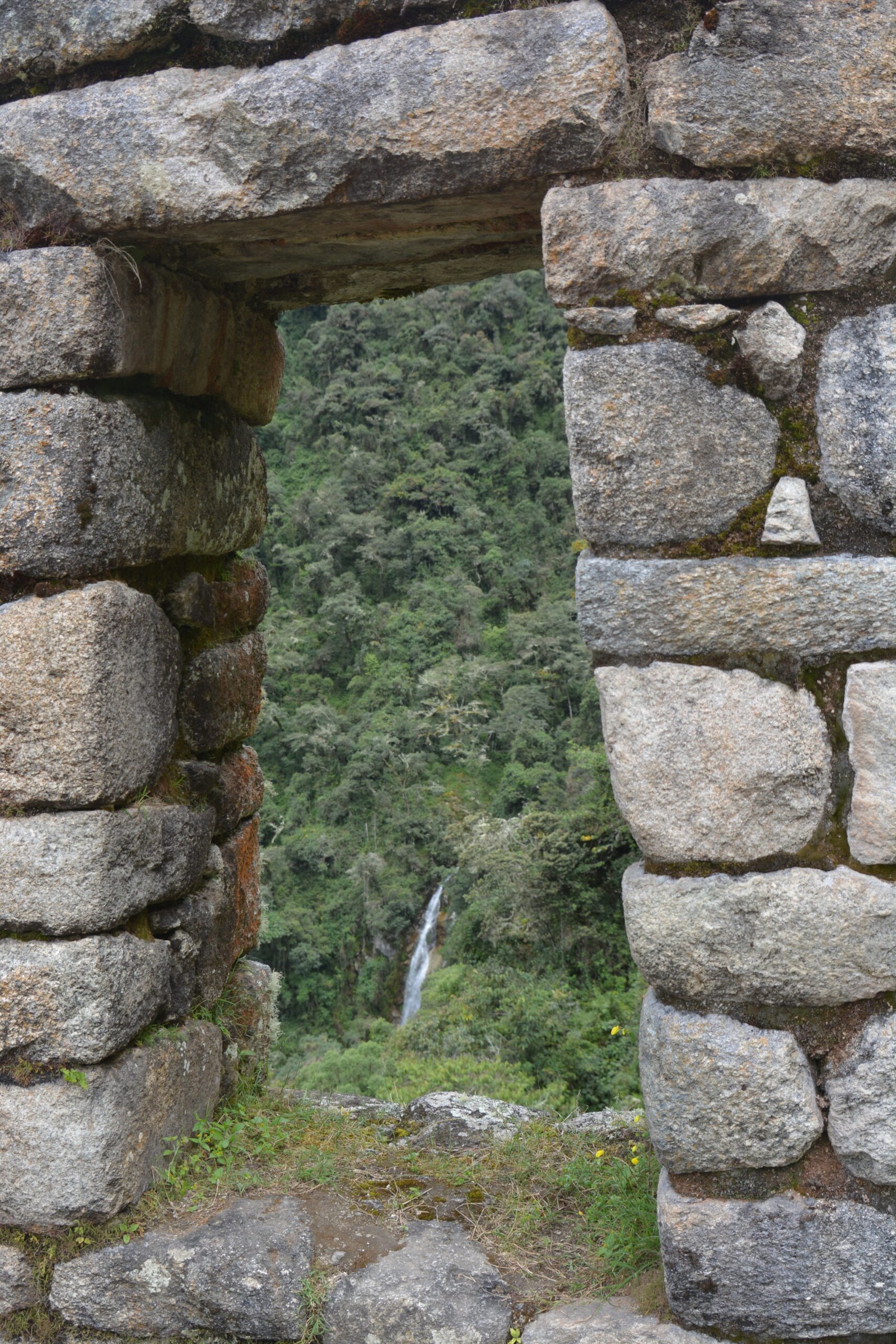
Stone Doorway To A Waterfall
A stone doorway looking out on a spring-fed waterfall. In the former farming village of Wiñay Wayna (Forever Young) along the Inca Trail. Again with the trapezoid shape of the doorway, a standard feature of Inca construction. The Incas did not use actual doors to close a structure. If the inhabitants wanted privacy, they tied a rope across the opening. Structures built in the Cellular polygonal masonry style typically have holes cut on each side of the door for this rope.
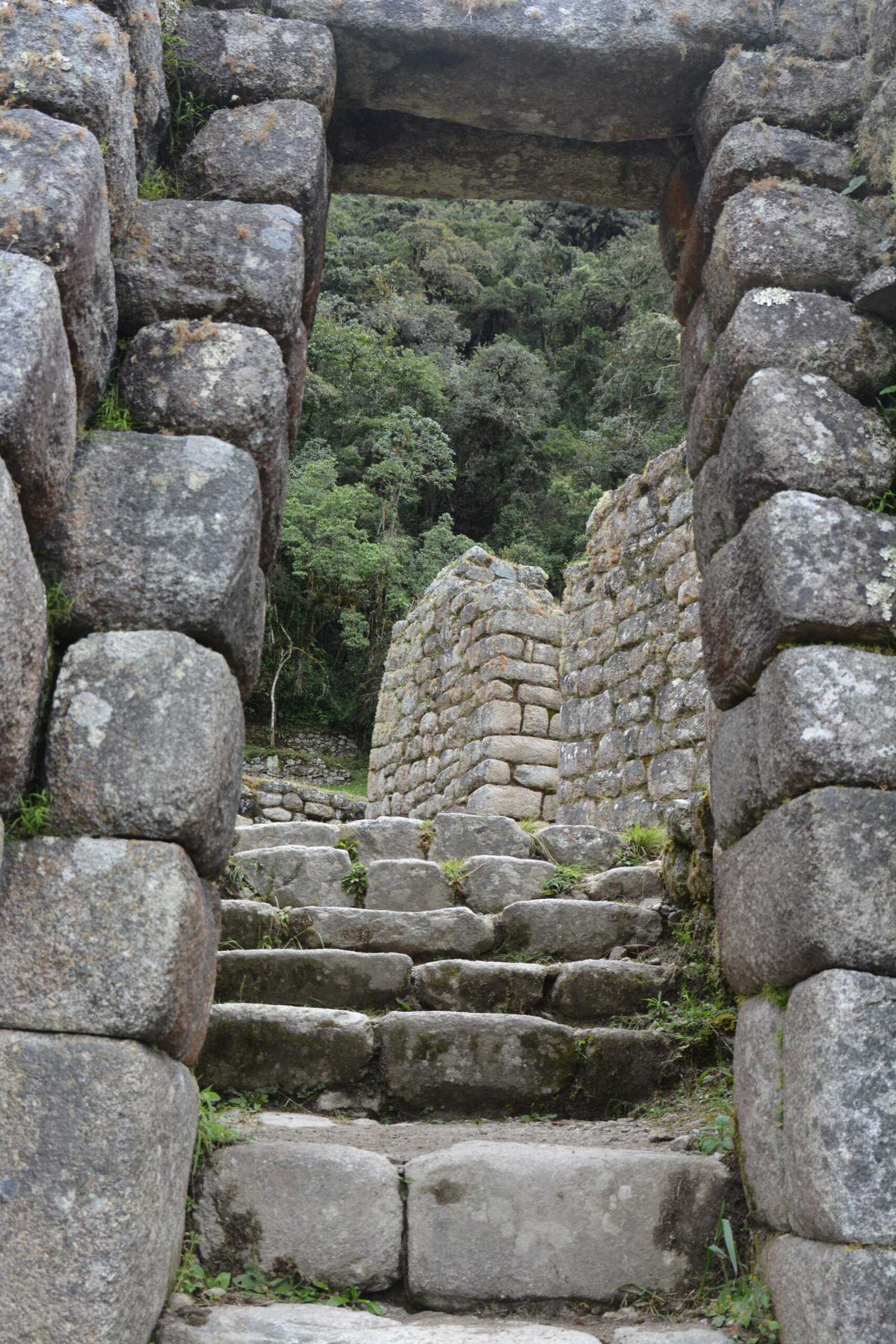
Stone Stairs in Wiñay Wayna
Looking through a stone doorway at stairs leading up the mountain to other former houses. Once a farming village of Wiñay Wayna ("Forever Young"), along the Inca Trail between Cusco and Machu Picchu.
The Incas did not use actual doors to close a structure. If the inhabitants wanted privacy, they tied a rope across the opening. Structures built in the Cellular polygonal masonry style typically have holes cut on each side of the door for this rope.
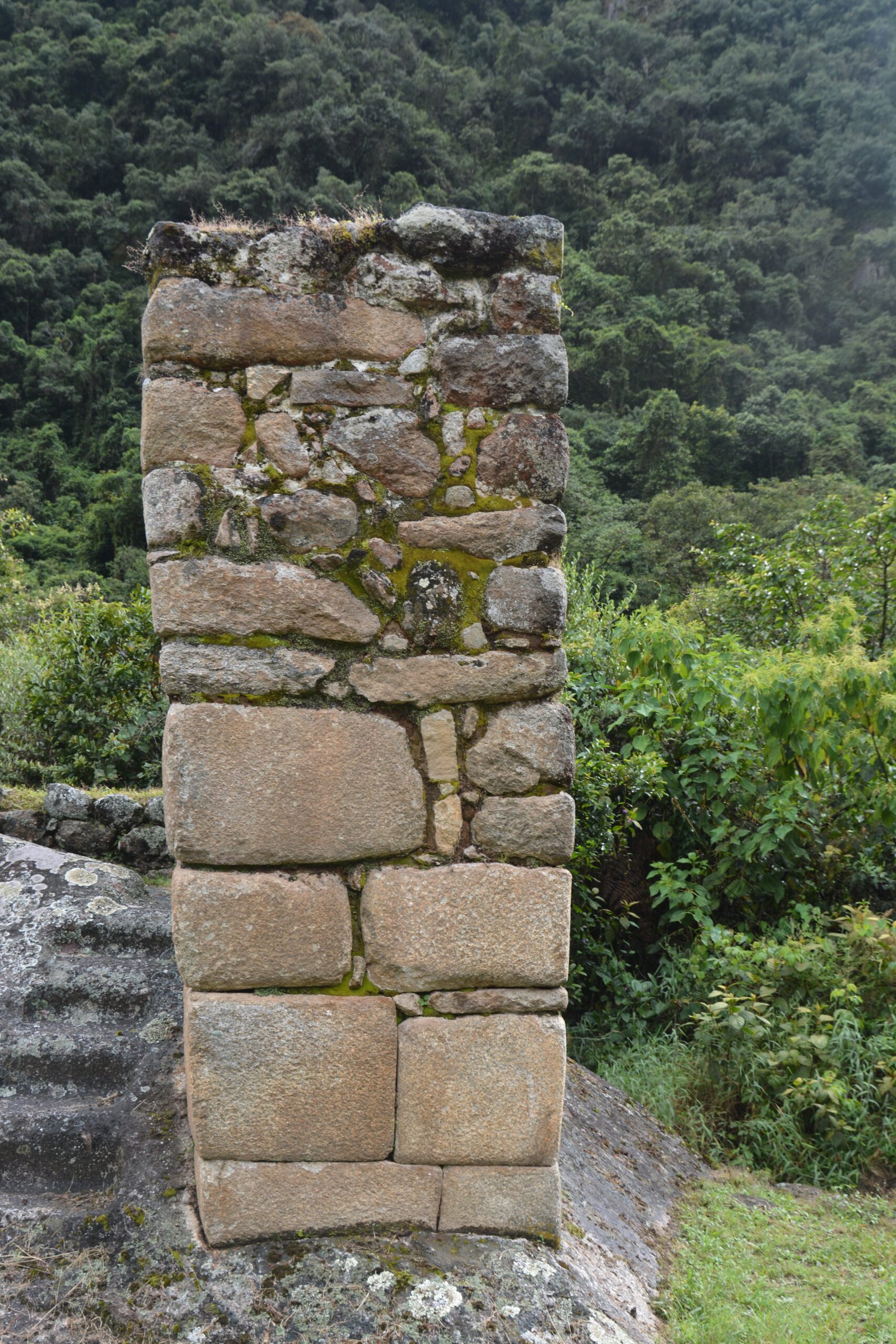
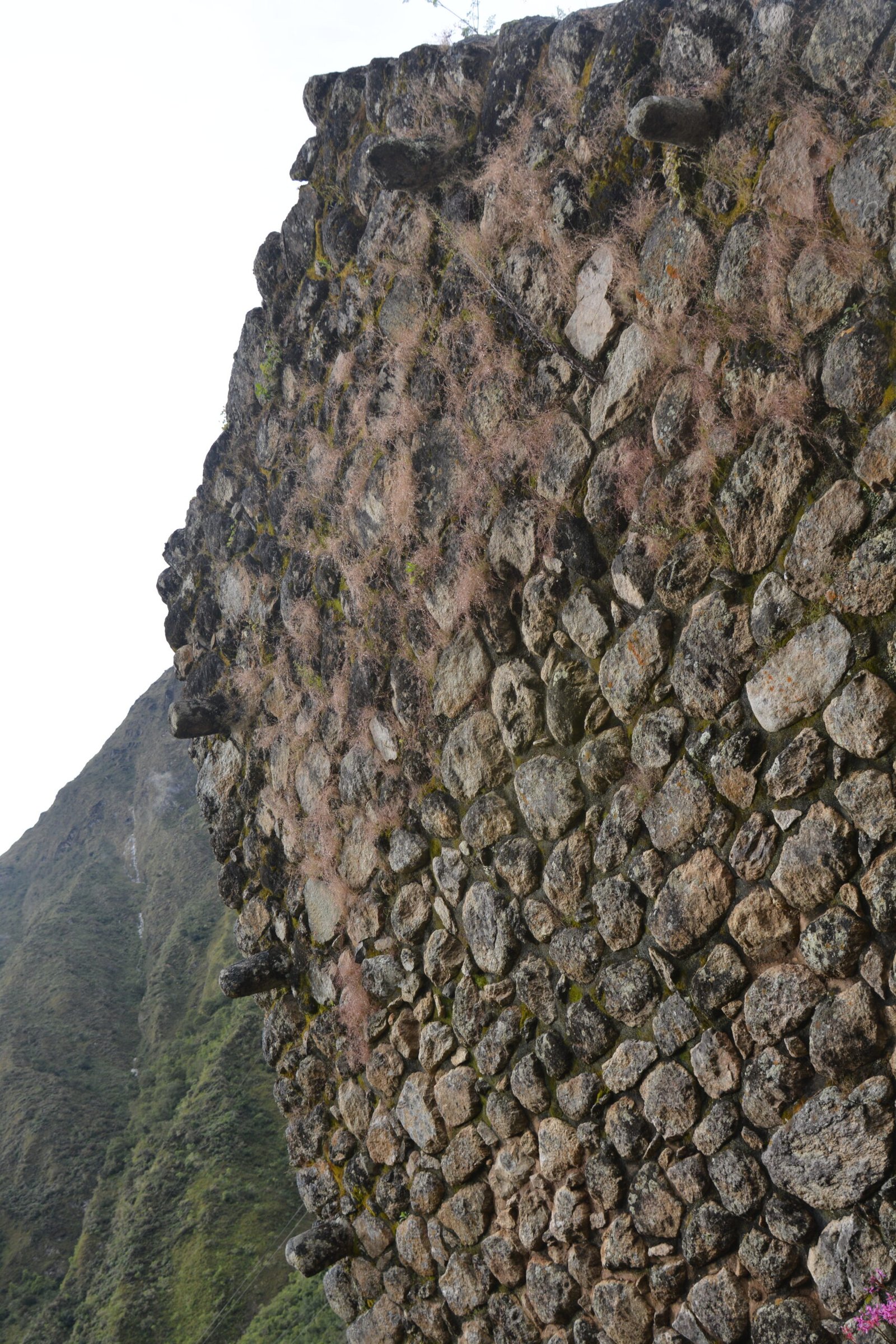
Side View Of A Wall
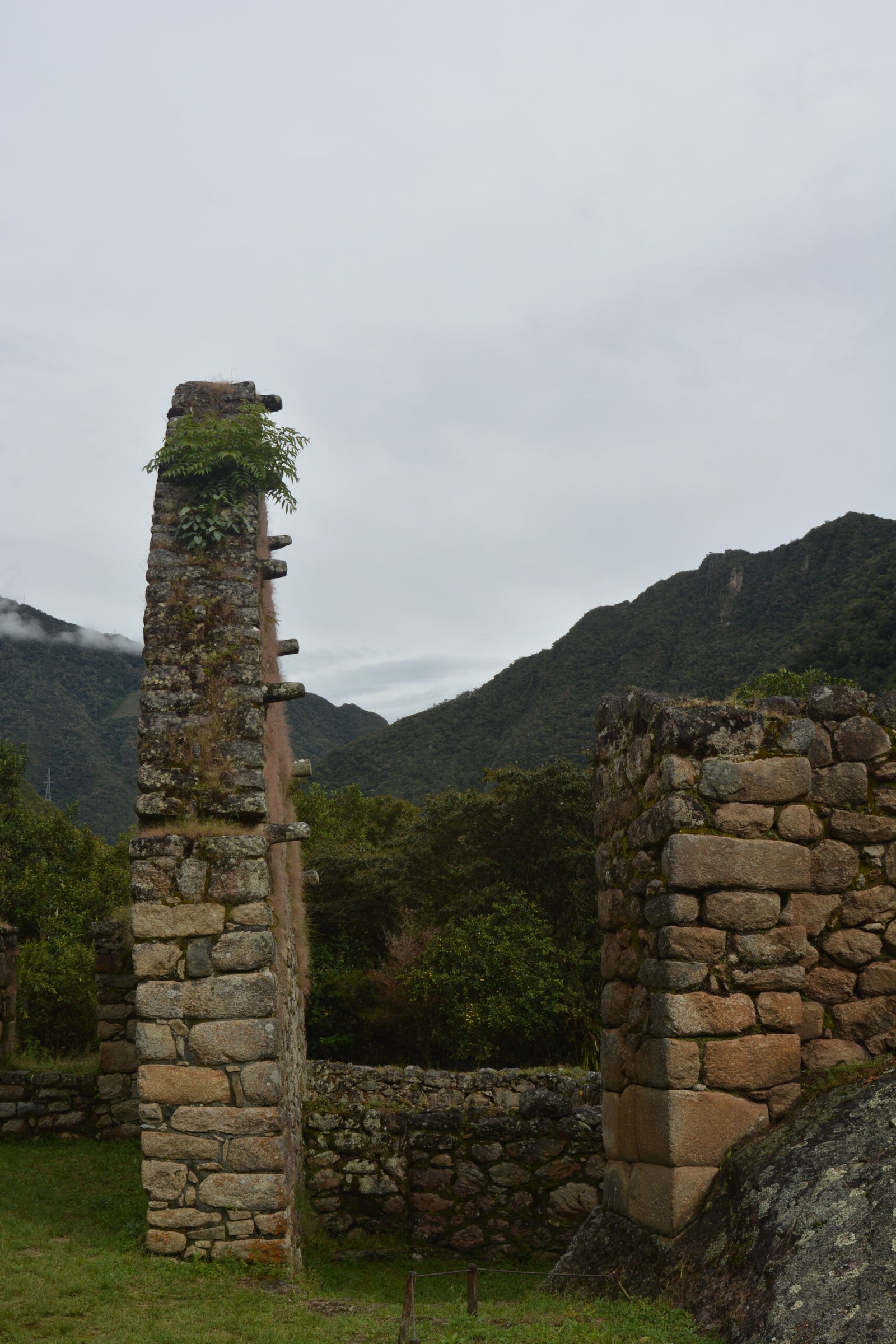
Showing a side view of a Wall built with different construction styles. The lower section appears to be cellular polygonal masonry construction with the upper section encased coursed masonry. I later saw this as a common construction style in the structures of Machu Picchu. This was at the Inca Trailhead of Mile104KM.
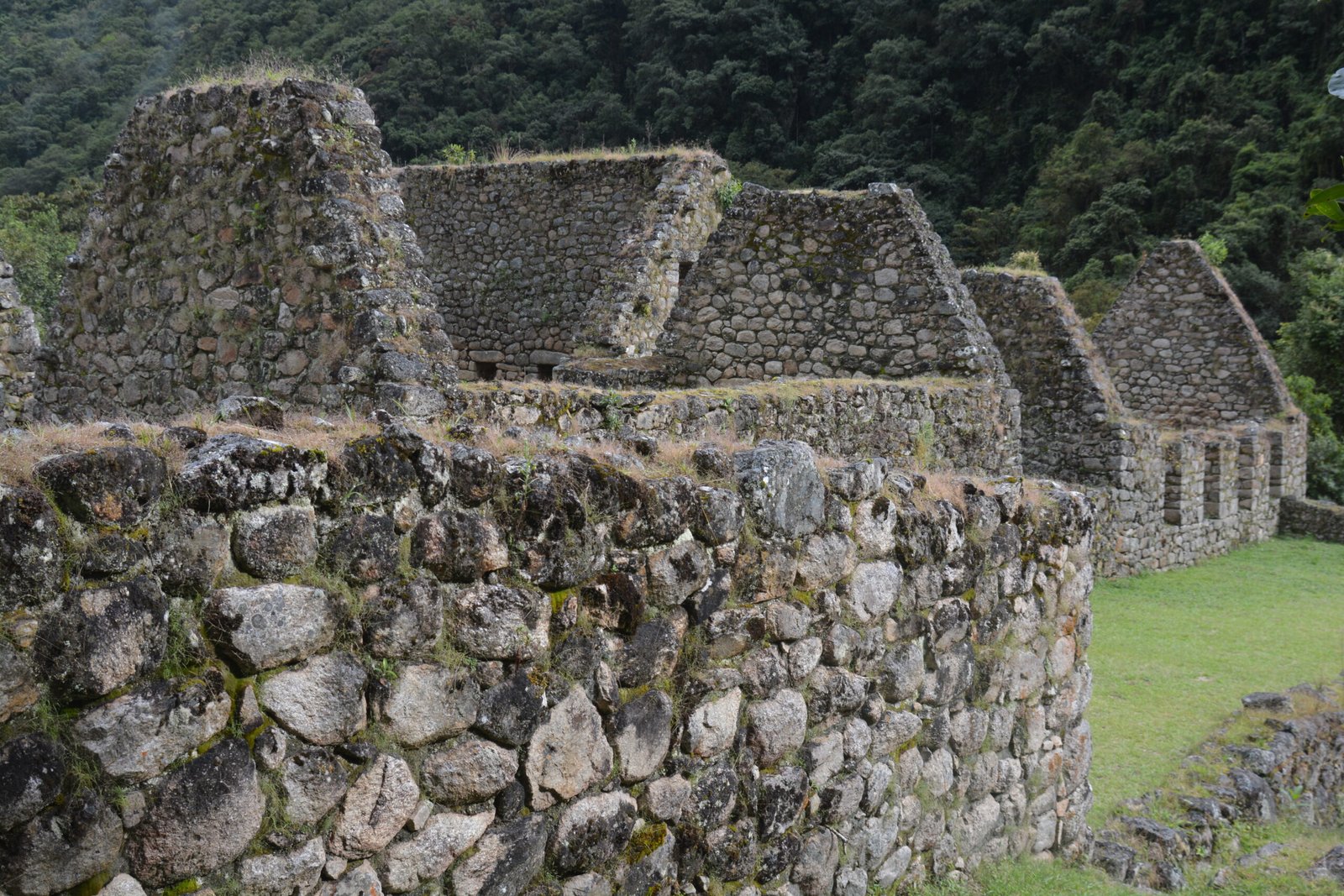
Remains of a Small Group of Houses Built In Encased Coursed Masonry Style
The remains of what was once a small farming village at the Inca Trailhead (Marker 104KM). This site shows several common features of Inca stonework in encased coursed masonry style, including roof lintels for supporting the roof poles, doorways and window openings, and wall niches.
Side View of The Stonework Of An Inca House
A side view of a small stone house, showing the lintels of the roof area. These lintels were used to support wooden poles for the roof, which were then covered with thatch for waterproofing. Located at the trailhead by "Marker 104KM" of the Inca Trail to Machu Picchu.
Wall Of A House SHowing the Roof-Supporting Lintels
This is the remains of a house wall built in the sedimentary coursed masonry style, showing lintels needed for supporting roof poles. Located at the trailhead by "Marker 104KM" of the Inca Trail to Machu Picchu.
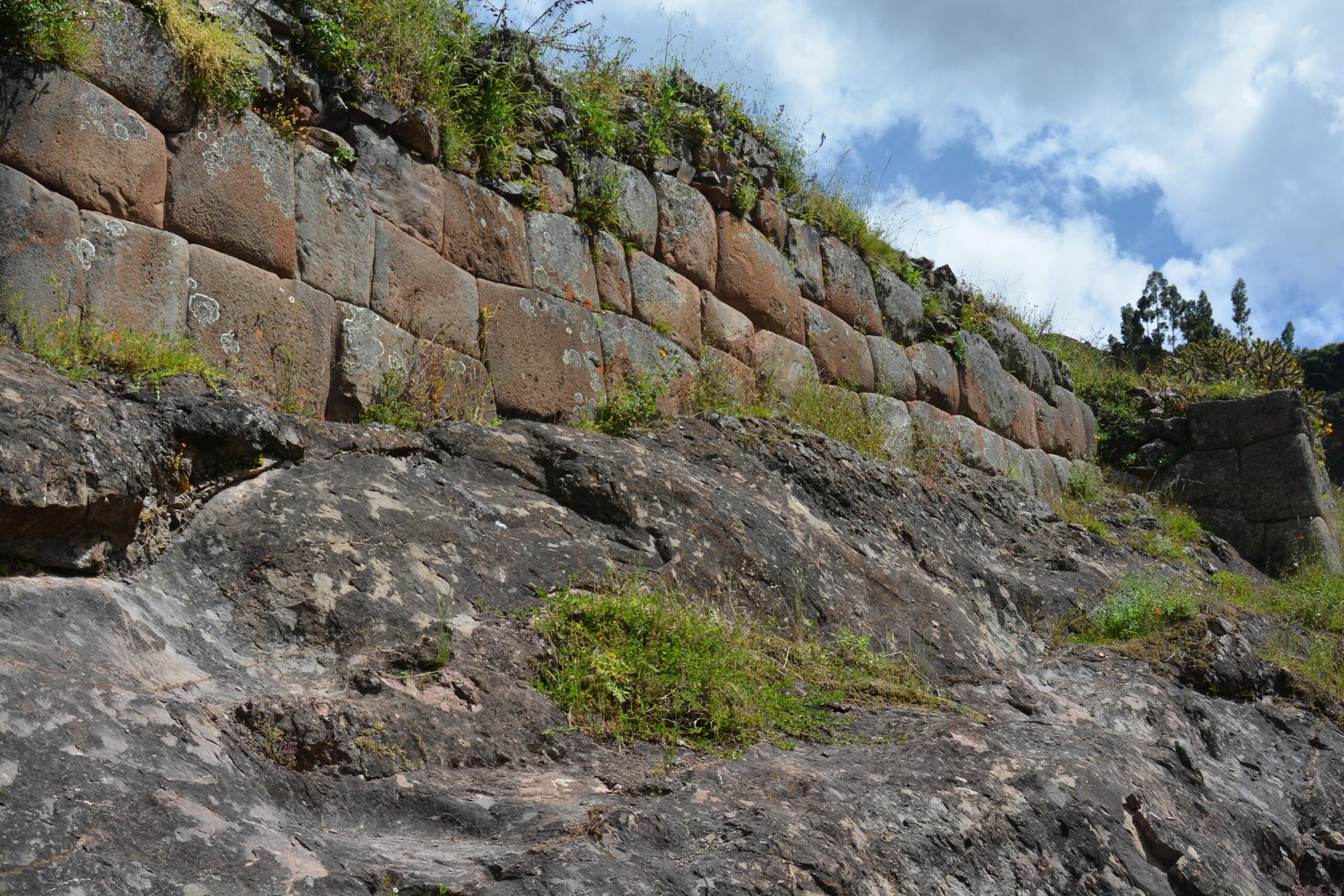
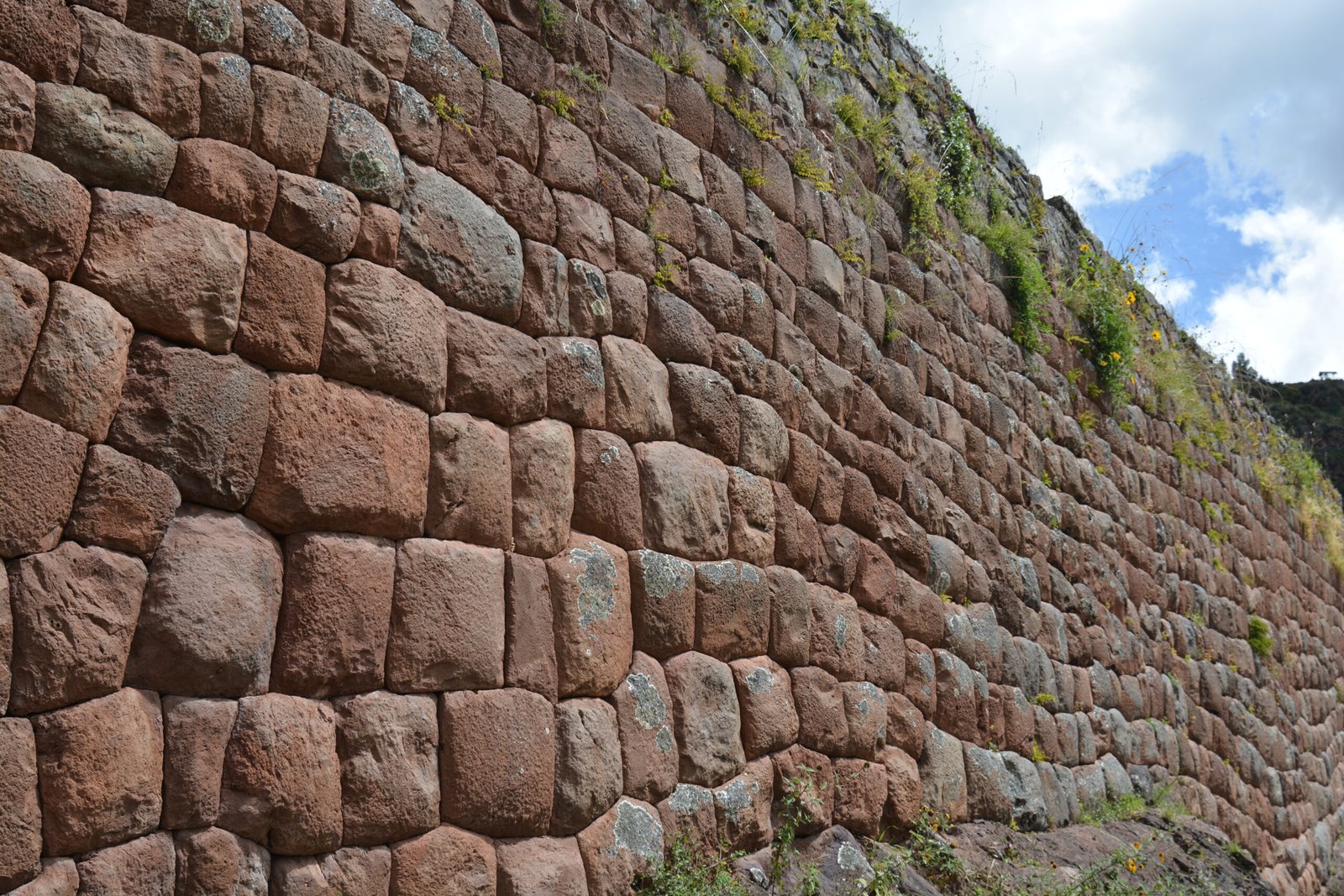
Example of Sedimentary Coursed Masonry
An Example of Sedimentary Coursed Masonry in the Sacred Valley archeological site of Pisaq (Pisac).
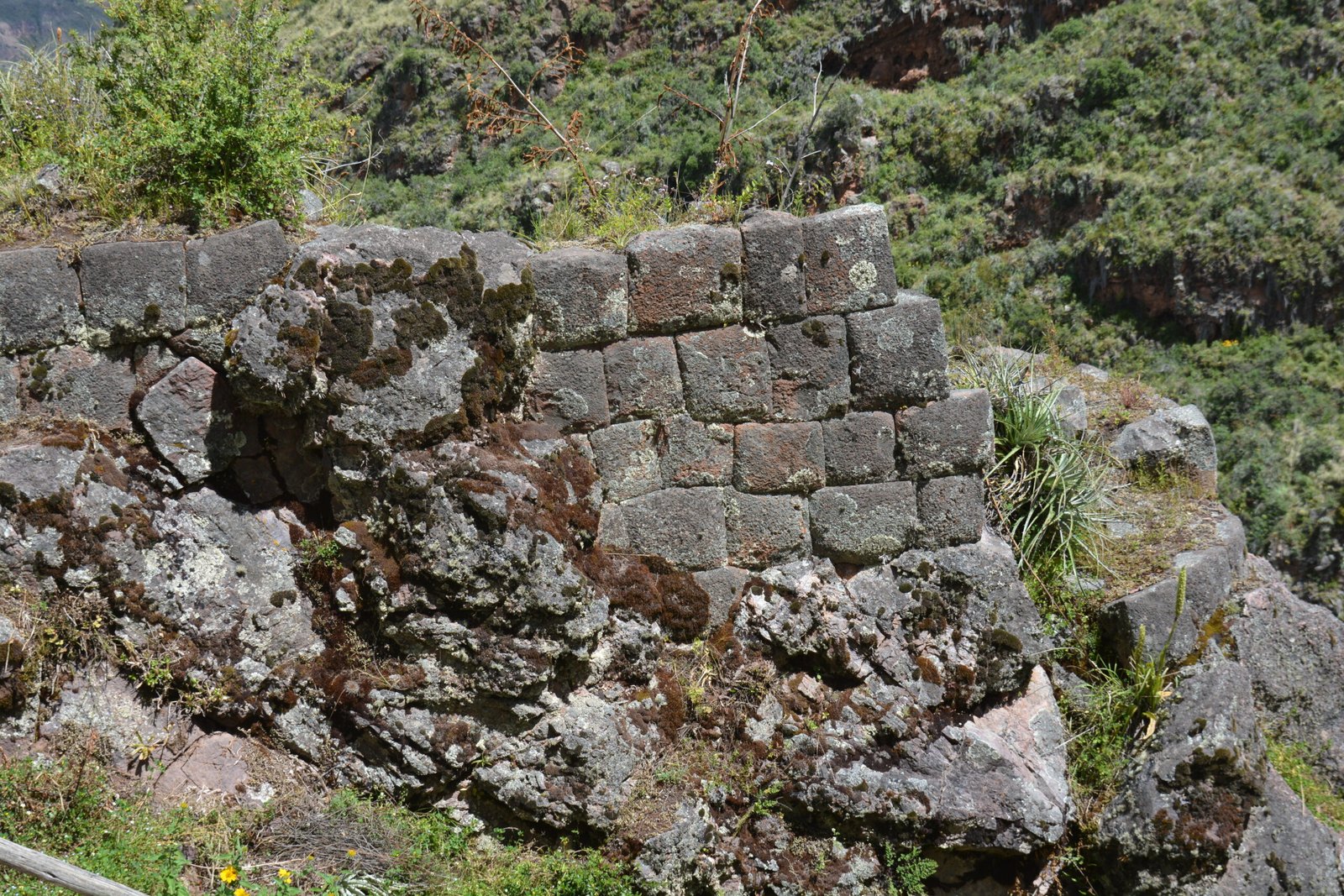
An Example of Sedimentary Coursed Masonry Following Natural Contours
Another example of sedimentary coursed masonry, but following natural contours of the mountainside the wall is built on. Sacred Valley archeological site of Pisaq (Pisac).
An Example of Encased Coursed Masonry in the Sacred Valle archeological site of Pisaq (Pisac).
An Example of Encased Coursed Masonry in the Sacred Valley archeological site of Pisaq (Pisac).
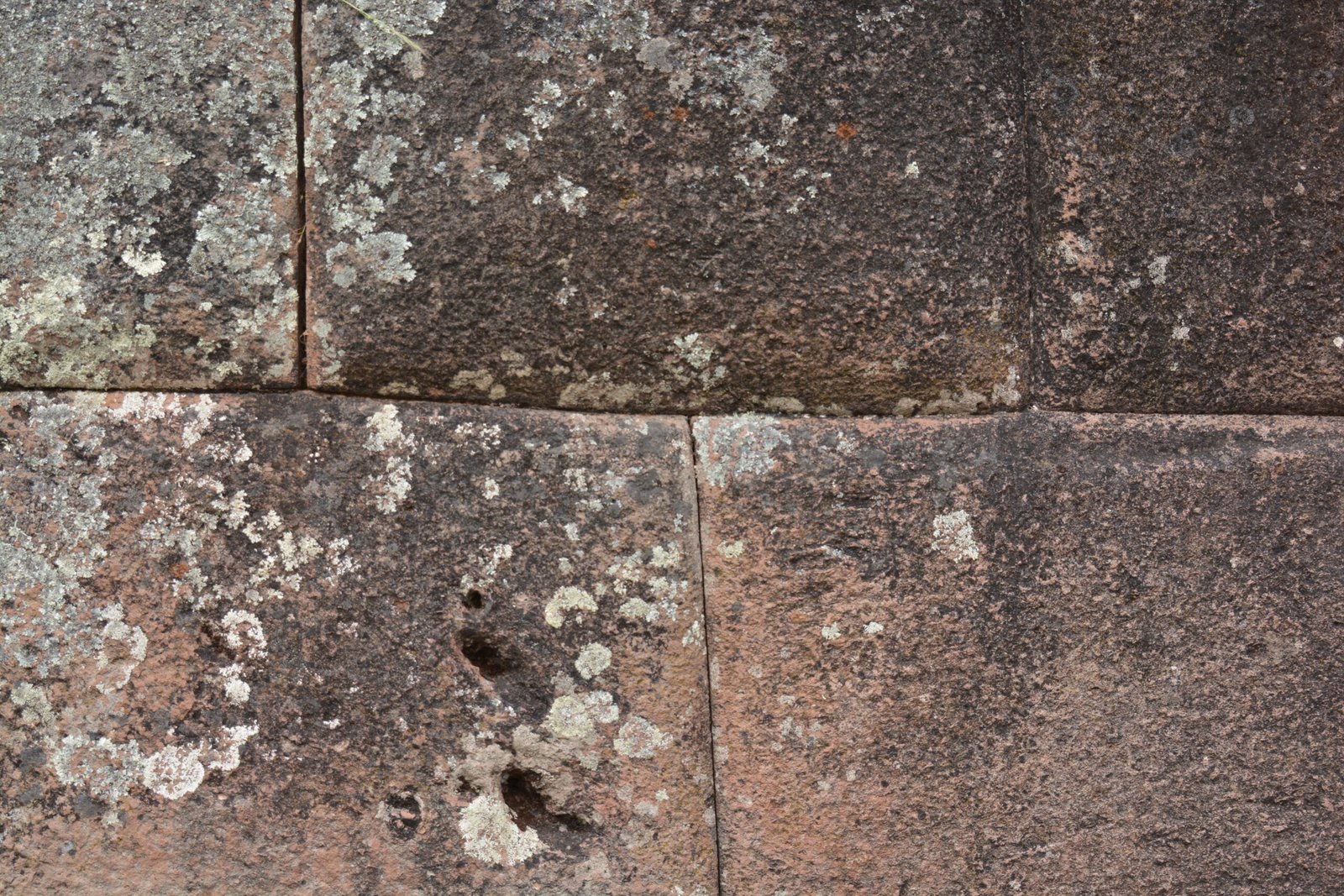
A Detail Example of Cellular Polygonal Masonry
A Detail of cellular polygonal masonry. part of a stone structure in the Sacred Valley archeological site of Pisaq (Pisac). Even after several centuries in an earthquake-prone region, the joints of these stones are so tight a sheet of paper cannot be pushed into the seams.
An Example of Sedimentary Coursed Masonry, Following Natural Terrain
An Example of sedimentary coursed masonry, following natural terrain. The Incas was also masters at incorporating natural stone formations into their structures.
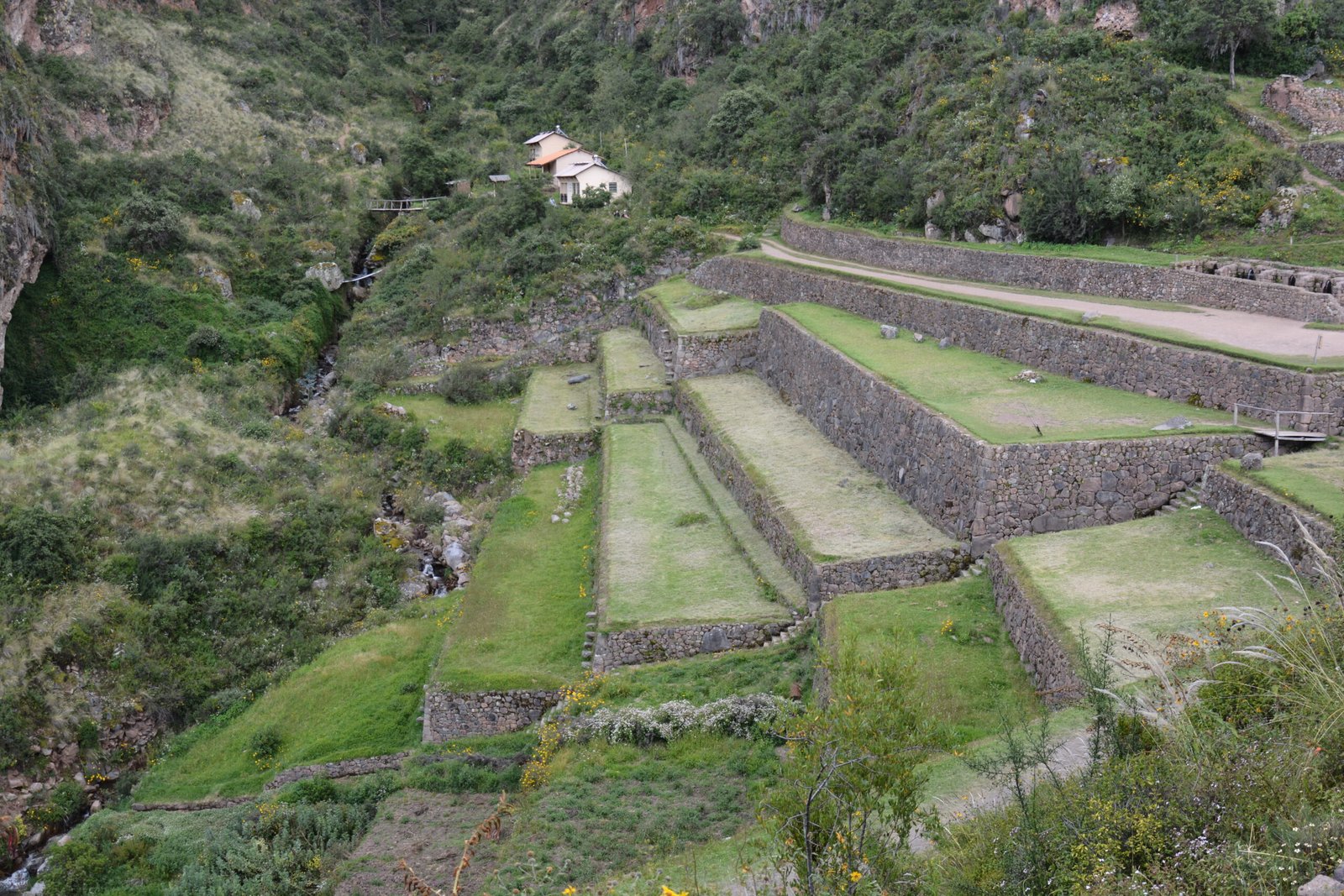
A Grand View of Mountainside Terraces Supported By Stone Walls
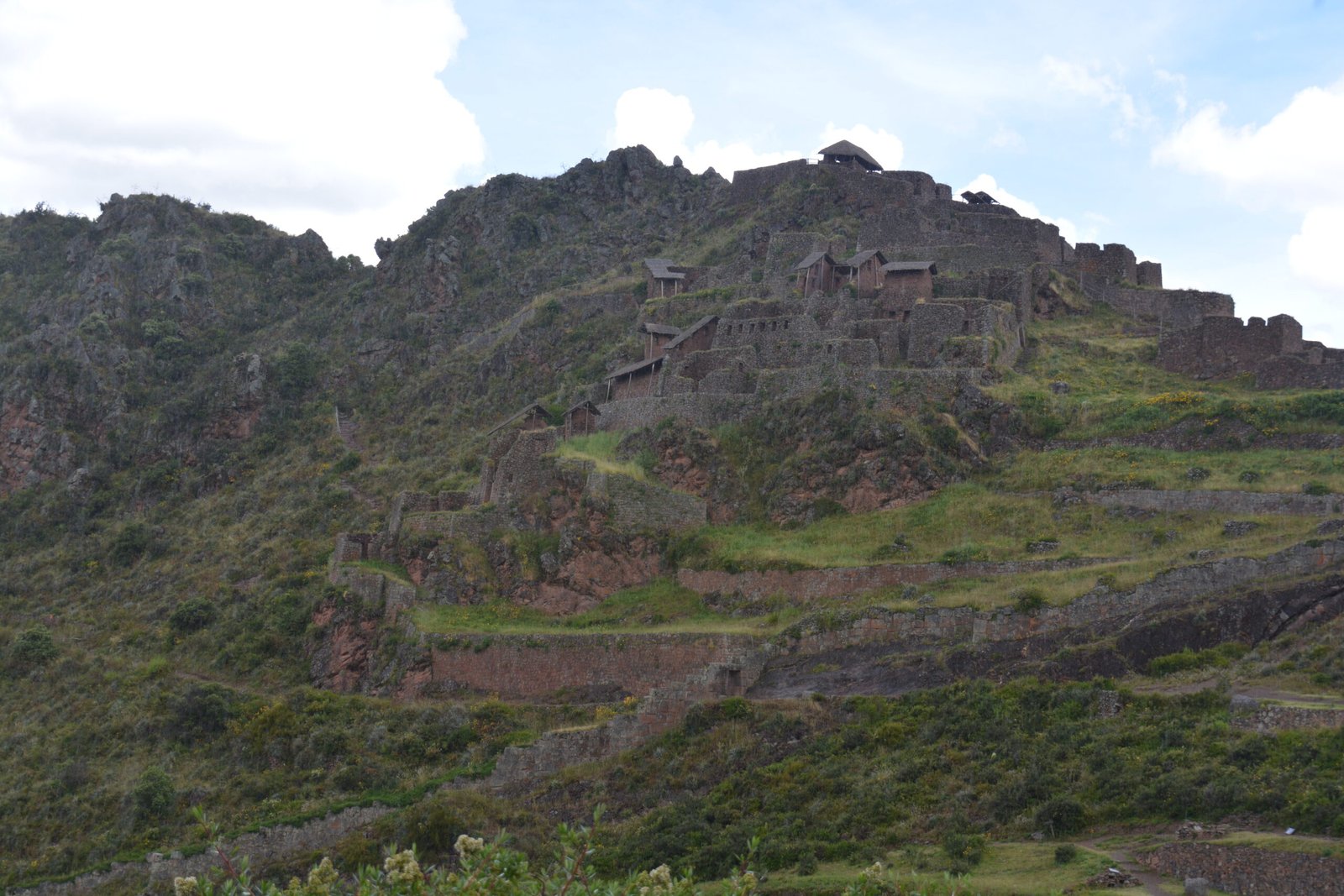
Mountainside Terraces supported by Stone Walls built in encased coursed masonry construction. Located in the Sacred Valley archeological site of Pisaq (Pisac).
Grand View Of A Stone-Built Farming Village
A grand view of what once was small houses and stone retaining walls integrated into the natural mountainsides. Part of the Sacred Valley archeological site of Pisaq.
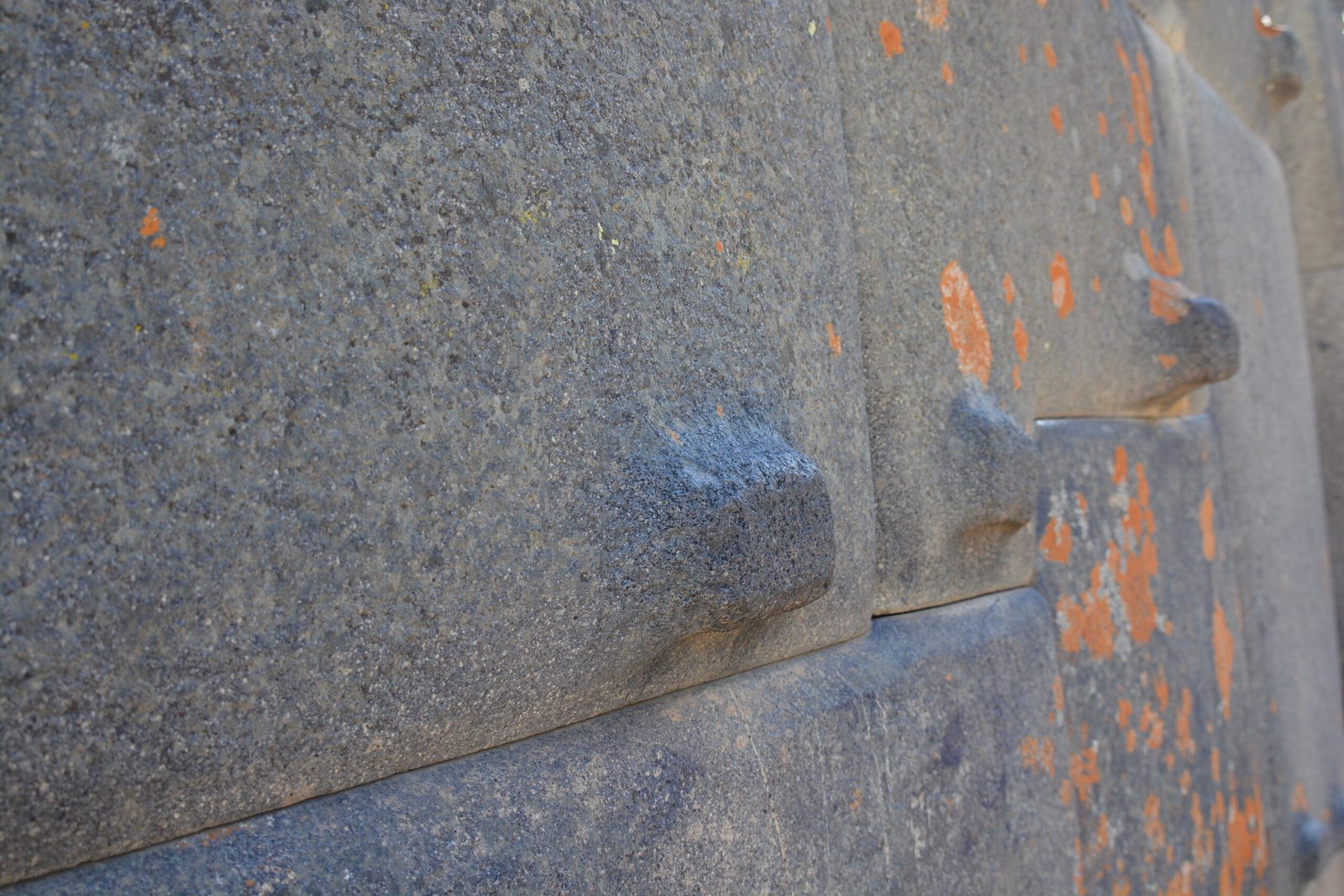
Detail of Lintels on An Ashlar Polygonal Masonry Wall
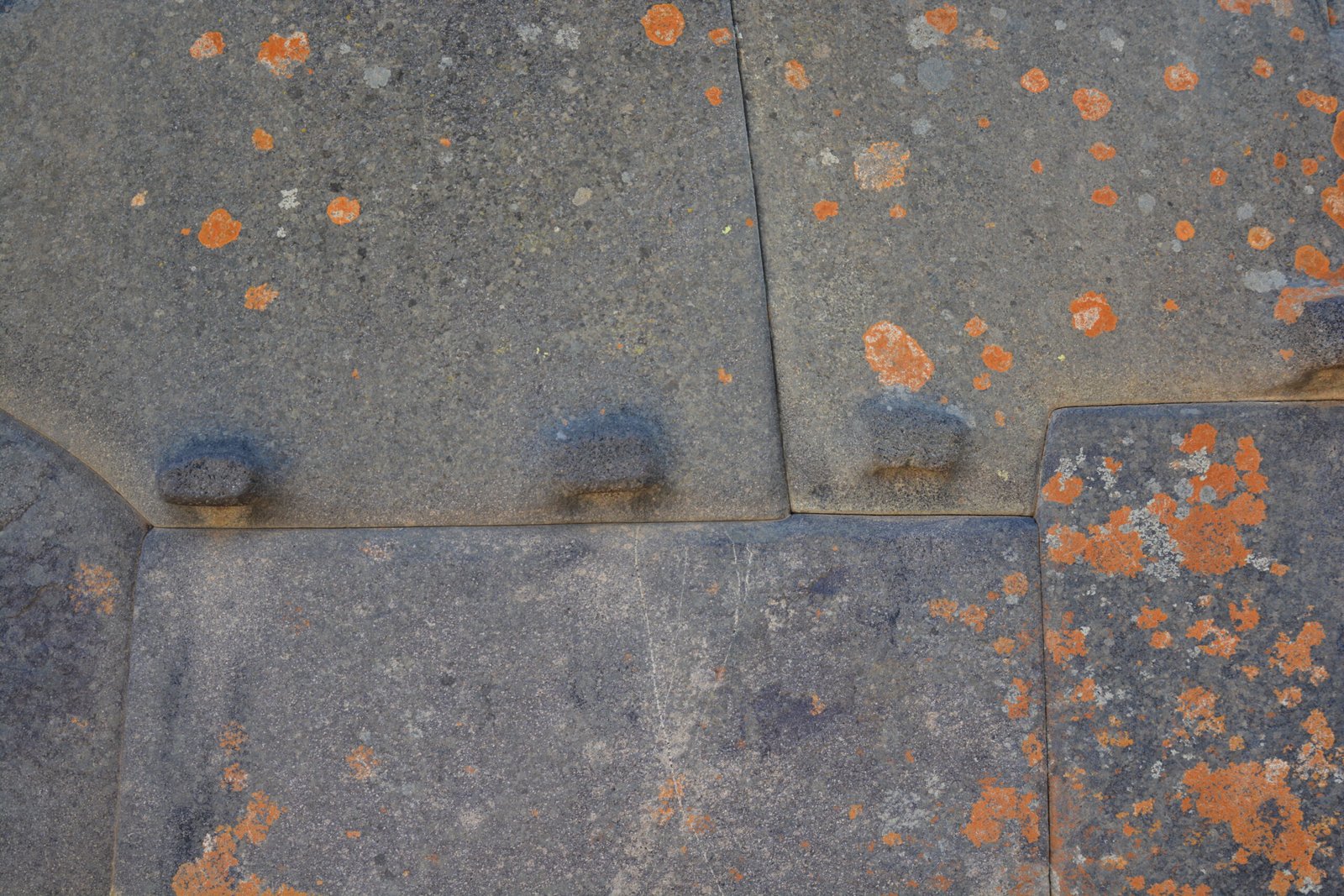
A detail of stone lintels on a stone wall. Archeologists believe these lintels were used to help place the dressed stone during construction. Often appearing on cellular or ashlar polygonal masonry construction. Located in the Sacred Valley archeological sit of Pisaq.
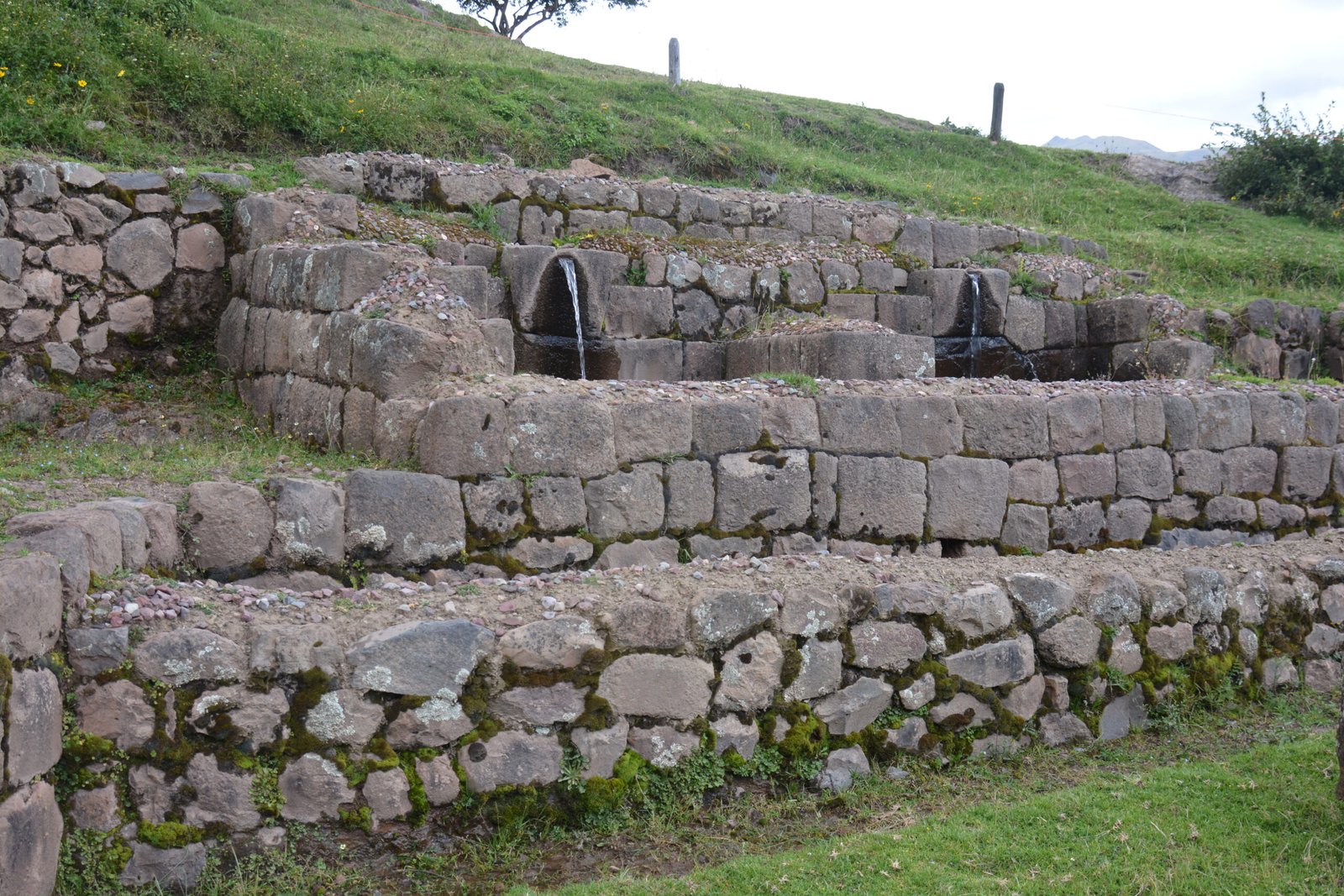
Stone Works Creating Natural Spring-Fed Fountains
Two different types of stone construction used to create fountains from naturally-occuring springs. Sources of water in the Sacred Valley communities was critical to the inhabitants. Located in Pisaq.
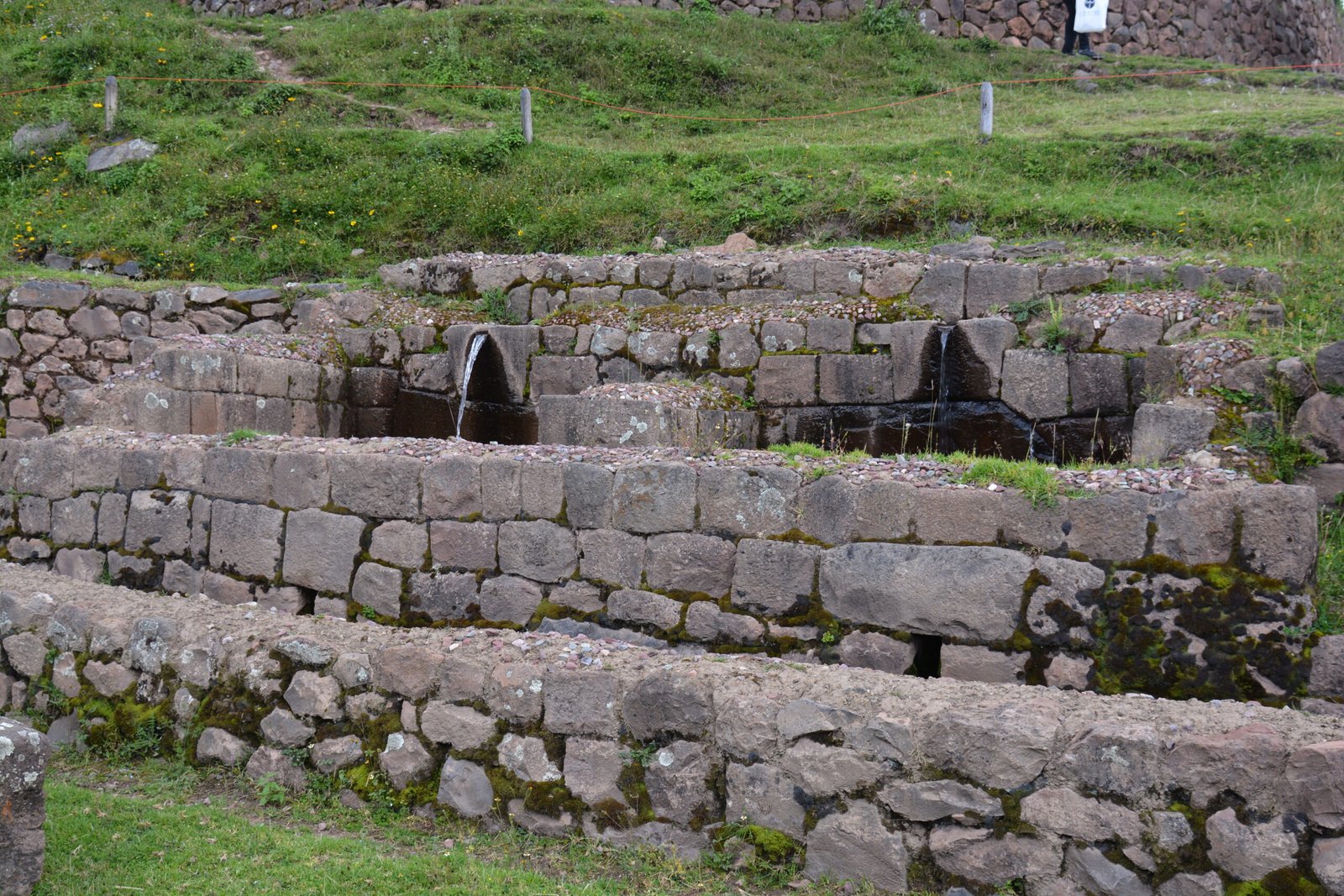
Stone Works Creating Natural Spring-Fed Fountains
Another view of fountains created from naturally-occuring springs in the Sacred Valley community of Pisaq.
Detail of Lintels on A Cellular Polygonal Masonry Wall
Detail view of lintels on a cellular polygonal masonry wall. Archeologists believe these lintels were used to help place the dressed stone during construction. Often appearing on cellular or ashlar polygonal masonry construction. Located in the Sacred Valley archeological site of Pisaq.
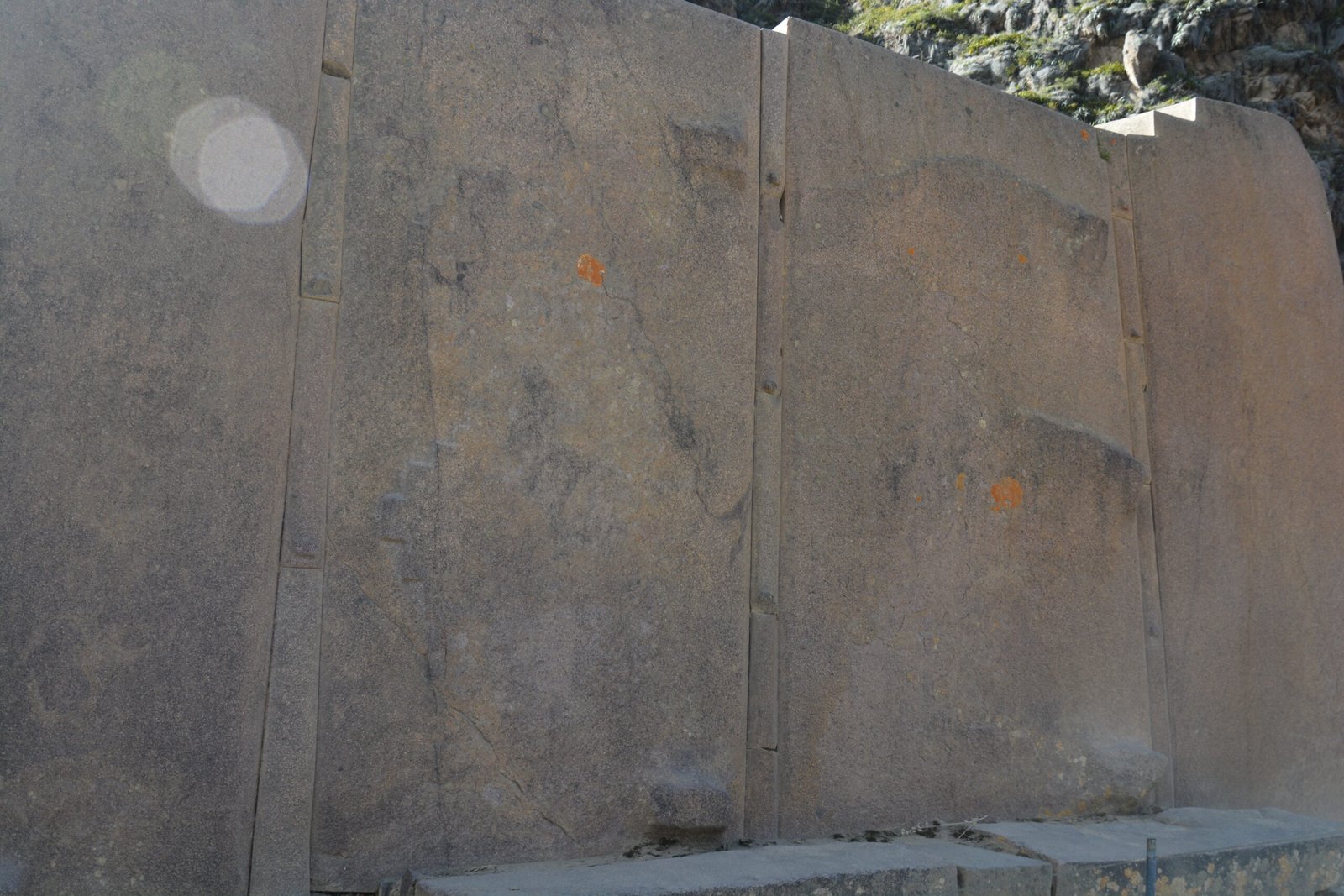
Detail Image of Large Stones Separated By Stone Spacers
This is a detail of a stone wall in Ollantaytambo, created of huge cut and dressed stones separated by what appears to be "spacers" or flush column stones. This was the only place where I saw this particular style of construction.
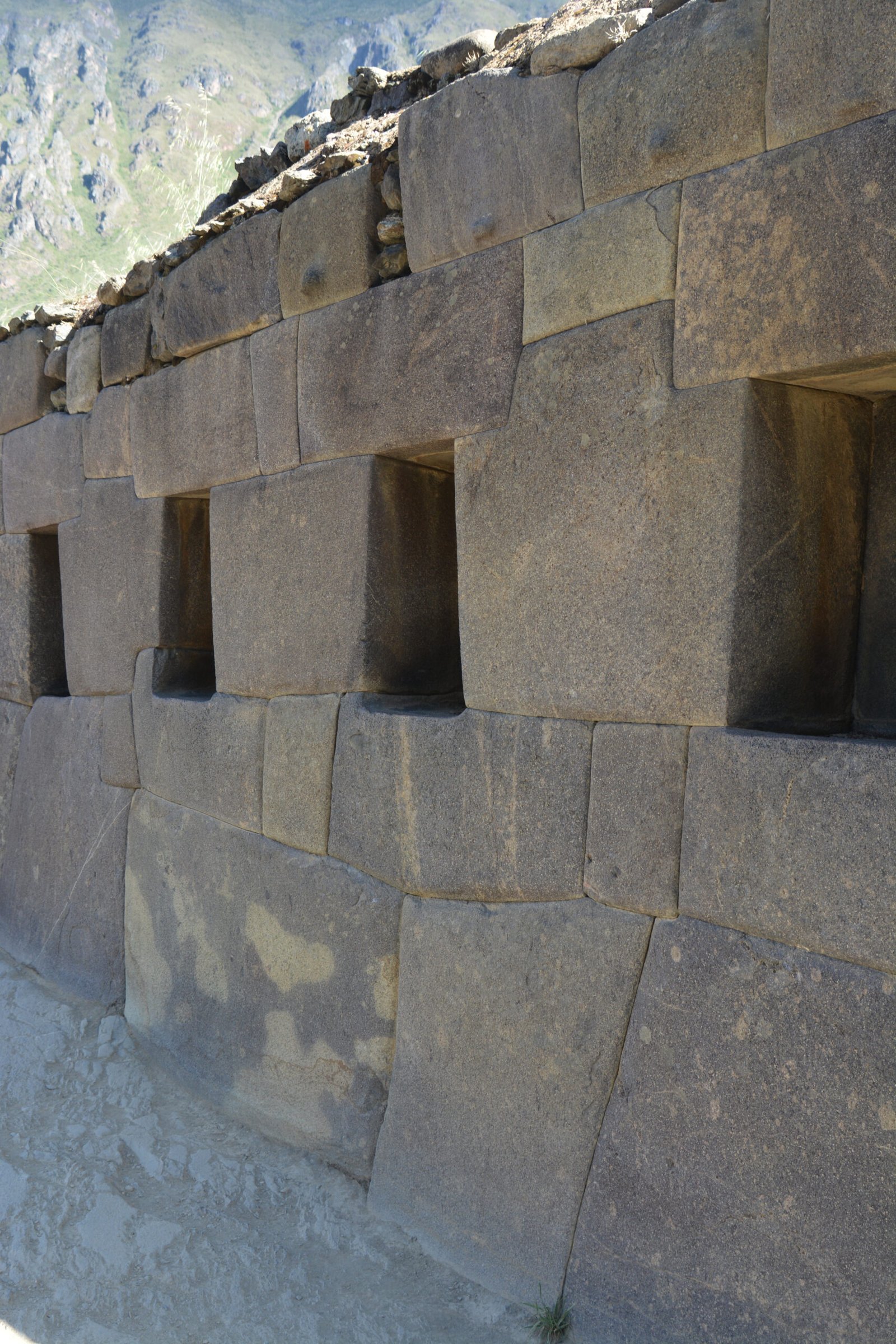
Stone Wall With Display Niches in Ollantaytambo
One common feature of Inca stonework was incorporating niches into the walls, particularly in homes or public buildings. Archeologists have Spanish records indicating these niches were used for storage of food or figurines. Many of the figurines were made of pure gold. Ollantaytambo is another part of the Sacred Valley region.
A Study of Stonehenge – Another of my photo studies of an ancient stone construction.
(Visited 23 times, 1 visits today)
We use cookies on our website to give you the most relevant experience by remembering your preferences and repeat visits. By clicking “Accept”, you consent to the use of ALL the cookies.
This website uses cookies to improve your experience while you navigate through the website. Out of these, the cookies that are categorized as necessary are stored on your browser as they are essential for the working of basic functionalities of the website. We also use third-party cookies that help us analyze and understand how you use this website. These cookies will be stored in your browser only with your consent. You also have the option to opt-out of these cookies. But opting out of some of these cookies may affect your browsing experience.
Necessary cookies are absolutely essential for the website to function properly. These cookies ensure basic functionalities and security features of the website, anonymously.
Cookie
Duration
Description
cookielawinfo-checkbox-analytics
11 months
This cookie is set by GDPR Cookie Consent plugin. The cookie is used to store the user consent for the cookies in the category "Analytics".
cookielawinfo-checkbox-functional
11 months
The cookie is set by GDPR cookie consent to record the user consent for the cookies in the category "Functional".
cookielawinfo-checkbox-necessary
11 months
This cookie is set by GDPR Cookie Consent plugin. The cookies is used to store the user consent for the cookies in the category "Necessary".
cookielawinfo-checkbox-others
11 months
This cookie is set by GDPR Cookie Consent plugin. The cookie is used to store the user consent for the cookies in the category "Other.
cookielawinfo-checkbox-performance
11 months
This cookie is set by GDPR Cookie Consent plugin. The cookie is used to store the user consent for the cookies in the category "Performance".
viewed_cookie_policy
11 months
The cookie is set by the GDPR Cookie Consent plugin and is used to store whether or not user has consented to the use of cookies. It does not store any personal data.
Functional cookies help to perform certain functionalities like sharing the content of the website on social media platforms, collect feedbacks, and other third-party features.
Performance cookies are used to understand and analyze the key performance indexes of the website which helps in delivering a better user experience for the visitors.
Analytical cookies are used to understand how visitors interact with the website. These cookies help provide information on metrics the number of visitors, bounce rate, traffic source, etc.
Advertisement cookies are used to provide visitors with relevant ads and marketing campaigns. These cookies track visitors across websites and collect information to provide customized ads.