During our 2025 Peru adventure Winnie and I had a three-hour guided tour of the world heritage site of Machu Picchu. We arrived here after the previous day’s hike of the last 7.4 miles of the Inca Trail, and a good night’s sleep at a hotel in the town of Aguas Calientes.
I had the opportunity to visit Machu Picchu back in 1979, during a four-day port visit to Lima while on a Navy cruise. I vowed that I would someday come back for another visit. Our 2025 Peru Adventure was that chance. I still did not get to see enough of this incredible Inca Citadel. But I at least was able to take a lot of pictures on this visit. I’ve included them here as a separate study.
A Photo Study of Machu Picchu
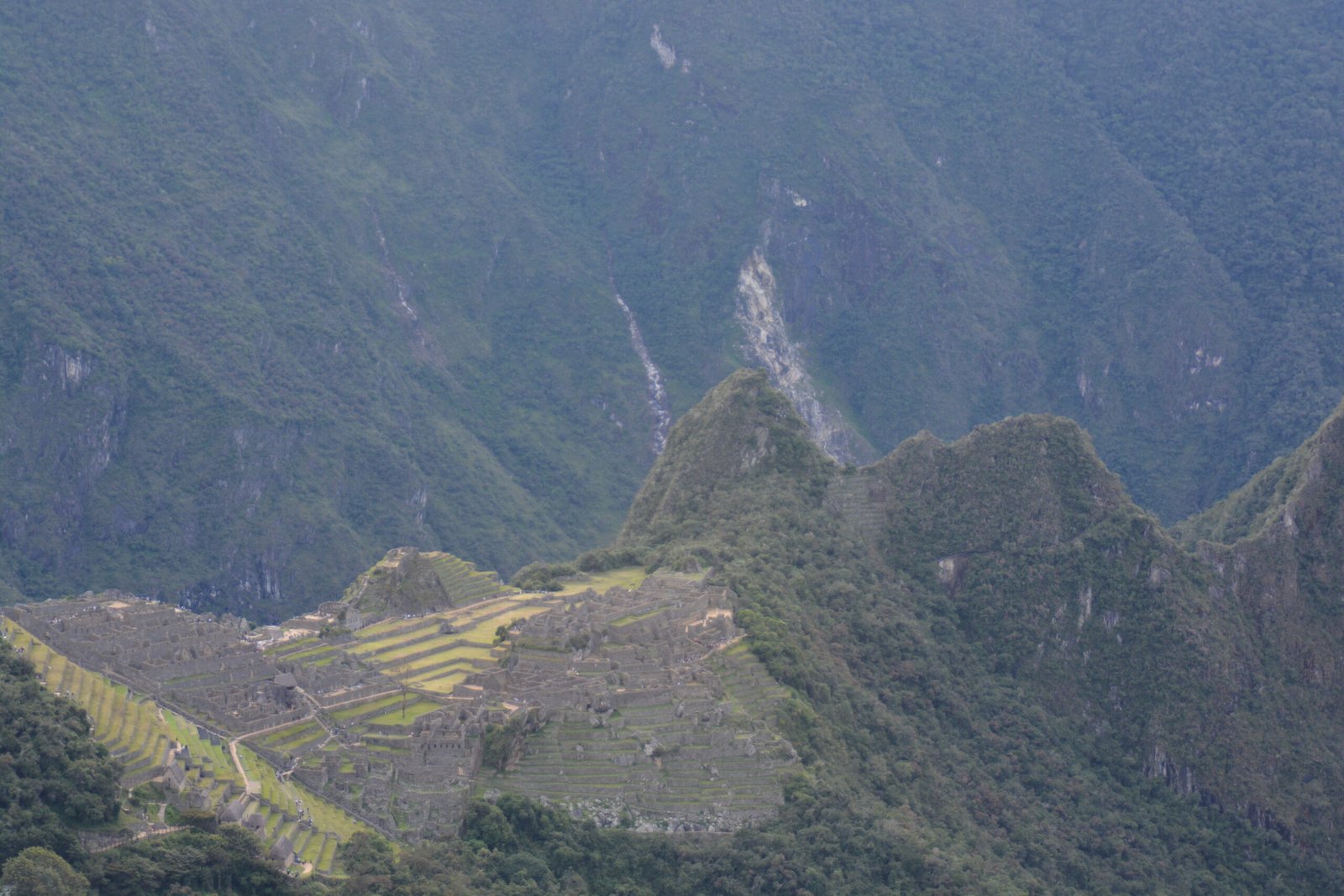
View of Machu Picchu from the Sun Gate
The first view of Machu Picchu when arriving at the Sun Gate, traveling from Cuzco.
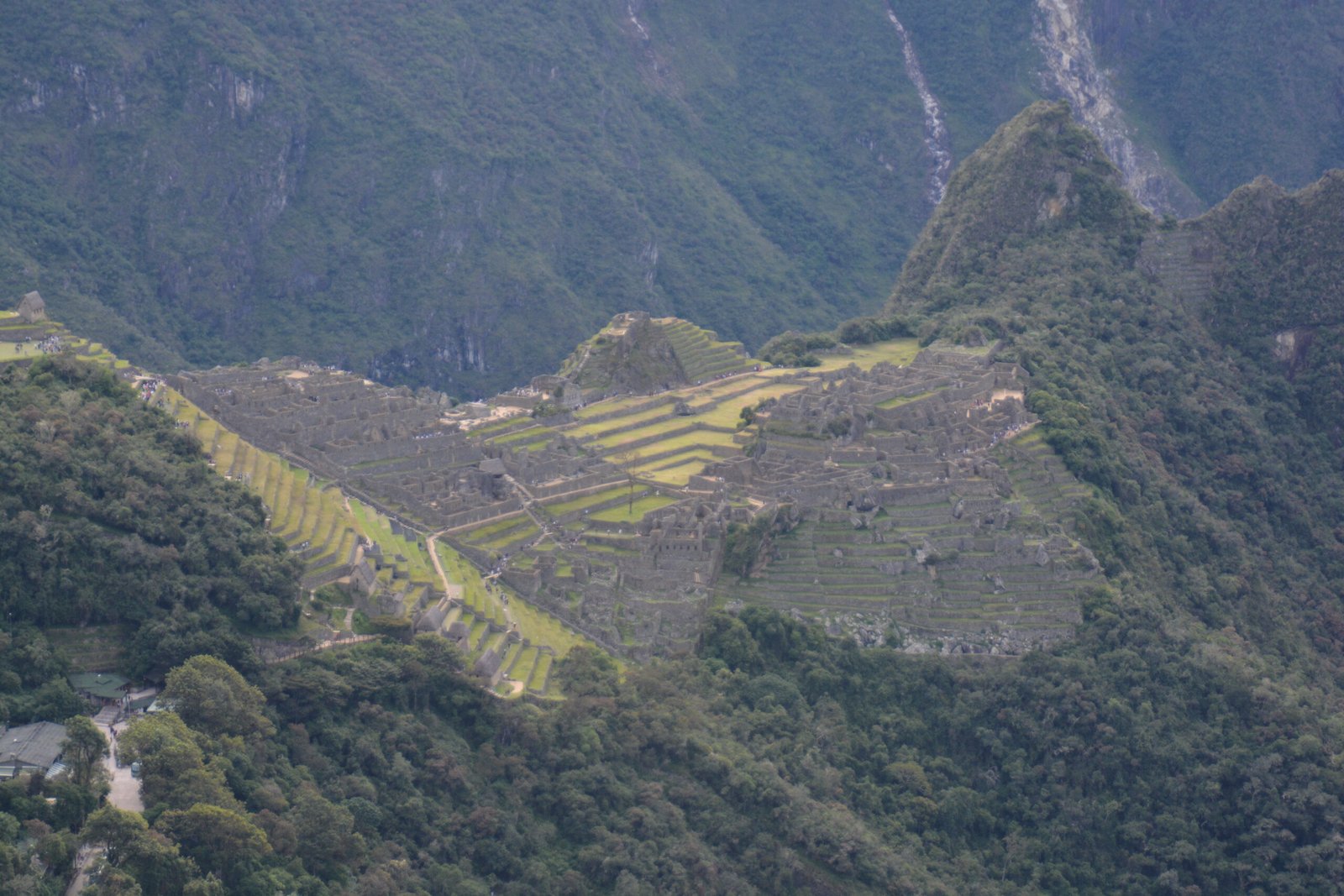
View of Machu Picchu from the Sun Gate
The first view of Machu Picchu when arriving at the Sun Gate, traveling from Cuzco.
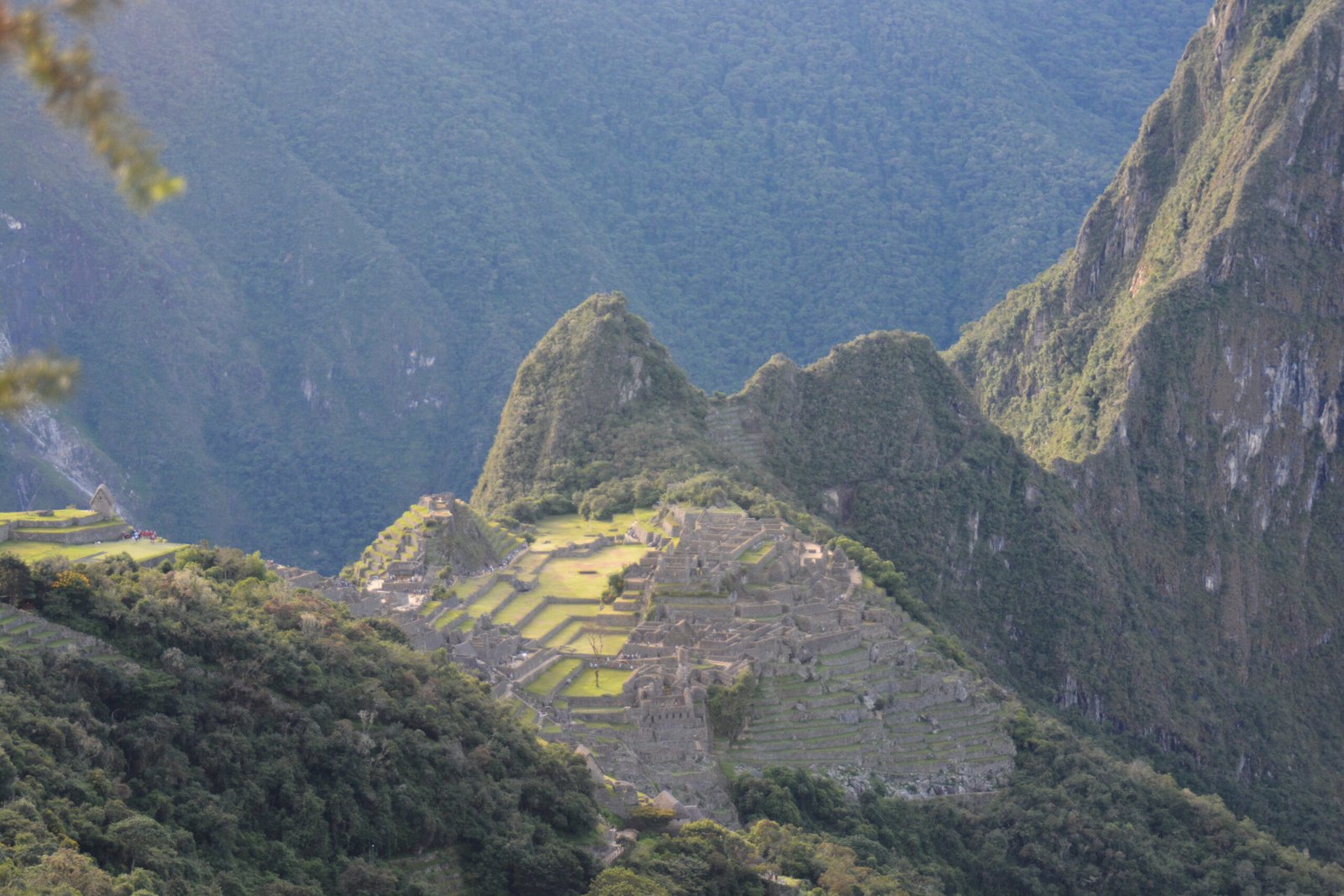
A Late Afternoon View of Machu Picchu
A view of Machu Picchu from below the Sun Gate in late afternoon.
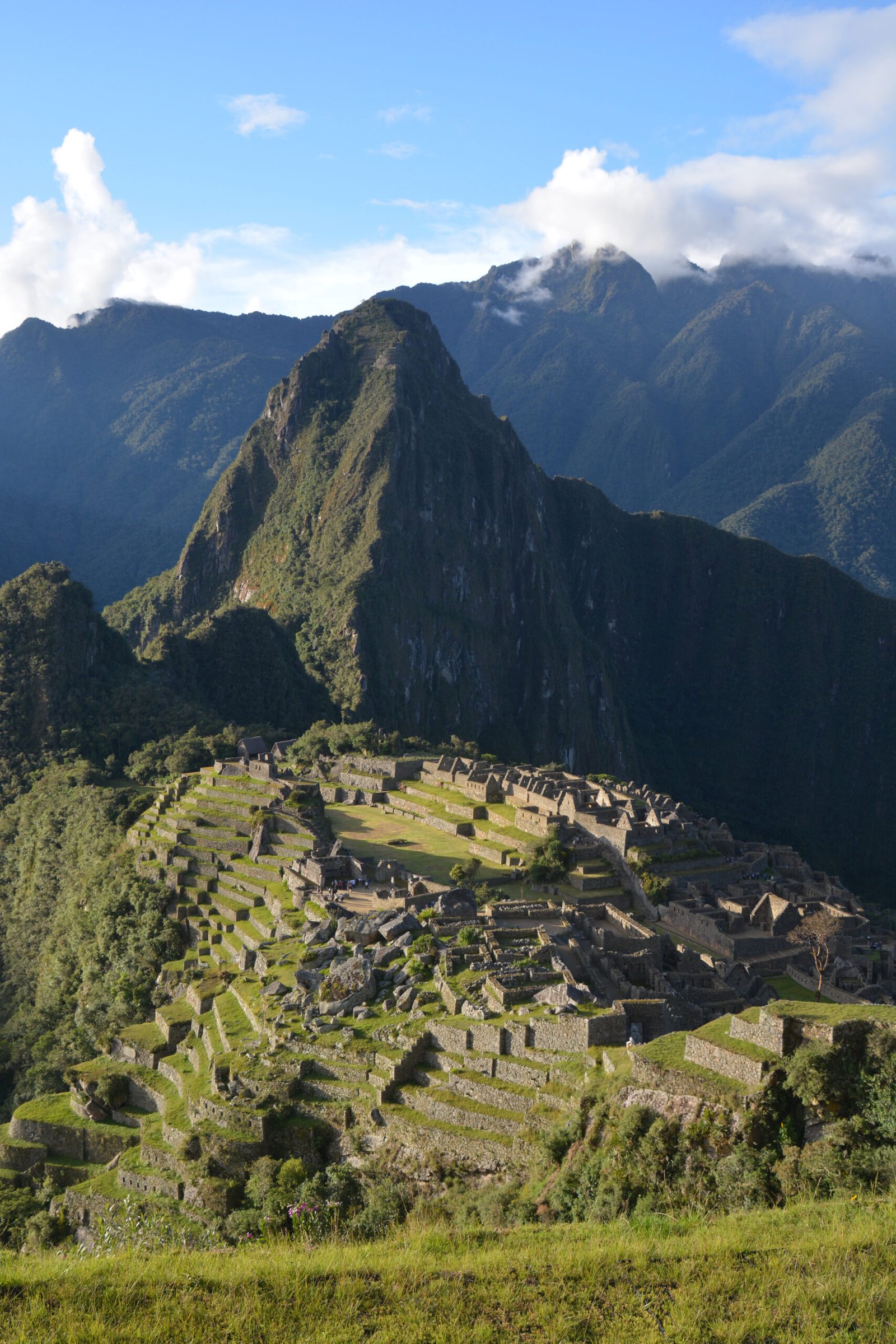
At the Entrance to Machu Picchu
Once past the Sun Gate, the road leads to an entrance into Machu Picchu. This is the view of the city from the upper entrance, taken in late afternoon.
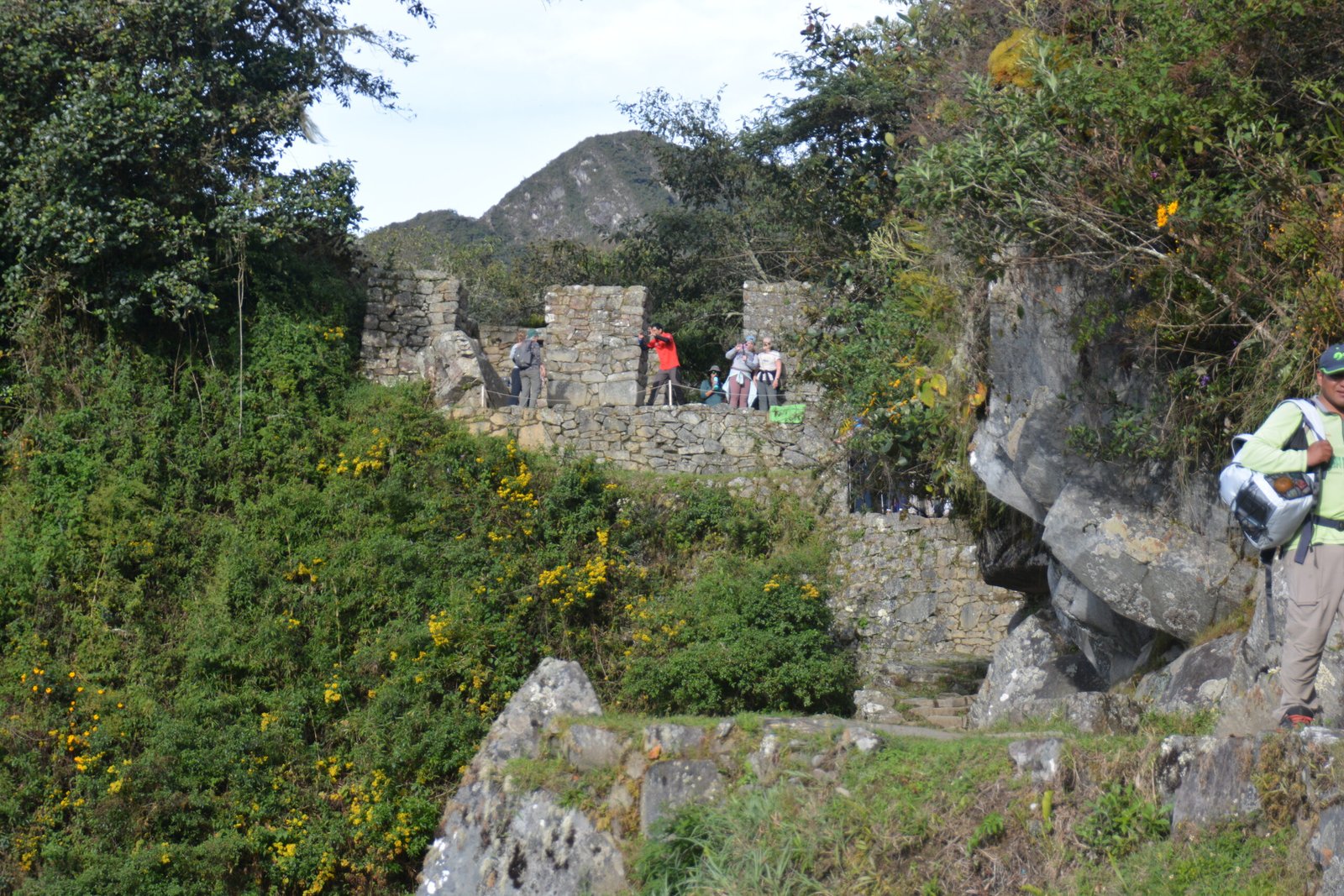
The Sun Gate Guarding Machu Picchu
The Sun Gate, as seen from the Inca trail leading into Machu Picchu. When Machu Picchu was a living city, this gate was the guard post protecting the city. The Inca Trail leading from Cuzco was the only access into and out of Machu Picchu.
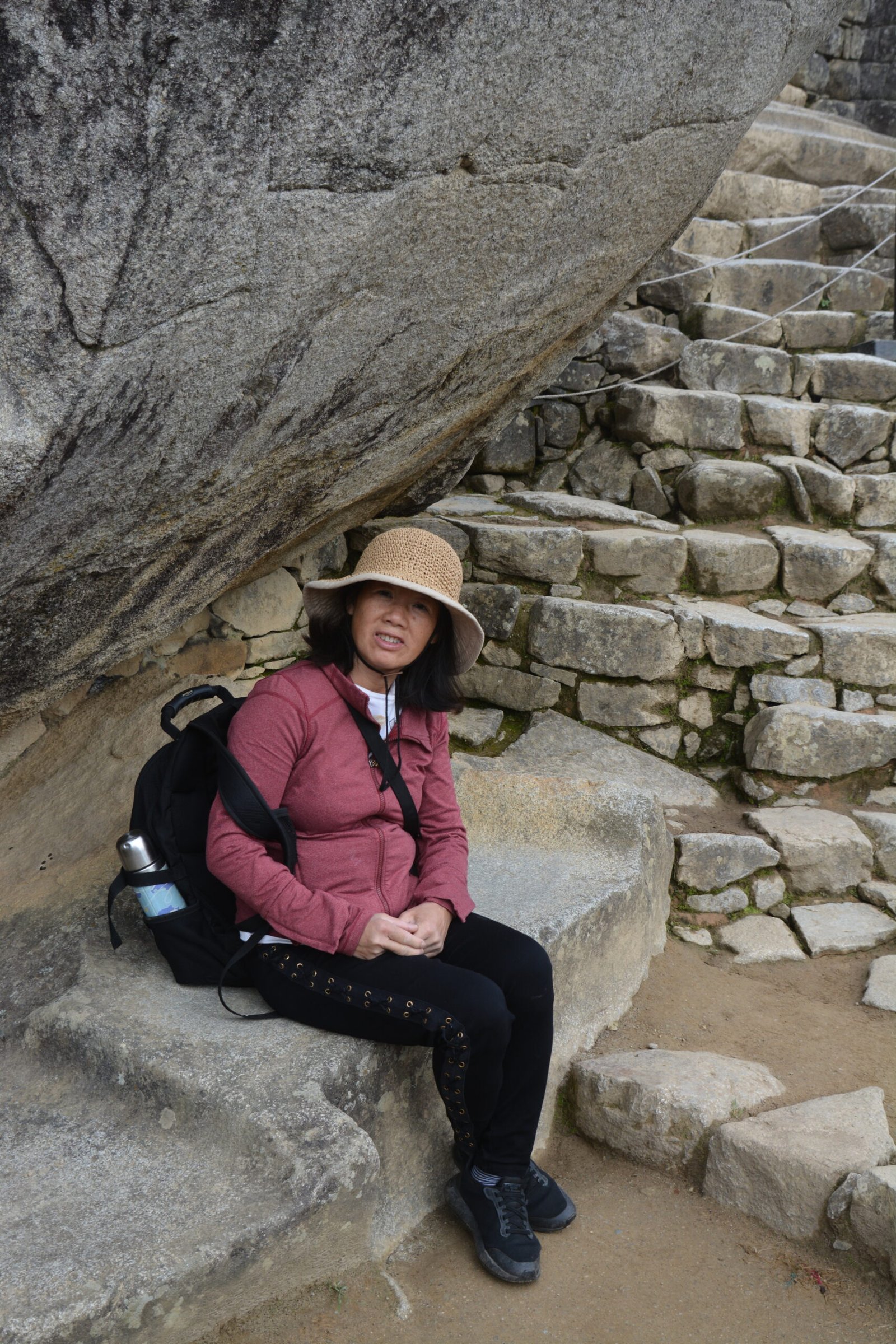
Winnie Taking A Break
Winnie taking a break while exploring Machu Pichu
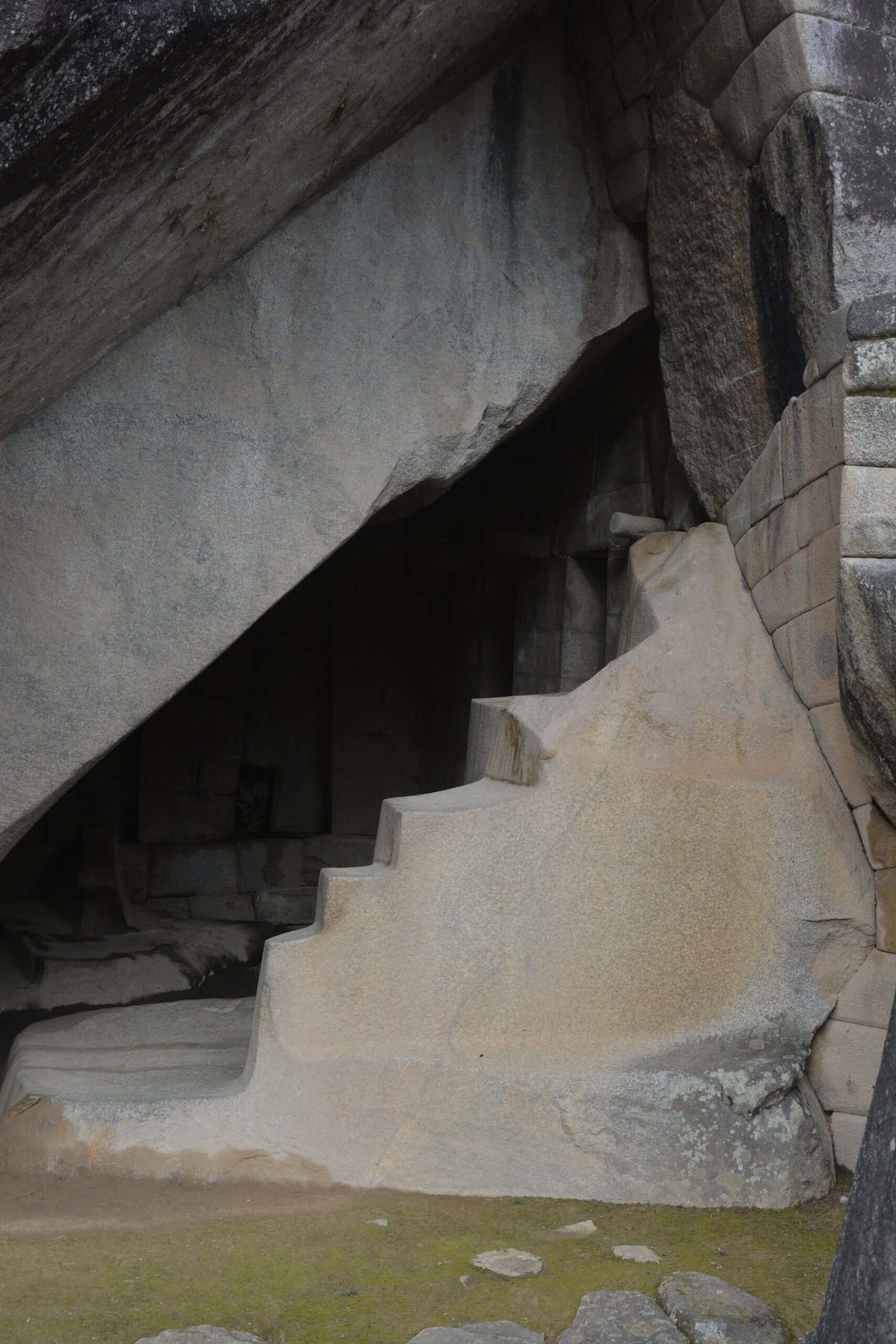
Storage Room in Machu Picchu
The Incas used natural stone formations as part of their constructions. This is a storage room using a natural stone formation as the upper section.
A View of Machu Picchu Agricultural Terraces
A View of some of the agricultural terraces of Machu Picchu.
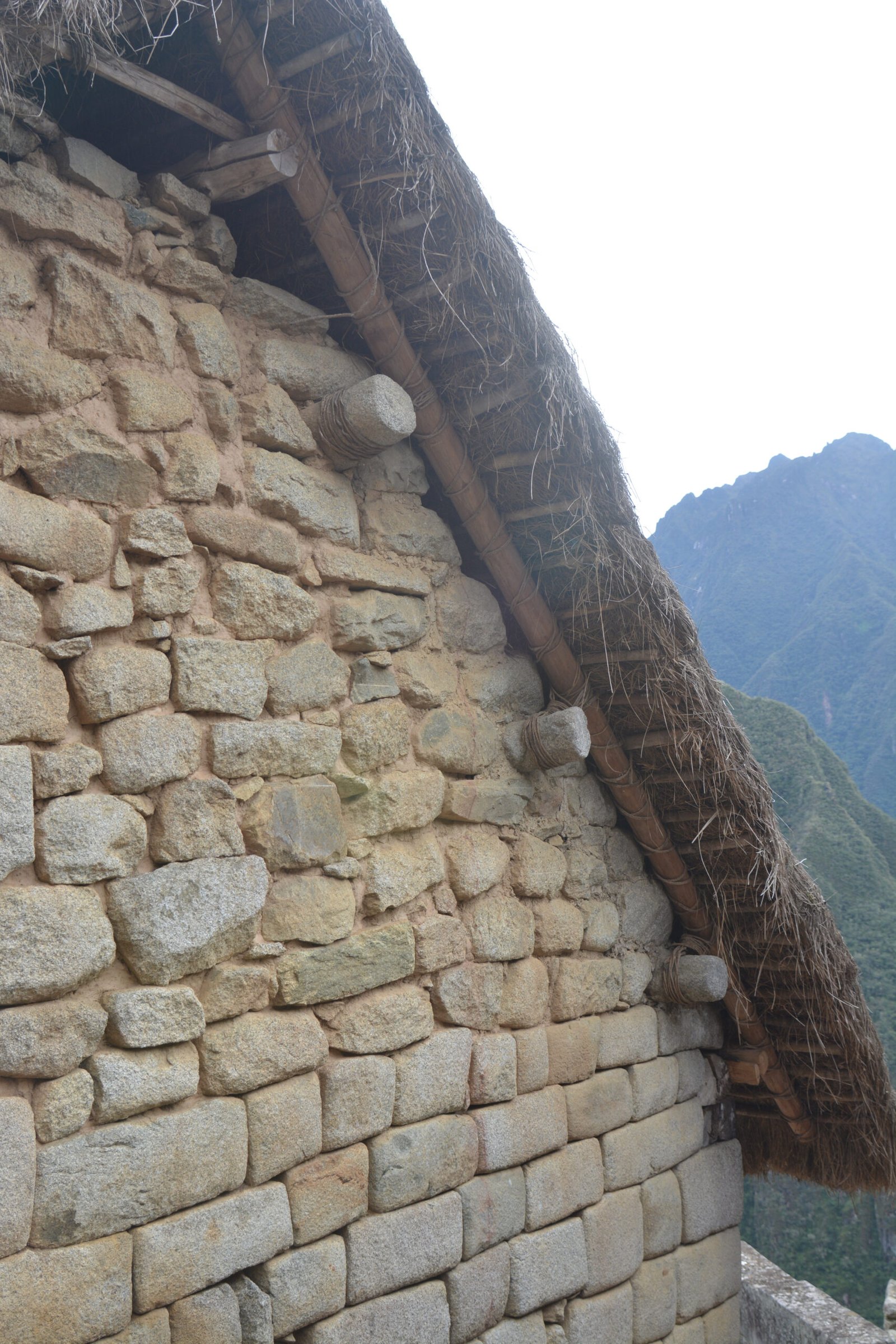
Roof Supports of a Building in Machu Picchu
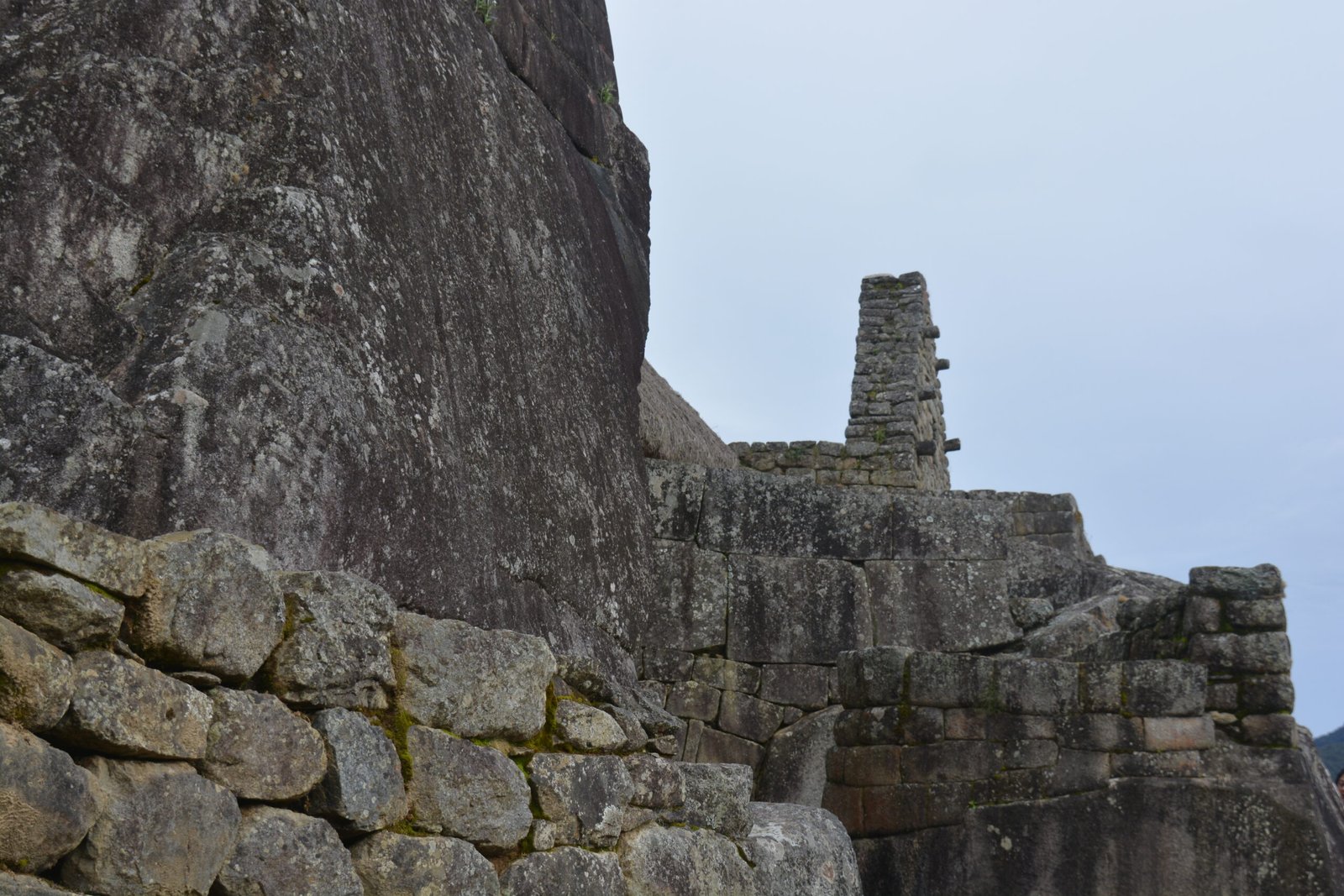
This shows the upper section of a building, with the stone roof supports clearly visible. The Incas would shape stone supports into the walls of their buildings that supported roof trusses.
A Mix of Farming Terraces and Buildings of Machu Picchu
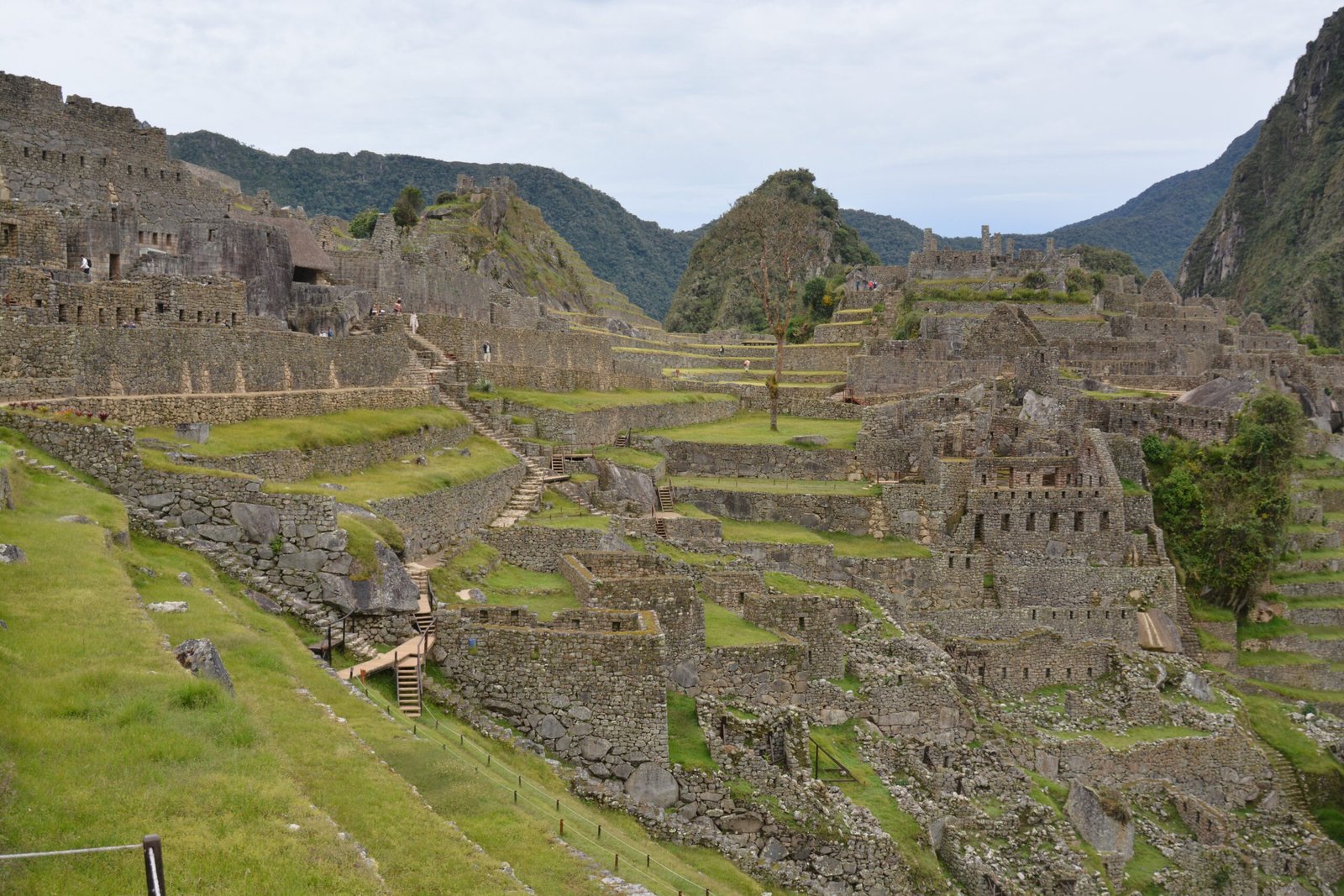
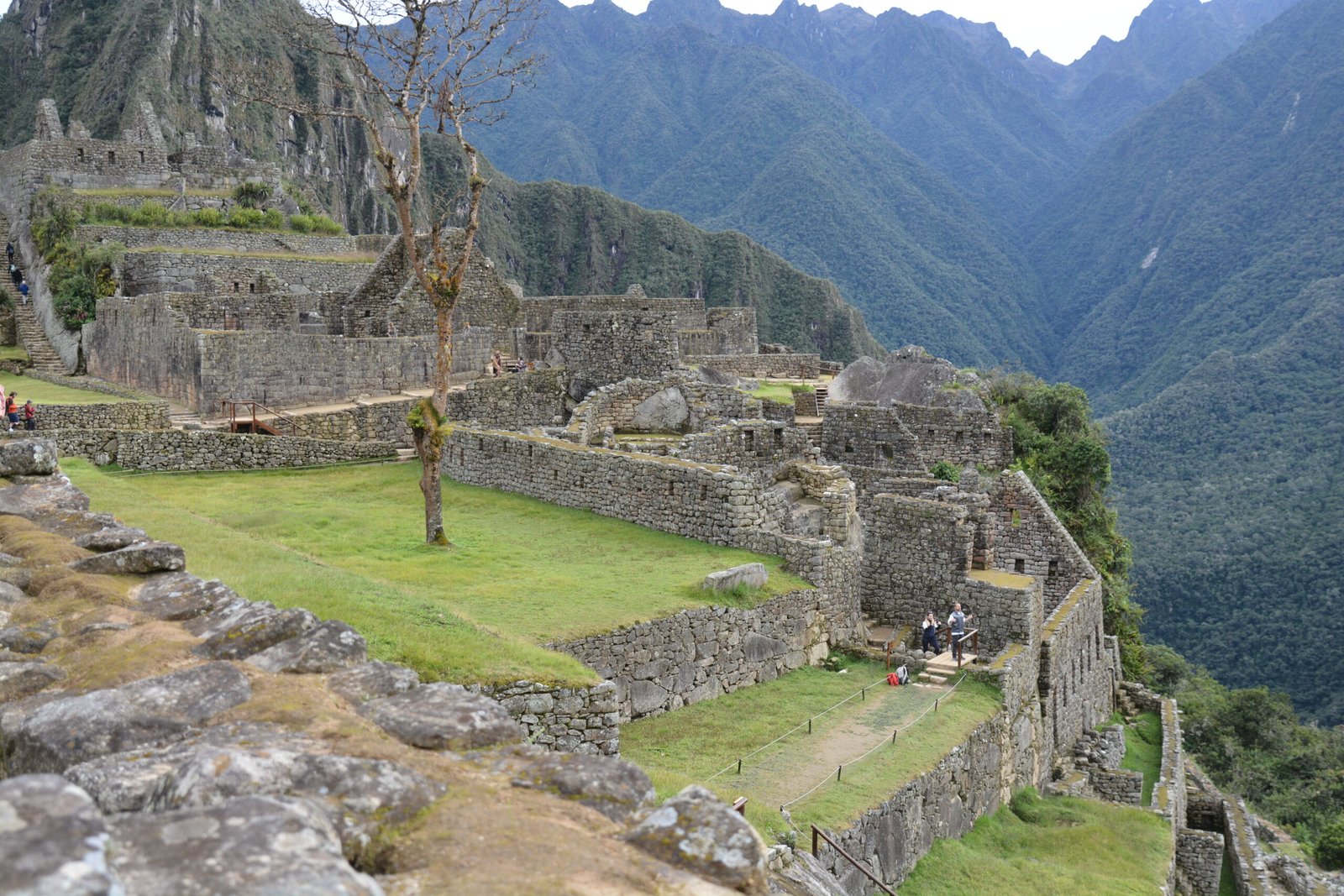
Showing a mix of buildings and farming terraces of Machu Picchu. This also shows some of the "catwalks" (protected walkways) created by the government to control and direct visitors. to this site. One item I found interesting was that these walkways have perforated plastic "floors" that allow grass to grow through them, but prevent ruts being worn from constant foot traffic.
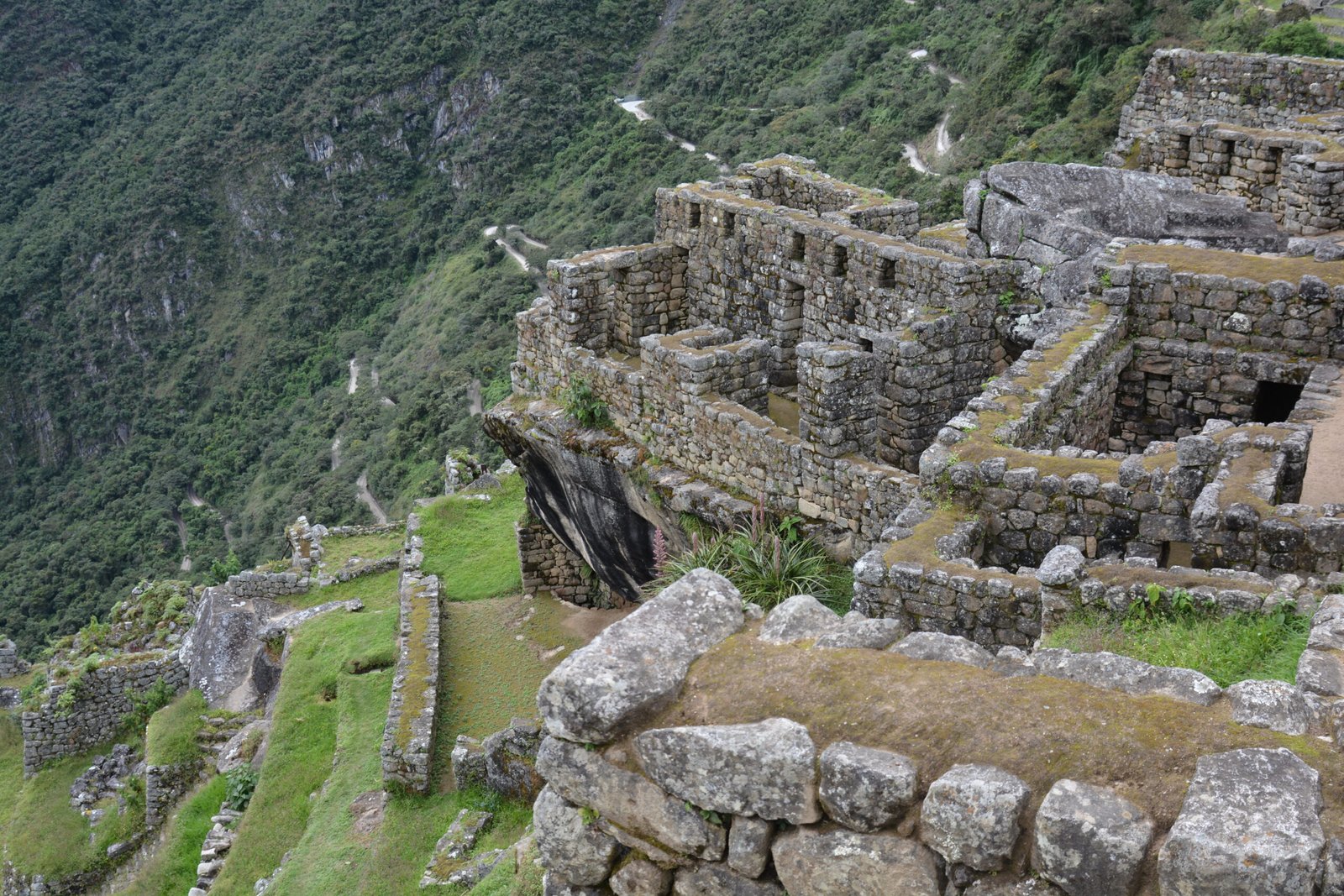
A Combination of Natural and Constructed Stone in Machu Picchu
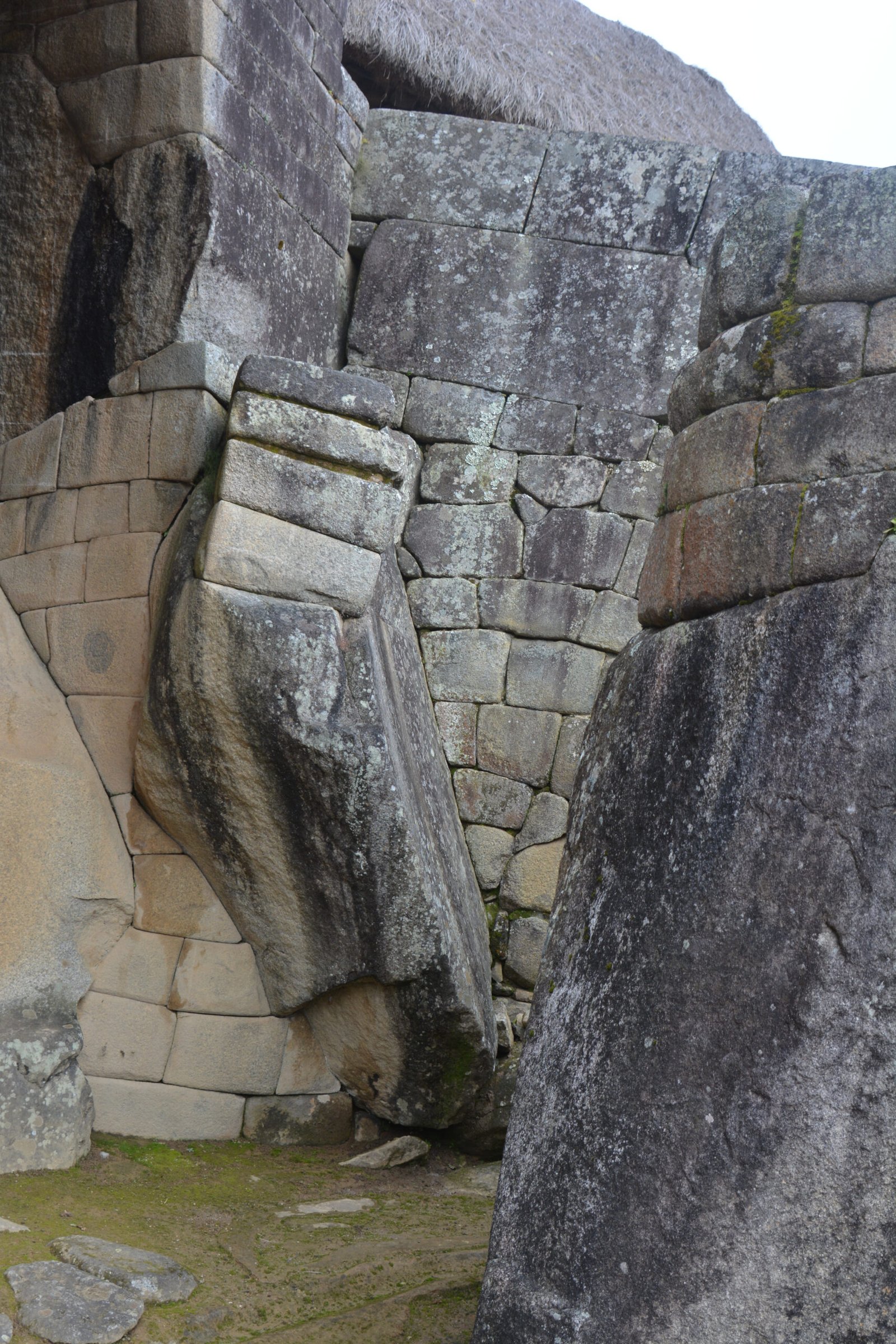
The Incas used natural stone formations as part of their constructions. This wall combines a natural stone formation with shaped stone to create a wall of a building.
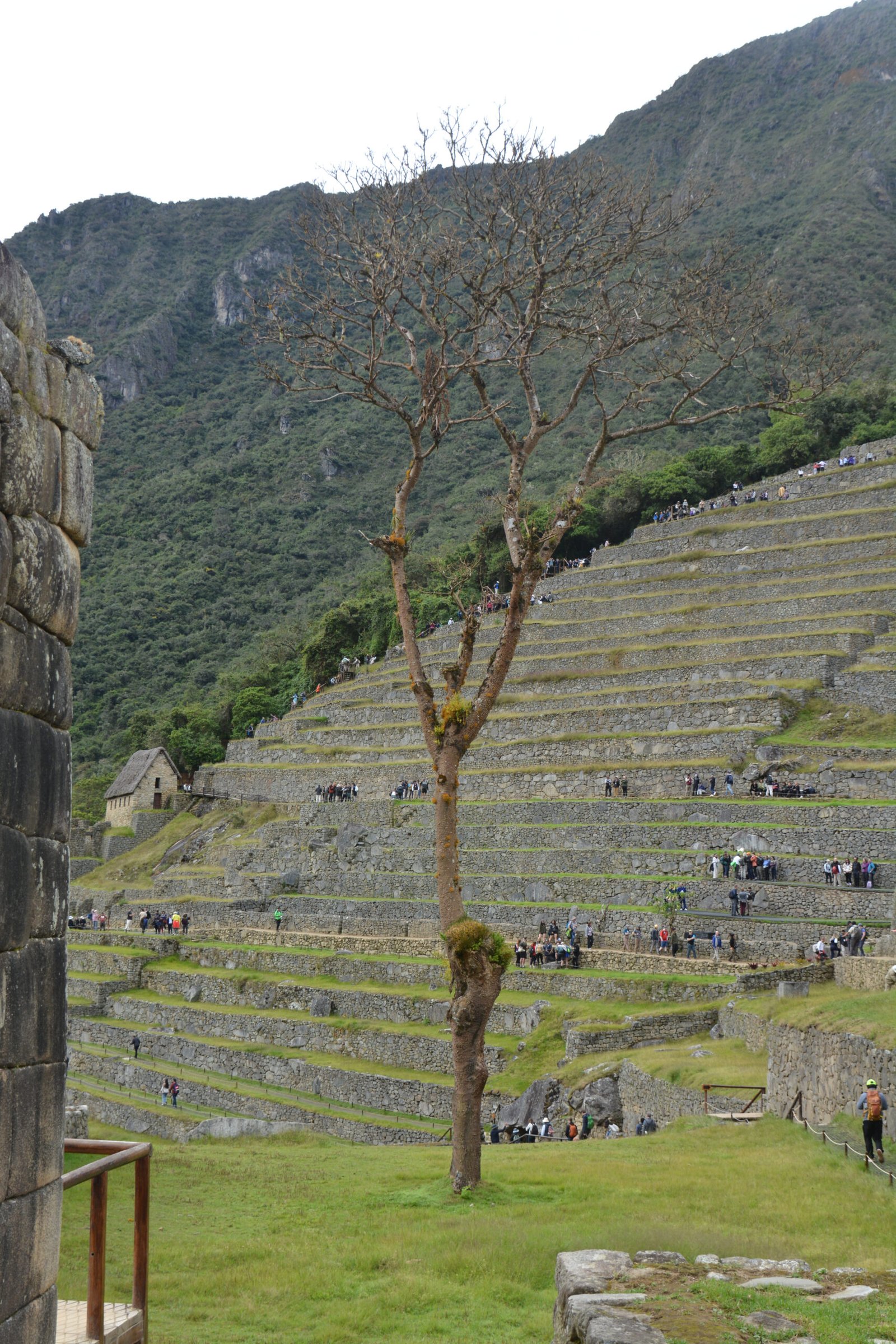
Residential Courtyard in Machu Picchu
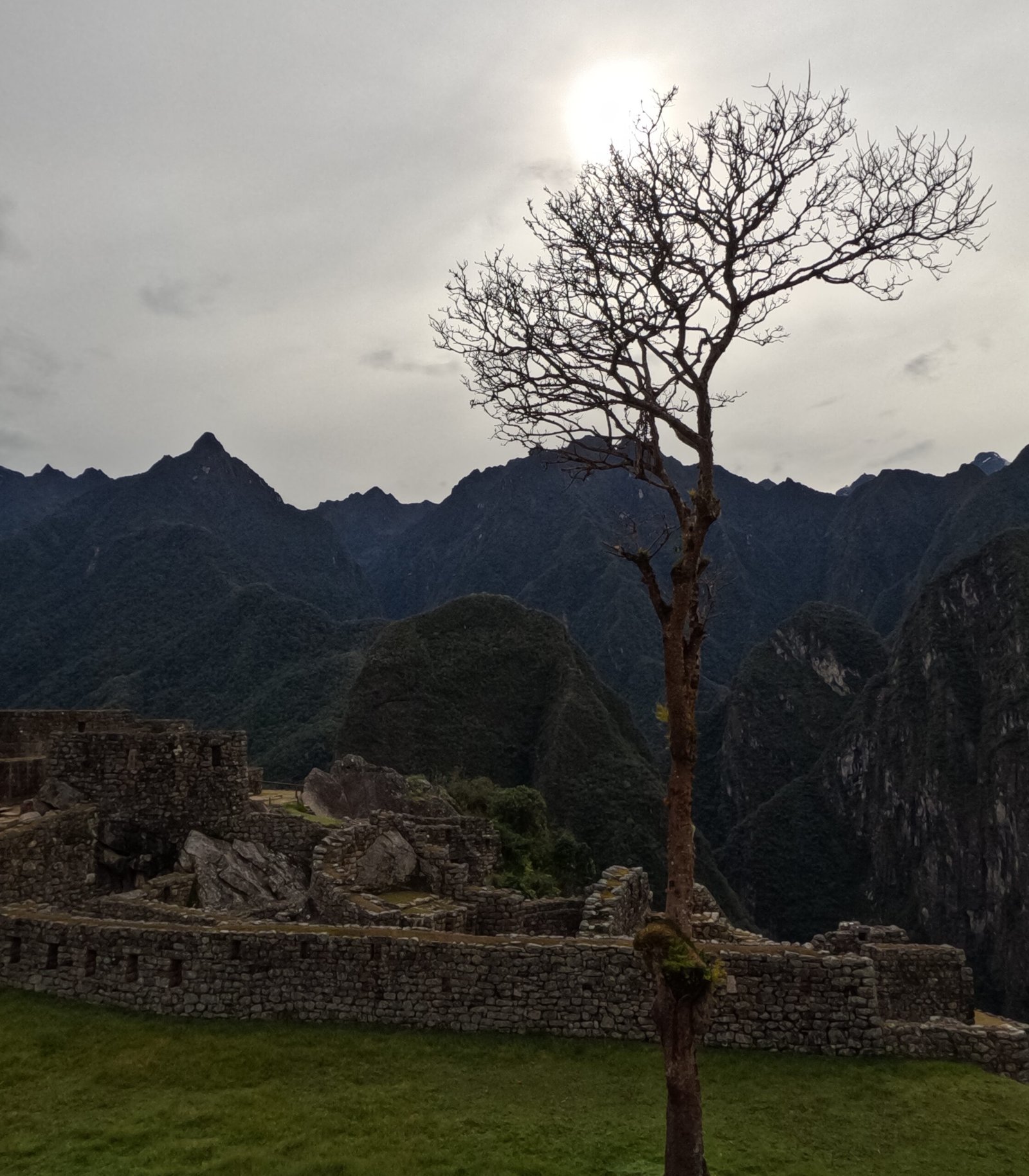
A courtyard in what was once a residential area of Machu Picchu. The tree was planted in 1979 and now has gained protected status as one of the living icons of Machu Picchu.
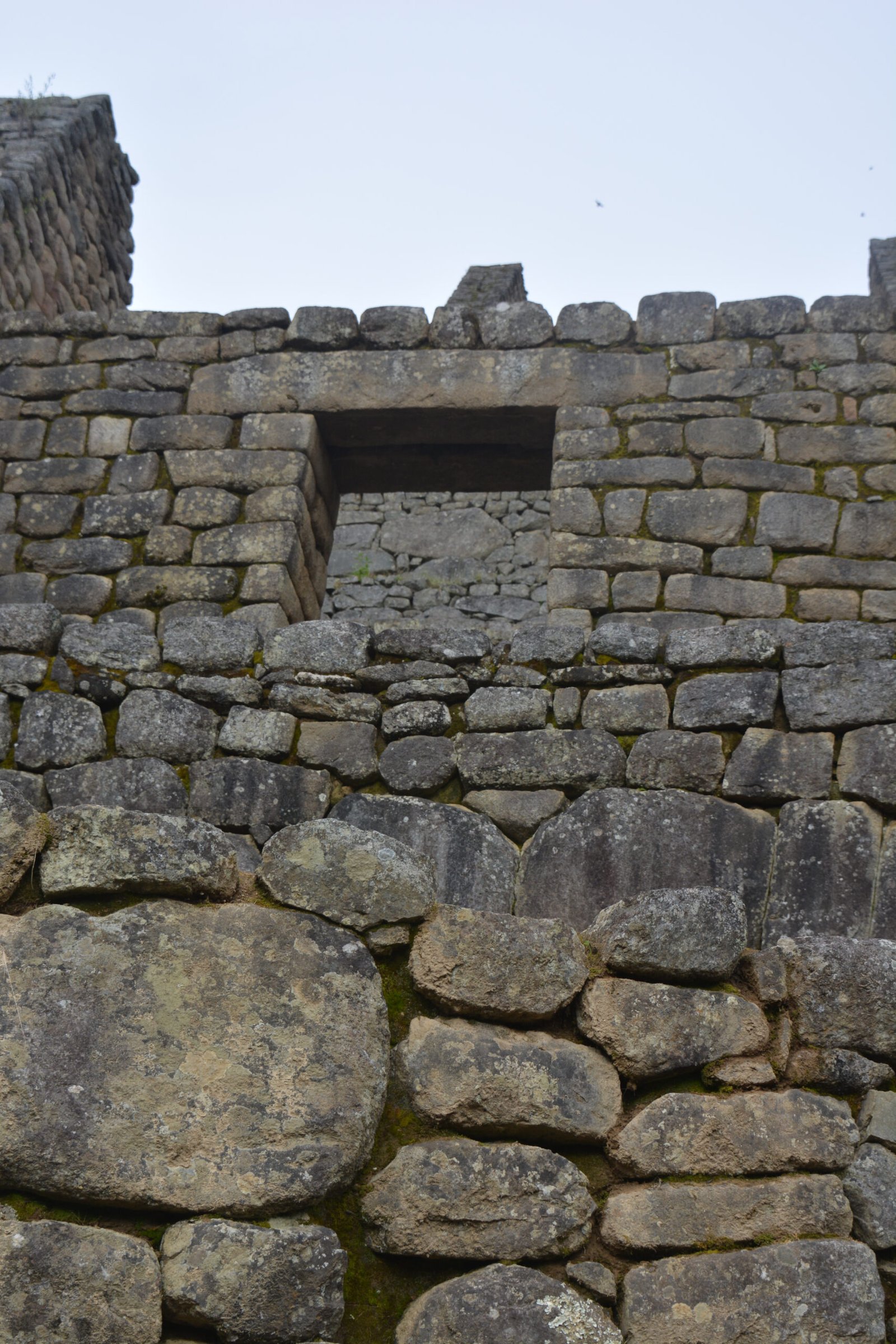
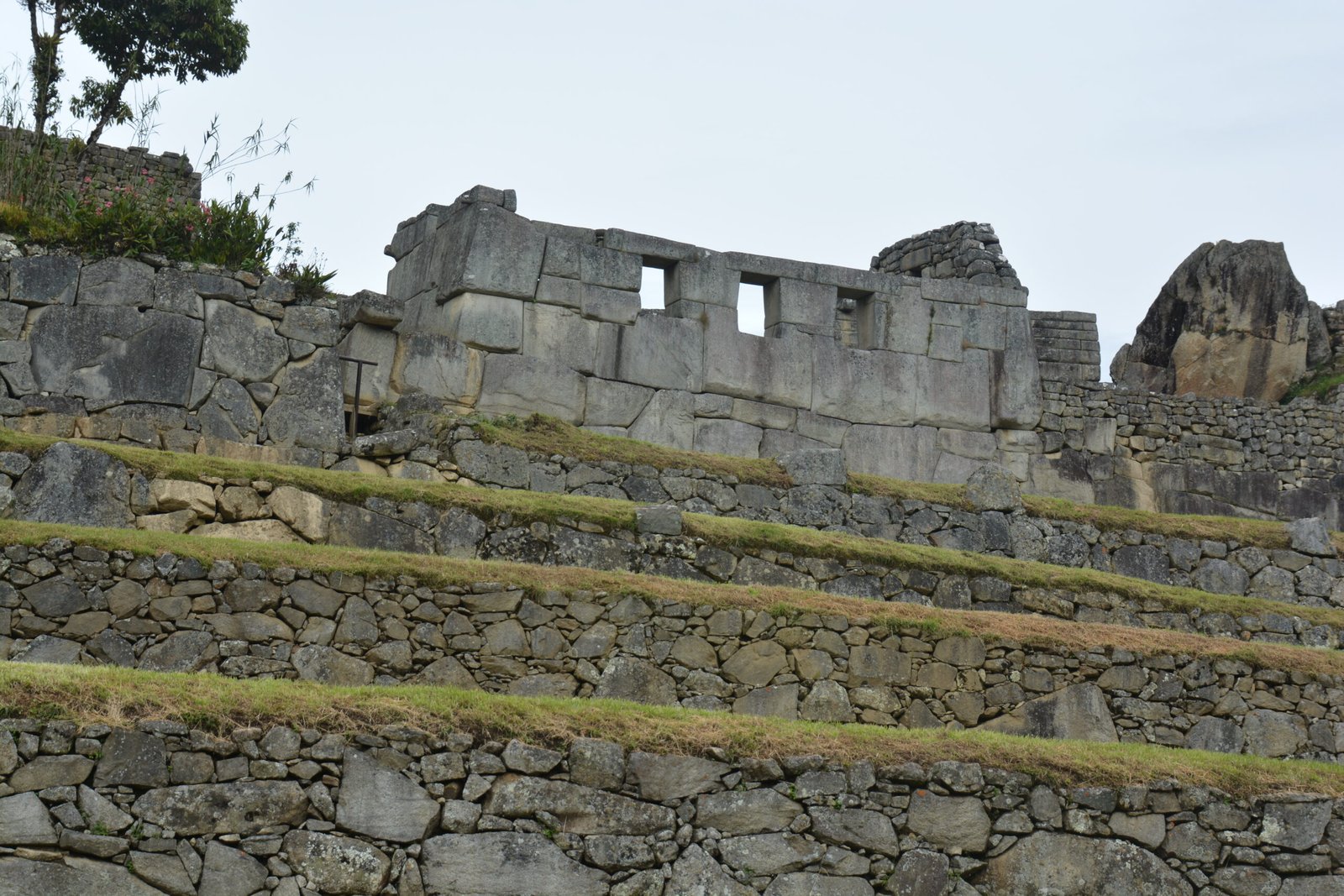
Window in A Wall in Machu Picchu
A window in what was once the wall of an enclosed building.
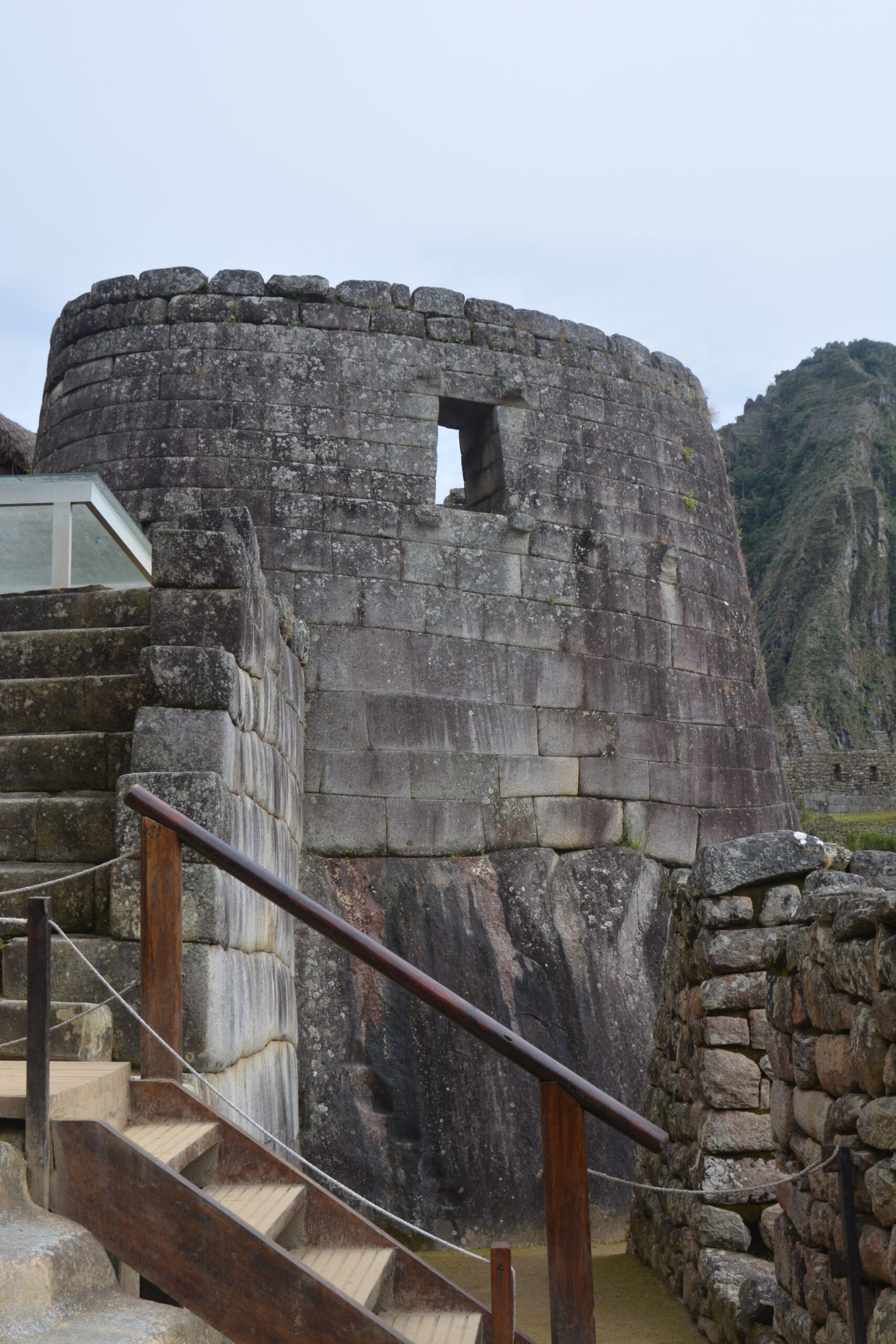
A Round Building of Machu Picchu
One of the few buildings in Machu Picchu with curved walls. The type of stone construction indicates this building was for high-ranking people.
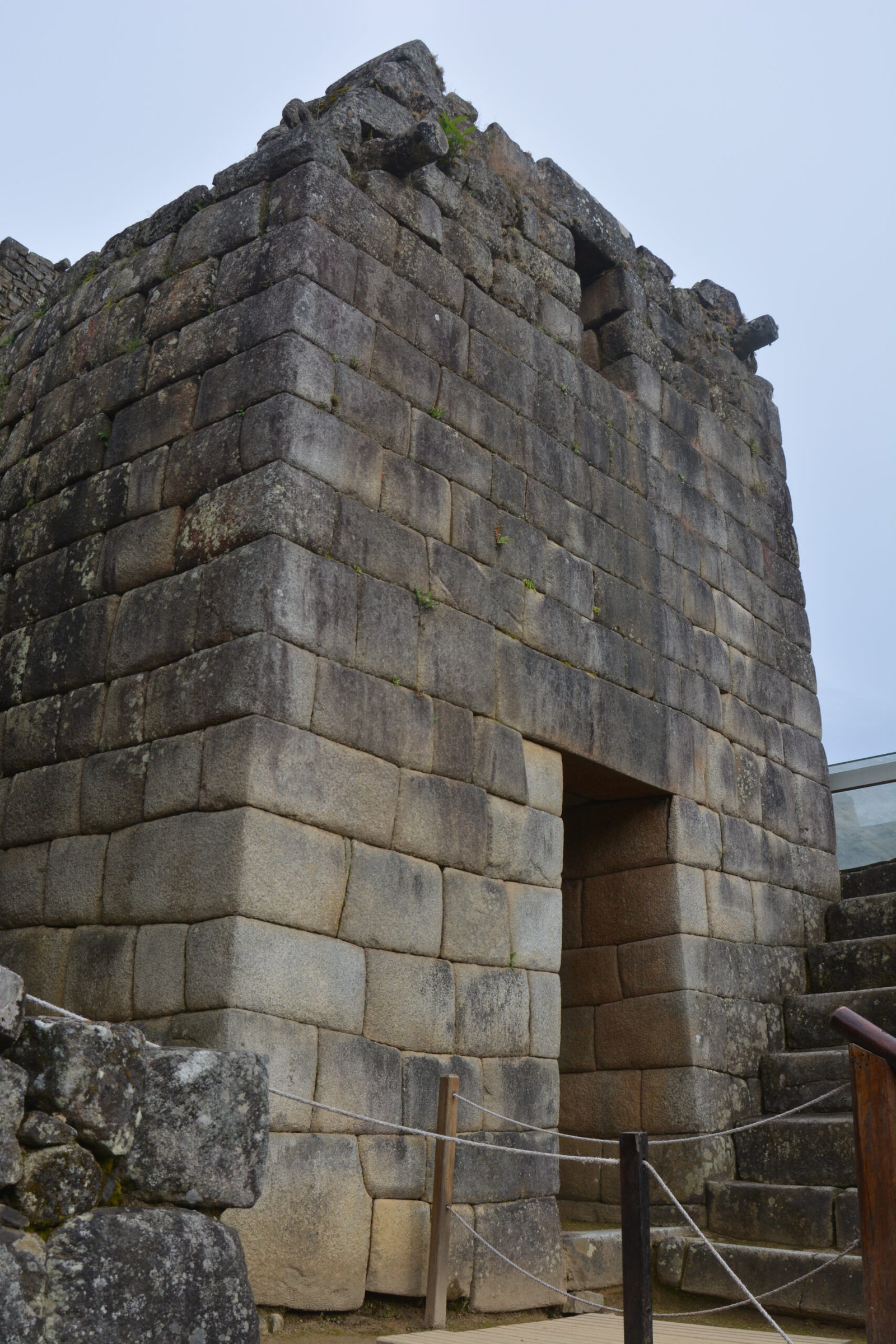
A Building for Important People in Machu Picchu
A building showing the typical trapezoid doorway and a window. The type of masonry construction indicates this building was for high-ranking people.
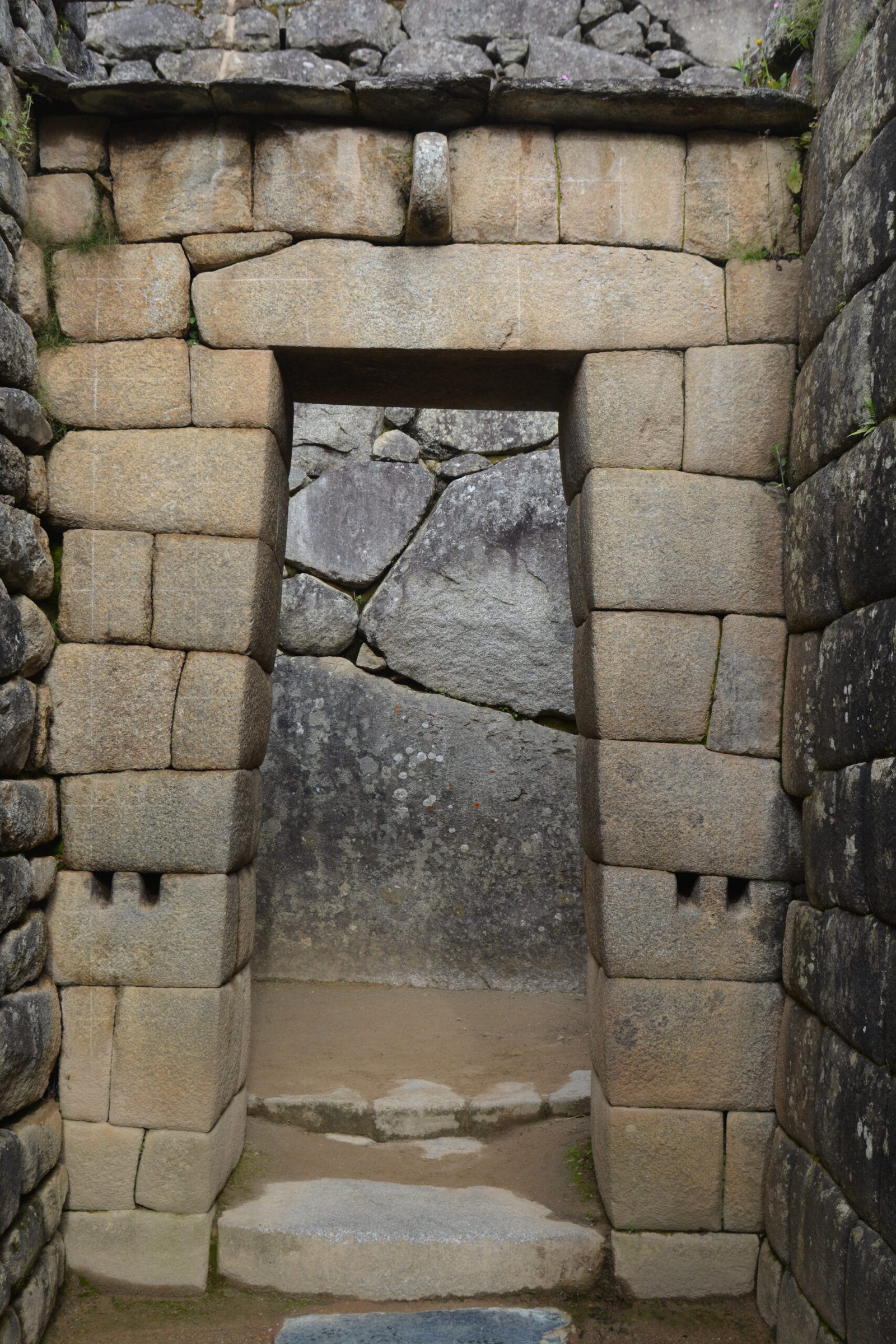
A Typical Trapezoid Doorway in Machu Picchu
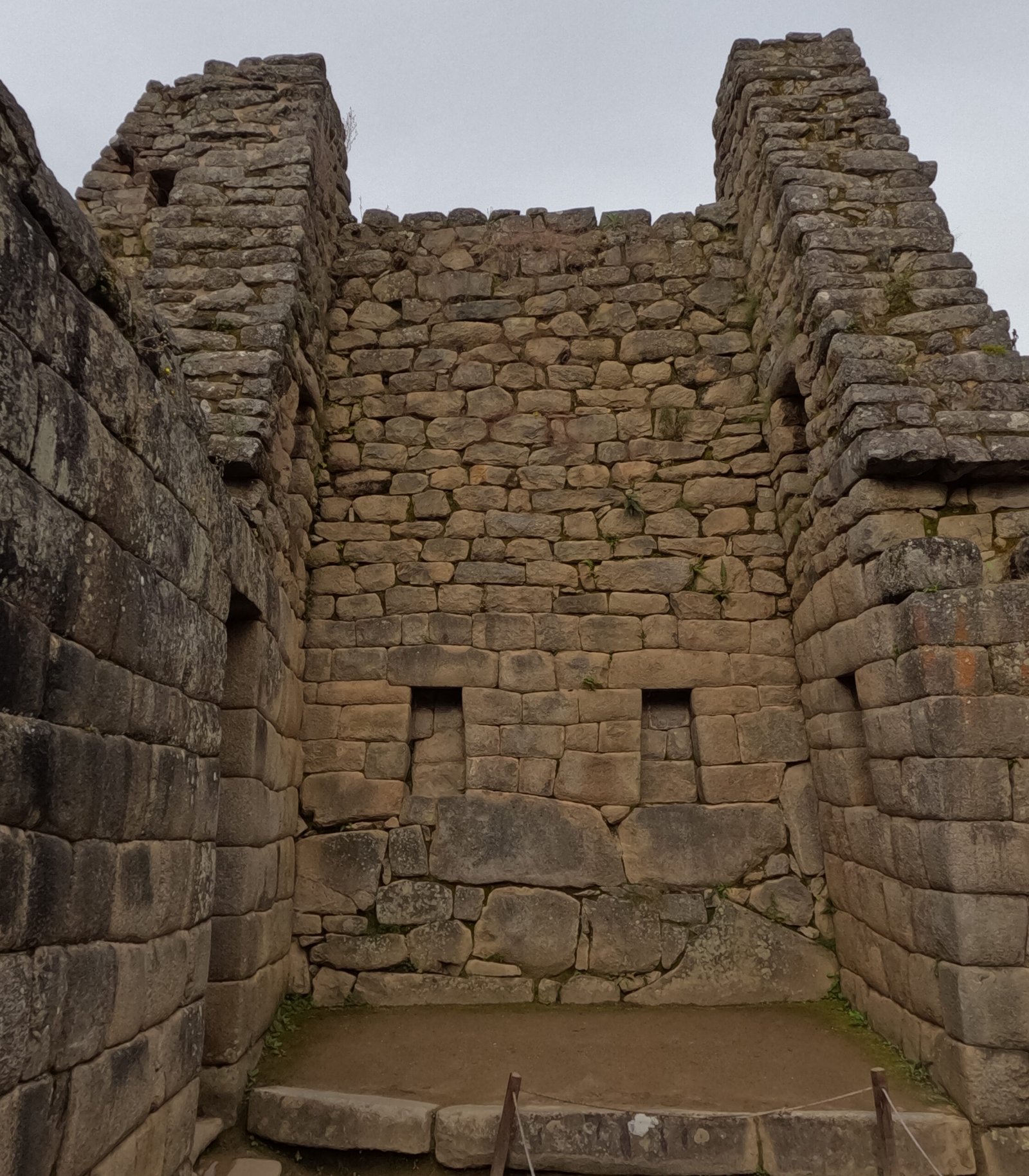
An example of a typical Incan doorway, seen throughout many archeological sites. The type of stone construction indicates this building was for high-ranking government or religious people. The two holes on either side were once used to tie a rope across the door. The Incas had no hinged doors in their structures. If they wanted privacy, they would tie a rope across the doorway opening.
Reconstructed Roof Showing Stonework Details in Machu Picchu
A reconstructed roof showing how stone was incorporated into the building structure. As the building walls were erected, stone was carved to create anchors for the future roof beams. The beams were tied onto the stone anchor points.
Stonework Details in Machu Picchu
This stone detail was used to create an anchor point for the roof beams (trusses) of the building. Once stonework construction was completed the roof beams were tied onto the stone anchor points.
A Building on Top of a Terraced Slope in Machu Picchu
Not all hillside terraces were for agriculture. Some terraces were designed as reinforcements to support a building on the top of the slope. This is one example of a civil reinforcing terrace.
A Tree Grows in Machu Picchu
In 1979 a local Peruvian planted a tree in a courtyard of Machu Picchu. It grew and today has gained protected status as one of the "icons" of this archeological site.
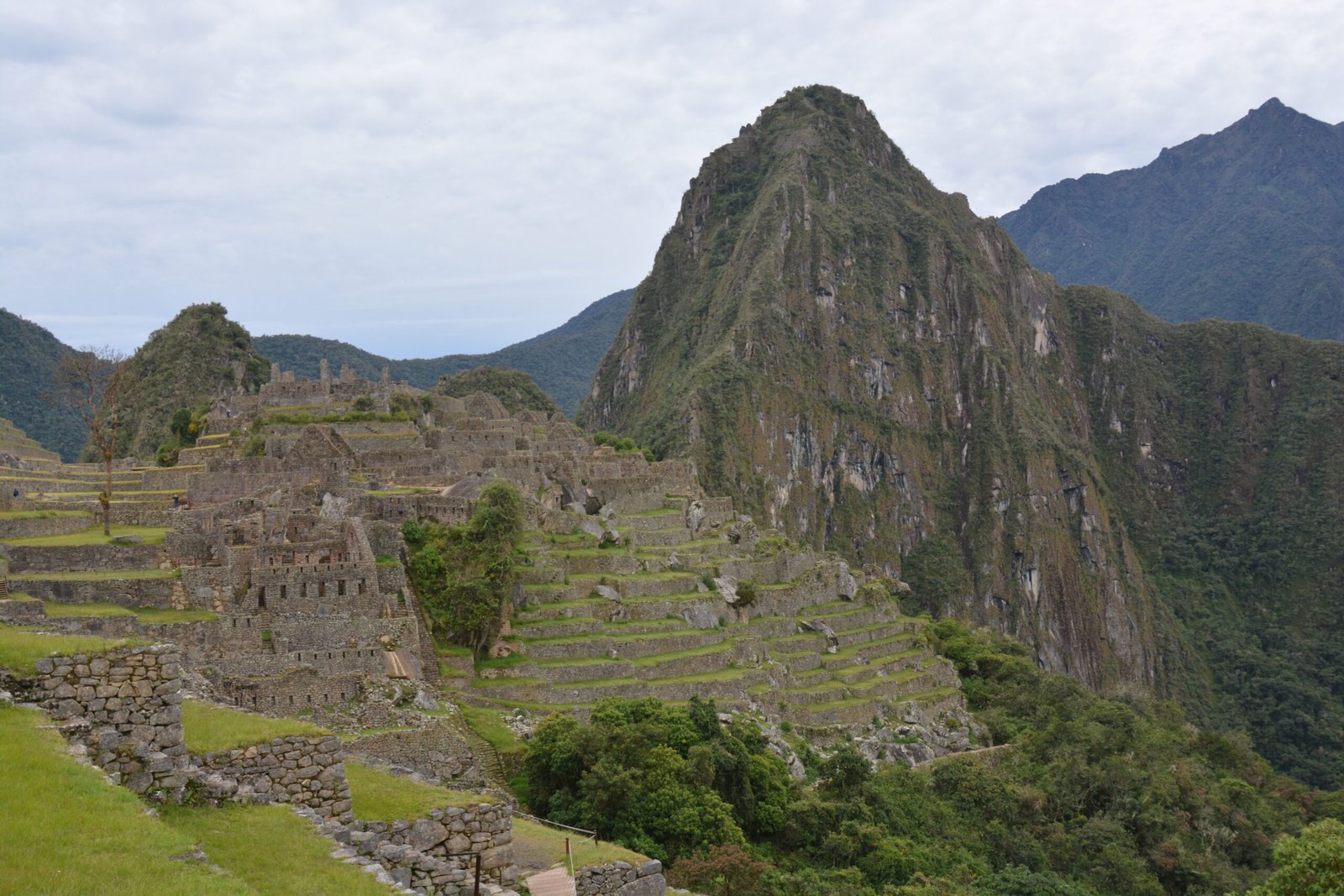
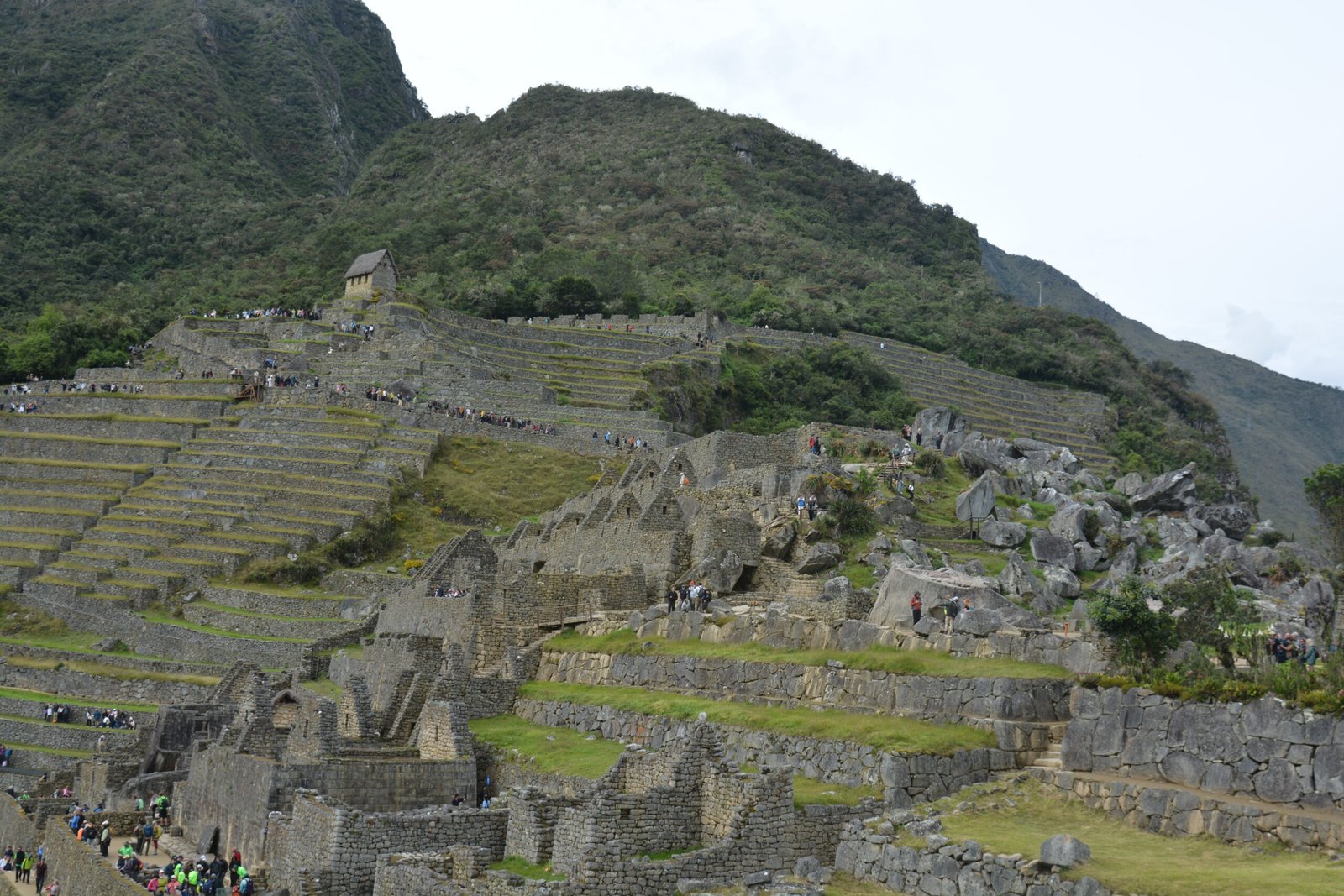
View of Machu Picchu
A view of Machu Picchu looking up a hillside.
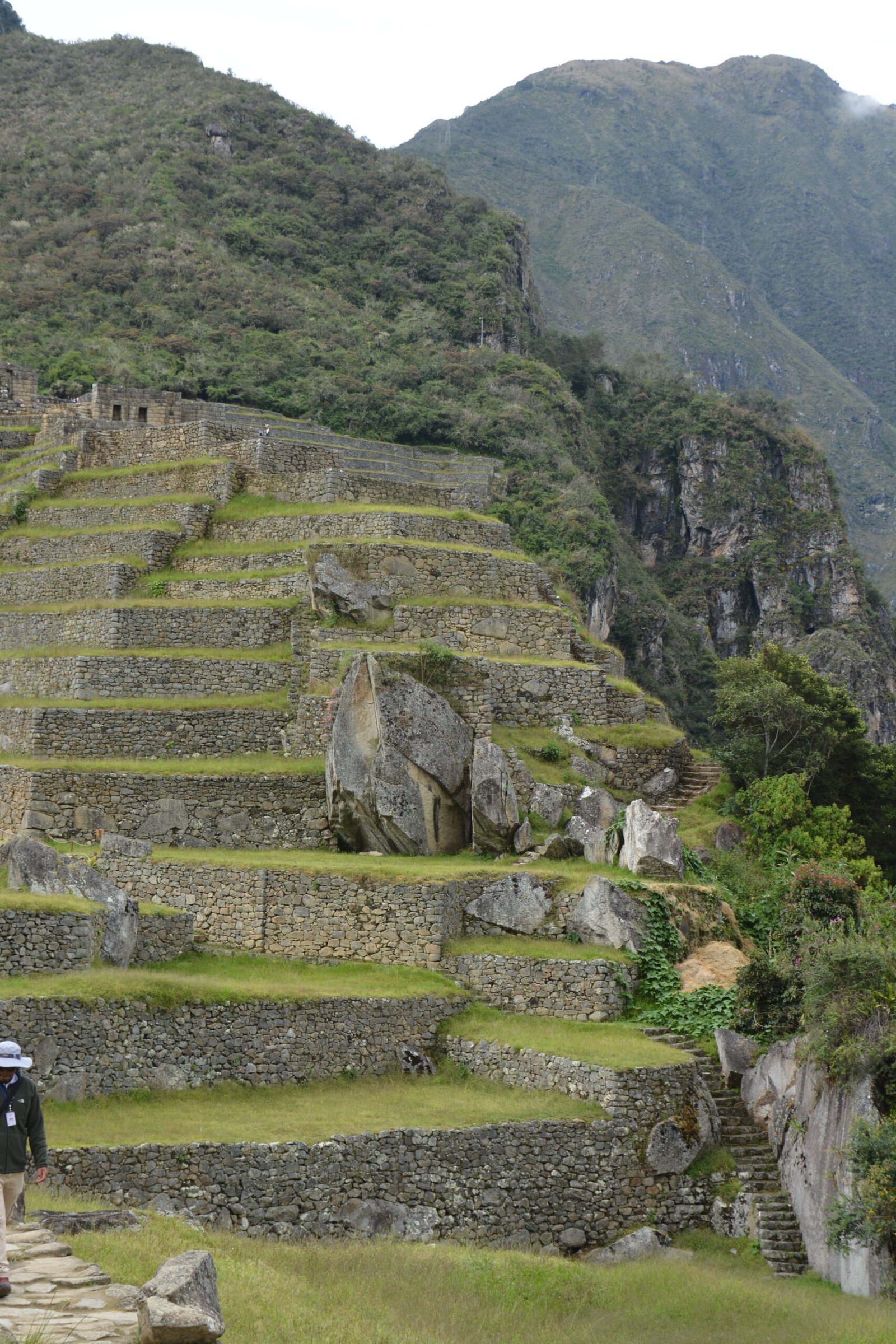
Incorporating Natural Stone Formations Into Constructions
The Incas were masters of incorporating naturally occurring stone formations into their constructions. In this example, the Incas incorporated a natural formation to support one wall of a building.
Living Areas of Machu Picchu
Some of the residental areas of Machu Picchu. Judging by the type of stone construction, these buildings would have been used by the farmers and general residents of the city.
Agricultural Terraces of Machu Picchu
Some of the agricultural terraces within Machu Picchu
A Tree Grows in Machu Picchu
In 1979 a local Peruvian planted a tree in a courtyard of Machu Picchu. It grew and today has gained protected status as one of the "icons" of this archeological site.
Looking Inside a Building in Machu Picchu
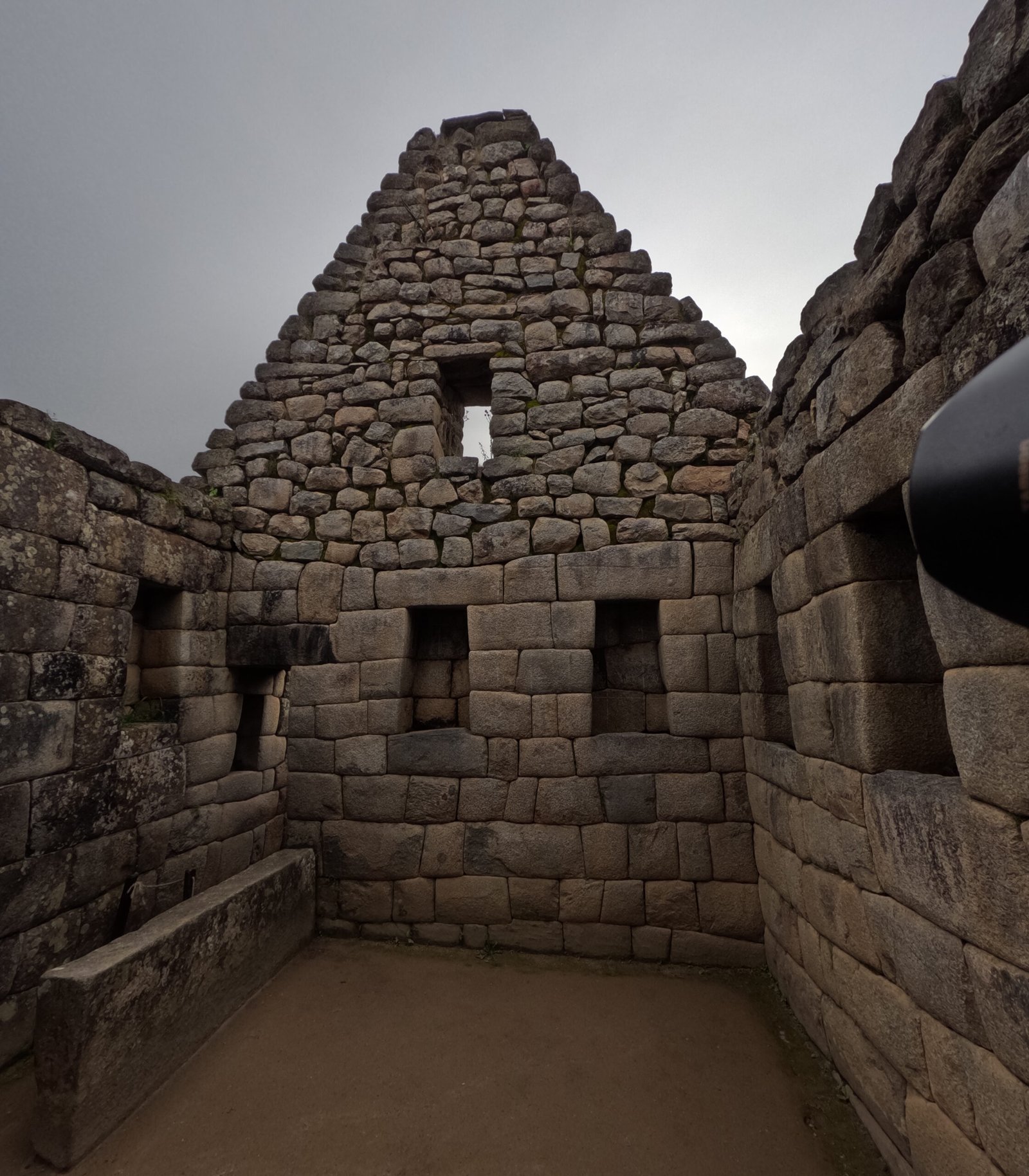
Looking inside what was one a small home. This shows recessed "niches" built into the interior walls, used for holding decorative objects or general storage. There was a window built into the upper "attic" level. The upper floors of these buildings were only used for storing food or animal feed.
Looking Inside a Building in Machu Picchu
Looking inside what was one a small home. This shows recessed "niches" built into the interior walls, used for holding decorative objects or general storage. There was a window built into the upper "attic" level. The upper floors of these buildings were only used for storing food or animal feed.
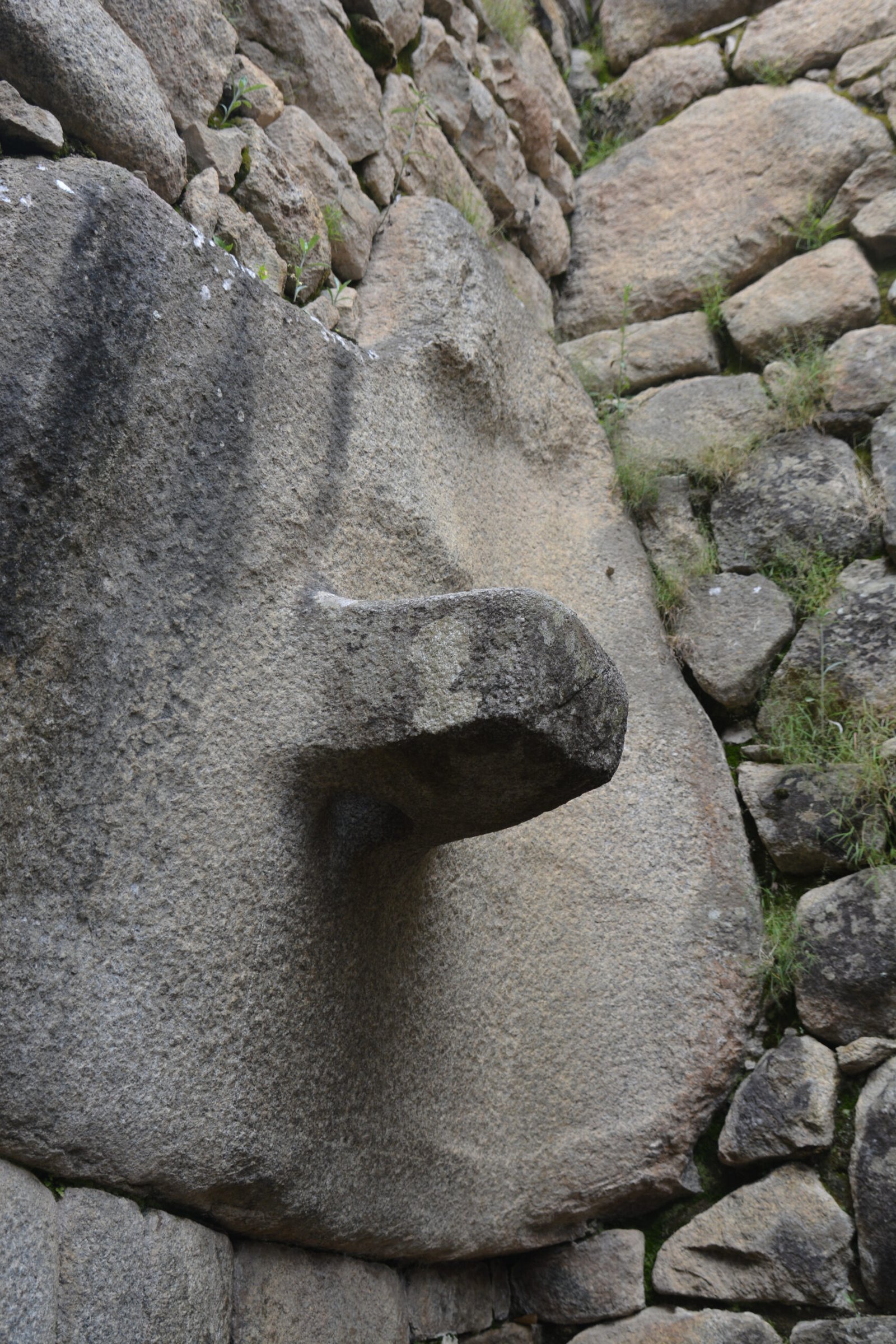
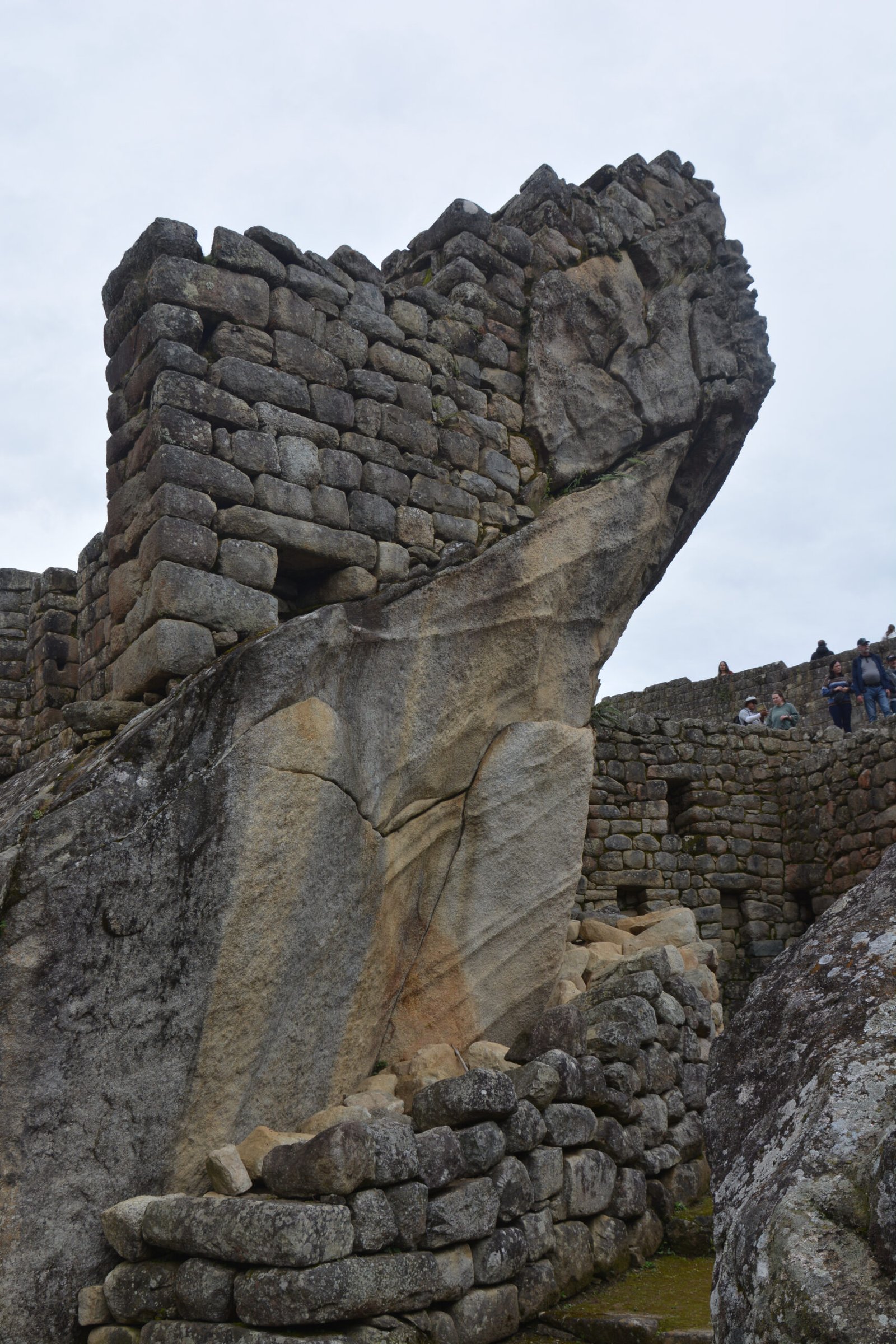
Stone Condor in Machu Picchu
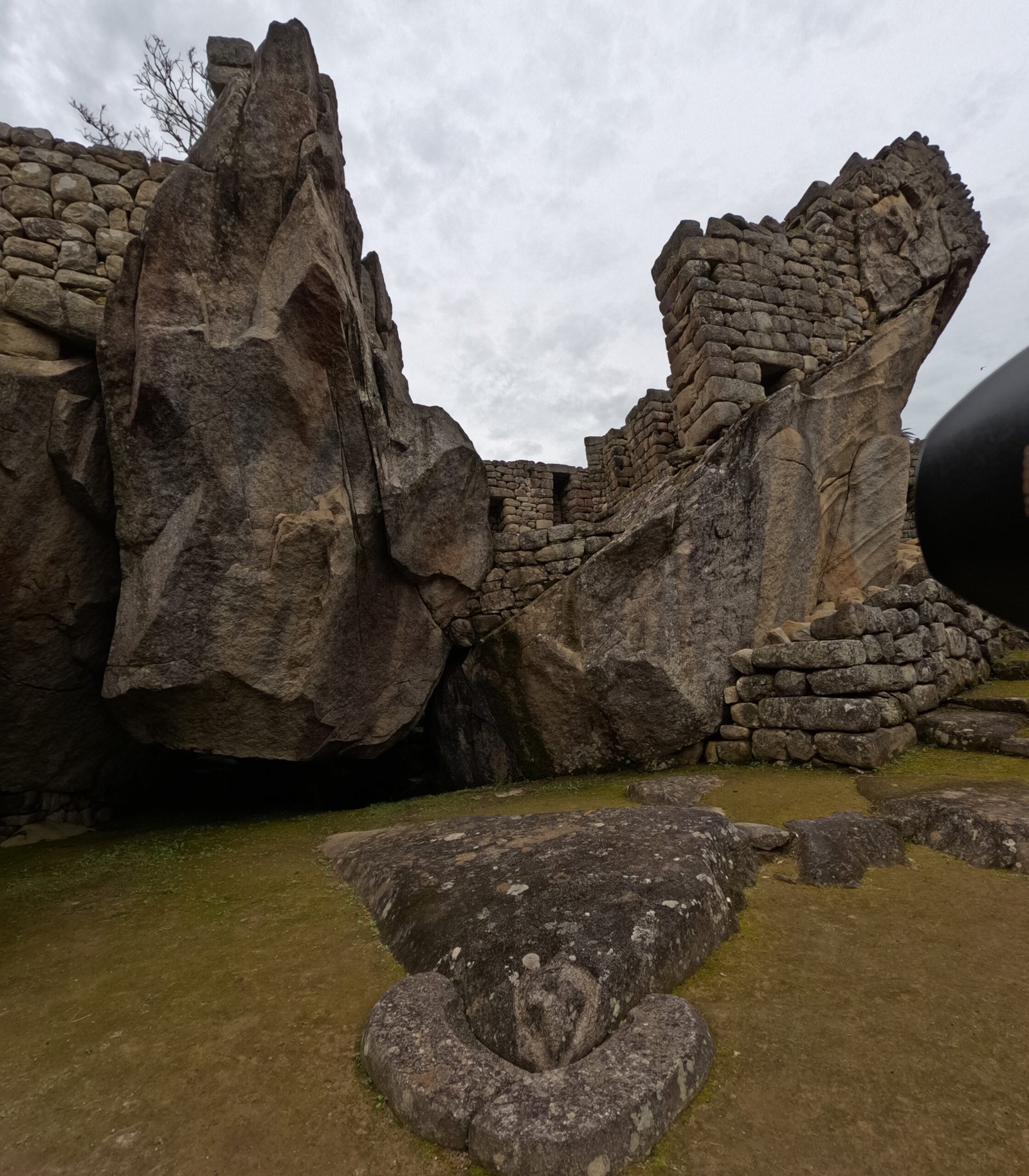
The Incas were masters of working in stone, and incorporated naturally occurring stone formations into their constructions. This is one example. using natural stone formations with constructed stone to create a symbol of the Condor. In Incan culture Condors, the world's largest flighted bird, were revered.
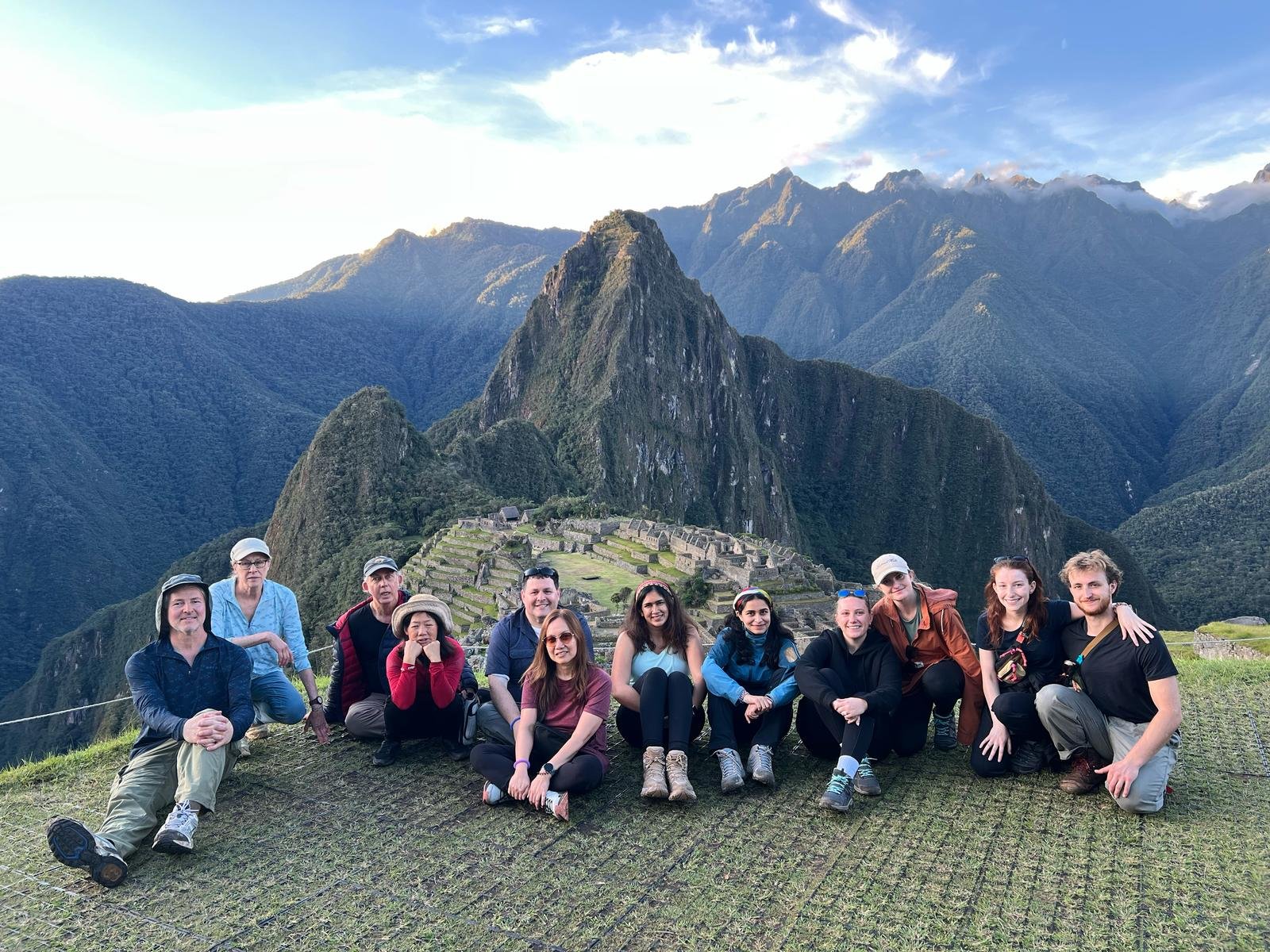
Our Intrepid Incan Trail Group with Machu Picchu in the Background
Our obligatory group photo after hiking the last several miles of the Inca Trail into Machu Picchu. This photo taken at the trail entrance into the former Incans' City of machu Picchu. Our group hike was organized by Apaca Adventures, a charter company operating in Peru.
We use cookies on our website to give you the most relevant experience by remembering your preferences and repeat visits. By clicking “Accept”, you consent to the use of ALL the cookies.
This website uses cookies to improve your experience while you navigate through the website. Out of these, the cookies that are categorized as necessary are stored on your browser as they are essential for the working of basic functionalities of the website. We also use third-party cookies that help us analyze and understand how you use this website. These cookies will be stored in your browser only with your consent. You also have the option to opt-out of these cookies. But opting out of some of these cookies may affect your browsing experience.
Necessary cookies are absolutely essential for the website to function properly. These cookies ensure basic functionalities and security features of the website, anonymously.
Cookie
Duration
Description
cookielawinfo-checkbox-analytics
11 months
This cookie is set by GDPR Cookie Consent plugin. The cookie is used to store the user consent for the cookies in the category "Analytics".
cookielawinfo-checkbox-functional
11 months
The cookie is set by GDPR cookie consent to record the user consent for the cookies in the category "Functional".
cookielawinfo-checkbox-necessary
11 months
This cookie is set by GDPR Cookie Consent plugin. The cookies is used to store the user consent for the cookies in the category "Necessary".
cookielawinfo-checkbox-others
11 months
This cookie is set by GDPR Cookie Consent plugin. The cookie is used to store the user consent for the cookies in the category "Other.
cookielawinfo-checkbox-performance
11 months
This cookie is set by GDPR Cookie Consent plugin. The cookie is used to store the user consent for the cookies in the category "Performance".
viewed_cookie_policy
11 months
The cookie is set by the GDPR Cookie Consent plugin and is used to store whether or not user has consented to the use of cookies. It does not store any personal data.
Functional cookies help to perform certain functionalities like sharing the content of the website on social media platforms, collect feedbacks, and other third-party features.
Performance cookies are used to understand and analyze the key performance indexes of the website which helps in delivering a better user experience for the visitors.
Analytical cookies are used to understand how visitors interact with the website. These cookies help provide information on metrics the number of visitors, bounce rate, traffic source, etc.
Advertisement cookies are used to provide visitors with relevant ads and marketing campaigns. These cookies track visitors across websites and collect information to provide customized ads.